
多支柱养老保险体系

Search documents
城乡居民基础养老金将继续提高
第一财经· 2026-03-14 05:10
Core Viewpoint - The article discusses the ongoing increase in the basic pension for urban and rural residents in China, highlighting the government's commitment to improving the pension system over the next five years, particularly for low-income groups [3]. Group 1: Pension System Overview - The basic pension system for urban and rural residents is a composite model combining welfare and insurance, with funding from personal contributions, collective subsidies, and government support [4]. - The basic pension has seen eight increases since its establishment, with the minimum monthly standard rising from 55 yuan to 163 yuan by 2026 [3][5]. Group 2: Current Pension Levels and Disparities - As of the end of 2024, approximately 53.83 million people are enrolled in the urban and rural basic pension insurance, with about 18.04 million receiving benefits, resulting in an average monthly pension of approximately 246 yuan [5]. - There are significant disparities in pension levels across provinces, with major cities like Beijing and Shanghai averaging over 1,000 yuan, while many central and western regions average between 200 to 300 yuan [5]. Group 3: Calls for Increased Pension for Farmers - During the National People's Congress, representatives called for substantial increases in pensions for farmers, especially those over 70 years old, who cannot improve their benefits through contributions [6]. - Suggestions include raising the basic pension for those over 70 to 500 yuan over three years, with other representatives proposing increases to 400 yuan [6]. Group 4: Encouraging Participation in Pension System - The government aims to incentivize participation in the pension system, particularly among younger generations, by promoting collective economic contributions and subsidies [7]. - Pilot programs for collective subsidies have shown positive results in increasing participation and contributions, although challenges remain due to varying economic conditions in different regions [7][8]. Group 5: Implementation of Collective Subsidies - The collective economic subsidy program aims to enhance individual account accumulation and improve pension benefits upon reaching eligibility [8]. - In Chongqing, the collective subsidy program has been expanded, with funding reaching 1.75 billion yuan in 2025, benefiting over 82,000 individuals [7].


夯实养老保险“第二支柱”
Xin Lang Cai Jing· 2026-02-26 17:41
Group 1 - The core viewpoint emphasizes the importance of expanding the enterprise annuity system as a supplementary pension scheme to enhance retirement security for employees [1][2] - As of Q3 2025, there are 175,000 employers in China with established enterprise annuities, covering over 33.32 million employees and accumulating funds exceeding 4 trillion yuan [1] - The new policies aim to simplify the establishment process and broaden the coverage of enterprise annuities, addressing the high thresholds and burdens faced by small and medium-sized enterprises [1][2] Group 2 - Hebei Xiong'an New Area has pioneered an "automatic enrollment mechanism" for enterprise annuities, significantly increasing the number of participating employers [2] - The long-term assessment mechanism for fund investments is crucial for guiding investments into technology innovation and green transformation, benefiting both the capital market and pension security [2] - Challenges such as cost pressures, lack of awareness, and regional disparities need to be addressed to facilitate the expansion of enterprise annuities [2][3] Group 3 - The "14th Five-Year Plan" suggests accelerating the development of a multi-tiered pension insurance system to address the aging population, projected to exceed 220 million by the end of 2025 [3] - Continuous reform and innovation are necessary to strengthen the pension security network, ensuring a secure and happy retirement for the elderly population [3]
对话养老金融专家朱俊生:时间积累、投资纪律和专业化管理,是养老资金长期回报的基础
Xin Lang Cai Jing· 2026-02-13 01:36
Core Viewpoint - The personal pension system in China has transitioned from the "institutional startup phase" to the "quality inspection phase after expansion," highlighting the need for improved operational quality despite rapid account growth [6][22]. Group 1: Current Status of Personal Pension System - As of 2025, the number of personal pension accounts is approaching 200 million, indicating significant coverage and social recognition [6][23]. - However, only about 22% of accounts have actual contributions, with an average annual contribution of approximately 2000 yuan, reflecting low real participation and insufficient capital accumulation [6][23]. - Approximately 62% of the funds deposited are utilized for investment, leaving over one-third in cash or cash-like forms, indicating underutilization of long-term capital [6][23]. Group 2: Challenges in the Personal Pension System - The product supply has expanded rapidly, with 1275 personal pension products offered by 127 financial institutions, but there is a significant issue of homogeneity and unclear risk-return profiles [7][24]. - The overall yield of savings-type products is low, and the performance of public fund products has been weaker than the market average, undermining the motivation for continuous contributions [7][24]. Group 3: Factors Affecting Participation - Weak short-term performance has led to cautious behavior among participants, with many opting for "account opening without contributions" due to market volatility and low equity asset allocation [8][25]. - There is a mismatch between the long-term nature of pensions and the current operational arrangements, leading to unclear perceptions of long-term investment benefits [8][25]. - The high degree of personal investment responsibility limits the effectiveness of the system, as many individuals lack the necessary investment knowledge and risk management skills [8][25]. Group 4: Recommendations for Improvement - Strengthening professional asset allocation and diversifying investment tools can enhance the attractiveness of personal pensions, allowing participants to benefit from economic growth and innovation [10][28]. - Expanding cross-border asset allocation channels and improving the international diversification of investments can reduce reliance on single market cycles [10][28]. - Optimizing the investment and management system of personal pensions is essential, including exploring mechanisms for connecting different pillars of the pension system [10][28]. Group 5: Policy Implications - The development of a multi-tiered pension system is crucial, with a focus on enhancing the second pillar (enterprise annuities) and improving the participation and sustainability of the third pillar (personal pensions) [14][31]. - Current structural imbalances in the pension system necessitate a shift from relying solely on the first pillar to a more balanced approach that includes robust support from the second and third pillars [14][31]. - Tailoring incentives and product designs to accommodate the characteristics of new employment forms and income volatility is essential for increasing participation among diverse income groups [17][34].

夯实养老保险“第二支柱”(微观)
Ren Min Ri Bao· 2026-02-10 03:38
Core Viewpoint - The article emphasizes the importance of reform and innovation in expanding the enterprise annuity system in China, which serves as a supplementary pension scheme to enhance the retirement security of the elderly population [1][2]. Group 1: Current Status of Enterprise Annuity - As of Q3 2025, there are 175,000 employers in China that have established enterprise annuities, with over 33.32 million participants and accumulated funds exceeding 4 trillion yuan [1]. - Despite the significant number of participants, the coverage of enterprise annuities remains insufficient compared to the basic pension insurance system, which covers over 1 billion people [1]. Group 2: Challenges and Solutions - High entry barriers, complex procedures, and heavy burdens are identified as major challenges for small and medium-sized enterprises in adopting enterprise annuities [2]. - New measures are being implemented to enhance the inclusivity, flexibility, and convenience of the enterprise annuity system, such as allowing flexible payment ratios and simplifying the establishment process [2]. Group 3: Regional Initiatives - Hebei Xiong'an New Area has pioneered an "automatic enrollment mechanism" for enterprise annuities, allowing companies to start with a small scale and low contribution rates, significantly increasing the number of employers offering annuities [2]. - Shanghai Lingang New Area has introduced a "regional talent enterprise annuity plan" that provides financial subsidies to participants, aiding in talent retention [2]. Group 4: Future Outlook - The expansion of enterprise annuities is expected to face ongoing challenges, including cost pressures and a lack of awareness among employees [3]. - Continued optimization of fiscal and tax incentives, along with improved transfer and continuity of annuities, is necessary to encourage financial institutions to develop standardized, low-cost service solutions [3]. - The article highlights the urgency of building a multi-tiered pension system to address the increasing aging population, projected to exceed 220 million people aged 65 and above by the end of 2025 [3].
手回集团创始人光耀:长寿时代的风险是人类从未面临的新课题
Zheng Quan Shi Bao Wang· 2025-12-29 12:36
Core Insights - The launch of the "Xinghai Winner Xuanwu Version (Dividend Type) Pension Annuity Insurance" by Fosun Puhua Life Insurance and Shouhui Group aims to address the growing demand for diversified pension solutions in the context of an aging population and low interest rates [1][2] Group 1: Industry Trends - By 2024, the proportion of the population aged 65 and above in China is expected to reach 15%, marking the entry into a deeply aging society, with increasing burdens on family pensions due to declining birth rates [2][3] - The third pillar of China's pension system, which includes personal commercial pension insurance, currently accounts for only about 6%, highlighting a significant gap that commercial insurance can fill as an important supplementary force in the pension system [2][3] Group 2: Product Features - The "Xinghai Winner Xuanwu Version" addresses two major pain points in pension planning: personalized withdrawal options and long-term value appreciation, offering three withdrawal plans and six product advantages to provide customized pension solutions [3] - The product combines guaranteed benefits with floating dividends, aligning with public demand for low-risk, stable cash flow, and is designed to be flexible and suitable for various demographic needs [2][3] Group 3: Future Directions - Fosun Puhua and its channel partners plan to deepen collaboration in product iteration, service optimization, and user education to promote the concept of "comfortable retirement" and contribute to the construction of a multi-tiered pension security system in China [3]
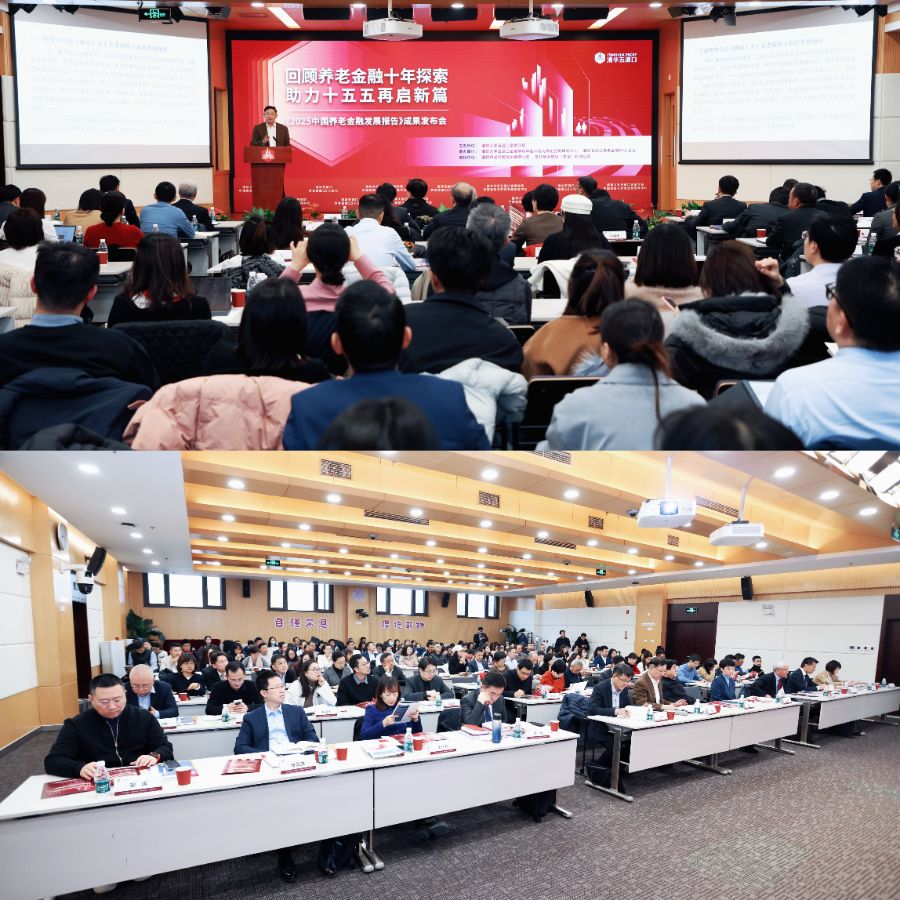
《中国养老金融发展报告2025》发布 探讨改革路径与发展方向
2 1 Shi Ji Jing Ji Bao Dao· 2025-12-23 14:17
Core Insights - The "China Pension Finance Development Report 2025" was released, focusing on the exploration of pension finance over the past decade and discussing new reform paths and development directions for the 14th Five-Year Plan period [1] Group 1: Key Themes from the Conference - Tsinghua University's Wudaokou School of Finance emphasizes the importance of pension finance as a long-term research focus, providing empirical references for policy-making and decision support for market participants [2] - The need to improve the multi-pillar pension system is highlighted, including national coordination of urban employee basic pension insurance and enhancing the coverage of enterprise annuities [2] - The conference discussed the necessity of a higher quality universal insurance plan and the exploration of institutional arrangements for new employment forms [3][4] Group 2: Recommendations for Pension Reform - The focus on expanding and enhancing the second pillar of the pension system and strengthening the third pillar through personal pension accounts is emphasized [4] - The importance of developing innovative smart social security systems using technology to optimize services and enhance fund management is noted [4] - The need for a coordinated approach involving central, local, and individual efforts to improve the basic pension level and enhance the investment operation capabilities of pension funds is discussed [5] Group 3: Industry Perspectives - Representatives from various financial institutions discussed the importance of a long-term, systematic approach to pension finance, emphasizing product supply and the integration of services for the elderly [6] - The necessity of aligning pension systems with digital economy trends and demographic changes is highlighted, focusing on improving operational efficiency through technology [6] - The challenges faced by the elderly care industry, including supply-demand mismatches and the need for sustainable financial paths, were addressed [7] Group 4: Report Highlights - The report assesses the recent trends in domestic and international pension finance, focusing on the optimization of the three-pillar pension system and evaluating simplified enterprise annuity plans [7] - It provides a systematic review of pension asset management strategies and international experiences, particularly analyzing Japan's pension system reforms [7]
丰富金融产品供给 推动个人养老金制度更好发展
Zheng Quan Shi Bao· 2025-12-09 00:31
Core Viewpoint - The article emphasizes the importance of developing a multi-level and multi-pillar pension insurance system in China, highlighting the implementation and evolution of the personal pension system as a key component of this strategy [1][6]. Group 1: Implementation and Development of Personal Pension System - The personal pension system was launched on November 25, 2022, in 36 pilot cities and is set for nationwide implementation by December 15, 2024 [1][6]. - As of November 25, 2025, there will be 1,245 personal pension financial products available, including 466 savings products, 437 insurance products, 305 fund products, and 37 wealth management products [1][6]. - By the end of September 2025, the scale of personal pension funds reached 15.1 billion yuan, representing a 655% increase from the end of 2022, with over 95% of fund products achieving positive returns since inception [1][6]. Group 2: Optimization and Challenges - The personal pension system is being optimized based on practical experiences from the pilot cities, focusing on product supply and withdrawal conditions to enhance operational effectiveness and attract investors [2][7]. - Despite the initial enthusiasm for account openings, there is a significant gap in actual contributions, with many investors failing to meet the annual contribution limit of 12,000 yuan [3][8]. - There is a need for improved investor education, as many individuals lack the correct investment mindset and tend to only deposit funds without engaging in diversified investment options [3][8]. Group 3: Recommendations for Improvement - To enhance the personal pension system, it is recommended to diversify financial product offerings tailored to different age groups and risk preferences, and to expand investment options to include equities and precious metals [3][9]. - Strengthening investor education is crucial to shift the public's perception from a savings-based approach to an investment-oriented strategy for pension accumulation [4][9]. - Policy recommendations include optimizing tax incentives for low-income groups, increasing annual contribution limits, and facilitating the transfer of pension accounts to improve overall system coherence [4][9].
【关注“十五五”规划】 推动个人养老金制度更好发展
Zheng Quan Shi Bao· 2025-12-08 18:26
Core Viewpoint - The implementation of the personal pension system in China aims to accelerate the development of a multi-level and multi-pillar pension insurance system, with significant progress observed since its pilot launch in 2022 [1][2]. Group 1: Implementation and Progress - The personal pension system was launched in 36 pilot cities on November 25, 2022, and is set for nationwide implementation by December 15, 2024 [1]. - As of September 2025, the scale of personal pension funds reached 15.1 billion yuan, marking a 655% increase from the end of 2022, with over 95% of fund products achieving positive returns since inception [1]. - By November 25, 2025, there will be a total of 1,245 personal pension financial products, including 466 savings products, 437 insurance products, 305 fund products, and 37 wealth management products [1]. Group 2: Optimization and Challenges - The personal pension system is being optimized based on practical experiences from the pilot cities, focusing on product supply and withdrawal conditions to enhance operational feasibility and attract investors [2]. - Despite the initial enthusiasm for account openings, actual contribution rates remain low, with many investors failing to utilize the full annual contribution limit of 12,000 yuan [3]. - There is a significant gap in public understanding of the personal pension system, with many investors lacking the correct investment mindset and primarily opting for savings rather than diversified investments [3]. Group 3: Recommendations for Improvement - To enhance the personal pension system, efforts should focus on diversifying product offerings, improving investor education, and refining regulatory frameworks [3][4]. - Financial products should be innovatively differentiated to cater to various age groups and risk preferences, and the investment scope should be expanded to include equities and precious metals [3]. - Investor education should emphasize the transition from a savings-based to an investment-based approach for retirement asset accumulation, highlighting the importance of long-term investment strategies [4].
工人日报:如何让企业年金“叫好”又“叫座”?
Sou Hu Cai Jing· 2025-11-09 23:54
Core Viewpoint - The establishment of enterprise annuity systems is seen as a reflection of high-quality enterprises, providing additional retirement income for employees, but the coverage remains low due to high costs and lack of immediate benefits [1][5][6]. Group 1: Importance of Enterprise Annuities - Enterprise annuities serve as a crucial supplement to the basic pension system, enhancing the income and quality of life for retirees [1][5]. - The current pension system in China consists of three pillars: basic pension insurance, supplementary pension insurance (enterprise annuities and occupational annuities), and individual pension systems [1]. Group 2: Current Status and Challenges - As of the first quarter of 2025, 168,200 enterprises have established enterprise annuity systems, covering 32.9 million employees, with accumulated funds reaching 3.73 trillion yuan, a year-on-year increase of 13.48% [5]. - Despite the growth, the coverage rate of enterprise annuities remains low compared to the first pillar of the pension system [5][6]. Group 3: Barriers to Adoption - High costs, unfamiliar processes, and lack of immediate benefits deter many enterprises from establishing annuity systems [6]. - The need for dedicated teams to manage annuity systems adds to the operational costs, making it less appealing for some companies [6]. Group 4: Recommendations for Expansion - Experts suggest focusing on expanding enterprise annuities in private enterprises, particularly small and medium-sized enterprises, by integrating them into compensation strategies [8]. - Recommendations include increasing the flexibility of contribution rates and allowing gradual implementation of annuity systems [8]. Group 5: Regulatory and Management Aspects - There are calls for improved transparency and management capabilities among financial institutions handling enterprise annuities [9].
“十五五”规划建议:加快发展多层次、多支柱养老保险体系
Bei Jing Shang Bao· 2025-10-28 10:09
Core Points - The article discusses the release of the "Suggestions on Formulating the 15th Five-Year Plan for National Economic and Social Development" by the Central Committee of the Communist Party of China, emphasizing the need to accelerate the development of a multi-level and multi-pillar pension insurance system [1] - It highlights the importance of improving the mechanism for determining and adjusting benefits, as well as gradually increasing the basic pension for urban and rural residents [1] Group 1 - The plan aims to enhance the pension insurance system, indicating a shift towards a more comprehensive approach to social security [1] - The focus on adjusting benefits suggests a proactive stance in addressing the financial needs of the aging population [1] - The gradual increase in basic pensions reflects a commitment to improving the welfare of both urban and rural residents [1]