
央行政策调控

Search documents
人民币2025年升值4.2%,2026年汇率如何走?继续涨但大幅升值可能性小
Sou Hu Cai Jing· 2026-01-01 04:28
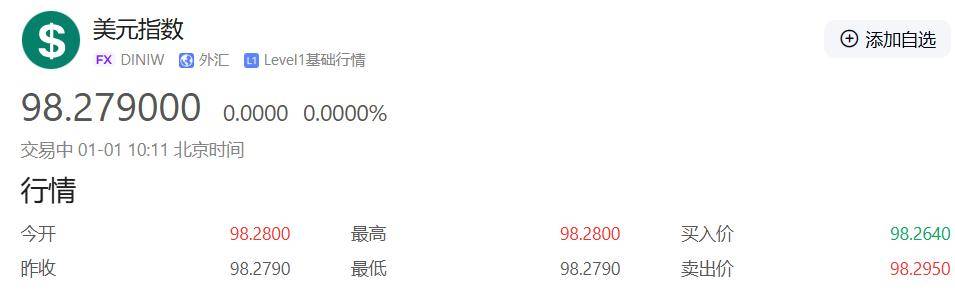
Core Viewpoint - The trend of the RMB exchange rate has become a central topic of concern as the global economic landscape continues to evolve in 2025, with a moderate annual appreciation setting the stage for further gains in 2026 [1] Group 1: RMB Exchange Rate Performance - On the last day of 2025, the onshore RMB to USD exchange rate closed at 6.994, appreciating significantly by 4.2% compared to 7.299 at the end of 2024 [2] - The appreciation of the RMB in 2025 is attributed to multiple factors, primarily the depreciation of the USD, which saw a decline of 9.4% as indicated by the USD index [2] - The controlled pace of RMB appreciation is likely a result of proactive adjustments by the People's Bank of China (PBOC) to mitigate the impact on export competitiveness [3] Group 2: Economic and Policy Implications - The PBOC aims to maintain a moderate appreciation of the RMB to avoid exacerbating cost pressures on Chinese exporters, especially in light of increased tariffs under the Trump administration's "reciprocal tariff" policy [3] - The moderate appreciation of the RMB in 2025 is expected to create broader space for future gains, supported by the Federal Reserve's shift towards a more accommodative monetary policy starting December 2025 [5] - The depreciation of the USD as a global reserve currency is anticipated to contribute to the relative appreciation of other currencies, including the RMB [5] Group 3: Future Outlook - There is a solid foundation for continued RMB appreciation in 2026, although significant gains are unlikely due to expected limited rate cuts by the Federal Reserve [7] - The RMB exchange rate is projected to fluctuate within a range of 6.7 to 7.1 throughout 2026, with potential for a brief dip to around 6.6 in extreme scenarios [9] - The accuracy of these predictions will depend on various intertwined factors, including economic fundamentals, policy adjustments, and international financial market dynamics [11]

2025年债市复盘系列之一:再见2025:利率债复盘
Huachuang Securities· 2025-12-31 12:04
1. Report Industry Investment Rating There is no information provided regarding the industry investment rating in the given documents. 2. Core View of the Report In 2025, the bond market ended two consecutive years of rapid decline and entered a low - level oscillation. Due to the over - pursuit of interest rate cut expectations and capital gain games at the end of 2024, which over - exhausted the market's upward potential, the yield at the beginning of 2025 was at the annual low. Although the tariff disturbances in early April provided temporary support to the bond market, in the second half of the year, along with the repair of the stock - bond ratio and regulatory disturbances in the fund market, the bond market gradually adjusted, with the adjustment intensifying towards the end of the year and a significant increase in the ultra - long end. Driven by three main lines of central bank policy regulation, tariff games, and the stock - bond seesaw, the yield showed an "N - shaped" trend, and the ultra - long - term spread broke out of the low - level oscillation range, with the 30 - 10y Treasury term spread returning to the level of the second half of 2022 [5][8]. 3. Summary by Directory 3.1 Annual Summary: Fast Bull Pause, Low - Level Balance - In 2025, the bond market shifted from a fast - bull market to a low - level balance. The yield started at a low point due to the over - speculation at the end of 2024. Throughout the year, it was affected by central bank policies, tariff games, and the stock - bond seesaw, showing an "N - shaped" trend [5][8]. - From January to March, the central bank tightened funds, causing the yield to rise to the annual high of 1.90%. From April to June, tariff disturbances and growth - stabilizing policies led to a narrow - range oscillation around 1.65%. From July to September, the stock - bond seesaw and regulatory new rules triggered an upward adjustment in yield. From October to the end of the year, factors such as tightened fund regulation, weakened monetary easing expectations, and supply - demand pressure in the ultra - long end led to a significant upward adjustment in the bond market [9]. 3.2 Stage Review: Central Bank → Tariff → Stock - Bond Seesaw, Yield "N - shaped" Trend 3.2.1 First Stage: Continuation of the Late - 2024 Rush - Ahead Market, Bond Market Reached the Annual Low - From late November 2024 to early January 2025, the reduction of non - bank inter - bank deposits in late November 2024 removed interest rate blockages, and the monetary policy turned "moderately loose". With the year - end rush - ahead by institutions, the yield of the 10 - year Treasury active bond dropped below 1.6% to 1.59% in early January 2025 [5][12]. 3.2.2 Second Stage: Central Bank's Tightening of Funds Broke the Interest Rate Downward Inertia, Bond Market Corrected to the Annual High - From early January to the end of March 2025, the central bank tightened funds to address long - term interest rate risks and "fund idling". The bond market returned to a positive carry situation, and the 10 - year Treasury yield rose from 1.60% to the annual high of 1.89%. After the tax period and at the end of the quarter, with the central bank's active liquidity injection, the bond market stabilized and recovered to around 1.80% [13][18]. 3.2.3 Third Stage: Tariff Friction and Growth - Stabilizing Policy Game, Yield Declined and Then Turned to Oscillation - From April to June 2025, the "reciprocal tariff" imposed by the US on China in early April and the subsequent domestic growth - stabilizing policies led to a rapid decline in yield, which then entered a narrow - range oscillation around 1.65%. In May, after the implementation of policies such as interest rate cuts and reserve requirement ratio cuts, the bond market showed a "buy - the - rumor, sell - the - news" pattern, and the yield oscillated upwards. In June, with the central bank's release of a "loose money" signal and other factors, the yield dropped slightly to 1.65% [2][19]. 3.2.4 Fourth Stage: "Anti - Involution" and Regulatory New Rules Triggered Adjustment Pressure, Stock - Bond Seesaw Effect Prominent - From July to September 2025, after the weakening of external disturbances in July, the "anti - involution" policy made the stock - bond seesaw effect prominent, and the news of new fund sales rules increased the concern of bond fund redemptions. The bond market entered a period of headwinds, with the yield rising significantly and the curve steepening [25]. 3.2.5 Fifth Stage: The Year - End Consensus Expectation Was Broken, Bond Market Oscillated Weakly - From October to December 2025, after the escalation of tariff frictions in October, concerns about fund regulation led to preventive redemptions of bond funds by institutional investors. The central bank's bond - buying scale was lower than expected, and risk events in the real estate market and supply - demand pressure in the ultra - long end led to a significant upward adjustment in the bond market, with the 30 - year Treasury leading the decline and the curve steepening [30].