安全管控

Search documents
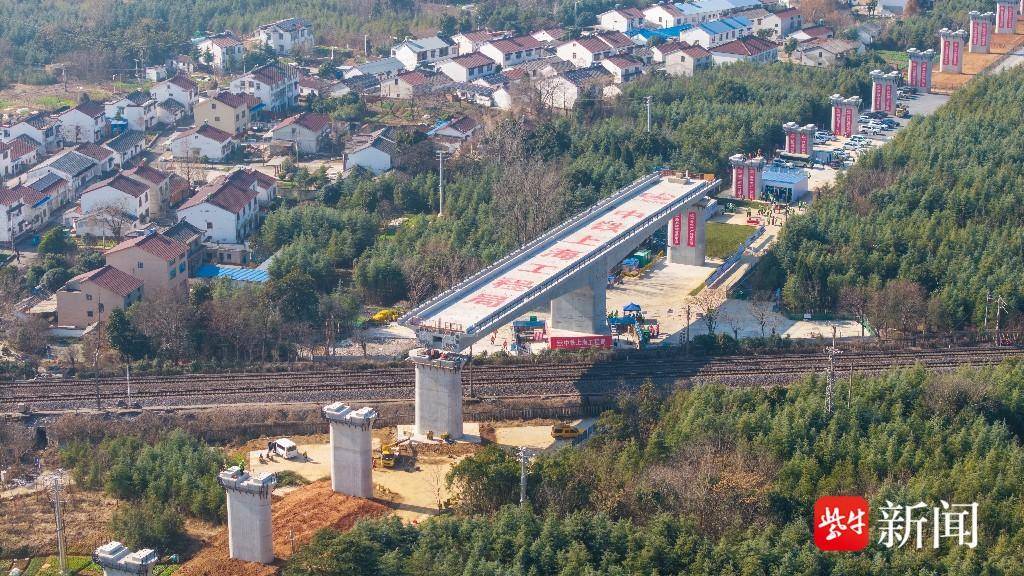
北沿江高铁南京特大桥跨京沪铁路 转体梁成功转体
Yang Zi Wan Bao Wang· 2026-01-08 03:48
Core Viewpoint - The construction of the Shanghai-Nanjing-Hefei High-Speed Railway (North Jiangsu High-Speed Railway) has achieved a significant breakthrough with the successful rotation of a 6,300-ton turning beam, facilitating the subsequent box girder installation [1][5]. Group 1: Construction Details - The continuous beam measures 97.5 meters in length and is designed as a prestressed concrete box girder with a variable height and cross-section [3]. - The construction utilized a turning method, where the beam was first cast parallel to the railway on one side, with the 0 block constructed using a formwork support system, while the remaining segments were cast using a cantilever method [3]. - The entire beam segment was symmetrically pulled using two 200-ton jacks during the railway's operational "window period," achieving a precise 60-degree counterclockwise rotation to its designated position [3][5]. Group 2: Project Management and Safety - To ensure the successful execution of the turning operation, the project management team conducted thorough planning and multiple optimizations of the construction scheme, coordinating with local meteorological departments to select an optimal date for the operation [5]. - Prior to the turning operation, the beam was allowed to rest for 24 hours, and a monitoring team verified all measurement data and balance status [5]. - Key project elements, including counterweights, sliding tracks, and traction systems, were meticulously checked and signed off by supervisory and construction teams to ensure compliance with standards [5]. Group 3: Strategic Importance - The Shanghai-Nanjing-Hefei High-Speed Railway is a crucial segment of the eastern section of the Chongqing-Lanzhou High-Speed Railway and an important part of the national "Eight Vertical and Eight Horizontal" high-speed railway network along the Yangtze River [6]. - Once completed, the project will establish a rapid new corridor between the Shanghai metropolitan area, Nanjing metropolitan area, and Hefei metropolitan area, significantly enhancing the railway network layout in the Yangtze River region and supporting high-quality development in the Yangtze Economic Belt [6].

交通运输部多措并举迎“战”低温雨雪冰冻天气 全力保通保畅保安全
Yang Shi Wang· 2025-12-24 03:54
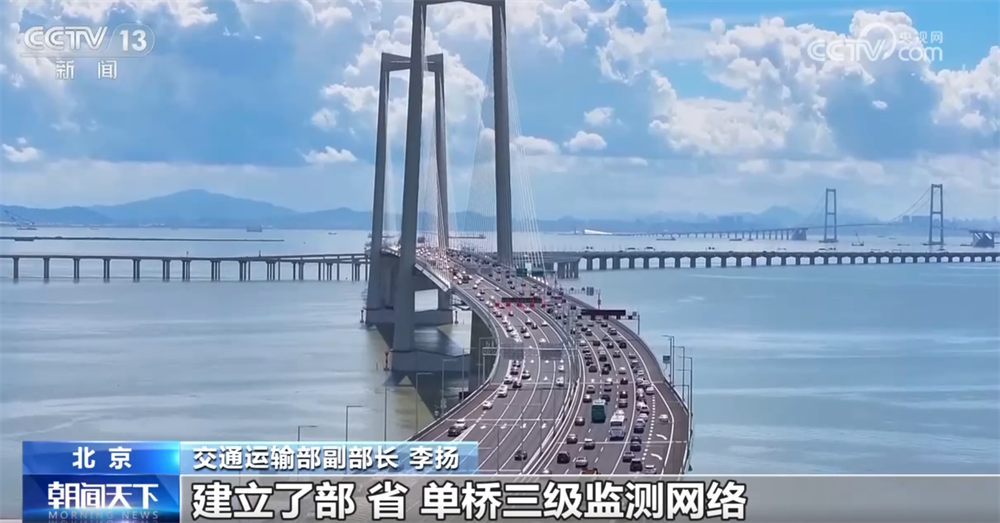
Group 1 - The Ministry of Transport is implementing multiple measures to combat low-temperature, icy, and snowy weather affecting transportation across various regions [1] - A five-level safety control system has been established, covering nearly 380,000 major risk sources, with 14 key governance actions focused on high-risk areas such as passenger buses, tourist coaches, and hazardous goods vehicles [1] - A three-tier monitoring network has been set up for 696 major bridges, with 790,000 "two passengers and one hazard" vehicles and 16,000 passenger and hazardous goods ships equipped with intelligent monitoring systems [1] Group 2 - The Ministry of Transport is preparing for the upcoming New Year and Spring Festival by implementing proactive defense measures to prevent road icing in the south and heavy snowfall in the north [3] - Two lists have been created: one for road sections prone to snow and ice, and another for emergency resource allocation, enhancing collaboration with meteorological and traffic management departments [6] - Five measures have been reinforced, including ice removal, traffic control, vehicle rescue, and service assurance, to ensure road network smoothness and safety for travelers [6]
从“风险辨识”到“文化深植” ——山东能源梁家煤矿走出安全管控能力提升新路径
Qi Lu Wan Bao· 2025-10-22 05:25
Core Insights - Shandong Energy Luli Mining's Liangjia Coal Mine has transformed its safety management approach from reactive to proactive by establishing a "dual prevention" system, enhancing technical support, energizing workforce dynamics, and cultivating a cultural foundation for safety production [1] Group 1: Safety Management Initiatives - The mine has implemented a "dual prevention" system as a key safety management tool, with responsibilities for risk identification cascading from professionals to teams and then to individual groups [1] - A mechanism for risk identification has been established, resulting in the identification of 1,026 risks and the rectification of 261 hazards since the third quarter [1] - A specific plan was developed to address the risk of fault zones in the 4102 working face, utilizing "geophysical exploration first + drilling verification" to resolve challenges in roadway and roof support [1] Group 2: Technical Support and Process Improvement - The mine has initiated a special rectification of belt transportation, focusing on nine projects, with one planned and completed last week [2] - A comprehensive process control approach has been adopted, emphasizing design quality and overall system safety, with daily management, weekly reporting, and monthly assessments to ensure effectiveness [2] - The mine has implemented a "158" safety production standardization improvement project, establishing quantitative indicators for construction quality during tunneling operations [2] Group 3: Workforce Development and Cultural Integration - The mine prioritizes employee skill enhancement through a three-dimensional training system, achieving a 100% participation rate in safety training activities [3] - A "safety concern" management mechanism has been established, providing one-on-one support for 62 individuals to improve their operational standards [3] - The mine promotes a safety culture through various initiatives, including the "Five Hearts" project, which enhances employee satisfaction by addressing 36 livelihood issues [3]
徒骇河上的技术突围
Huan Qiu Wang· 2025-10-10 08:35
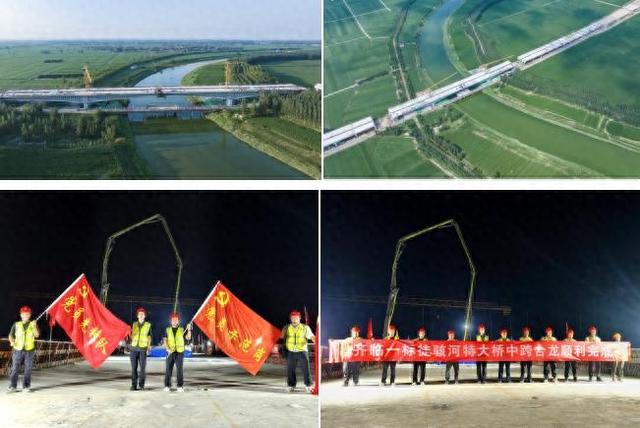
Core Insights - The article highlights the successful application of advanced technology in the construction of the Tuhai River Grand Bridge, which is a critical infrastructure project for the Jinan to Linqing Expressway [1][3][6] Group 1: Technological Innovation - The project team adopted 3D laser scanning technology to enhance measurement efficiency, reducing the time required for adjustments from two days to just a few hours, thus significantly improving operational efficiency [1][3] - The use of 3D scanning allowed for the creation of reverse reality models that were compared in real-time with design BIM models, leading to a 100% acceptance rate for 126 construction segments [3][4] - The introduction of the "N+2 segment block advanced installation of wave-shaped steel web" technique replaced the traditional "N+1" method, resulting in a 45-day reduction in construction time [4] Group 2: Quality Control - The project implemented a Doppler detection system to ensure the quality of high-strength bolts, allowing for rapid identification of non-compliant areas [4] - A quality control team conducts daily site inspections, weekly analyses, and monthly reviews to ensure that every construction phase is thoroughly monitored and validated [4][5] - The project has achieved recognition with seven national invention patents and one international invention patent, along with various provincial and departmental quality control achievements [5] Group 3: Safety Management - The project employs an AI monitoring system to track safety hazards in real-time, focusing on optimizing wind resistance measures for construction equipment [5] - Comprehensive safety training and daily briefings are conducted for high-altitude workers, along with a one-person-one-card management system to monitor qualifications and health [5] - The project has established a multi-dimensional safety management system that includes equipment inspections and weather monitoring to ensure a safe working environment [5][6] Group 4: Economic Impact - The Tuhai River Grand Bridge is expected to enhance regional economic development by improving transportation links in the northwest of Shandong Province [6]
我驻尼泊尔大使馆提醒在尼中国公民和机构遵守安全管控措施
Yang Shi Xin Wen Ke Hu Duan· 2025-09-12 09:51
Group 1 - The Chinese Embassy in Nepal issued a notice regarding security measures and consular services for Chinese citizens in Nepal, highlighting the current security situation and travel restrictions in the Kathmandu Valley [1] - The Nepalese Army announced specific travel restrictions: access is allowed from 6 AM to 11 AM and 5 PM to 7 PM, with a curfew starting at 7 PM until the next morning [1] - The embassy urged Chinese citizens and institutions in Nepal to remain vigilant, monitor local developments, and adhere to security measures while providing emergency contact numbers for assistance [1] Group 2 - Chinese citizens in Nepal facing issues with passport damage, loss, or theft can apply for new documents at the Chinese Embassy and subsequently process visa transfers at the Tribhuvan International Airport or the Nepal Immigration Office [1] - The embassy provided specific operational hours for the Nepal Immigration Office and mentioned a fee of 2 USD along with the requirement of a photocopy of the original passport for processing [1]
园区管理的核心目标是什么?
Sou Hu Cai Jing· 2025-08-13 12:23
Group 1: Operational Efficiency - Enhancing operational efficiency is a core goal in park management, helping companies save time and reduce costs through automated systems for lease management and asset tracking [2] - Digital platforms accelerate client screening and signing processes, with electronic contracts allowing for quick completion, thus streamlining operations [2] - Regularly reviewing processes to identify bottlenecks and utilizing technology tools for optimization can significantly improve efficiency [2] Group 2: Safety Management - Safety management is crucial in preventing issues like fires, theft, or accidents, with smart monitoring systems and electronic access controls enabling real-time monitoring of unusual situations [4] - The use of electronic contracts reduces the risk of document loss or fraud, enhancing the reliability of lease and property management [4][5] - Implementing safety measures such as 24/7 video surveillance and smart access systems improves response times and reduces theft risks [5] Group 3: Asset Lifecycle Management - Asset lifecycle management involves comprehensive tracking from acquisition to disposal, ensuring clarity and efficiency in managing numerous assets [6] - Maintaining detailed records of assets helps in making informed economic decisions regarding maintenance and replacement, ultimately saving costs [6] - Effective management can extend asset lifespan and prevent unnecessary expenditures, contributing to overall cost efficiency [6] Group 4: Digital Transformation - Digital tools are essential for optimizing resource utilization in modern park management, enabling real-time tracking of space usage, energy consumption, and equipment performance [7] - Smart systems can adjust lighting and HVAC based on occupancy, leading to significant energy savings [7] - Efficient lease management and asset maintenance contribute to increased asset value and reduced vacancy rates, enhancing overall profitability [7][8] Group 5: Comprehensive Management Benefits - Integrating lease and asset management reduces vacancy rates and enhances tenant satisfaction through streamlined processes like one-click electronic contracts [8] - Coordinated efforts in leasing and property management attract high-quality tenants, improving service satisfaction and controlling safety risks [8] - Digital tools facilitate efficient resource allocation and lifecycle management, driving continuous appreciation of commercial real estate assets [8]