
工业文化

Search documents
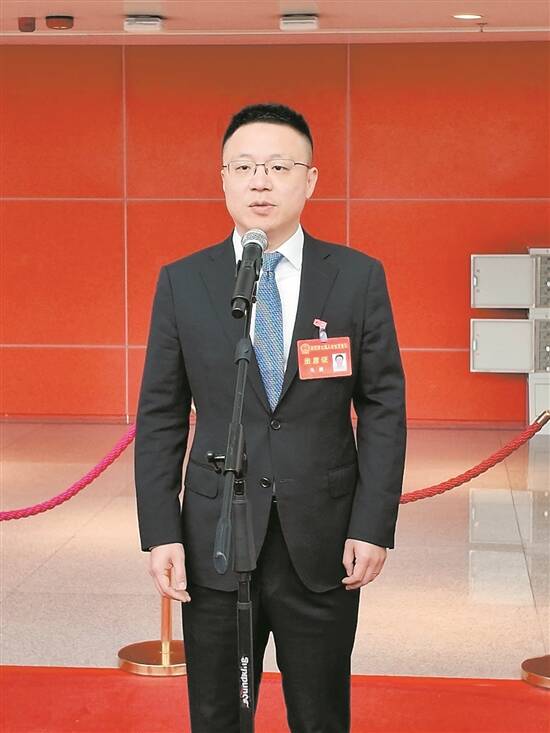
首场“代表通道”亮出好声音
Xin Lang Cai Jing· 2026-02-10 00:32
Group 1 - The representatives emphasize the importance of cultivating future strategic emerging industries in Shenzhen to inject strong momentum for achieving Chinese-style modernization [1][3] - Shenzhen has been promoting the establishment of large scientific facilities and enhancing university research to address shortcomings, creating a unique environment for the development of emerging industries that is globally competitive [5] - There is a focus on leveraging industrial culture, immigrant culture, and Hakka culture, along with introducing popular IP images to enrich cultural spaces and enhance emotional experiences for tourists and citizens [7]

工业和信息化部与中央广播电视总台达成战略合作《中华考工记》创作研讨会举行
Yang Guang Wang· 2026-01-31 02:37
Core Viewpoint - The Ministry of Industry and Information Technology and the China Media Group have signed a strategic cooperation framework agreement and held a seminar for the creation of the large-scale industrial culture program "Chinese Craftsmanship" [1] Group 1: Program Overview - "Chinese Craftsmanship" is the first large-scale industrial culture program jointly launched by the China Media Group and the Ministry of Industry and Information Technology [1] - The program aims to decode the "gene pool" of Chinese industrial civilization and narrate the stories of a major country's industrial development in the new era [1] - Since its launch, the program has achieved a total online exposure of 5.04 billion views, with related Weibo topic readings exceeding 1.63 billion [1] Group 2: Future Plans - The Ministry of Industry and Information Technology and the China Media Group will further strengthen strategic cooperation in areas such as thematic promotion, media integration, and international communication [1] - A series of books titled "Chinese Craftsmanship" will also be compiled and published concurrently with the program's launch [1]
中国(沈阳)工业博物馆宣讲团走进育工社区
Xin Lang Cai Jing· 2026-01-20 21:54
Group 1 - The core theme of the event is "Inheriting Industrial Spirit and Promoting Industrial Culture" [1] - The event was organized by the China (Shenyang) Industrial Museum, featuring a presentation team composed of museum guides and volunteers [1] - The presentation included valuable historical images and narratives highlighting the struggles and achievements of the working class since the founding of New China, such as the creation of the first metal national emblem and the first C620-1 ordinary lathe [1] Group 2 - The museum showcased a selection of representative industrial artifacts and materials in the community [1] - Community residents, especially older builders and their descendants, engaged in a meaningful dialogue with these historical objects, reflecting a connection across time [1]

【热点思考】工业文化涵养职业伦理与职业荣誉的实践路径
Xin Lang Cai Jing· 2026-01-18 19:30
Core Viewpoint - The article emphasizes the importance of industrial culture in nurturing professional ethics and honor, highlighting its role in integrating innovation, integrity, craftsmanship, collaboration, and entrepreneurial spirit into the industrial sector [1][2]. Group 1: Value Generation - Industrial culture fosters professional ethics and honor through four pathways: low-carbon innovation and digital empowerment to reduce ecological and safety risks; optimizing structural quality to enhance product and service value; solidifying behavioral boundaries through standards and contracts; and amplifying social recognition through exemplary workers [1]. - The transformation of red industrial culture's values into productive forces is crucial, reinforcing ideals such as self-reliance, hard work, and patriotism among industrial workers [1]. Group 2: Systematic Mechanism - A closed-loop mechanism is proposed to create a systemic synergy, embedding industrial culture values into executable systems, processes, and data frameworks, ensuring a positive cycle from concept to behavior to evaluation [3]. - The mechanism includes establishing comprehensive operational standards, promoting quality traceability, and integrating vocational skills with lifelong learning and honor incentives [3]. Group 3: Cultural Immersion - Innovative methods to enhance cultural immersion involve integrating red industrial culture into professional ethics through immersive classrooms, utilizing industrial heritage sites and modern technologies like VR/AR to increase engagement [4]. - Collaborative efforts between schools and enterprises are encouraged to implement dual mentorship and apprenticeship systems, allowing students to internalize values and develop skills in real production contexts [4]. Group 4: Evaluation and Improvement - A measurable evaluation system is essential for ensuring the effectiveness of industrial culture initiatives, tracking compliance, quality, innovation, and social recognition metrics [5]. - The evaluation process emphasizes both results and processes, incorporating self-assessment and third-party evaluations to create a feedback loop that links evaluation outcomes with incentives and training opportunities [5].
“生产线”变成“风景线”
Ren Min Ri Bao Hai Wai Ban· 2025-12-05 00:40
Core Viewpoint - The integration of "industry + tourism" is rapidly emerging, breaking traditional industry boundaries and enriching tourism content, while providing significant support for industrial transformation and upgrading [1]. Group 1: Industrial Tourism Development - The number of recognized national industrial heritage sites has reached 264, with nearly 500 at the provincial level, and over 1.7 million industrial artifacts have been surveyed [2]. - Many companies are opening their factory doors to unlock new industrial tourism experiences, allowing visitors to engage in hands-on activities, such as making traditional food products [3]. - The "14th Five-Year Plan" suggests accelerating the construction of a manufacturing powerhouse and promoting deep integration of culture and tourism [4]. Group 2: Market Growth and Predictions - The industrial tourism sector in China is expected to maintain an annual growth rate of 18% over the next five years, with the market size projected to exceed 300 billion yuan by 2029 [5]. - Shandong's Leiling City is leveraging its industrial history and cultural heritage to develop industrial tourism, establishing several museums to enhance cultural and tourism consumption options [6]. Group 3: Government Initiatives - The Ministry of Industry and Information Technology aims to promote the protection and inheritance of industrial culture, explore effective mechanisms for the integration of culture, technology, and industry, and develop new cultural consumption scenarios [7].
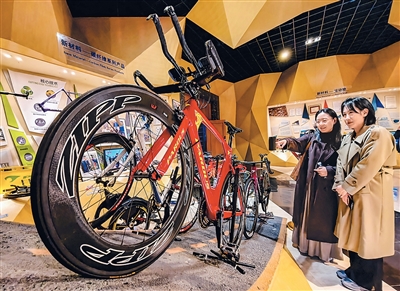
四中全会精神解读·市场最前沿丨“生产线”变“风景线”,解锁工业旅游新体验
Xin Hua She· 2025-12-03 10:49
Core Insights - The integration of "industry + tourism" is rapidly emerging, breaking traditional industry boundaries and enriching tourism offerings while providing significant support for industrial transformation and upgrading [1][2][3] Group 1: Industrial Tourism Growth - Xiaomi's automotive factory has welcomed over 150,000 visitors since its opening in April last year, averaging over 10,000 visitors per month [1] - The industrial tourism sector in China is projected to maintain an annual growth rate of 18% over the next five years, with the market size expected to exceed 300 billion yuan by 2029 [7] Group 2: Cultural and Historical Significance - China has established a comprehensive modern industrial system, resulting in a wealth of historical and cultural heritage, with 264 national industrial heritage sites and nearly 500 provincial sites recognized [3] - The Ministry of Industry and Information Technology is actively promoting the creative transformation and innovative development of industrial heritage and cultural resources [3][7] Group 3: Innovative Experiences - Industrial tourism offers unique experiences, such as hands-on activities in production processes, interactive games, and immersive storytelling, enhancing visitor engagement [4][6] - Companies are increasingly opening their factory doors to the public, creating new scenes and experiences in industrial tourism [3][6] Group 4: Policy and Future Directions - The 14th Five-Year Plan emphasizes the construction of a modern industrial system and the deep integration of culture and tourism, highlighting the importance of developing high-quality tourism products [6][7] - The Ministry of Industry and Information Technology plans to explore effective mechanisms for the integration of culture, technology, and industry, aiming to create new cultural consumption scenarios and cultivate new cultural formats [7]
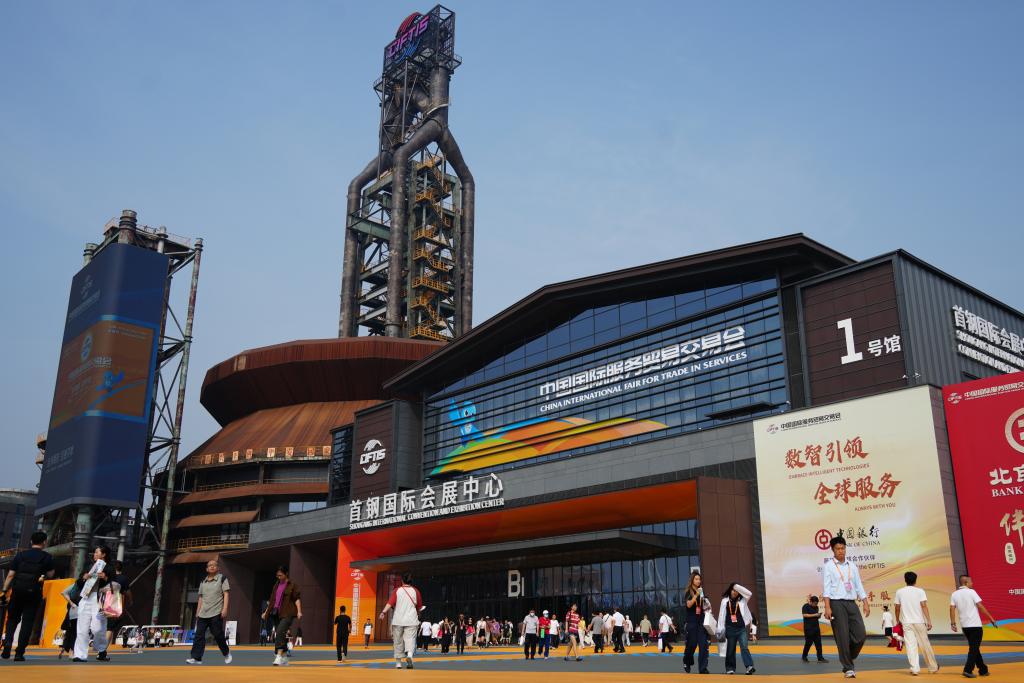
2025工业文化发展大会在沪举办
Zhong Guo Xin Wen Wang· 2025-11-04 17:24
Core Insights - The 2025 Industrial Culture Development Conference was held in Shanghai, highlighting the achievements and future directions of China's industrial culture [1][2] - The Ministry of Industry and Information Technology (MIIT) emphasized the importance of industrial culture as a soft power and its integration with technological innovation and urban renewal [2] Group 1: Achievements in Industrial Culture - Since the establishment of New China, China has rapidly developed a comprehensive modern industrial system, recognizing 264 national-level industrial heritage sites and nearly 500 provincial-level sites [1] - Over 1.7 million industrial versions have been surveyed, indicating significant progress in the preservation and promotion of industrial heritage [1] Group 2: Future Directions and Trends - The development of industrial culture is moving beyond mere heritage protection to a deeper integration with technology, industry renewal, and urban development, characterized by systematic construction, digital empowerment, and ecological integration [2] - Six new trends were identified: continuous social consensus, revitalization of industrial cultural resources, deep integration of technology and culture, accelerated cultural empowerment of industries, booming industrial tourism, and innovative communication methods [2] Group 3: Conference Structure and Highlights - The conference featured a theme of "Industrial Elegance and Shared Achievements," organized by MIIT's Industrial Culture Development Center and Shanghai's Economic and Information Technology Commission [3] - The event included an opening ceremony, keynote speeches, four parallel sessions, and a supporting exhibition, showcasing significant achievements in the field of industrial culture [3]
全国已认定国家工业遗产264项
Xin Hua She· 2025-11-04 14:10
Core Viewpoint - The Ministry of Industry and Information Technology has made significant progress in the creative transformation and innovative development of industrial heritage and cultural resources, with 264 national industrial heritage sites and nearly 500 provincial sites recognized to date [1][1][1] Group 1: Industrial Heritage and Cultural Resources - The Ministry has completed a survey of over 1.7 million industrial versions, highlighting the extensive efforts in cataloging industrial heritage [1][1][1] - The future focus will include in-depth research on industrial cultural resources and the establishment of a tiered protection system [1][1][1] Group 2: Development Initiatives - Support will be provided for localities to build industrial museums and promote the industrial design industry to enhance industrial aesthetics [1][1][1] - The aim is to create new cultural consumption scenarios and industrial clusters [1][1][1] Group 3: Event Overview - The 2025 Industrial Culture Development Conference, themed "The Charm of Industry: Together We Forge a New Chapter," was co-hosted by the Ministry and the Shanghai Municipal Economic and Information Commission [1][1][1] - The event included an opening ceremony, keynote speeches, four parallel sessions, and a supporting exhibition [1][1][1]
四川省工业文化协会第一届理事会第二次(扩大)会议暨第一届四川工业文化研讨会在成都举办
Zhong Zheng Wang· 2025-10-20 14:34
Core Viewpoint - The development of industrial culture in Sichuan is essential for promoting new industrialization and building modern Chinese culture, with significant potential due to the province's rich industrial heritage resources [1][2]. Group 1: Government Initiatives - The Sichuan Provincial Economic and Information Technology Department emphasizes the importance of inheriting, protecting, and promoting industrial culture as a guarantee for new industrialization [1]. - Sichuan has over 90 industrial heritage sites and 24 industrial museums, with 20 recognized as national industrial heritage [1]. - The government aims to enhance the development of industrial culture in Sichuan, which currently lags behind the eastern coastal regions [1]. Group 2: Association's Role - The Sichuan Provincial Industrial Culture Association aims to strengthen political construction and improve service capabilities for government, enterprises, and members [2]. - The association plans to innovate platforms and integrate resources from government, enterprises, and universities to promote industrial culture [2]. - The association has approved the revised charter and management system, established an expert committee, and added new vice-presidents and directors [2]. Group 3: Research and Development - The association has conducted various research projects related to industrial culture and has collaborated with over 30 institutions and enterprises [3]. - The focus is on five integrations: industrial culture with industry, art, technology, finance, and history to drive high-quality development [3]. - Experts presented on topics such as the revitalization of industrial heritage and the role of industrial culture in economic development during the conference [3].
2025年中央广电总台中秋晚会将融入鲜明的四川风情与德阳特色 月从蜀道升
Si Chuan Ri Bao· 2025-10-04 02:02
Core Theme - The 2025 Mid-Autumn Festival Gala will be themed "The Moon Rises from the Shu Road, People Become Round in the Mirror," showcasing various elements of Sichuan culture and local cuisine, including hot pot and dry pot [1][2]. Venue and Structure - The main stage is located by the Xuan Zhu Lake in Deyang, chosen for its natural beauty and ideal setting for the gala [2]. - The gala will be divided into three main chapters: "Mountain Moon Full," "This is My Hometown," and "A Round Autumn," inspired by classical poetry [2]. Cultural Elements - The event will incorporate multiple aspects of Sichuan's local culture, including traditional opera, ancient poetry, intangible cultural heritage, and local delicacies [4]. - Significant cultural symbols such as the Sanxingdui archaeological site will be featured, highlighting the rich history and industrial heritage of Deyang as a "Heavy Equipment Capital" [4]. Artistic Presentation - A unique program will blend Sanxingdui bronze artifacts with AI technology, creating a dialogue between ancient civilization and modern innovation through live performances [4]. - The gala will also feature a strong industrial theme, contrasting with vibrant youth songs to showcase the power of industrial culture and its legacy [5]. Tribute to Heroes - The gala will pay homage to Huang Jiguang, a national hero from Deyang, in recognition of the 75th anniversary of the Chinese People's Volunteer Army's participation in the Korean War [5].