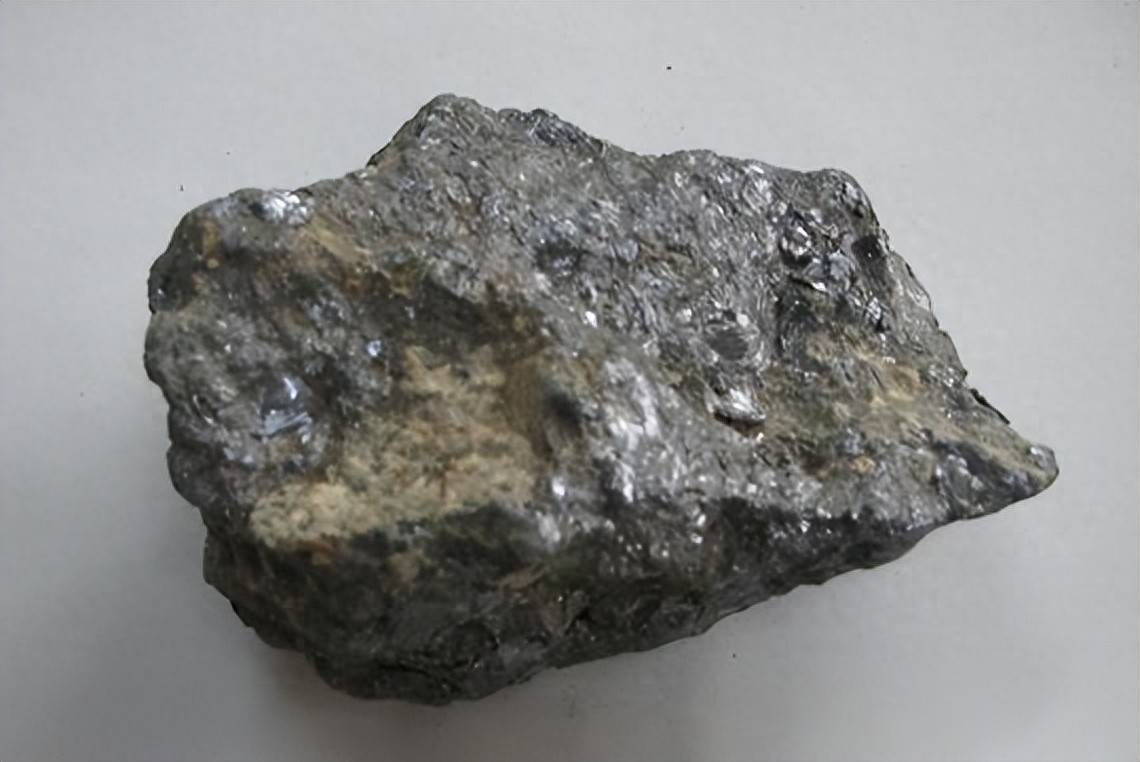
工业维生素

Search documents
50天暴涨80%!白银飙升至94美元,三大推手曝光!这波行情我们普通人还能追吗?
Sou Hu Cai Jing· 2026-01-19 14:27
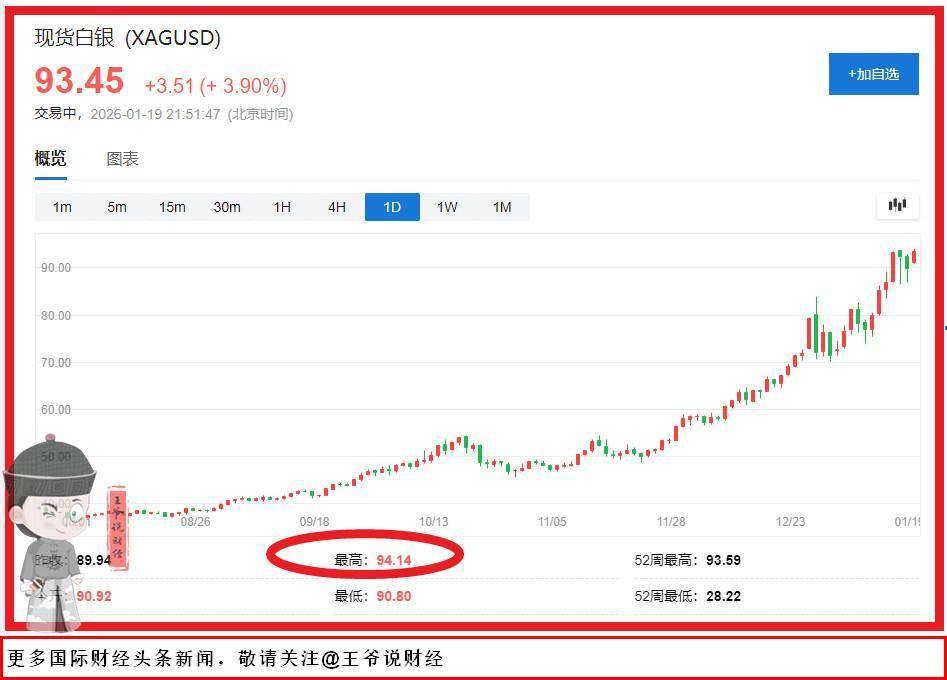
Core Viewpoint - The silver market has experienced a dramatic surge, with prices reaching historical highs, driven by multiple factors including geopolitical tensions, monetary policy, and supply-demand dynamics [1][3][15]. Group 1: Price Movement - On January 19, 2026, the international spot silver price surged past $94 per ounce, marking a daily increase of over 5% and reaching a peak of $94.36, which is a historical high [1]. - In just two months, silver prices have nearly doubled, increasing by over 80% from around $50 [3]. Group 2: Driving Forces Behind the Surge - The first driving force is geopolitical tensions, particularly Trump's announcement of a 10% tariff on eight European countries, which has heightened fears of a global trade war and led to increased demand for silver as a safe-haven asset [6]. - The second factor is the dovish stance of the Federal Reserve, which has indicated potential interest rate cuts, causing the dollar index to decline and making silver more attractive as an investment [8]. - The third and most critical factor is the increasing demand for silver in various industries, including solar panels, AI data centers, and electric vehicles, while mining output has not significantly increased, leading to a supply-demand gap [9][10]. Group 3: Future Outlook - There are mixed opinions on the future of silver prices. Some analysts believe that the current gold-silver ratio indicates that silver is undervalued and has significant upside potential, with some institutions projecting target prices as high as $5,000 for gold, suggesting even greater potential for silver [12]. - Conversely, there are concerns about the current market being overbought, with technical indicators suggesting a potential correction, cautioning investors against chasing prices [13]. - The broader context indicates that silver is becoming a strategic resource in the era of de-dollarization and technological advancement, positioning it as a vital asset in the industrial and green energy sectors [15].

深海挖矿、全球囤货,日本折腾13年仍逃不出中国稀土手掌心
Sou Hu Cai Jing· 2026-01-15 12:12
Group 1 - The article discusses Japan's long-term efforts to reduce its dependence on Chinese rare earth elements, which have not yielded the desired results, as evidenced by high costs and reliance on Chinese technology [1][10][21] - Rare earth elements, a group of 17 metals, are crucial for modern industries, but their distribution and processing are highly imbalanced globally, with China dominating both resource availability and processing capabilities [3][7][8] - Japan's attempts to establish a self-sufficient rare earth supply chain have included global mining investments, technology recycling, and ambitious deep-sea mining projects, but these efforts have faced significant challenges and limitations [12][14][20] Group 2 - Japan's "rare earth anxiety" stems from a past crisis in 2010 when tensions with China led to a drastic reduction in rare earth exports, highlighting the need for supply chain security [10][21] - Despite investing heavily in alternative sources and technologies, Japan's actual dependence on China for critical heavy rare earths remains above 90% [21][23] - The global landscape shows that attempts to decouple from China in the rare earth sector are fraught with difficulties, as other countries, including the U.S., face similar challenges in establishing competitive processing capabilities [23][25] Group 3 - China's dominance in the rare earth market is attributed to a combination of resource endowment, technological advancement, and established industrial scale, creating high barriers for other countries to replicate [25][27] - The comprehensive industrial ecosystem in China, from mining to processing, allows for cost efficiencies that foreign competitors struggle to match due to regulatory and environmental challenges [27][29] - The environmental costs associated with rare earth processing in China have been internalized, affecting the overall cost structure and competitiveness of the industry [29][31]

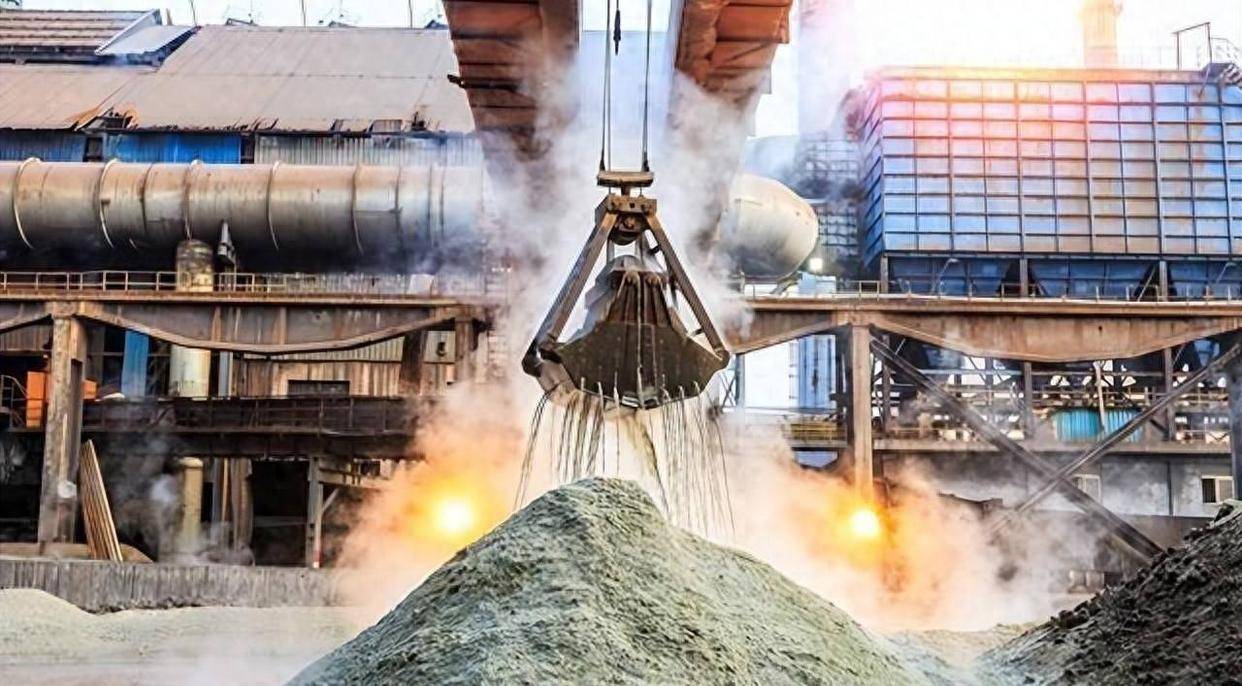
中国坐拥“工业维生素”,钼矿储量震惊世界!芯片军工全靠它
Sou Hu Cai Jing· 2025-07-07 02:46
Core Insights - Molybdenum, a metal 65 times rarer than lithium, is crucial for various industrial applications and is predominantly found in China, which holds 38.7% of the world's molybdenum reserves [1][3]. Industry Overview - Molybdenum has a high melting point of 2620°C and is essential in enhancing the strength of steel alloys, with just 0.15% addition increasing strength by 30% [3]. - The metal is used in high-temperature applications, such as rocket engines, and in medical imaging technologies, showcasing its versatility [3][5]. Market Dynamics - The price of molybdenum surged to over 3200 yuan per ton in 2023, nearly tripling in six years, driven by a 19% drop in Chilean production and a 9.5% increase in Chinese output [5]. - China's implementation of export controls starting next year is expected to create urgency among international buyers, potentially leading to a 40% price increase [5]. Technological Advancements - Recent breakthroughs in chip technology using molybdenum disulfide have led to the development of flexible chips with significantly lower power consumption compared to silicon chips, paving the way for advanced applications in human-machine integration [5][7]. - Chinese engineers are innovating in the production of molybdenum thin films for flexible displays, indicating a shift towards high-tech applications of this metal [7].