
工艺革新

Search documents
2026黄金市场消费趋势洞察
Sou Hu Cai Jing· 2026-02-05 14:41
Market Overview - The Chinese jewelry market shows strong demand resilience and steady growth, with a compound annual growth rate (CAGR) of 7.2% from 2018 to 2023, and is expected to exceed 1.14 trillion yuan by 2028 [16][18] - Gold maintains its dominant position in the Chinese jewelry market, accounting for over 50% of the market share in 2018 and projected to exceed 60% by 2028, with a high growth rate of 9.4% from 2018 to 2023, significantly outpacing the overall industry [18][19] Consumer Insights - Consumer decision-making in gold purchases is driven by a dual focus on "rational value preservation" and "emotional aesthetics," with a notable rise in self-wearing demand among younger consumers and women [30][34] - The purchasing structure reflects a coexistence of "low-price high-frequency" and "high-price low-frequency" consumption, indicating a market upgrade towards high-margin premium products [37] Industry Trends - The price of gold has seen a steep increase, with the Shanghai Gold Exchange (SGE) gold price rising over 180% since July 2021, leading to higher retail prices for gold jewelry, which have reached 1,436 yuan per gram [20][21] - Innovations in gold craftsmanship, such as 3D/5D hard gold and traditional techniques, are reshaping market dynamics, catering to consumer preferences for lightweight and fashionable designs [24][25] - Tax policies are aligning with the dual attributes of gold as both a commodity and a financial asset, supporting the industry's growth [22][23]


LiFSI(双氟磺酰亚胺锂)不仅仅是添加剂
猛兽派选股· 2025-12-24 03:15
Core Viewpoint - LiFSI (Lithium bis(fluorosulfonyl)imide) is transitioning from a performance-enhancing additive to a core material in high-end battery formulations, with its usage in leading battery manufacturers increasing from 5% to 15% as the industry moves towards high-nickel ternary, fast-charging, and solid-state batteries [1] Group 1: Advantages and Shortcomings of LiFSI - Core advantages include high efficiency and safety, with an ionic conductivity of 10.2 mS/cm at 25°C, which is 15% higher than traditional LiPF₆, and a capacity retention rate of 82.3% after 1000 cycles with high-nickel cathodes [3] - LiFSI remains conductive at -40°C, addressing range reduction issues for electric vehicles in cold climates, and shows excellent compatibility with silicon-carbon anodes and high-voltage cathodes above 4.4V, making it a standard material for 800V platforms [4] - As a primary salt, LiFSI can create high-concentration electrolytes, meeting the interface control needs of semi-solid batteries, with CATL's Kirin battery requiring at least 20% addition [5] - Current production costs are high, ranging from 120,000 to 200,000 yuan per ton, which is 2-3 times that of LiPF₆, despite a significant decrease from 800,000 yuan per ton in 2021 [6] - There is a risk of aluminum foil corrosion at high voltages, necessitating the use of additives like LiPO₂F₂ or blending with LiPF₆, complicating formulations [7] - The synthesis process is complex, requiring multiple reactions and a product purity of over 99.99%, with metal impurities needing to be controlled below 5 ppm [8] Group 2: Capacity Landscape - The domestic LiFSI market is highly concentrated, with over 85% market share held by five companies, including Tianqi Materials and Dongyue Group, as of Q3 2025, with effective capacity reaching 32,000 tons [9] - Tianqi Materials leads the industry with a capacity of 30,000 tons, expected to expand to 90,000 tons by 2026, benefiting from a cost advantage of 15% due to its integrated supply chain [10] - Dongyue Group operates at full capacity with 8,000 tons, achieving over 90% self-sufficiency in intermediates and maintaining top-tier impurity control [11] - New Zhongbang and Yongtai Technology focus on high-end markets with capacities of 5,000 tons and 6,000 tons, respectively, with the latter reducing energy consumption by 30% through continuous flow processes [12] - By 2026, planned domestic capacity is expected to exceed 50,000 tons, but only 30% will be high-end electronic-grade, leading to price competition in mid-to-low-end products [13] Group 3: Development Pathways - In the short term (2025-2027), LiFSI is expected to penetrate the market as an additive, increasing its proportion in power batteries from 8.5% to 20%, with high-end consumer electronics penetration exceeding 68% [15] - In the medium term (2028-2030), the demand for LiFSI as a primary salt will grow due to the mass production of semi-solid batteries, with usage in 4680 cylindrical batteries rising to over 5% per ton [16] - In the long term (post-2030), LiFSI is anticipated to adapt to new scenarios such as sodium-lithium hybrid batteries and hydrogen energy storage, with global demand potentially exceeding 200,000 tons [18] Group 4: Upstream and Downstream Dynamics - The upstream supply chain faces constraints, particularly with chlorosulfonic acid, which is essential for LiFSI production, leading to a 50% price surge to 2,050 yuan per ton due to increased demand [20] - The domestic effective capacity for chlorosulfonic acid is locked at 565,000 tons, with environmental approvals causing supply gaps, while Kaisheng New Materials monopolizes 40% of the market with 150,000 tons [20] - The downstream battery manufacturers are shifting from passive procurement to joint development, customizing LiFSI formulations to suit silicon-carbon anodes and solid electrolytes, with the average mixing ratio reaching 8.5% in 2024, up 6 percentage points from 2022 [22] - Three pathways for overcoming bottlenecks include upstream integration of raw materials, promoting process innovations, and establishing green approval channels for chlorosulfonic acid production [23][24][25] Conclusion - The evolution of LiFSI reflects the lithium battery industry's shift towards higher energy density and safety, with short-term raw material constraints supporting industry growth, while long-term leaders with integrated capabilities and technological barriers are expected to dominate [27]


小创新撬动大效益,山东港口日照港三公司助推木材业务降本增效
Qi Lu Wan Bao· 2025-11-26 04:07
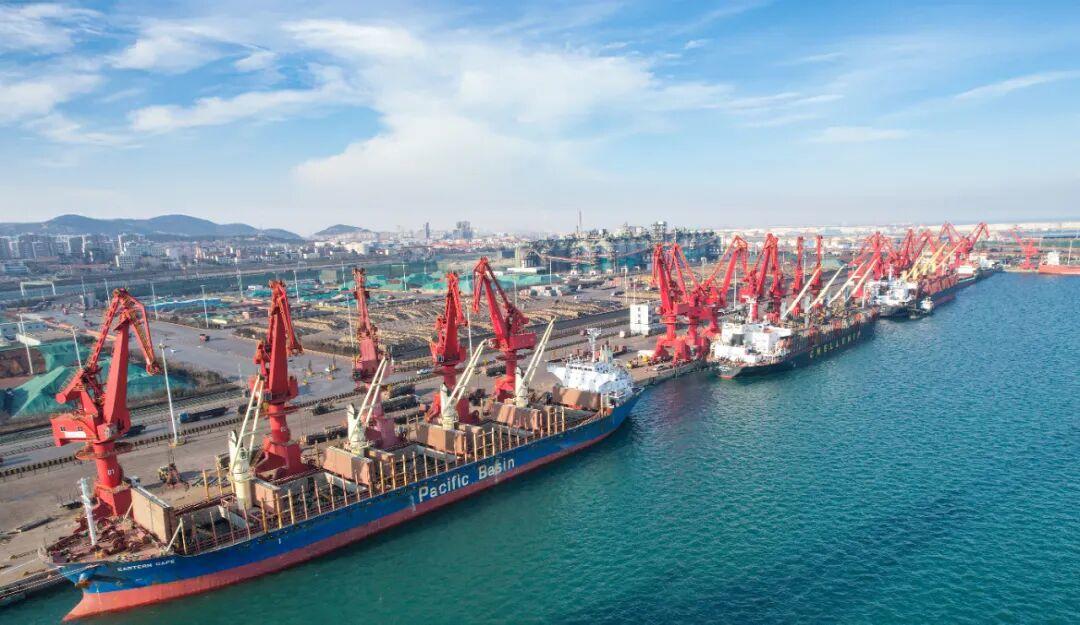
Core Viewpoint - The article highlights the innovative operational improvements at Shandong Port Rizhao Port, specifically in the timber handling process, which have significantly enhanced efficiency and reduced costs. Group 1: Operational Innovations - The "half-open door" operation method has been implemented to optimize the entry and exit of wood handling machinery, reducing the time required for mechanical loading by over 50% [3][4]. - The new method allows for a more efficient workflow, addressing the pressure from increasing operational volumes and customer demands for higher efficiency [4][5]. - The innovation stems from careful observation and problem-solving, leading to the development of a ramp using raw wood that provides sufficient friction and allows for quick deployment [7]. Group 2: Efficiency Gains - The new operational techniques have resulted in a time savings of nearly 2 hours per hold, which is crucial for the overall efficiency of the port and reduces logistics costs for clients [4][7]. - Additional innovations, such as the "raw wood direct drop" method, have simplified the loading and unloading process into three steps, increasing efficiency by 30% [10]. - The implementation of a smart inventory system has improved the efficiency of inventory management by over 60%, allowing for more streamlined operations [10]. Group 3: Future Outlook - The company aims to continue its focus on cost reduction and efficiency improvements, emphasizing the importance of innovation and process optimization for sustainable growth [8][10]. - The commitment to enhancing operational capabilities is expected to contribute to the overall development of Shandong Port's timber business, with a focus on maintaining a competitive market position [10].

一季度钢铁行业运行平稳 141家企业完成超低排放改造
Yang Shi Wang· 2025-05-11 00:22
Core Viewpoint - The Chinese steel industry is experiencing stable production and operational performance in the first quarter of the year, with significant year-on-year growth in steel output, laying a solid foundation for positive development throughout the year [1]. Group 1: Production and Performance - In the first quarter, China's steel production exceeded 350 million tons, marking a year-on-year increase of 6.1% [1]. - The crude steel production reached 259 million tons, with a growth of 0.6%, while pig iron production was 216 million tons, up by 0.8% [1]. - The China Iron and Steel Association indicated that the industry's operational performance has improved compared to the previous year [1]. Group 2: Industry Transformation and Environmental Initiatives - The steel industry is currently in a critical period of transformation and upgrading, focusing on green and low-carbon development [1]. - As of April 20, 2025, 141 steel enterprises have completed ultra-low emission transformations, covering crude steel capacity of approximately 591 million tons [3]. - The industry is shifting from a linear "resource-product" model to a closed-loop model of "resource-product-recycled resource" [3]. Group 3: Future Goals and Achievements - By the end of this year, key regional steel enterprises are expected to complete their ultra-low emission transformations, establishing the world's largest clean steel production system [4]. - Over the past year, China has eliminated 300 million tons of outdated steel production capacity, with over 45% of crude steel capacity undergoing ultra-low emission transformations, significantly reducing major pollutants by over 75% [4]. - The goal is for over 80% of steel production capacity to complete the transformation by the end of 2025 [4].