
币股联动

Search documents
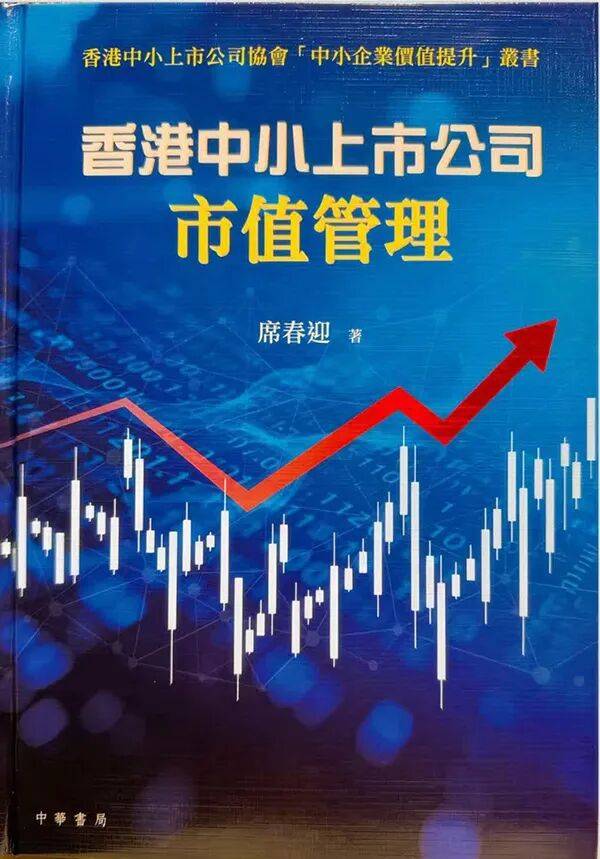
价值重塑与格局跃迁:评席春迎博士新著《香港中小上市公司市值管理》
Sou Hu Cai Jing· 2025-12-08 07:52
Core Insights - The article highlights the structural challenges faced by small and medium-sized listed companies in Hong Kong, which account for over 80% of the total number of listed firms but struggle with low valuations, low liquidity, and low attention, creating a "three lows dilemma" [1][7][9] Group 1: Book Overview - Dr. Xi Chunying's new book, "Value Management of Hong Kong Small and Medium-Sized Listed Companies," serves as a strategic guide that combines macro perspectives, systematic thinking, and practical experience [3][4] - The book aims to provide solutions for entrepreneurs, investors, and policymakers seeking to navigate the challenges of value management in the context of Hong Kong's capital market [4][6] Group 2: Author's Background - Dr. Xi Chunying has a rich background that integrates academia and practical experience, having held significant positions in both educational institutions and capital markets [5][6] - His extensive experience in investment banking and entrepreneurship provides him with unique insights into the complexities of corporate management and value creation [5][6] Group 3: The "Three Lows Dilemma" - The book identifies the "three lows dilemma" as a critical issue for small and medium-sized companies: low valuations, low liquidity, and low attention [7][9] - Low valuations are attributed to the market's preference for stable, cash-rich large-cap stocks, leading to significant undervaluation of smaller firms, even those with growth potential [8][9] - Low liquidity results from the lack of institutional interest in small-cap stocks, causing trading volumes to dwindle and making it difficult for these companies to raise capital [8][9] - Low attention from sell-side research firms further exacerbates the situation, as analysts focus on larger stocks, leaving many small companies without adequate market coverage [8][9] Group 4: Value Management Framework - The book redefines "value management" as a long-term strategic process focused on value creation, discovery, and maintenance, rather than short-term price manipulation [10][11] - Value creation is emphasized as the foundation of value management, requiring strong operational performance and governance [11] - Value discovery involves effectively communicating a company's intrinsic value to the market through transparent information disclosure and investor relations [11] - Value maintenance focuses on stabilizing market value during irrational fluctuations through measures like share buybacks and clear communication [12] Group 5: Strategic Growth Pathways - The book outlines a strategic blueprint for companies to transition from a "billion-dollar mindset" to a "trillion-dollar framework," emphasizing the need for a shift in thinking and growth strategies [13][14] - Three pathways for growth are proposed: internal growth, acquisition-driven expansion, and platform-based scaling [15][16] - Internal growth focuses on refining core business operations and building a strong brand [15] - Acquisition-driven strategies are highlighted as a means to overcome industry limitations and achieve rapid growth through strategic synergies [16] - Platform-based expansion involves creating ecosystems that leverage core competencies to drive multiple business lines [16] Group 6: Practical Tools and Innovations - The book provides a comprehensive toolbox for value management, including traditional methods like share buybacks and investor relations management [17] - It explores innovative financial models such as tokenized equity and asset tokenization to enhance liquidity and valuation for small companies [18][19] - The "AI Hong Kong Stock Connect" platform is introduced as a practical application of the book's theories, aiming to connect investors and companies through AI and big data [20][21] Group 7: Conclusion - Dr. Xi Chunying's work is positioned as a significant contribution to the understanding of value management for small and medium-sized companies in Hong Kong, offering both theoretical insights and practical solutions [22][24] - The book serves as a guide for entrepreneurs, investors, and policymakers, aiming to foster a more inclusive and efficient capital market ecosystem [22][24]

星太链集团与Starcoin Foundation订立谅解备忘录
Xin Lang Cai Jing· 2025-10-14 00:28
Core Viewpoint - Starcoin Foundation intends to issue Starcoin tokens, with a distribution model based on existing shareholdings in the company, marking a significant step in integrating traditional finance with blockchain technology [1][2] Group 1: Company Overview - Starcoin Foundation is a non-profit organization established under the laws of the Republic of Panama, focusing on smart contract key management, DAO governance, and token custody for project development and operations [1] - The company has entered into a memorandum of understanding with Starcoin Foundation to initiate a token issuance project, which is the first of its kind directly initiated and recognized by a listed company in Asia [1] Group 2: Token Issuance Details - The token issuance will be based on a model where shareholders will receive one Starcoin token for every ten existing shares held, establishing a direct link between traditional equity and digital assets [1] - Each Starcoin token will be backed by USD assets, aiming to create an integrated on-chain investment banking system focused on the issuance, compliance, and global circulation of real-world assets (RWA) [1] Group 3: Technological Integration - The company plans to leverage blockchain technology to reshape traditional financial processes, aiming to become a key connector between global assets and digital investors [2] - The token issuance will be deployed on the Conflux eSpace public blockchain, enhancing the project's technological foundation [2]
星太链集团与 Starcoin Foundation订立谅解备忘录
Zhi Tong Cai Jing· 2025-10-13 14:05
Core Viewpoint - Starcoin Foundation intends to issue Starcoin tokens, allowing shareholders to receive one token for every ten shares held, marking a significant development in the integration of traditional finance and blockchain technology [1] Group 1: Company Overview - Starcoin Foundation is a non-profit organization established under the laws of the Republic of Panama, founded by Dr. Yang Rong, who serves as both the chairman of the foundation and the executive director of the company [1] - The foundation's primary business includes smart contract key management, DAO governance, vault access, and token custody for project development and operations [1] Group 2: Token Issuance Details - The token issuance is described as the first "coin-stock linkage" project initiated and recognized directly by a listed company in Asia [1] - Each Starcoin token will be backed by USD assets, aiming to create an integrated on-chain investment banking system focused on the issuance, compliance, and global circulation of real-world assets (RWA) [1] Group 3: Strategic Goals - The company plans to leverage blockchain technology to reshape traditional financial processes, with the goal of establishing a Web3 investment bank that serves as a major link between global assets and digital investors [1] - The token issuance will be deployed on the Conflux eSpace public blockchain, indicating a commitment to utilizing advanced blockchain infrastructure [1]
星太链集团(00399)与 Starcoin Foundation订立谅解备忘录
智通财经网· 2025-10-13 14:01
Core Viewpoint - Starcoin Foundation intends to issue Starcoin tokens, with a distribution model based on existing shareholdings in Star Tai Chain Group, marking a significant step in integrating traditional finance with blockchain technology [1][2] Group 1: Token Issuance - The memorandum of understanding between Star Tai Chain Group and Starcoin Foundation outlines that for every 10 shares held, shareholders will receive one Starcoin token [1] - This token issuance is positioned as the first "coin-stock linkage" project initiated and recognized by a listed company in Asia [1] - Each Starcoin token will be backed by USD assets, aiming to create an integrated on-chain investment banking system focused on the issuance, compliance, and global circulation of real-world assets (RWA) [1] Group 2: Blockchain Integration - The group plans to leverage blockchain technology to transform traditional financial processes [2] - The goal is to establish a Web3 investment bank that serves as a primary link between global assets and digital investors [2] - The token issuance will be deployed on the Conflux eSpace public blockchain [2]
百年酱香破壁数字世界!荣和酒香港“币股联动”敲钟上市
Sou Hu Cai Jing· 2025-10-10 15:05
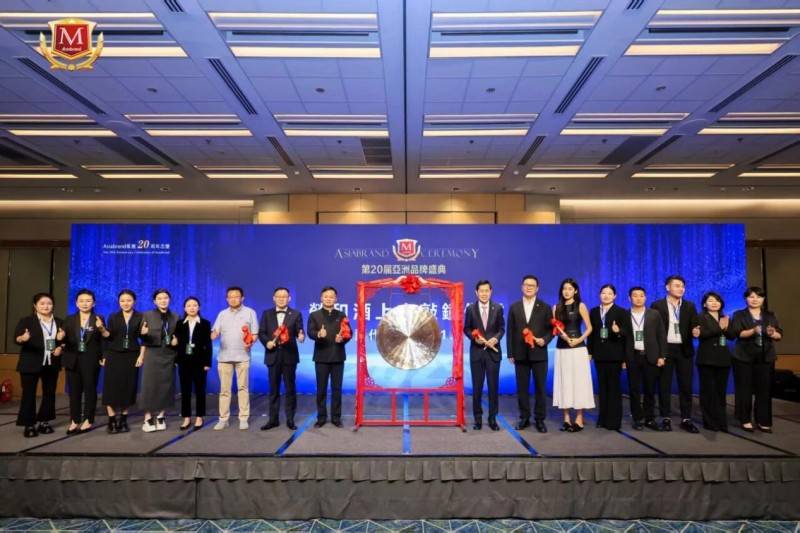
Core Insights - The Hong Kong listing ceremony for Ronghe Wine marked a significant milestone, showcasing the brand's commitment to both tradition and innovation in the context of digital transformation [4][5] - The event highlighted the theme of "Entering a New World of Brand RWA Digitalization," emphasizing the global journey and digital transition of Asian brands [2] Group 1: Event Highlights - The 20th Asian Brand Ceremony was held in Hong Kong, co-hosted by various organizations including Asiabrand and the Asian Digital Development Bank, gathering global leaders and experts [2] - The ceremony featured a bell-ringing event led by prominent figures, including former Thai Deputy Prime Minister Wang Pengdi and other industry leaders, symbolizing Ronghe Wine's entry into the capital market [5] Group 2: Ronghe Wine's Strategy - Wang Jun, Chairman of China Great Wall Computer Import and Export Company and Ronghe Development Group, presented the "Coin-Stock Linkage" strategy, aiming to set a benchmark for traditional brands in their digital transformation [4] - The listing of Ronghe Wine is seen as a declaration of traditional liquor embracing the digital economy, with expectations for the brand to explore the integration of tradition and digitalization [5] Group 3: Asiabrand Overview - Asiabrand, established in 2005 in Hong Kong, is a professional brand value service provider with a focus on new brands, technology, and finance [6] - The organization has developed a brand financial ecosystem, supporting over 18,000 member enterprises and offering services in brand evaluation and value management [6]
香港数字资产上市公司联合会成立,能否破解“合规与盈利”困局?
Xin Lang Cai Jing· 2025-08-30 07:57
Group 1 - The establishment of the Hong Kong Virtual Asset Listed Companies Association (HKVALA) marks a new phase of institutional collaboration in the digital asset industry in Hong Kong [1] - The formation of HKVALA is driven by three main factors: policy support, market demand, and addressing industry challenges [1] - The Hong Kong government has released several key policy documents this year, including the "Hong Kong Digital Asset Development Policy Declaration 2.0" and the implementation of the "Stablecoin Regulation" [1][2] Group 2 - Despite policy support and market demand, the digital asset industry in Hong Kong faces challenges such as regulatory implementation pace and market concerns [2] - There is a dilemma in the industry where compliance does not yield profits, and profits are often made in non-compliant ways, necessitating faster regulatory processes [2][3] - Investor education is crucial, as many citizens lack understanding of digital asset products, which can lead to exploitation by fraudsters [2][3] Group 3 - The new association aims to enhance investor education, ensuring that citizens understand the nature and risks of digital asset products [3][4] - The association will also promote Hong Kong's regulatory advantages and facilitate communication between the industry and regulatory bodies [4][5] - The HKVALA is positioned to bridge traditional finance and digital asset liquidity, with a goal to solidify Hong Kong's status as an international financial center [5] Group 4 - The total market capitalization of listed companies within the association is approximately $20 billion, while the asset management scale of traditional financial institutions represented at the event exceeds $200 billion [5] - The association includes a diverse range of members from various sectors, including digital asset exchanges, traditional financial companies, and blockchain technology firms [5]
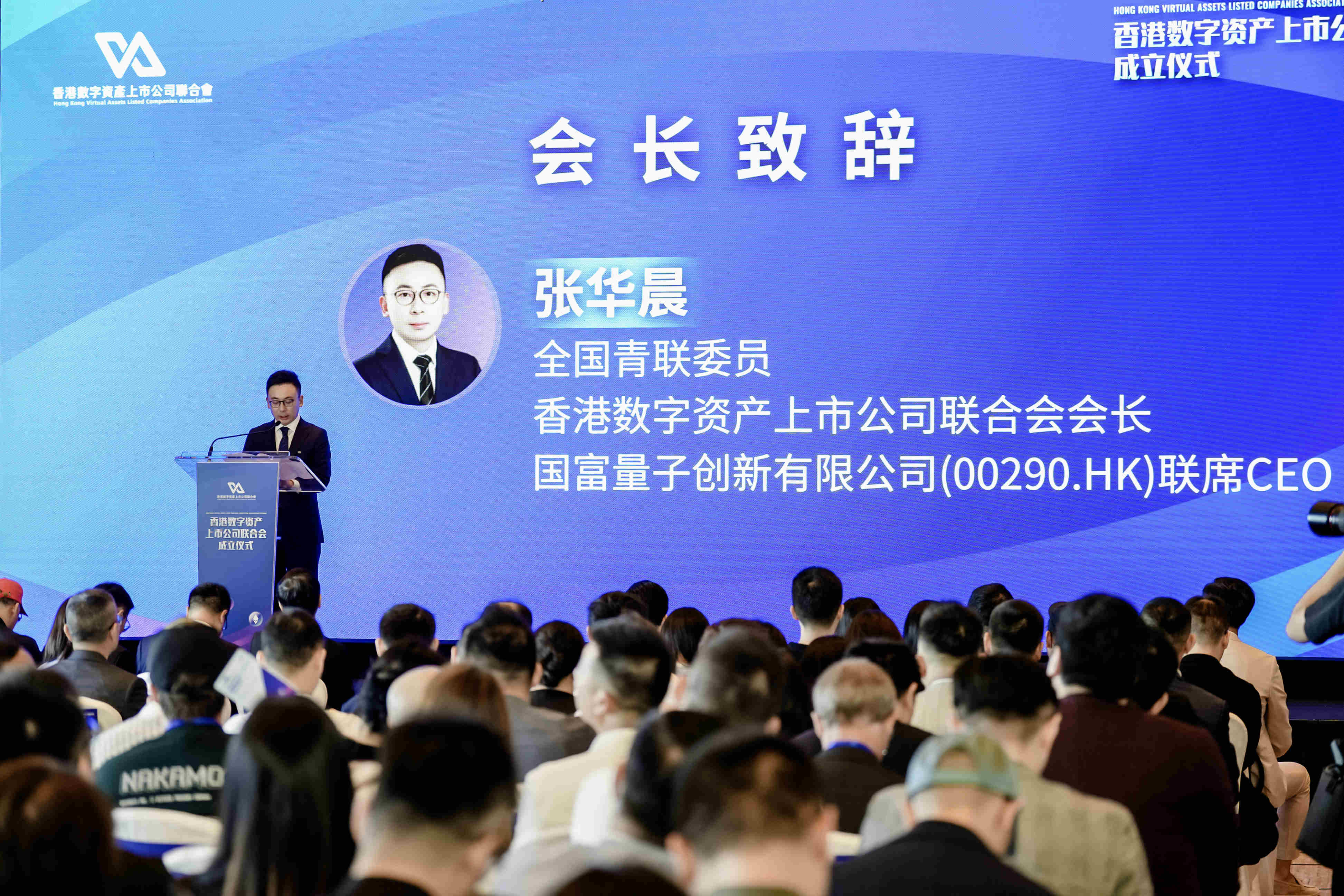
香港数字资产上市公司联合会会长张华晨:传统金融公司未来在打通币股联动的发展中将会作为关键媒介
智通财经网· 2025-08-27 06:48
Core Insights - The establishment of the Hong Kong Digital Asset Listed Companies Association is a significant milestone for the development of the digital asset sector in Hong Kong [1][3] - The Hong Kong SAR government maintains an open attitude towards the development of the digital asset field, with public discussions on the potential linkage between cryptocurrencies and stocks [1] Group 1 - Zhang Huachen estimates that the market value of digital assets held by Hong Kong-listed companies is over $200 billion, while the value of digital assets related to compliance license applications and operational funds is roughly estimated to be under $2 billion [3] - The scale of digital assets within the Hong Kong Digital Asset Listed Companies Association is expected to grow in the future [3] - Traditional financial companies are seen as key intermediaries in facilitating the linkage between cryptocurrencies and stocks, playing a crucial role in the exploration of digital sector development [3]
香港上市公司如何玩转"币股联动"?
Sou Hu Cai Jing· 2025-08-20 23:30
Core Insights - The concept of "coin-stock linkage" involves integrating traditional business with digital currencies and blockchain technology to create new growth opportunities, enhance company valuation, and attract a new generation of investors [2] Group 1: Trends Driving "Coin-Stock Linkage" - Digital economy wave: The global digital transformation is accelerating, and the virtual asset market is expanding [2] - Optimized regulatory environment: Hong Kong's financial regulators are actively promoting the development of the virtual asset ecosystem [2] - Growing investor demand: Both traditional and emerging investors are increasingly interested in digital assets [2] Group 2: Company Profiles - Coinbase Global (NASDAQ: COIN): The largest compliant cryptocurrency exchange in the U.S., closely tied to the overall trends in the cryptocurrency market, with significant holdings in Bitcoin and Ethereum [5][6] - OSL Group (HKEX: 0863): A licensed digital asset platform in Hong Kong, reflecting the demand for compliant crypto services in Asia [6][7] - Circle Internet Financial: Issuer of the USDC stablecoin, which raised $1.05 billion through an IPO, with a market valuation of $6.8 billion [9][10] - MicroStrategy (NASDAQ: MSTR): A business intelligence company that has become the largest corporate holder of Bitcoin, with its stock price increasing by 4315.85% since its first Bitcoin purchase [11][12][13] - JD Coinchain Technology (HKEX: 9618): A subsidiary of JD.com focusing on blockchain applications, currently developing a stablecoin [14][15] Group 3: Market Management Strategies - Information disclosure strategy: Regularly publish reports on digital asset business progress and engage with investors through social media [19] - Shareholder return plans: Consider issuing digital tokens as shareholder benefits and explore blockchain-based equity management systems [19] - Strategic partnerships: Collaborate with leading blockchain projects and digital asset exchanges to enhance influence in the digital economy [19] - Talent incentives: Establish a digital asset incentive pool and implement blockchain-based employee equity incentive plans [19]



大成律所王善良:稳定币不是货币,但它带来的影响远非货币可比
Guan Cha Zhe Wang· 2025-07-24 00:51
Core Insights - The roundtable discussion on stablecoins highlighted their commercial opportunities and regulatory challenges in the global financial landscape [1] - Recent U.S. legislation, including the "Genius Act" on stablecoins, the Clarity Act, and a ban on CBDCs, is expected to significantly shape the future of Web3 and cryptocurrency [4][6] Regulatory Developments - The U.S. House of Representatives passed three key bills that will impact the future of Web3, including a stablecoin bill, which is anticipated to be signed by Trump [4] - The Clarity Act clarifies that tokens on mature blockchains are classified as commodities, regulated by the CFTC rather than the SEC, and provides certain regulatory exemptions for decentralized finance (DeFi) [4][6] - The third bill prohibits the issuance of Central Bank Digital Currencies (CBDCs) in the U.S., establishing a regulatory framework for cryptocurrencies [4][6] Stablecoin Characteristics - Stablecoins are not considered traditional currency; they function as a peer-to-peer payment system without a balance concept, serving as a bridge between Web2 and Web3 [2][7] - The issuance of stablecoins is relatively accessible, allowing various assets to be pegged, including fiat currencies, gold, and receivables [2][7] - The potential for stablecoins to revolutionize financial transactions lies in their ability to facilitate low-cost, high-speed transactions, with costs as low as one-thousandth of a cent [10] Market Potential and Challenges - The market for Real World Assets (RWA) is projected to reach trillions of dollars by 2030, indicating significant investment opportunities [3][12] - Hong Kong's efforts to issue stablecoins and create a robust on-chain financial ecosystem are underway, despite challenges in attracting users to local stablecoins compared to USD-pegged options [3][8] - The concept of tokenization is seen as a transformative force, enabling instant settlement and reducing friction costs in traditional finance [11][12] Future Outlook - The development of cross-chain technology and data integration is crucial for the evolution of the blockchain ecosystem, with significant market opportunities anticipated [13][14] - The ongoing interest in "coin-stock linkage" and "chain-stock linkage" reflects a growing trend in capital markets, driven by the potential of blockchain technology [14]
X @0xLIZ
0xLIZ· 2025-07-22 03:35
Market Trend & Strategy - Publicly listed companies are becoming the "touch" for crypto assets to enter traditional finance, but this is just the beginning [1] - Simply "holding" crypto is not enough to attract investors; deep participation is required to bind to the crypto market's sentiment and valuation [1] - The industry anticipates a shift from companies merely "buying crypto" to "launching chains," requiring them to build their own moats [1] Technology & Infrastructure - Caldera ($ERA) provides a "one-click chain launch" toolkit, enabling companies to quickly deploy their own exclusive Rollup chains at a very low cost [1] - Caldera's modular design allows for flexible customization and supports BSC and ETH, ensuring interoperability between new chains [1] - Caldera is paving the underlying highway towards the ultimate goal of linking crypto and stock markets [1] Investment & Opportunity - $ERA's strong performance justifies its high-quality financing background [1] - BNB holders are benefiting from both BNB's price increase and the ability to earn additional tokens through staking [1] Risk Warning - The industry acknowledges that any cutting-edge technology comes with uncertainties, including intense competition in the Layer 2 track and the unknown factors in ecosystem development [1]