
市场支配地位

Search documents
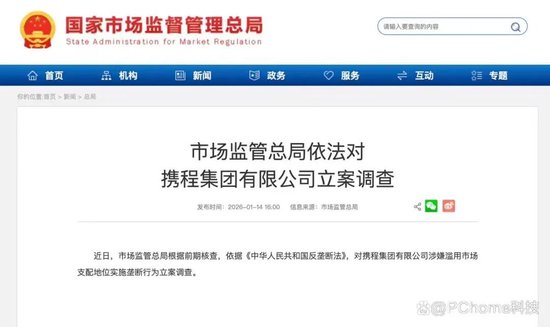
携程被立案调查 OTA行业第一波整改风暴?
Xin Lang Cai Jing· 2026-01-14 10:59
Core Viewpoint - The National Market Regulatory Administration has initiated an investigation into Ctrip for suspected abuse of market dominance under the Anti-Monopoly Law, signaling a significant regulatory shift in the online travel market where Ctrip holds a 56% market share [1][4][38]. Group 1: Company Overview - Ctrip is among the top five most profitable companies in the domestic internet sector [2]. - In 2024, Ctrip's market share is projected to reach 56%, with revenues of 62.85 billion yuan and a net profit expected to nearly double to 38.67 billion yuan by 2025, maintaining a gross margin above 80% [4][38]. Group 2: Regulatory Concerns - The investigation raises questions about whether Ctrip's market dominance stems from technological innovation and service improvement or from monopolistic control and coercive practices against partners [5][39]. - Ctrip has faced scrutiny for its "price adjustment assistant" tool, which allegedly undermines merchants' pricing autonomy by automatically scanning competitors' prices and enforcing lower hotel rates [8][39]. Group 3: Industry Impact - The collective action from the Yunnan Provincial Tourism Homestay Industry Association against Ctrip highlights significant grievances, including forced "choose one" agreements and unilateral commission increases from 12% to 15-20%, far exceeding the industry average of 8-10% [15][42]. - The ongoing investigation and regulatory actions signal a broader industry issue, indicating that the market's competitive landscape is not solely a Ctrip problem but a systemic issue within the OTA sector [61][64]. Group 4: Future Implications - Potential outcomes for Ctrip include mandatory cessation of identified monopolistic practices, substantial fines based on previous year's revenue, and structural reforms to ensure fair competition [21][51]. - The regulatory focus on Ctrip may compel all OTA platforms to reassess their core business models, shifting from aggressive market control to enhancing service quality and transparency [34][70].


苹果再被意大利监管机构罚款近1亿欧元
Zhong Guo Jing Ying Bao· 2025-12-22 11:41
Core Viewpoint - The Italian Competition and Market Authority (AGCM) has fined Apple €98.635 million (approximately ¥814 million) for abusing its market dominance through its App Tracking Transparency (ATT) policy, which restricts competition from third-party app developers [1] Group 1: Regulatory Actions - The AGCM's investigation concluded that Apple's ATT policy, implemented in April 2021, has a restrictive nature on competition [1] - This is not the first action taken by AGCM against Apple; in November 2021, Apple was fined €10 million for failing to provide information on how it collects and uses user data [1] - In 2020, Apple was also fined €10 million by AGCM for misleading commercial practices regarding the waterproof capabilities of iPhones [1]

苹果因滥用市场支配地位被罚
Xin Lang Cai Jing· 2025-12-22 11:24
Core Viewpoint - Apple has been fined nearly €98.6 million for abusing its dominant market position, as determined by the Italian Competition and Market Authority (AGCM) [1] Group 1: Fine Details - The fine amounts to €98.635 million, imposed on Apple Inc., Apple Distribution International, and Apple Italy [1] - The penalty is a result of Apple's "App Tracking Transparency" (ATT) policy, which has been in effect since April 2021 [1] Group 2: Regulatory Findings - The AGCM's investigation concluded that the ATT policy has a restrictive nature concerning competition under competition law [1]
苹果首次调整内地“苹果税”,微信跟进
3 6 Ke· 2025-11-14 11:48
Core Viewpoint - Apple's "App Store Mini App Partner Program" introduces a 15% revenue share reduction for developers selling qualifying in-app purchases, marking a significant adjustment in its revenue-sharing policy in the Chinese market [1][2]. Group 1: Program Details - The program aims to assist developers managing mini-apps in expanding their business and enhancing sales within the Apple Store [2]. - To qualify for the 15% revenue share reduction, apps must support specific Apple Store technologies, including Declared Age Range API and Advanced Commerce API, ensuring a safe and smooth experience for all age groups [2]. - "Mini apps" are defined as software packages, scripts, or game content that can be added and executed on devices post-installation, provided they comply with Apple's Developer Program License Agreement [2]. Group 2: Market Implications - The revenue share adjustment may encourage more paid applications to transition to mini-app platforms, potentially strengthening these platforms as significant traffic entry points and enhancing their market power [2]. - The shift indicates a trend where users may increasingly favor a few high-frequency "commercial complex" apps, elevating the gatekeeping role of platform companies and solidifying their market dominance [3]. Group 3: Industry Reactions - WeChat announced support for virtual payments in mini-apps on iOS, expressing a positive reception to Apple's initiative and a commitment to building a healthy ecosystem for developers [3]. - Recent reports suggest that Apple and Tencent have reached an agreement on a 15% commission for in-game purchases, with Tencent's president affirming ongoing collaboration to invigorate the mini-game ecosystem [3]. Group 4: Historical Context - Apple's ecosystem has faced criticism for its "Apple tax," particularly in China, where the commission rates are higher than in Western markets, significantly impacting local developers [3][4]. - In a rare disclosure, Apple reported that the income generated for Chinese developers through its ecosystem has nearly doubled since 2018, with over 95% of the revenue retained by developers without paying commissions to Apple [4].
55名中国消费者联合举报苹果,要求零佣金开放第三方支付与应用商店
3 6 Ke· 2025-10-21 00:19
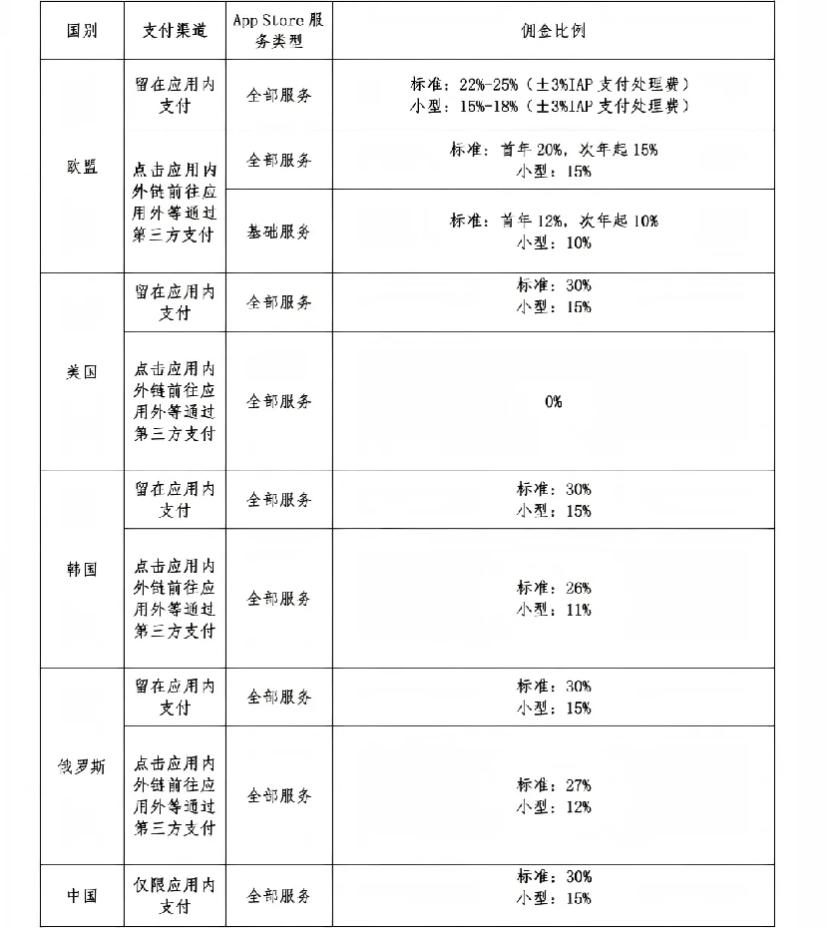
Core Viewpoint - A group of 55 Chinese consumers has submitted a complaint to the State Administration for Market Regulation, accusing Apple Inc. of abusing its market dominance in China through practices such as forced transactions, bundling, and charging "unfairly high prices," which harm the legitimate rights of Chinese consumers [1][2]. Group 1: Complaint Details - The complaint requests the regulatory authority to investigate Apple's alleged monopolistic behaviors, including limiting transactions and bundling, which forces Chinese consumers to use Apple's In-App Purchase (IAP) system for digital goods and services [2][3]. - The complaint also highlights that Apple charges up to 30% commission on IAP transactions, which is considered an unfair pricing practice [4]. Group 2: Specific Demands - The consumers demand that Apple be ordered to open third-party payment channels to Chinese consumers, allowing developers to guide consumers to any third-party platform for purchases without charging any commission [5]. - They also request that Apple allow access to iOS applications outside of the App Store, including third-party app stores and web sideloading, without imposing any fees [5]. Group 3: Market Discrimination - The complaint argues that Chinese consumers face national discrimination, as they are unable to use third-party payment channels and app stores, unlike consumers in the US and EU [6][7]. - It is noted that the "Apple tax" burden on Chinese consumers is the highest globally, with a projected payment of $6.44 billion in 2024, surpassing Europe [9][18]. Group 4: Global Context - The complaint references legal actions taken against Apple in various countries, including Japan, Australia, and Colombia, which have also accused Apple of monopolistic practices [10][20]. - The complaint emphasizes that Apple has relaxed its policies in the US and EU but continues to enforce strict rules in China, leading to a significant disparity in commission rates and payment options [7][19]. Group 5: Financial Impact - The complaint calculates that the "Apple tax" constitutes 10% of Apple's revenue in China, compared to 8.8% in the US and only 4.6% in Europe, indicating a disproportionate financial burden on Chinese consumers [9][18]. - Predictions suggest that by 2026, the "Apple tax" in China could reach $8.1 billion, making it the highest globally, further highlighting the financial implications for Chinese consumers [19].
55名中国用户举报苹果:中外双标,滥用支配地位
Hu Xiu· 2025-10-20 13:45
Core Viewpoint - A group of 55 Chinese consumers has submitted a complaint to the State Administration for Market Regulation, accusing Apple Inc. of abusing its market dominance in China through various monopolistic practices that harm consumer rights [1][2]. Group 1: Allegations Against Apple - The complaint alleges that Apple forces Chinese consumers to use its In-App Purchase (IAP) system for digital goods and services, prohibits developers from directing consumers to alternative payment methods, and imposes unfairly high commissions of up to 30% [5][7]. - The core demands include an investigation into Apple's alleged illegal activities and a mandate to allow third-party payment channels and app stores in China [3][4]. Group 2: Specific Requests for Action - The consumers request that Apple be ordered to open third-party payment channels, allowing developers to guide consumers to external platforms without incurring any commission [8]. - They also demand that Apple permit access to iOS applications outside of the App Store, including third-party app stores and sideloading options, without charging any fees [9]. - Additionally, the complaint calls for a reduction in the commission rate for in-app purchases to be lower than the most favorable rates in other countries [10]. Group 3: Comparative Analysis - The complaint highlights that Chinese consumers face "country-specific discrimination," as they are unable to access third-party payment options and are subjected to the highest commission rates globally [11][13]. - It cites recent legal developments in the U.S. and EU, where courts have mandated Apple to provide payment options and reduce commission rates, contrasting this with the situation in China [12][14]. Group 4: Financial Impact on Consumers - In 2024, Chinese consumers are projected to pay $6.44 billion in "Apple tax," second only to the U.S. at $14.8 billion, and surpassing Europe at $4.8 billion [15][30]. - The complaint calculates that the "Apple tax" constitutes 10% of Apple's revenue in China, compared to 8.8% in the U.S. and 4.6% in Europe, indicating a heavier burden on Chinese consumers [15][30]. Group 5: Global Legal Actions - The complaint notes that over ten countries, including Japan, South Korea, and Australia, have initiated legal actions against Apple for similar monopolistic practices [18][31]. - Japan's Fair Trade Commission has announced plans to force Apple to open third-party transaction models by December 2025, marking a significant shift in the Asian market [19][31].

太龙股份(300650) - 公司及天风证券股份有限公司关于公司申请向特定对象发行股票的审核问询函的回复(修订稿)
2025-02-27 10:48
关于太龙电子股份有限公司 申请向特定对象发行股票的 审核问询函的回复 保荐机构(主承销商) (武汉东湖新技术开发区高新大道 446 号天风证券大厦 20 层) 二〇二五年二月 深圳证券交易所: 贵所《关于太龙电子股份有限公司申请向特定对象发行股票的审核问询函》 (审核函〔2024〕020029)(以下简称"审核问询函")已收悉。太龙电子股份 有限公司(以下简称"太龙股份""发行人"或"公司")会同天风证券股份有 限公司(以下简称"保荐机构"或"保荐人")、上海市通力律师事务所(以下 简称"发行人律师")、华兴会计师事务所(特殊普通合伙)(以下简称"申报 会计师")等相关方已就审核问询函中提到的问题进行了逐项落实并回复,并对 申请文件进行了相应的补充。现回复如下,请贵所予以审核。 如无特别说明,本问询函回复中的简称与《太龙电子股份有限公司 2024 年 度向特定对象发行 A 股股票募集说明书》中的简称具有相同含义。本问询函回 复中的字体代表以下含义: | 类别 | 字体 | | --- | --- | | 审核问询函所列问题 | 黑体(不加粗) | | 审核问询函问题回复、中介机构核查意见 | 宋体(不加粗) ...
