市场结构分化

Search documents
帮主收评:指数红了,账户绿了!3400股下跌的“假反弹”怎么看?
Sou Hu Cai Jing· 2025-12-30 14:55
Core Viewpoint - The market is experiencing a significant structural divergence, with a stark contrast between hot and cold sectors, indicating a fierce competition for capital rather than a bullish trend reversal [3]. Group 1: Market Performance - The three major indices showed a rebound in the afternoon, particularly the ChiNext, but over 3,400 stocks declined, revealing a disparity between the index performance and individual stock results [1]. - The human-shaped robot sector emerged as a key highlight, driving related industries such as motors and film theaters, reflecting a concentrated investment in sectors with clear growth trends for the upcoming year [3]. Group 2: Sector Analysis - The human-shaped robot and film sectors are currently strong, but caution is advised against chasing highs during peak emotions; instead, investors should look for potential stocks within these sectors that have lagged behind [4]. - Conversely, sectors like solar equipment and insurance are experiencing significant declines, which may present long-term investment opportunities if the fundamental logic remains intact [4]. Group 3: Investment Strategy - In a market characterized by reduced trading volume, any potential upward movement in the market requires increased trading volume to be sustainable; otherwise, caution is warranted [4]. - Investors should either engage in short-term trading within the strongest sectors or focus on research in quieter areas to prepare for future market rotations, avoiding indecision that could lead to losses [5].


国家终于出手!2026年楼市将迎两大变局,你准备好了吗?
Xin Lang Cai Jing· 2025-12-28 10:09
Core Viewpoint - The Chinese real estate market is transitioning from a volatile cycle to a deep adjustment phase, driven by national policies aimed at stabilizing the market, preventing risks, optimizing supply, and promoting transformation, marking a new development stage for the industry [1] Policy Changes - The policy shift is moving from "short-term control" to "long-term foundation," establishing a framework for precise supply-demand matching. The new policies focus on "controlling increment, reducing inventory, and optimizing supply" [3] - Demand-side policies are becoming more precise, with measures such as reforming the provident fund system and removing unreasonable housing consumption restrictions, leading to a significant reduction in home purchase costs for first-time buyers [3] - On the supply side, policies are addressing core market pain points, allowing local governments to implement tailored strategies based on inventory levels, with a focus on converting existing housing into affordable housing in high-inventory cities [4] Market Dynamics - The market is shifting from "universal price increases" to "structural differentiation," characterized by a resilient core and pressured periphery. This change is driven by population movement, industrial support, and inventory structure differences [6] - National new housing sales area is projected to decline by 5% in 2026, with significant disparities between cities. Core areas in first-tier cities are expected to maintain stable prices, while third and fourth-tier cities face significant pressure [6][8] - The product and demand sides are also experiencing differentiation, with a growing preference for high-quality housing and an increase in the proportion of improvement demand, which now accounts for 40% of the market [8] Implications for Stakeholders - For homebuyers, the era of blind purchasing is over, and decision-making should prioritize value. First-time buyers are encouraged to focus on well-located properties with good amenities, while improvement buyers should seek high-quality housing [9] - Real estate companies must adapt to a new environment where high leverage and rapid turnover are no longer sustainable. Leading firms are focusing on core urban areas and enhancing product quality, while smaller firms need to clear out excess inventory to survive [10] - The adjustment in the real estate market is not a short-term pain but a necessary transition towards optimizing existing stock, with policies supporting market stability and promoting high-quality development [11]
二手房“寒意”蔓延,深圳市场呈现“以价换量”
Sou Hu Cai Jing· 2025-12-21 01:39
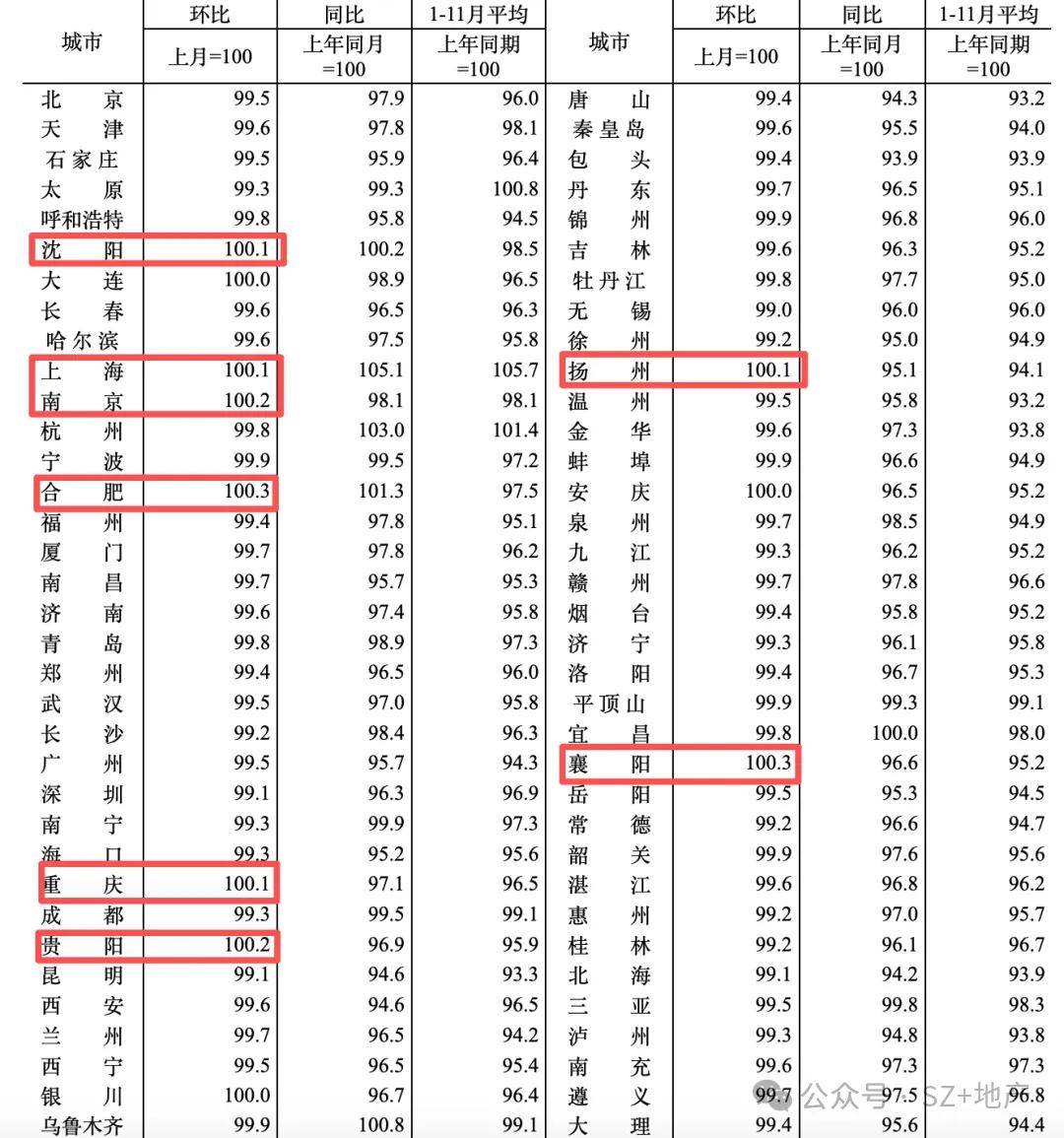
Core Insights - The real estate market is showing a clear divergence between new and second-hand homes, with new home prices stabilizing while second-hand home prices continue to decline [1][10] - In November, the number of cities with rising new home prices increased from 4 to 8, indicating signs of stabilization in the new home market [1] - The second-hand home market remains under pressure, with no city reporting a month-on-month increase in prices, although the rate of decline has narrowed [1] New Home Market - In November, 8 out of 70 major cities reported month-on-month increases in new home prices, including cities like Hefei, Xiangyang, Nanjing, and Shanghai [1][2] - Shanghai has shown remarkable resilience, with new home prices rising for 85 consecutive months since November 2018, averaging a year-on-year increase of 5.6% [2] - First-tier cities saw a month-on-month decline of 0.4% in new home prices, with Shanghai being the only city to experience a slight increase of 0.1% [3] Second-Hand Home Market - The second-hand home market is experiencing significant challenges, with first-tier cities seeing a year-on-year price decline of 5.8%, and specific declines in Beijing (6.8%), Shanghai (4.6%), Guangzhou (7.2%), and Shenzhen (4.8%) [4] - In November, first-tier cities' second-hand home prices continued to adjust, with declines of 1.3% in Beijing, 0.8% in Shanghai, 1.2% in Guangzhou, and 1.0% in Shenzhen [3] - The second-hand home market in Shenzhen is characterized by a "price for volume" strategy, with a notable increase in the proportion of low-priced homes [7][10] Market Dynamics - The overall second-hand market is showing a trend of "increased volume, decreased prices, and structural differentiation," with a 14% month-on-month increase in transactions in key cities [9] - In Shenzhen, the number of new second-hand listings decreased by 4% year-on-year and 7% month-on-month, but the rate of decline has slowed, indicating a shift in seller sentiment [6] - The market is witnessing a split where low-priced home sellers are more active, while high-end property owners tend to adopt a wait-and-see approach [8][10] Conclusion - The real estate market is in a critical phase of adjustment, with new home prices stabilizing in some cities while second-hand home prices continue to seek a new equilibrium [9][10] - The dynamics in Shenzhen may serve as a bellwether for other hot cities, as the market adapts to changing conditions and buyer-seller negotiations intensify [10]