
干细胞治疗

Search documents
全球首例!我国实现再生胰岛移植
第一财经· 2026-03-17 11:21
Core Viewpoint - The article discusses a groundbreaking achievement in the treatment of Type 1 diabetes through the use of regenerated islets (E-islet) derived from both autologous and allogeneic stem cells, marking a significant advancement in diabetes management and potential cure [3][4][6]. Group 1: Research and Development - A new technology system based on endodermal stem cells has been established over two decades, leading to the successful creation of E-islets for treating severely impaired pancreatic function in diabetes patients [4]. - Clinical studies involving three patients demonstrated that both autologous and allogeneic E-islet transplants can restore pancreatic function and enable blood sugar control without external insulin dependency [6]. Group 2: Clinical Implications - The research team has proven that E-islet transplantation can significantly improve blood sugar levels and reduce the occurrence and progression of complications associated with Type 1 diabetes [6]. - Current treatment still requires long-term immunosuppressive therapy to prevent autoimmune relapse, but future plans include gene editing to modify the E-islets to avoid immune system recognition, aiming for a complete cure of diabetes [6].


中源协和:公司全资子公司武汉光谷药业自主研发的VUM02注射液治疗特发性肺纤维化处于I期临床试验阶段
Zheng Quan Ri Bao Wang· 2026-02-13 13:14
Core Viewpoint - Zhongyuan Qihua (600645) is advancing its clinical research in innovative therapies, focusing on treatments for idiopathic pulmonary fibrosis and chronic periodontitis [1] Group 1: Clinical Trials - The company's wholly-owned subsidiary, Wuhan Guanggu Pharmaceutical, is conducting a Phase I clinical trial for VUM02 injection aimed at treating idiopathic pulmonary fibrosis (IPF) [1] - The company holds a stake in Beijing Sanyouli, which is collaborating with Capital Medical University on a Phase II clinical trial for "human dental pulp mesenchymal stem cell injection" to treat chronic periodontitis [1] Group 2: Regulatory Compliance - The company's stem cell clinical research projects have been registered with the National Health Commission/NMPA and the Logistics Support Department of the Central Military Commission [1]

何氏眼科(301103) - 301103何氏眼科投资者关系管理信息20260211
2026-02-11 09:48
Group 1: Strategic Planning and Regional Development - The company focuses on a regional development strategy of "deepening in Liaoning, radiating nationwide, hierarchical layout, and precise expansion," targeting core urban clusters such as Beijing-Tianjin-Hebei, Chengdu-Chongqing, Greater Bay Area, and Yangtze River Delta [2][3] - Liaoning serves as the core base and profit pillar, maintaining stable operations and good cash flow, while expanding into provinces like Beijing, Chongqing, Chengdu, and Hainan [3] - The company is optimizing operations by closing underperforming units to enhance overall efficiency without affecting the national layout [3] Group 2: Business Performance and Financial Metrics - Refractive surgery revenue was 239 million CNY in 2023, projected to decrease to 218 million CNY in 2024, a decline of 9.08%, but expected to recover to 135 million CNY in the first half of 2025, a growth of 3.26% [4][5] - Vision care revenue was 387 million CNY in 2023, expected to drop to 365 million CNY in 2024, a decrease of 5.82%, with a projected revenue of 169 million CNY in the first half of 2025, a decline of 4.95% [4][5] - Cataract surgery revenue is forecasted to be 157 million CNY in 2024, down 23.61% year-on-year, with 7.66 million CNY in the first half of 2025, a decrease of 17.67% [6] Group 3: Business Model and Franchise Development - The company employs a light-asset, replicable franchise model for vision care centers, providing brand authorization, standardized operations, and supply chain support [4] - In the first half of 2025, 23 new vision care stores were signed, bringing the total to 53 [5] Group 4: Competitive Landscape and Market Position - The Liaoning eye care market is evolving with increased competition from public institutions and private chains, necessitating a focus on technical and service excellence [7][8] - The company is enhancing its service offerings through a "365 myopia prevention system" and digital health management initiatives [8] Group 5: International Expansion and Investment - The acquisition of 70.65% of Japan's Medical Pathway is a strategic move to integrate advanced regenerative medical technologies and enhance the company's competitive edge in global markets [8] - The investment aims to leverage collaborations with top universities and enhance research and clinical capabilities [8]
海南帝湾医院获批开展干细胞治疗膝骨关节炎转化应用项目
Sou Hu Wang· 2026-01-15 07:54
Group 1 - The technology utilizes cells from a leading innovative stem cell therapy company in China, with a core team experienced in cell therapy and related cutting-edge technologies, having published multiple academic papers in top-tier research institutions like Yale and Harvard [2] - The company has established a standardized technical system for process design, critical quality attribute (CQA) control, and QC/QA release processes, achieving international advanced levels in the development and production of various cell therapy products [2] - The company has undertaken multiple national-level research projects, creating a complete technology platform around key aspects of the cell therapy industry chain, including cell separation, purification, large-scale expansion, formulation process development, quality control, and safety evaluation [2] Group 2 - Hainan Diwan Hospital leverages the "pilot and trial" policy advantages of the Boao Lecheng International Medical Tourism Pilot Zone to promote the implementation of this technology, becoming a leading project in clinical application scale and patient acceptance since its approval in February 2025 [4] - The hospital is recognized as a high-end medical institution in the fields of regenerative medicine, gut microbiome, and new biomedicine technologies, collaborating deeply with top national medical resources and establishing strategic partnerships with institutions like Shanghai Ruijin Hospital [4] - The hospital has formed a long-term strategic cooperation mechanism with several academicians from the Chinese Academy of Sciences and the Chinese Academy of Engineering, continuously advancing original technology transformation and clinical application in regenerative medicine and gut microbiome [4] Group 3 - The establishment of the "Boao Lecheng Innovative Orthopedic New Technology Research Institute" aims to integrate national-level authoritative academic resources and gather innovative technologies, clinical experiences, and research results in orthopedics [6] - The stem cell treatment project for knee osteoarthritis (KOA) has gained significant attention and professional support from top orthopedic experts, addressing the challenges of limited drug efficacy and controversial surgical interventions in treating KOA [6] - The hospital plans to continuously introduce safe, effective biomedical innovations with independent intellectual property rights, enhancing the application capabilities of new biomedical technologies and promoting high-quality development in high-end medical and biomedicine industries [6]
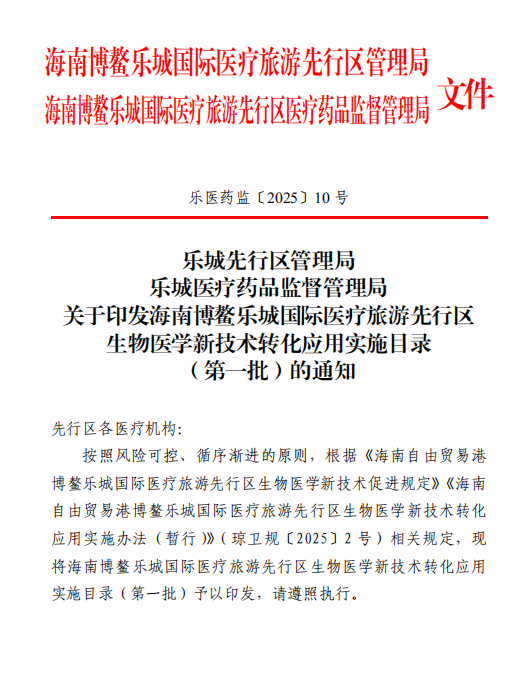
2025年中国干细胞行业发展现状及趋势洞察行业研究报告
Tou Bao Yan Jiu Yuan· 2025-12-30 12:24
Investment Rating - The report does not explicitly state an investment rating for the stem cell industry in China [1]. Core Insights - The stem cell industry in China is experiencing rapid growth driven by technological advancements, regulatory support, and increasing market demand for cell therapies [5][27]. - Companies are expected to establish comprehensive quality management systems and data traceability mechanisms to ensure compliance and product quality [5]. - The industry is moving towards automation and smart technologies, integrating AI to enhance production efficiency and meet growing market needs [5]. Industry Overview - The report analyzes the current state and future trends of the stem cell industry in China, focusing on the entire industry chain and market competition [3][4]. - The stem cell market is evolving with a focus on various therapeutic applications, particularly in chronic diseases and regenerative medicine [21][24]. Industry Chain Analysis - The stem cell industry chain consists of upstream (collection and storage), midstream (drug development), and downstream (treatment and application) segments, with the upstream being the most developed [36]. - Leading companies in the upstream segment include Zhongyuan Xiehe, Boya Stem Cell, and Beike Biotechnology, which leverage advanced technologies and high-quality storage capabilities [41]. - The midstream segment is characterized by a concentration of research and development activities in key regions such as Beijing, Wuhan, and Shanghai, which serve as hubs for clinical translation [42]. Market Trends - The demand for stem cell therapies is increasing due to factors such as aging population and urbanization, leading to a focus on respiratory and neurological diseases [5]. - The report highlights the importance of regulatory frameworks and policies that support the development and commercialization of stem cell therapies in China [27]. Clinical Trial Progress - As of December 2025, China has conducted 586 stem cell clinical trials, ranking second globally after the United States [27]. - Various companies are advancing clinical trials for treatments targeting conditions like knee osteoarthritis, acute liver failure, and chronic obstructive pulmonary disease [28][30]. Competitive Barriers - The stem cell industry faces multifaceted competitive barriers, including technological, quality, talent, and regional resource distribution challenges [32]. - Companies must build comprehensive competitive advantages to address these challenges and maintain market positions [32].
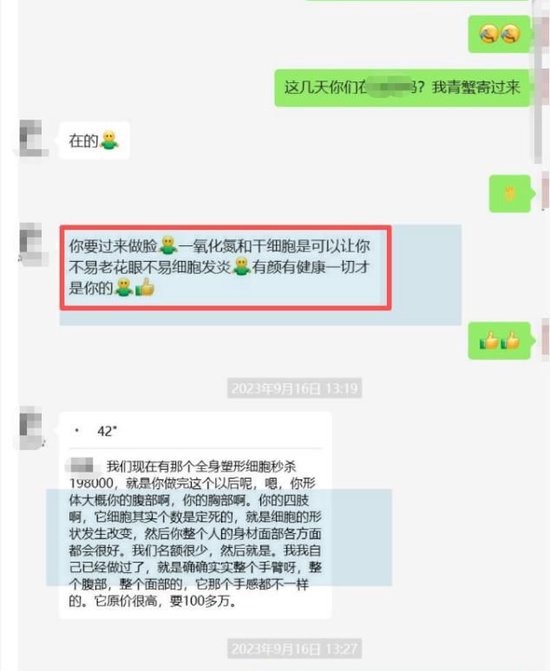
花了2000万后她悔不当初,“干细胞美容”是不是智商税?
Xin Lang Cai Jing· 2025-12-30 02:03
Core Viewpoint - The rise of "stem cell beauty" treatments has led to significant consumer spending and legal disputes, highlighting a broader market issue of unregulated practices and misleading claims in the beauty industry [1][21][22]. Group 1: Consumer Experiences and Financial Impact - A case study reveals that an individual spent over 20 million yuan on stem cell beauty treatments, leading to a lawsuit against the beauty clinic for unlicensed medical practices [1][22]. - The financial burden escalated over time, with reported expenditures of 300 million yuan in 2021 and 700 million yuan in 2023 for various stem cell treatments [3][23]. - Another individual reported spending nearly 4 million yuan on a single stem cell injection, only to discover that the recommending friend received a 50% kickback, raising concerns about the legitimacy of the treatments [7][25]. Group 2: Regulatory Response and Industry Standards - The National Health Commission emphasized that stem cell and gene therapies must be conducted by qualified medical institutions, prohibiting beauty salons from offering such services [21][22]. - Despite regulatory efforts, the market remains flooded with unapproved stem cell products, with many lacking legitimate scientific backing and being marketed with exaggerated claims [9][11][27]. - As of 2023, no stem cell products for beauty injections have received national approval, and the majority of clinical trials focus on serious medical conditions rather than cosmetic applications [11][31]. Group 3: Scientific and Medical Context - Stem cell technology is still in the early stages of research and requires rigorous validation before being applied in clinical settings, particularly for cosmetic purposes [10][14][33]. - The FDA has approved specific stem cell therapies for limited medical conditions, indicating a cautious approach to the commercialization of stem cell treatments [10][28]. - Experts warn against the commercialization of stem cell technology without a comprehensive understanding of its implications, stressing the need for consumer protection and regulatory oversight [15][33][36].
诚达药业(301201) - 301201诚达药业调研活动信息20251224
2025-12-24 08:44
Group 1: Small Nucleic Acid Business - The company’s small nucleic acid business primarily involves phosphoramidite monomers and GalNAc delivery systems, with delivery systems priced higher than monomers [2] - The company has delivered part of its small nucleic acid business orders and will continue to meet customer needs, with further details available in future reports [2] - The company possesses a stable and effective quality system, necessary production equipment and technology, smooth supply chain responsiveness, and compliance advantages to become a supplier for multinational corporations (MNCs) [2][3] Group 2: Production Capacity and Main Business - The company’s fundraising projects are gradually releasing production capacity to meet diverse customer orders [3] - The main business includes providing key pharmaceutical intermediates, active pharmaceutical ingredients (APIs), CDMO services, L-carnitine series products, and stem cell drug development [3] - The company is focused on continuous innovation in new products and processes to expand product depth and breadth, aiming for a richer customer structure [3] Group 3: Stem Cell Project Progress - The company has completed the design, installation, debugging, and confirmation of GMP facilities for its cell therapy projects, including myocardial infarction and cerebral infarction [3] - Technical transfers for the isolation, culture, and cryopreservation of umbilical cord mesenchymal stem cells have been completed, establishing seed, master, and working cell banks [3] - The company has developed and validated analytical methods and initiated process validation in preparation for IND application [3] Group 4: Disclosure of Major Information - The activity did not involve the disclosure of any undisclosed major information [3]

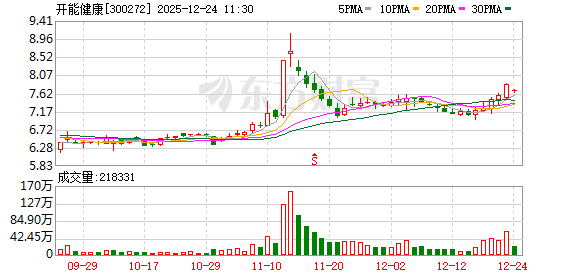
开能健康:公司自主研发的“YT001注射液”已获批准开展I/IIa期临床试验
Mei Ri Jing Ji Xin Wen· 2025-12-24 04:06
Core Viewpoint - The company holds a positive outlook on the prospects of the stem cell therapy industry and has been actively involved in this field since 2014, establishing the Yuaneng Cell Technology Group [2] Group 1: Company Strategy and Developments - The company has made significant investments in the cell therapy sector, aligning with national policy support for stem cell treatments [2] - Through acquisitions of equity in subsidiaries of Yuaneng Group, the company has secured key assets including land in Zhangjiang, patent licenses in the cell industry, and clinical trial approvals for "YT001 injection" [2] - The company's layout in the stem cell therapy field includes several business segments: 1. Cell preparation services for large-scale production of cell therapy drugs and customized clinical research cells for pharmaceutical companies and research institutions [2] 2. Development of proprietary cell preparation reagents, establishing itself as a key supplier in the industry chain [2] 3. Research and development of cell technology products, with "YT001 injection" approved for I/IIa clinical trials, aiming for commercialization through product launch, technology transfer, or revenue sharing [2] 4. Application of stem cell therapy and related solutions in pet health and anti-aging [2] Group 2: Industry Participation and Intellectual Property - The company actively participates in the formulation of industry standards and holds multiple authorized patents and software copyrights, providing a solid technical foundation and intellectual property protection for the development of stem cell therapy [2]

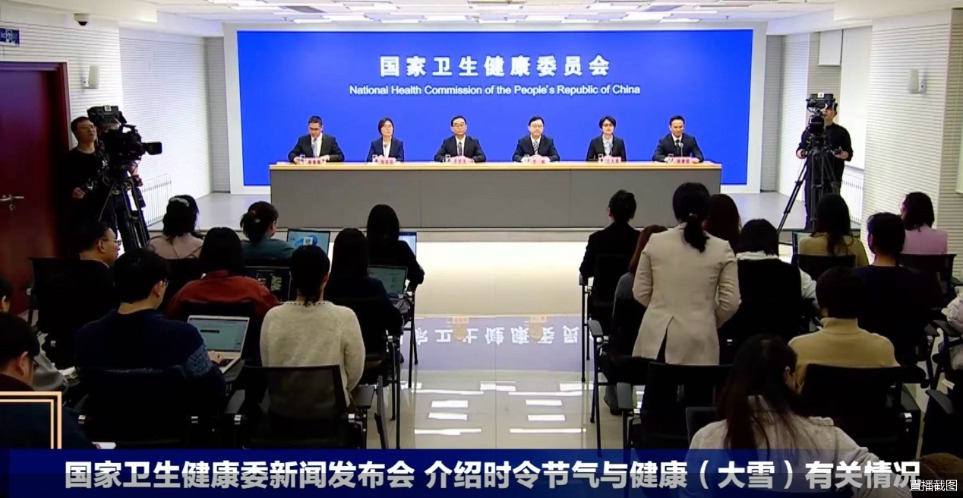
非医疗机构不得开展干细胞诊疗活动,国家卫健委明确行业“红线”
Bei Jing Shang Bao· 2025-12-05 14:16
Core Viewpoint - The National Health Commission held a press conference focusing on seasonal health issues, emphasizing flu prevention, chronic respiratory disease care, and skin problems during winter, while also addressing the risks associated with stem cell treatments and the need for public awareness [1] Group 1: Stem Cell Treatment Regulations - Stem cell treatments must be conducted by qualified medical institutions, as there have been instances of fraud by unlicensed entities claiming to offer such therapies [3][4] - The National Health Commission issued a consumer warning regarding the risks of unapproved stem cell treatments, highlighting that only approved products and techniques should be used, and that non-medical institutions are not authorized to provide such services [4] - The commission clarified that claims of stem cell treatments being "miracle cures" or "zero risk" are fraudulent, urging the public to be cautious and informed [4] Group 2: Flu Prevention and Respiratory Health - Flu activity is expected to peak in mid-December, with 17 provinces currently experiencing high levels of flu circulation, primarily due to the H3N2 strain [5] - Public health experts recommend that vulnerable populations, such as the elderly and those with chronic conditions, should avoid crowded places and receive flu vaccinations [5] - Misconceptions about treating respiratory illnesses, such as using inappropriate medications for fever or cough, were addressed, with recommendations for proper home remedies and care [6] Group 3: Skin Health in Winter - The press conference highlighted common misconceptions about skin health, particularly the belief that dry skin is due to lack of cleanliness, which can lead to over-cleansing [6][7] - Experts advised using warm water for bathing, avoiding harsh soaps, and applying moisturizers promptly after bathing to combat winter dryness [7]
干细胞治疗产业链加速实现技术与成本突围
Zheng Quan Ri Bao· 2025-11-24 16:29
Core Insights - Stem cell therapy has become a global research hotspot due to its potential for self-renewal and multi-directional differentiation, with China's first stem cell therapy drug, Aimi Maitosai injection, marking the commercialization phase of stem cell drugs in January this year [1] - 2025 is anticipated to be a pivotal year for stem cell applications in China, with the first stem cell new drug expected to be launched, alongside various policies promoting cell and gene therapy [1][8] - The clinical trial scale for stem cell therapy is expected to expand, with an increasing number of new drugs and a broader range of indications [1][2] Industry Development - Stem cell therapy aims to repair, replace, or regenerate damaged cells, tissues, and organs, addressing various medical challenges such as Alzheimer's disease and tissue damage from aging [2] - Over the past 30 years, significant breakthroughs in stem cell technology have been achieved, including nuclear transfer and gene editing, which have advanced the field [2] - As of January 2025, over 120 stem cell drugs have been approved for clinical trials in China, covering various systems including hematological, respiratory, cardiovascular, and autoimmune diseases [2] Clinical Applications - In orthopedics, stem cell therapy shows promise, particularly for osteoarthritis and cartilage issues, with a dual-track system for clinical research in place [3] - The emergence of stem cell treatment centers and anti-aging clinics indicates a growing market, especially in regions like Hainan Boao and the Guangdong-Hong Kong-Macao Greater Bay Area [3] Challenges and Innovations - The stem cell therapy industry faces challenges such as regulatory scrutiny and the need for cost-effective, quality-controlled production methods [4][5] - Current approved mesenchymal cell drugs focus on immune modulation rather than direct differentiation, while pluripotent stem cells are seen as the future but face safety concerns [4] - Innovations in production processes, such as the 3D biodegradable microcarrier technology developed by Huakan Biotechnology, have significantly reduced production costs and improved scalability [6][7] Policy and Market Environment - A comprehensive policy support system covering research, approval, and payment is being established to facilitate the development of the stem cell industry in China [8][9] - Recent regulations and pilot programs aim to create a standardized and efficient environment for stem cell therapy, promoting both domestic and foreign investment [9][10] - The market for stem cell therapy in China is projected to exceed 200 billion yuan by 2029, with a growing share in the global market [10]