医药健康

Search documents
不设存续期,北京怀柔设立一支政府投资引导基金
FOFWEEKLY· 2026-03-20 10:11
Group 1 - The core viewpoint of the article is the establishment of the Huairou District Government Investment Guidance Fund, which aims to leverage fiscal funds to attract social capital and create a comprehensive capital empowerment system covering the entire lifecycle of enterprises [1] - The total scale of the Huairou District Government Investment Guidance Fund is 5 billion yuan, with no set duration [1] - The fund focuses on supporting key areas such as scientific instruments and sensors, new materials, new energy, aerospace technology, medical health, and next-generation information technology, aligning with the "4410" modern industrial system of Huairou District [1]


复星国际:对部分资产一次性计提非现金减值,2025年预计亏损至少215亿元
Sou Hu Cai Jing· 2026-03-06 14:23
Group 1 - The core viewpoint of the announcement is that Fosun International expects a significant increase in net loss for the fiscal year 2025, estimated between 21.5 billion to 23.5 billion yuan, compared to a net loss of approximately 4.349 billion yuan in 2024 [1] - The primary reason for the substantial loss in the financial statements for 2025 is attributed to one-time non-cash impairment charges and value reassessments of certain assets, particularly in the real estate sector, which is under pressure due to a prolonged downturn and weak market demand [1] - The company plans to dynamically adjust its operational and sales strategies based on market conditions, enhance marketing efforts, and accelerate cash recovery [1] Group 2 - The board of directors believes that the large non-cash impairments and provisions are intended to accurately reflect the company's financial information and do not impact overall operations and cash flow [2] - The core industries of the company, such as pharmaceuticals and insurance, are showing good development trends, indicating a stable fundamental performance [2] - The company will continue to focus on its core business strategy and financial strategy aimed at promoting business growth and solidifying long-term value for shareholders [2] Group 3 - As of the close of trading, Fosun International's stock price was reported at 3.59 HKD per share, reflecting a decline of 1.1% [3]

再投百亿,海淀科创的雄心藏不住了
投中网· 2026-03-02 04:30
Core Viewpoint - The article discusses the strategic initiatives taken by Haidian District to establish itself as a global AI industry hub, emphasizing a comprehensive approach that includes policy support, funding, and international collaboration [2][3][12]. Group 1: Key Initiatives and Policies - The "2026 Implementation Plan for Building the Most Investment-Value City" was released, outlining 36 support policies across four areas: capital vitality, enterprise potential, talent attraction, and asset carrying capacity [6][5]. - The plan includes an 8 billion yuan fund for the Zhongguancun Science City Technology Growth Phase IV and a 2 billion yuan fund for technology transformation, focusing on early-stage and disruptive technology projects [7][6]. - Haidian plans to allocate no less than 9 billion yuan for industrial innovation in 2026 to support enterprise growth [7]. Group 2: Modern Industrial System - The "1+X+1" modern industrial system was introduced, with AI as the core engine, supported by five strategic emerging industries and three future industries [8][9]. - The system is designed to remain flexible and adaptive to global technological innovations, ensuring continuous alignment with industry changes [9][10]. Group 3: Global Collaboration and Development - Haidian aims to build a world-leading technology park, emphasizing open collaboration and signing agreements with various partners to enhance regional cooperation [10][11]. - The district's focus has shifted from internal resource integration to external connections, indicating a broader vision for collaborative development [10]. Group 4: Innovation and Talent - Haidian is committed to becoming a source of independent innovation, with significant research resources, including national laboratories and a high concentration of talent [12][14]. - The district boasts over 200,000 talent resources and has a high innovation development index, leading in national technology awards [14][15]. Group 5: Competitive Landscape - The article highlights the competitive landscape for AI development, noting that other cities are also making significant investments in AI, which could impact Haidian's position [16]. - The ongoing competition for AI talent and projects is intensifying, with Haidian needing to convert capital density into innovation and policy benefits into talent advantages [16].
2025年北京新设经营主体38.01万户 同比增长超二成
Zhong Guo Xin Wen Wang· 2026-02-12 11:56
Group 1 - In 2025, Beijing established 380,100 new business entities, a year-on-year increase of 20.7%, with 152,500 of these being technology-based enterprises, accounting for 47.49% of new businesses [1] - Beijing's R&D expenditure intensity remains stable at around 6%, maintaining its position as the top city globally in the Nature Index for nine consecutive years, with AI core industry scale and number of enterprises representing about half of the national total [1] - The Beijing Development and Reform Commission reported significant improvements in the business environment, including the implementation of a comprehensive review system for fair competition and the establishment of a compliance development service station for platform enterprises [1] Group 2 - Beijing has implemented over 400 reform and opening-up tasks approved by the State Council, with more than 70 groundbreaking policies and 80 innovative achievements replicated nationwide, consistently ranking first in national service industry expansion pilot evaluations [2] - The city has recognized 332 foreign-funded R&D centers and hosted major international technology events, enhancing its capacity to link innovation resources [2] - The medical and health industry in Beijing has reached a scale of 1.1 trillion yuan, with the number of approved innovative medical devices and AI medical products ranking first in the country [2] Group 3 - Significant achievements have been made in the collaboration between Beijing, Tianjin, and Hebei, with 230 dynamic management items established for standardized government services and a 99% satisfaction rate for cross-regional tax consultation services [3] - The average processing time for consultations has been reduced by 24.7%, and 115 medical alliances have achieved resource sharing, with clinical test results recognized across 1,326 medical institutions [3] - The "Cloud Window" system has enabled 73 local government service halls across the three regions to provide "regional services," saving an average of 60% time for high-frequency business [3]
大国首都 腾跃起势
Bei Jing Ri Bao Ke Hu Duan· 2026-02-11 22:42
Core Perspective - The article emphasizes the strategic positioning of Beijing as a capital city, focusing on the development of its "Four Centers" and the need for a coordinated approach to urban growth and functionality [5][6][11]. Group 1: Capital Development Strategy - The core strategy for Beijing's development is centered around its role as a national political, cultural, international exchange, and technological innovation center [5][6]. - The transition from "Beijing development" to "capital development" aims to enhance the functionality of the city while ensuring sustainable growth [6][12]. - The city is undergoing a historical transformation by optimizing its functions and addressing urban challenges through a dual approach of external relocation and internal restructuring [6][13]. Group 2: Economic and Cultural Growth - Beijing's cultural and economic sectors are thriving, with cultural industry revenues exceeding 2.6 trillion yuan, and the city hosting over 60,000 performances annually [12][19]. - The city has seen a 39% increase in inbound tourists, reflecting its growing international exchange capabilities [19]. - The technology sector is a key driver of economic growth, with significant advancements in core technologies and a high number of national high-tech enterprises [19]. Group 3: Urban Planning and Infrastructure - The construction of the urban sub-center is crucial for alleviating pressure on the main city and enhancing the overall functionality of the capital [15][16]. - The sub-center is designed to support the relocation of non-capital functions and improve the quality of urban life through better infrastructure and services [16][17]. - The integration of digital technologies and smart governance is enhancing urban management efficiency and responsiveness to citizen needs [13][14].

天津经开区:从能源破局到百亿投建 传统园区的零碳转型样本
Xin Lang Cai Jing· 2026-02-10 23:13
Core Viewpoint - The Tianjin Economic and Technological Development Zone (TEDA) is advancing towards becoming a national-level zero-carbon park by 2030, focusing on transforming its existing industrial energy systems to achieve low-carbon goals while maintaining economic stability [1][2][3]. Group 1: Zero-Carbon Park Development - TEDA has been selected as one of the first national-level zero-carbon parks, with a construction plan to be completed by 2030 [1][2]. - The park will implement a five-year plan to guide the development of the zero-carbon park, emphasizing the need for a systematic energy supply-side transformation [4][5]. - The core indicator for the zero-carbon park is to achieve a carbon emission of no more than 0.2 tons per ton of standard coal consumed, alongside a clean energy consumption rate exceeding 50% [7][8]. Group 2: Energy System Transformation - The transformation will focus on upgrading the existing energy supply system rather than starting from scratch, which presents unique challenges due to the complexity of the current industrial ecosystem [3][6]. - The park plans to close existing coal-fired boilers to significantly reduce carbon emissions, which is a key strategy to meet the core indicator [5][6]. - Investment for the low-carbon transformation is projected to reach a scale of around 100 billion yuan, targeting the "source, network, load, and storage" aspects of the energy system [8][9]. Group 3: Corporate Participation and Support - Corporate engagement is crucial for the success of the zero-carbon park, with varying motivations among companies, such as compliance with international carbon regulations and customer demands for low-carbon supply chains [10][12]. - The park has established a management mechanism that combines incentives and constraints to encourage companies to meet energy-saving targets, with support for those exceeding their goals [12][13]. - Companies are encouraged to build energy management centers and connect to online monitoring systems to enhance energy efficiency and carbon management [12][13].
关于四川省2025年国民经济和社会发展计划执行情况及2026年计划草案的报告
Si Chuan Ri Bao· 2026-02-10 22:26
Core Viewpoint - The report outlines the execution of the 2025 National Economic and Social Development Plan in Sichuan Province, highlighting significant achievements and setting the stage for the 2026 plan, emphasizing high-quality development and strategic initiatives for economic growth. Group 1: 2025 Economic and Social Development Plan Execution - The GDP reached 67,665.3 billion yuan, growing by 5.5%, meeting the expected target [3] - Fixed asset investment (excluding farmers) decreased by 2.4%, falling short of the expected target due to declines in real estate and infrastructure investments [3] - Retail sales of consumer goods increased by 5.1%, exceeding the expected target [4] - Total import and export volume was 10,318.1 billion yuan, meeting the expected target [5] - Local general public budget revenue reached 5,853.9 billion yuan, growing by 3.9%, surpassing the expected target [6] - Urban residents' per capita disposable income grew by 4.4%, meeting the expected target [7] - Rural residents' per capita disposable income increased by 5.6%, meeting the expected target [8] - Consumer prices decreased by 0.3%, meeting the expected target [9] - Urban employment increased by 1.073 million, exceeding the expected target by 223,000 [10] - The urbanization rate of the permanent population is expected to exceed 61%, increasing by about 1 percentage point from the previous year, roughly meeting the expected target [11] - Grain production reached 732.5 billion jin, exceeding the expected target by 75 million jin [13] Group 2: Economic and Social Development Situation - The regional coordinated development pattern has been optimized, with significant progress in the Chengdu-Chongqing economic circle [14] - The "Five Districts Common Prosperity" development strategy has been advanced, with key projects achieving substantial investment [15] - County economies have shown significant improvement, with 39 underdeveloped counties receiving targeted support [16] - Domestic demand has been steadily increasing, with consumption policies stimulating growth [17] - Key projects have accelerated implementation, with a high completion rate of provincial key projects [18] - Innovation capabilities have significantly improved, with the establishment of high-level innovation platforms and successful technology breakthroughs [19][20] - The traditional industries are undergoing rapid transformation and upgrading, with significant growth in key sectors [22] - New and future industries are being rapidly developed, with a focus on emerging technologies [23] - A new service system is being actively constructed, with notable growth in the service sector [24] Group 3: Market Vitality and Economic Environment - The environment for private economic development is steadily improving, with significant growth in private sector contributions to GDP [26][27] - State-owned enterprise reforms have shown significant results, with increased revenue and strategic restructuring [28] - Digital infrastructure development is advancing, with initiatives to enhance data utilization and government services [29] Group 4: High-Level Opening Up - The opening channels and platforms are becoming increasingly complete, with enhanced logistics and transportation networks [30] - The scale of the open economy is stabilizing and improving, with significant growth in foreign trade and investment [31][32] Group 5: Urban-Rural Integration and Environmental Protection - New urbanization is accelerating, with significant improvements in urban infrastructure and rural revitalization efforts [33][34] - Ecological environment quality is improving, with successful implementation of environmental protection measures [36][37] Group 6: Social Welfare and Public Services - Employment and income growth measures have been effective, with significant increases in disposable income and job creation [38][39] - Public service systems are becoming more robust, with improvements in healthcare, education, and social security [40] Group 7: Safety and Risk Management - Food and energy security measures are being effectively implemented, ensuring stable supply chains [41] - Risk prevention and control measures are in place, addressing financial and operational risks [42]
川渝篇:四大增长极经济与产业洞察报告(2025)
GUOTAI HAITONG SECURITIES· 2026-02-10 14:59
Group 1: Economic and Industrial Insights - The report focuses on the Chengdu-Chongqing region's industrial structure for 2025, emphasizing the need for regional collaboration to enhance supply chain capabilities[5] - The region aims to become a significant economic center and innovation hub, as outlined in the national planning documents for the 14th Five-Year Plan[5] - By 2024, the industrial output value of the Chengdu-Chongqing economic circle is projected to reach 2.42 trillion yuan, with a year-on-year growth of 6.3%[12] Group 2: Sectoral Developments - The primary industry in Sichuan and Chongqing is expected to see a gradual decline, with Sichuan's contribution to GDP dropping to 8.69% in 2024, down 1.51 percentage points from 2019[11] - The secondary industry in both regions is projected to remain below 40% of GDP, with Sichuan at 35.27% and Chongqing at 36.31% in 2024, both showing a downward trend since 2019[12] - The tertiary industry is on the rise, with Chongqing's service sector contributing 57.05% to GDP in 2024, an increase of 1.84 percentage points since 2019[21] Group 3: Key Industries and Future Directions - Sichuan's electronic information industry has become the first trillion-yuan industry in Western China, achieving revenues of 168.53 billion yuan in 2024, a 6.9% increase year-on-year[44] - Chongqing is focusing on developing a modern manufacturing cluster system, with the automotive industry identified as a key pillar, contributing significantly to local economic growth[27] - Both regions are prioritizing the development of emerging industries, with Sichuan emphasizing biomedicine and nuclear medicine as strategic sectors for growth[52]
天津经开区:从能源破局到百亿投建,传统园区的零碳转型样本
2 1 Shi Ji Jing Ji Bao Dao· 2026-02-10 09:45
Core Viewpoint - The Tianjin Economic and Technological Development Zone (TEDA) is advancing towards becoming a national-level zero-carbon park by 2030, focusing on transforming its existing industrial energy systems to achieve low-carbon goals while maintaining economic stability [1][2][3]. Group 1: Zero-Carbon Park Development - TEDA has been selected as one of the first national-level zero-carbon parks, with a construction plan to be completed by 2030 [1][3]. - The park will implement a five-year plan to guide the development of the zero-carbon park, emphasizing the need for a systematic energy supply-side transformation [4][5]. - The core indicator for the zero-carbon park is to achieve a carbon emission of no more than 0.2 tons per ton of standard coal consumed, alongside a clean energy consumption rate exceeding 50% [7][8]. Group 2: Energy System Transformation - The transformation will focus on upgrading the existing energy supply system rather than starting from scratch, which presents unique challenges due to the complexity of the current industrial ecosystem [2][3]. - The park plans to close existing coal-fired boilers to significantly reduce carbon emissions, which is a key strategy to meet the core indicator [5][7]. - Investment for the low-carbon transformation is projected to reach a scale of around 10 billion, targeting four core areas: source, network, load, and storage [8][9]. Group 3: Corporate Participation and Support - Corporate engagement is crucial for the success of the zero-carbon park, with varying motivations among companies, such as compliance with international carbon regulations and supply chain requirements [10][12]. - The park has established a closed-loop management mechanism that incentivizes companies to meet energy-saving targets, providing financial and policy support for successful projects [12][13]. - Companies are encouraged to build energy management centers and connect to online monitoring systems to enhance energy efficiency and carbon management [12][13].
让生态、算力“双家底”转化为高质量发展“硬实力”
Xin Lang Cai Jing· 2026-02-07 20:46
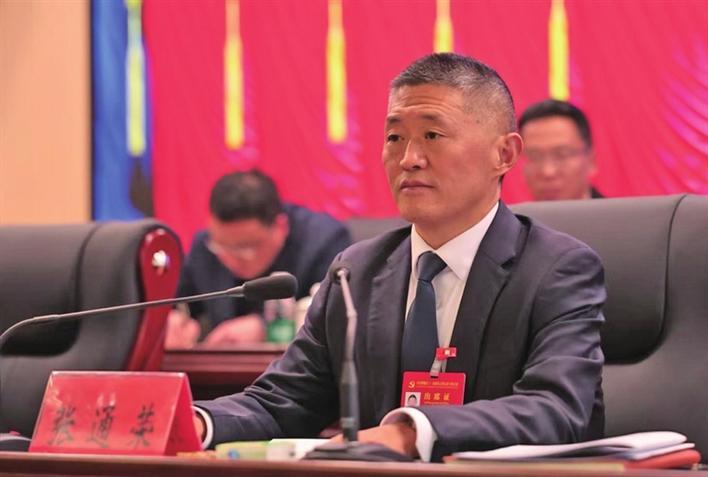
Core Viewpoint - The proposals presented by Zhang Tongrong at the Sichuan Provincial Two Sessions focus on transforming ecological value, empowering the computing power industry, and promoting regional collaborative development to overcome development bottlenecks and activate growth momentum in Ya'an [3][4]. Group 1: Ecological Value Transformation - The proposal emphasizes a development strategy of "regional collaboration and resource sharing," suggesting the establishment of a collaborative mechanism for medical and health care in Ya'an, Meishan, and Leshan [4]. - Ya'an aims to develop ecological medicinal material cultivation and forest health care, leveraging its ecological advantages to create a health and wellness destination [4]. - The integration of local culture into health care industries is highlighted, with Meishan focusing on cultural health and dietary therapy, while Leshan promotes Zen health care and cultural tourism [4]. Group 2: Computing Power Industry Empowerment - The proposal advocates for aligning with the national "East Data West Computing" strategy, pushing for Ya'an to be included in the national computing power network as a hub in the Chengdu-Chongqing area [5]. - There is a call to transform the computing power industry from basic models like "data center leasing" to advanced applications in agricultural modernization, digital tourism, and industrial intelligence [5]. - The proposal also stresses the importance of leveraging major opportunities such as the construction of the Sichuan-Tibet Railway and requests provincial support for key projects like the China Ya'an Cloud Intelligent Computing Center [5].