平均工资

Search documents
吉林省平均工资
Sou Hu Cai Jing· 2025-10-28 06:41
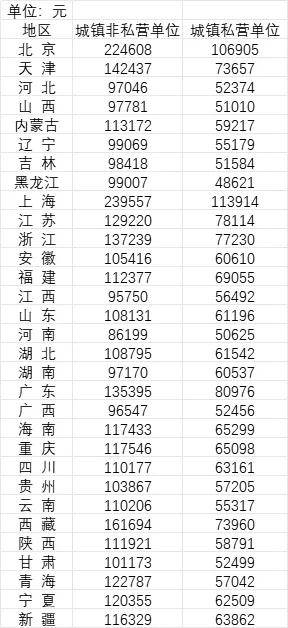
Core Insights - The average annual salary for urban non-private sector employees in China for 2024 is 124,110 yuan, reflecting a nominal increase of 2.8% and a comparable increase of 2.6% from the previous year [1] - The average annual salary for urban private sector employees is 69,476 yuan, with a nominal increase of 1.7% and a comparable increase of 4.0% [1] - Non-private sector salaries are significantly higher than private sector salaries across the board [1] Salary Distribution by Region - Nine provinces have non-private sector average salaries exceeding 120,000 yuan, including Shanghai, Beijing, Tibet, Tianjin, Zhejiang, Guangdong, Jiangsu, Qinghai, and Ningxia [1] - Shanghai and Beijing lead in non-private sector average salaries, driven by advanced modern service industries and high-tech sectors [2] Salary Data by Province - Detailed salary data for urban non-private and private sector employees across 31 provinces is provided, with notable disparities between provincial capitals and smaller cities [3] - For example, Hefei in Anhui has a non-private sector average salary of 122,162 yuan, while Taiyuan in Shanxi has 113,002 yuan, both being the highest in their respective provinces [4] Industry Salary Comparison - The top three industries for average salaries in both non-private and private sectors are information transmission, software and IT services, finance, and scientific research and technical services [4] - There are significant variations in industry salary rankings across different provinces, with finance being the highest in 14 provinces and IT services leading in 7 provinces [4]

31省份去年平均工资公布
第一财经· 2025-10-27 11:39
Core Insights - The average annual salary for urban non-private sector employees in China for 2024 is 124,110 yuan, reflecting a nominal increase of 2.8% and a comparable increase of 2.6% from the previous year [3] - The average annual salary for urban private sector employees is 69,476 yuan, with a nominal increase of 1.7% and a comparable increase of 4.0% [3] - The data indicates that non-private sector salaries are significantly higher than those in the private sector [3] Salary Distribution by Province - Nine provinces have an average salary exceeding 120,000 yuan for non-private sector employees, including Shanghai, Beijing, Tibet, Tianjin, Zhejiang, Guangdong, Jiangsu, Qinghai, and Ningxia [4] - Shanghai and Beijing lead the provinces in average salaries for non-private sector employees, attributed to their developed modern service industries and high-tech sectors [5] - For private sector employees, the top five provinces in average salary are Shanghai, Beijing, Guangdong, Jiangsu, and Zhejiang [6] Salary Variations within Provinces - There are significant disparities in average salaries within provinces, with capital cities and major urban centers generally offering higher salaries than smaller cities [8] - For example, Hefei, the capital of Anhui, has an average salary of 122,162 yuan, the only city in the province exceeding 120,000 yuan [8] Industry Salary Disparities - The highest average salaries for both non-private and private sectors are found in the information transmission, software and information technology services, financial services, and scientific research and technical services industries [9] - Financial services rank first in average salary in 14 provinces, while information technology services lead in 7 provinces [9] - Although mining does not rank in the top three nationally, it is prominent in resource-rich provinces, ranking first in average salary in 8 provinces [9]

31省份去年平均工资公布 9省份非私营单位平均工资超12万
Di Yi Cai Jing· 2025-10-27 10:59
Core Insights - The average annual salary for urban non-private sector employees in China for 2024 is 124,110 yuan, reflecting a nominal increase of 2.8% and a comparable increase of 2.6% from the previous year [1] - The average annual salary for urban private sector employees is 69,476 yuan, with a nominal increase of 1.7% and a comparable increase of 4.0% [1] - Non-private sector salaries are significantly higher than private sector salaries across the board [1] Salary Distribution by Region - Nine provinces have non-private sector average salaries exceeding 120,000 yuan, including Shanghai, Beijing, Tibet, Tianjin, Zhejiang, Guangdong, Jiangsu, Qinghai, and Ningxia [1] - Shanghai and Beijing lead in non-private sector average salaries, driven by advanced modern service industries and high-tech sectors [2] - In the private sector, the top five provinces for average salaries are Shanghai, Beijing, Guangdong, Jiangsu, and Zhejiang [3] Salary Data by Province - Detailed salary data for urban non-private and private sector employees across 31 provinces is published in the "China Statistical Yearbook 2025" [5] - For example, Hefei, the capital of Anhui, has a non-private sector average salary of 122,162 yuan, the only city in the province exceeding 120,000 yuan [5] - Taiyuan, the capital of Shanxi, has a non-private sector average salary of 113,002 yuan, the only city in the province exceeding 100,000 yuan [5] Industry Salary Disparities - The top three industries for average salaries in both non-private and private sectors are information transmission, software and IT services, finance, and scientific research and technical services [5] - There are significant regional differences in the leading industries for average salaries among non-private sector employees [5] - In 14 provinces, finance ranks as the highest paying industry, while information transmission and IT services lead in 7 provinces [5] Resource Sector Insights - Although the mining industry does not rank among the top three for average salaries nationally, it is prominent in resource-rich provinces, ranking first in 8 provinces and second in 3 provinces for non-private sector average salaries [6]

31省份去年平均工资公布,9省份非私营单位平均工资超12万
Di Yi Cai Jing· 2025-10-27 10:58
Core Insights - The average annual salary for urban non-private sector employees in China for 2024 is 124,110 yuan, an increase of 3,412 yuan or 2.8% nominally, and 2.6% in real terms [1] - The average annual salary for urban private sector employees is 69,476 yuan, an increase of 1,136 yuan or 1.7% nominally, and 4.0% in real terms [1] - Non-private sector salaries are significantly higher than private sector salaries across the board [1] Provincial Salary Data - Nine provinces have non-private sector average salaries exceeding 120,000 yuan, including Shanghai, Beijing, Tibet, Tianjin, Zhejiang, Guangdong, Jiangsu, Qinghai, and Ningxia [2] - Shanghai and Beijing lead the non-private sector average salaries, attributed to their developed modern service industries and high-tech sectors [2] - In the private sector, the top five provinces for average salaries are Shanghai, Beijing, Guangdong, Jiangsu, and Zhejiang [3] Detailed Salary Breakdown - The average salaries for urban non-private and private sector employees in various regions are detailed, with Beijing's non-private sector average at 224,608 yuan and private sector at 106,902 yuan [4] - Significant salary disparities exist within provinces, with capital cities often having higher average salaries compared to smaller cities [5] - For example, Hefei in Anhui has a non-private sector average salary of 122,162 yuan, while Taiyuan in Shanxi has 113,002 yuan [5] Industry Salary Insights - The top three industries for average salaries in both non-private and private sectors are information transmission, software and IT services, finance, and scientific research and technical services [5] - The finance industry ranks first in average salaries in 14 provinces, while information transmission and IT services lead in 7 provinces [5] - In resource-rich provinces, the mining industry shows higher average salaries, ranking first in 8 provinces and second in 3 provinces for non-private sector employees [6]
波黑塞族共和国最高薪行业平均工资达2007马克
Shang Wu Bu Wang Zhan· 2025-08-28 12:01
Core Insights - The average net salary for employees in the Republika Srpska in July was 1556 marks, with the highest average salary in the financial and insurance sector at 2007 marks, while the construction sector had the lowest average salary at 1206 marks [1] Salary and Consumer Prices - In July, the price of a basket of consumer goods in the Republika Srpska was 2750 marks, indicating that the average net salary only covered 57% of the cost of this basket [1] - The highest proportion of household spending was on food, averaging 1269 marks, followed by housing and utilities at 667 marks, transportation at 226 marks, clothing and footwear at 221 marks, and household maintenance at 161 marks [1]
热点城市工资单曝光,看看多少年才能买房?
3 6 Ke· 2025-07-24 02:15
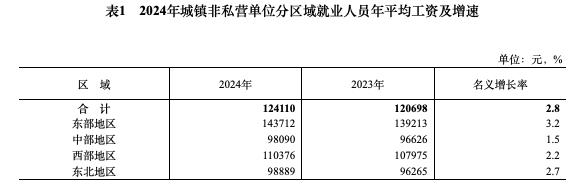
Summary of Key Points Core Viewpoint The average annual salary for urban employees in China for 2024 has been released, showing significant variations across regions and industries, with major cities like Beijing and Shenzhen leading in average salaries. The data indicates a growing disparity in housing affordability relative to income levels in various cities. Group 1: Average Salary Data - The national average salary for urban non-private sector employees in 2024 is 124,110 yuan (approximately 10,342.5 yuan/month), while for private sector employees, it is 69,476 yuan (approximately 5,789.7 yuan/month) [2][3] - Among regions, the eastern region has the highest average salary for non-private sector employees at 143,712 yuan (approximately 11,976 yuan/month), with a nominal growth of 3.2% [3] - Beijing has the highest average salary for non-private sector employees at 224,608 yuan (approximately 18,717.3 yuan/month) and for private sector employees at 106,905 yuan (approximately 8,908.8 yuan/month) [4][6] Group 2: Regional Salary Comparisons - In the eastern region, the average salary for private sector employees is 77,585 yuan, while the lowest is in the northeastern region at 53,058 yuan [4] - Cities like Hangzhou and Guangzhou show competitive salaries, with Hangzhou's non-private sector average at 162,774 yuan (approximately 13,564.5 yuan/month) and private sector at 92,054 yuan (approximately 7,671.2 yuan/month) [5][6] - The average salary in Shenzhen for non-private sector employees is 174,478 yuan (approximately 14,539.8 yuan/month) [4] Group 3: Industry Salary Insights - The highest average salary in the non-private sector is in the information transmission, software, and IT services industry at 238,966 yuan (approximately 19,913.8 yuan/month), followed by the financial industry at 201,883 yuan (approximately 16,823.6 yuan/month) [7][8] - For private sector employees, the financial industry also ranks highest with an average salary of 135,339 yuan (approximately 11,278.3 yuan/month) [8] Group 4: Housing Affordability - The analysis of housing affordability indicates that cities like Shanghai and Beijing have a high housing price-to-income ratio, with Shanghai at 30, making home buying significantly challenging [14][16] - In contrast, cities like Changsha and Qingdao have a lower housing price-to-income ratio, around 8-10, indicating a more favorable environment for home buyers [15][16]
深圳2024年平均工资出炉:城镇非私营单位就业人员年平均工资为174478元 同比增长1.5%
news flash· 2025-06-30 13:34
Core Insights - The average annual salary for urban non-private sector employees in Shenzhen for 2024 is reported to be 174,478 yuan, reflecting a year-on-year increase of 1.5% [1] - The average annual salary for urban non-private sector employees on duty is 177,057 yuan, with a year-on-year growth of 1.4% [1] - The average annual salary for urban private sector employees in Shenzhen is 95,217 yuan, showing a year-on-year increase of 1.1% [1]
16省份2024年平均工资公布
第一财经· 2025-06-28 10:44
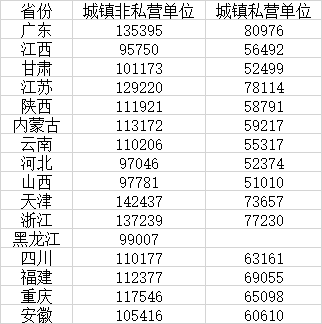
Core Insights - The average annual salary for urban non-private sector employees in China reached 124,110 yuan in 2024, marking a nominal increase of 2.8% and a comparable increase of 2.6% from the previous year [1] - The average annual salary for urban private sector employees was 69,476 yuan, with a nominal increase of 1.7% and a comparable increase of 4.0% [1] Provincial Salary Data - Sixteen provinces have reported their average annual salary data for urban employees, with non-private sector salaries exceeding 120,000 yuan in provinces like Tianjin, Zhejiang, Guangdong, and Jiangsu [2][3] - In Tianjin, the average salary for urban non-private sector employees was 142,437 yuan, an increase of 4,430 yuan or 3.2% year-on-year [3] - Zhejiang's average salary for non-private sector employees was 137,239 yuan, with a year-on-year increase of 4,194 yuan or 3.2% [4] Industry Salary Disparities - The highest average salaries in urban non-private sectors are found in the information transmission, software, and IT services, finance, and scientific research sectors [5] - In Zhejiang, the average salary in the information transmission and software sector exceeded 301,889 yuan, the highest across all industries [5] - Financial services also ranked high in several provinces, while mining, although not in the top three nationally, was prominent in resource-rich provinces [5]

16省份2024年平均工资公布,收入前三行业各省不相同
Di Yi Cai Jing· 2025-06-28 09:44
Core Insights - The average annual salary for urban non-private sector employees in China reached 124,110 yuan in 2024, reflecting a nominal increase of 2.8% from the previous year [1][4] - The average annual salary for urban private sector employees was 69,476 yuan in 2024, with a nominal increase of 1.7% [1][4] - There is a significant disparity in average salaries between non-private and private sectors, with non-private sector salaries substantially higher [3][5] Provincial Salary Data - Among the 16 provinces, 10 reported average salaries for urban non-private sector employees exceeding 110,000 yuan, with Tianjin leading at 142,437 yuan [4][5] - Zhejiang's urban non-private sector employees earned an average of 137,239 yuan, while Guangdong's average was 135,395 yuan [5][6] - The average salary in provincial capitals often exceeds that of smaller cities, with Hefei and Taiyuan being notable examples [5][6] Industry Salary Insights - The top three industries for average salaries in urban non-private sectors vary by province, with information transmission, software, and IT services leading in several regions [6] - In Zhejiang, the average salary for employees in the information transmission and software sector surpassed 301,889 yuan, the highest across all industries [6] - Financial and mining industries also show high average salaries, particularly in provinces rich in resources [6]
压力测试来了!石破茂还需闯过这一关
第一财经· 2025-06-15 09:50
Group 1 - The upcoming Tokyo Metropolitan Assembly election is seen as a precursor to the national Diet's House of Councillors election, with voting scheduled for June 22 [2][4] - The Liberal Democratic Party (LDP), led by Prime Minister Shinzo Abe, is under scrutiny to maintain its seats in the Tokyo Assembly, as no party holds an absolute majority [4] - Recent polls indicate a rise in support for Abe, with one poll showing a 6% increase to 39% and another showing a 7% increase to 34%, up from around 20% previously [4] Group 2 - Approximately 300 candidates are contesting in the Tokyo Assembly election, marking the highest number in over 30 years [4] - The main issues in the election include rising prices, political scandals, and demographic challenges such as aging and declining birth rates [6] - The Consumer Price Index (CPI) in Japan rose by 3.5% year-on-year in April, exceeding the Bank of Japan's target of 2% [6] Group 3 - Abe has pledged to increase nominal GDP to 1,000 trillion yen by 2040 and aims for a 50% increase in average wages, requiring an annual growth rate of approximately 2.74% [8] - The LDP is considering cash handouts to citizens to alleviate the impact of rising prices [9] - The price of rice in Japan has doubled compared to the previous year, with the average price for a 5 kg bag reaching 4,223 yen [9] Group 4 - Japan's government is facing pressure from U.S. tariffs, with a significant decline in business confidence reported among large enterprises [11] - The confidence index for large companies dropped from 2.0 to -1.9 in the second quarter, with the manufacturing sector particularly affected [11] - The steel industry confidence index fell to -29.1, while the automotive sector index was at -16.1, indicating severe challenges [11]