德中合作

Search documents
德国总理默茨在华参访企业:愿马年成为德中合作与发展之年
Xin Hua She· 2026-02-26 15:23
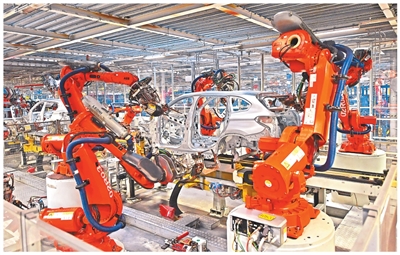
Group 1 - German Chancellor Merz's visit to China emphasizes the importance of practical cooperation between Germany and China, showcasing the integration of German manufacturing with Chinese technology [1][2] - During the visit, Merz experienced advanced technologies such as the new Mercedes-Benz S-Class and autonomous driving systems developed in collaboration with Chinese tech company Momenta, highlighting the potential for future mobility solutions [1] - The visit included interactions with humanoid robots at Yushutech, indicating Germany's keen interest in China's technological innovations and the potential for collaboration in the robotics industry [1] Group 2 - Merz's itinerary included a visit to Siemens Energy's high-voltage switch facility in Hangzhou, where he gained insights into the development of German enterprises in China [2] - The visit was marked by the participation of approximately 30 executives from leading German companies across various sectors, including automotive, chemicals, biopharmaceuticals, and mechanical manufacturing, resulting in over ten commercial agreements [2] - Siemens' CEO highlighted China's "14th Five-Year Plan" as a solid blueprint for growth, aligning with Germany's strengths in promoting consumption, green industries, and high-tech manufacturing [2]
默茨:中国已成为全球重要力量,德中应合作应对挑战
Zhong Guo Xin Wen Wang· 2026-02-25 05:27
Group 1 - The core message of the article emphasizes the importance of Germany-China cooperation and the potential economic opportunities that can arise from it, as stated by German Chancellor Merz during his first visit to China since taking office [1][3] - Merz highlighted that the high-level German business delegation accompanying him signifies the strong consensus within the German business community regarding the potential for collaboration with China [1] - He criticized the notion of "decoupling" from China, asserting that such a move would harm Germany and lead to missed economic opportunities, rather than improving economic prospects [1][2] Group 2 - Merz acknowledged China's significant role as a global power, indicating that Germany's policy towards China must reflect this reality, as no one can afford to ignore China's influence [1] - He pointed out that addressing global challenges, such as climate change, requires cooperation with China, reinforcing the need for collaborative efforts between Germany and China [2]
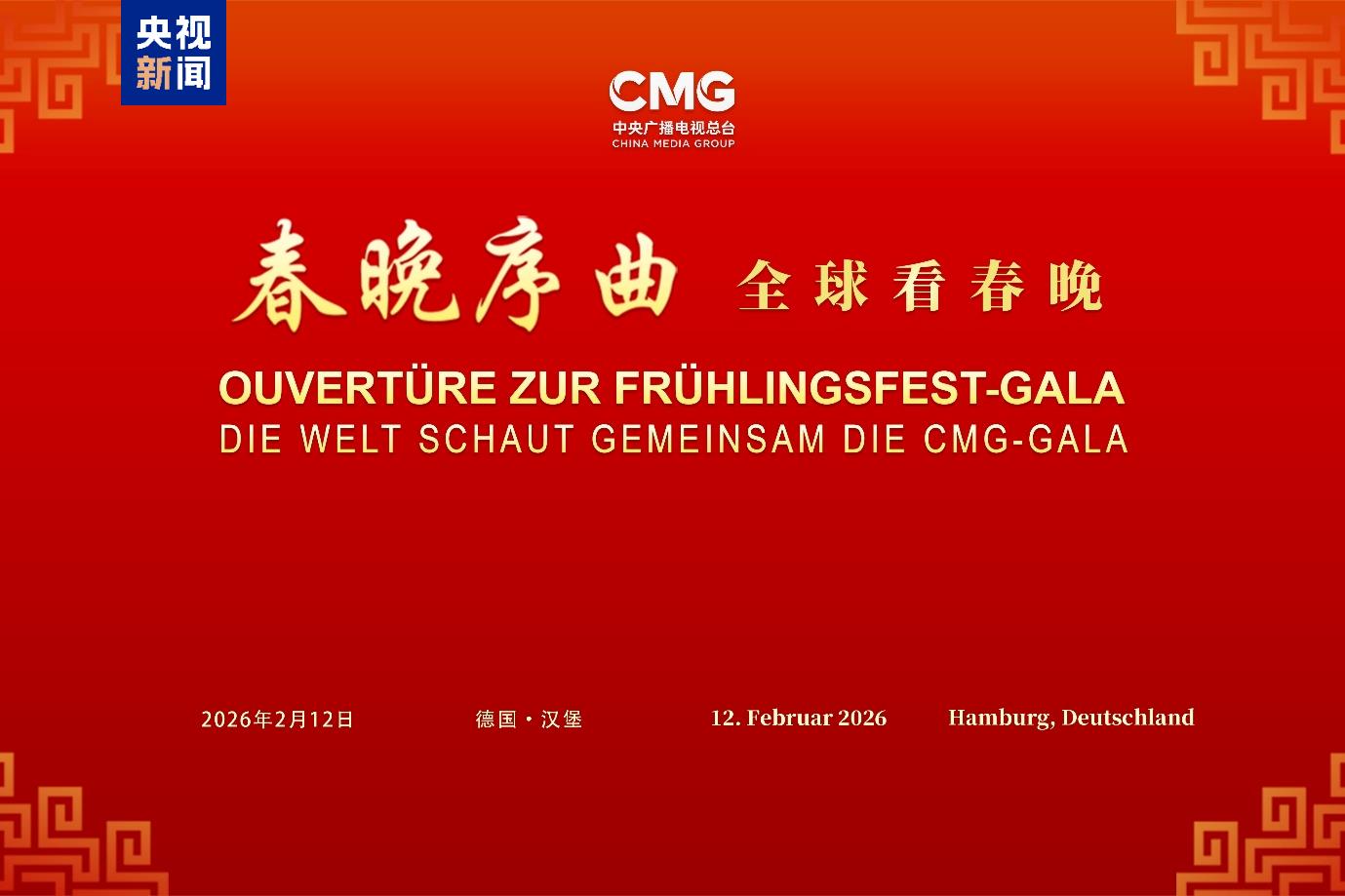
全球看春晚!总台“春晚序曲”德国专场活动在汉堡举行
Xin Lang Cai Jing· 2026-02-13 14:17
Core Viewpoint - The event "Spring Festival Prelude Global Viewing" held in Hamburg marks a significant cultural exchange between China and Germany, emphasizing the importance of the Spring Festival as a symbol of unity and cooperation between the two nations [2][3][10]. Group 1: Event Overview - The event was co-hosted by China Central Radio and Television and the Hamburg Sino-German Friendship Association, attended by over 120 guests including officials and cultural representatives from both countries [2]. - The theme for this year's Spring Festival Gala is "Galloping Steeds, Unstoppable Momentum," showcasing technological innovations such as "5G+4K/8K+AI" to enhance the cultural experience for global audiences [3]. Group 2: Statements from Officials - Shen Haiyong, the head of China Central Radio and Television, highlighted the gala's role as a "spiritual New Year's Eve dinner" for global Chinese communities, with over 3,100 media outlets participating in its international dissemination last year [3]. - Hamburg's Mayor, Peter Tschentscher, noted the significance of the upcoming Year of the Horse, aligning it with Hamburg's development plans and the long-standing economic partnership with China, celebrating 40 years of friendship with Shanghai [5]. - Lin Dong, the Chinese Consul General in Hamburg, emphasized the need for strategic communication and cooperation between China and Germany, particularly in the context of China's 14th Five-Year Plan starting in 2026 [7]. Group 3: Cultural Significance - The event featured performances by the German Bole Chinese Choir and the North German Philharmonic Orchestra, showcasing traditional Chinese music and enhancing cultural exchange [10][11]. - The lighting of "Chinese Red" at the Hamburg Yuyuan Garden symbolized the friendship between Hamburg and Shanghai, reinforcing cultural ties [12]. Group 4: Media Coverage - The event received extensive coverage from major German media outlets, including n-tv and Hamburg DIREKT, highlighting its significance in promoting Sino-German relations [13].

市场“用脚投票”——从德国外贸结构看德中合作韧性
Xin Lang Cai Jing· 2026-02-08 03:00
Core Insights - Germany's trade with China is projected to reach 253 billion euros by 2025, marking a 2.7% year-on-year increase, reaffirming China as Germany's largest trading partner [1] - In contrast, trade with the United States is expected to decline by 4.4% to 241.6 billion euros, highlighting a shift in trade dynamics influenced by external policies and market demands [1] Trade Dynamics - The structural change in trade relationships is attributed to the impact of U.S. tariffs on German exports, prompting German companies to focus more on cooperation with China [2] - The trend is particularly evident in the green transition sector, where Germany relies heavily on Chinese imports for solar panels and batteries, essential for its renewable energy strategy [2] Investment Trends - Bilateral investments between Germany and China are progressing steadily, particularly in the automotive, chemical, and renewable energy sectors [3] - Bosch Group plans to invest 10 billion yuan in Suzhou for smart driving technology, while Volkswagen has established a comprehensive R&D center in Anhui to enhance market responsiveness [3] - BASF is expanding its presence in China with a significant investment of approximately 8.7 billion euros in an integrated base in Zhanjiang, emphasizing the necessity of growth in the Chinese market for the chemical industry [3] Chinese Investment in Germany - Chinese investments in renewable energy, robotics, medical technology, and software solutions in Germany are on the rise, with 199 investment projects established in 2024 [4] - Despite challenges like high labor costs, Germany remains a key investment destination for Chinese companies, with potential for further cooperation [5] Innovation and Collaboration - The resilience of Sino-German economic cooperation is rooted in industrial complementarity and shared growth perspectives, with companies prioritizing profit and innovation [6] - German companies are increasingly establishing R&D centers in China to leverage local advancements in electric and intelligent technologies, enhancing cost control and market responsiveness [6] - The automotive sector is entering a new phase of collaboration focused on R&D, with nearly 70% of surveyed companies planning to increase investments in China, particularly in research and development [6] Global Cooperation - China is expanding its high-level openness and global cooperation, providing confidence for foreign enterprises to operate and innovate in the Chinese market [7] - The narrative emphasizes that China has evolved from being merely a "world factory" to becoming an innovation hub, urging companies not to overlook the second-largest market [7]
【环球财经】全球不稳定性加剧凸显德中合作价值——访德国斯图加特会展中心首席执行官布莱因罗特
Xin Hua She· 2025-07-24 08:40
Group 1 - The core viewpoint emphasizes the importance of strengthening cooperation between Germany and China amidst global geopolitical tensions, supply chain pressures, and increasing trade barriers [1] - The Stuttgart Exhibition Center serves as a vital platform for economic connection between Germany and China, with significant participation from both Chinese and German businesses in exhibitions [1] - The optimistic outlook on Germany-China cooperation highlights numerous opportunities that can benefit both nations and the world, focusing on shared interests and collaborative efforts [1] Group 2 - The current era is characterized by disruptive technologies such as artificial intelligence, quantum computing, and automation, which are reshaping global operational rules, necessitating cooperation over division [2] - Global challenges like climate change present significant opportunities in green technologies, hydrogen energy, and fuel cells, requiring collaborative efforts from Germany, China, and other nations [2]
“与中国合作,就是投资未来”(见证·中国机遇)
Ren Min Ri Bao· 2025-07-23 22:03
Group 1: Overview of Sino-German Cooperation - Bavaria is Germany's largest and economically developed federal state, with China as its top global trading partner and a significant investment source, hosting around 500 Chinese companies [5][13] - The historical context of Sino-German relations dates back to 1975, marked by Franz Josef Strauss's visit to China, which laid the foundation for ongoing political, economic, and social exchanges [6][7] - The collaboration between China and Bavaria has yielded fruitful results, emphasizing mutual benefits and cultural exchanges [7][8] Group 2: Industry Developments - Klaus-Maffei Group, a leading manufacturer in plastic and rubber machinery, has established a new headquarters in Bavaria, featuring advanced production technologies that significantly reduce carbon emissions and waste [10][11] - Since its acquisition by China National Chemical Corporation, Klaus-Maffei has undergone structural changes, focusing on green manufacturing and digital operations, which have enhanced its market presence [11][12] - NIO, a Chinese electric vehicle company, has established multiple battery swap stations in Bavaria, highlighting the region's commitment to innovative solutions in electric mobility [13][14] Group 3: Future Prospects - Bavaria aims to attract more Chinese investments in emerging industries such as smart manufacturing and renewable energy, leveraging its robust infrastructure and skilled workforce [13][14] - The region's ongoing collaboration with Chinese enterprises is expected to contribute to local economic growth, job creation, and technological advancements [12][14] - The importance of open dialogue and cooperation between Germany and China is emphasized, especially in the context of global geopolitical changes [15]