戏剧创新

Search documents
北京人艺新排作品《樱桃园》上演
Xin Lang Cai Jing· 2026-01-08 22:05
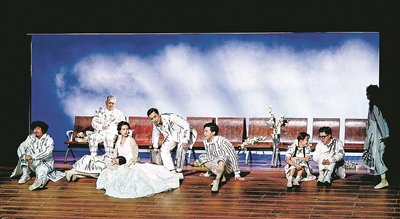
Core Viewpoint - The new production of "The Cherry Orchard" by the Beijing People's Art Theatre represents a bold exploration of a classic work, emphasizing its relevance in today's rapidly changing world [2][3]. Group 1: Production Details - The new adaptation of "The Cherry Orchard" is directed by David Doiashvili, featuring a cast of artists from Georgia and utilizing the translation by Jiao Juyin, a founding director of the Beijing People's Art Theatre [2]. - The stage design intentionally blurs the boundaries of time and reality, with actors in DuPont paper costumes gradually filling the space, which is then overwhelmed by time [2]. Group 2: Themes and Character Reactions - The play serves as a metaphor for change and transition, reflecting the characters' varied responses to the irreversible flow of time as the cherry orchard is auctioned off [3]. - The design includes moments where multiple characters speak simultaneously, amplifying the sense of chaos and the loneliness of individuals unable to truly listen to one another [3]. Group 3: Collaborative Efforts - The collaboration between Chinese and Georgian artists has involved over six months of refining both working methods and thought processes, aiming to convey the depth of Chekhov's work while innovating its form [3].

喧哗的《樱桃园》大胆的“契诃夫”
Xin Lang Cai Jing· 2026-01-05 22:49
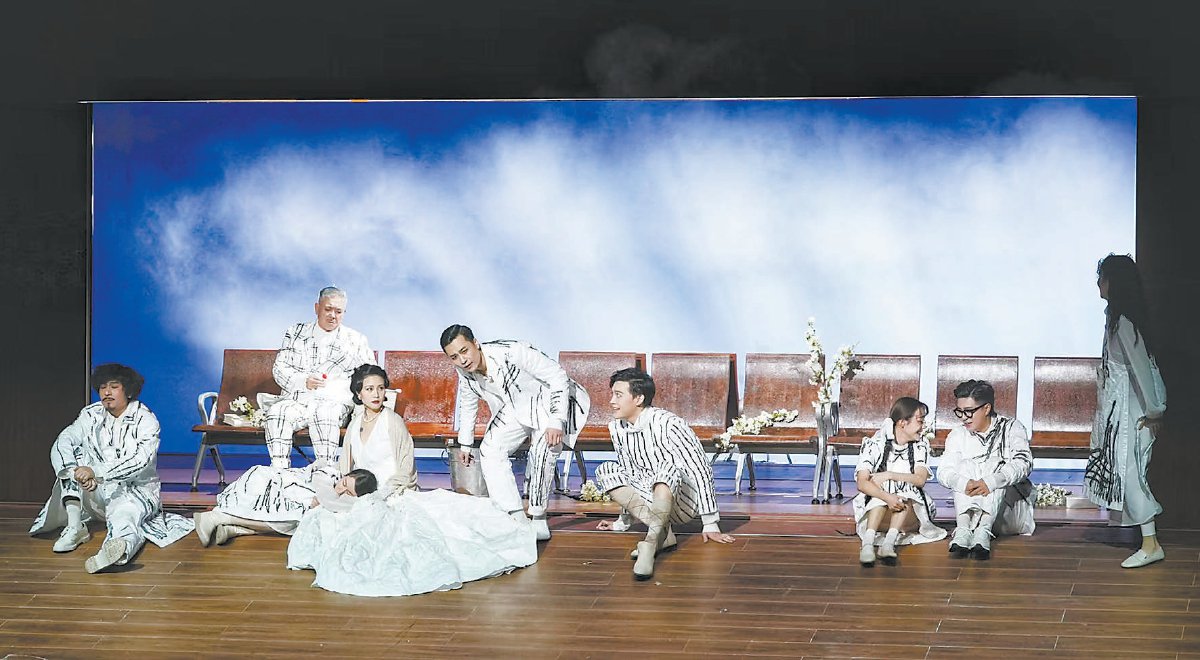
Core Viewpoint - The new production of "The Cherry Orchard" by the Beijing People's Art Theatre represents a bold exploration of a classic work, aiming to reinterpret Chekhov's themes while paying homage to the original text [1] Group 1: Production and Direction - The stage design features a compact, radiating "box" made of wood, creating a space that blurs the boundaries of time and reality, allowing actors to gradually fill it with memories [2] - Director David Doiashvili emphasizes the metaphor of change and transition in "The Cherry Orchard," reflecting on the contemporary world's relevance of the play's themes [2][3] - The production incorporates a significant use of real-time imagery to enhance emotional expression, with dynamic camera work and close-ups of actors' expressions [3] Group 2: Artistic Collaboration and Innovation - Doiashvili aims to blend the emotional depth of Georgian theater with the subtlety of Asian aesthetics, creating an atmospheric experience that highlights each character's struggle with time and loss [4] - The rehearsal process involved unconventional methods, such as starting from the third act to understand character development, fostering a deeper comprehension of the narrative [4][6] - The collaboration between Chinese and Georgian artists focuses on conveying the depth of Chekhov's work while innovating the form to give traditional pieces a new dramatic core [6]
以艺相聚 对话东西
Ren Min Ri Bao· 2025-12-18 22:30
Core Viewpoint - The 2025 Beijing People's Art Theatre International Drama Invitation Exhibition aims to bridge cultural exchanges through diverse performances from various countries, showcasing the universal language of drama and its emotional resonance across cultures [2][4]. Group 1: Event Overview - The exhibition will take place from October 11 to November 26, 2025, featuring 14 performances from 9 countries, totaling 42 shows [2]. - Notable productions include Italy's "One Servant, Two Masters," France's "The Screens," and Germany's "The Threepenny Opera," highlighting the event's international scope [2]. Group 2: Cultural Exchange and Collaboration - The exhibition serves as a platform for cultural exchange, celebrating the 50th anniversary of diplomatic relations between China and the EU, with participation from major European theatre companies [4][5]. - Beijing People's Art Theatre has established a cooperative mechanism for theatre exchanges, promoting mutual visits and equal exchanges with various international theatres [5]. Group 3: Innovation in Theatre - The opening performance will be a new adaptation of "Hamlet," showcasing the confidence of Chinese theatre artists and their innovative interpretations of classic works [6]. - The exhibition emphasizes innovation as a core principle, with directors like David Doiaashvili bringing fresh perspectives to classic plays, enhancing audience engagement [6][7]. Group 4: Audience Development - The theatre prioritizes nurturing audiences, especially students, by offering affordable ticket prices for educational performances, benefiting over 500,000 students [10]. - The exhibition includes lectures to deepen audience understanding of international productions, encouraging active engagement with the art form [11]. Group 5: Future Directions - The exhibition aims to enhance international collaboration and provide diverse content, aspiring to become a model for cultural exchange and elevate the influence of Chinese civilization [12].

中外传世名作“深情共赴”(共建文明百花园)
Ren Min Ri Bao Hai Wai Ban· 2025-12-02 22:33
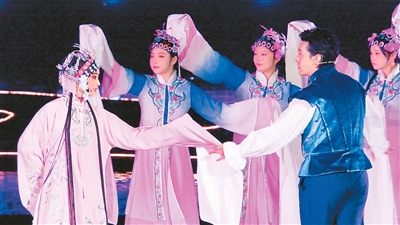
Core Viewpoint - The seventh Tang Xianzu International Drama Exchange Month in Fuzhou, Jiangxi, showcased a cross-cultural dialogue through the performance of "Tang Sha Meeting," blending elements from "The Peony Pavilion" and "Romeo and Juliet" to highlight the unique charm of drama as a shared human expression [4][5]. Group 1: Cultural Exchange and Artistic Collaboration - The opening performance utilized a water stage to create an immersive artistic experience, reflecting the vitality of cultural innovation in the new era [4]. - The collaboration between Chinese and British directors emphasizes the shared themes of love and societal constraints present in both "The Peony Pavilion" and "Romeo and Juliet," showcasing the emotional depth and philosophical inquiries of both works [5][6]. - The creative team aimed to present key moments of "love at first sight" and "parting in death," illustrating the parallel narratives of love and loss across cultures [5][6]. Group 2: Artistic Development and Future Prospects - The collaboration marks a significant evolution from previous works, transitioning from a single narrative to a dual narrative structure, enhancing the storytelling and expression [7]. - The performance of "The Peony Pavilion" alongside other regional operas like Cantonese and Gan opera demonstrates the enduring vitality of traditional Chinese theater and its ability to resonate across different art forms [8]. - Future plans include expanding the reach of "Tang Sha Meeting" to international stages, promoting cultural dialogue through art, and continuing to share Chinese stories globally [7][9].