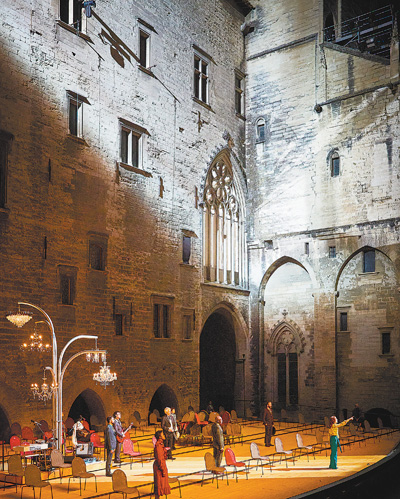
《樱桃园》

Search documents
粉笔绘就松弛 滑梯玩出深意
Huan Qiu Wang· 2026-01-23 01:41
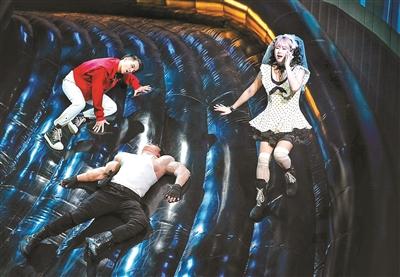
Group 1 - The core theme of the productions "The Cherry Orchard" and "The Wayfarer" is the exploration of modern interpretations of classic Russian literature, showcasing a blend of realism and contemporary artistic expression [4][5][6] - "The Cherry Orchard" is directed by Georgian director David Doiashvili, who emphasizes the dislocation of characters and their inability to escape their fates, reflecting on themes of loss and nostalgia [5][6][9] - The production employs innovative staging techniques, such as the use of a slanted floor and physical movement to convey the characters' emotional states and the passage of time [6][7][8] Group 2 - "The Wayfarer" presents a unique narrative structure where a single incident leads to multiple character interactions, highlighting societal roles and moral dilemmas faced by individuals [9][10] - The play's setting features a large inflatable slide, which serves as a central visual metaphor, affecting the audience's viewing experience while reinforcing the thematic elements of the narrative [11] - The conclusion of "The Wayfarer" reveals a philosophical twist, suggesting that the characters' struggles are part of a larger cosmic game, prompting the audience to reflect on the nature of existence and morality [10][11]

北京人艺新排作品《樱桃园》上演
Xin Lang Cai Jing· 2026-01-08 22:05
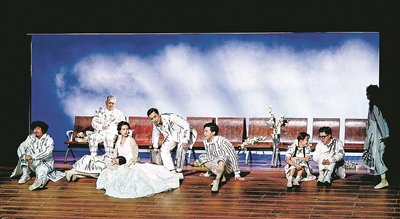
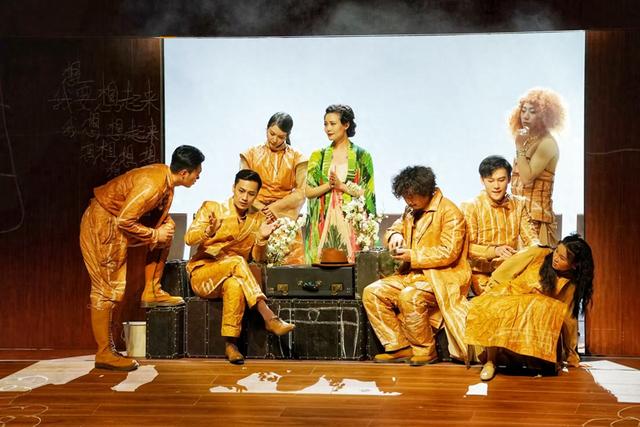
Core Viewpoint - The new production of "The Cherry Orchard" by the Beijing People's Art Theatre represents a bold exploration of a classic work, emphasizing its relevance in today's rapidly changing world [2][3]. Group 1: Production Details - The new adaptation of "The Cherry Orchard" is directed by David Doiashvili, featuring a cast of artists from Georgia and utilizing the translation by Jiao Juyin, a founding director of the Beijing People's Art Theatre [2]. - The stage design intentionally blurs the boundaries of time and reality, with actors in DuPont paper costumes gradually filling the space, which is then overwhelmed by time [2]. Group 2: Themes and Character Reactions - The play serves as a metaphor for change and transition, reflecting the characters' varied responses to the irreversible flow of time as the cherry orchard is auctioned off [3]. - The design includes moments where multiple characters speak simultaneously, amplifying the sense of chaos and the loneliness of individuals unable to truly listen to one another [3]. Group 3: Collaborative Efforts - The collaboration between Chinese and Georgian artists has involved over six months of refining both working methods and thought processes, aiming to convey the depth of Chekhov's work while innovating its form [3].
喧哗的《樱桃园》大胆的“契诃夫”
Xin Lang Cai Jing· 2026-01-05 22:49
Core Viewpoint - The new production of "The Cherry Orchard" by the Beijing People's Art Theatre represents a bold exploration of a classic work, aiming to reinterpret Chekhov's themes while paying homage to the original text [1] Group 1: Production and Direction - The stage design features a compact, radiating "box" made of wood, creating a space that blurs the boundaries of time and reality, allowing actors to gradually fill it with memories [2] - Director David Doiashvili emphasizes the metaphor of change and transition in "The Cherry Orchard," reflecting on the contemporary world's relevance of the play's themes [2][3] - The production incorporates a significant use of real-time imagery to enhance emotional expression, with dynamic camera work and close-ups of actors' expressions [3] Group 2: Artistic Collaboration and Innovation - Doiashvili aims to blend the emotional depth of Georgian theater with the subtlety of Asian aesthetics, creating an atmospheric experience that highlights each character's struggle with time and loss [4] - The rehearsal process involved unconventional methods, such as starting from the third act to understand character development, fostering a deeper comprehension of the narrative [4][6] - The collaboration between Chinese and Georgian artists focuses on conveying the depth of Chekhov's work while innovating the form to give traditional pieces a new dramatic core [6]
中国、格鲁吉亚艺术家联袂,北京人艺新戏《樱桃园》呈现不套路的契诃夫
Xin Lang Cai Jing· 2025-12-28 10:09
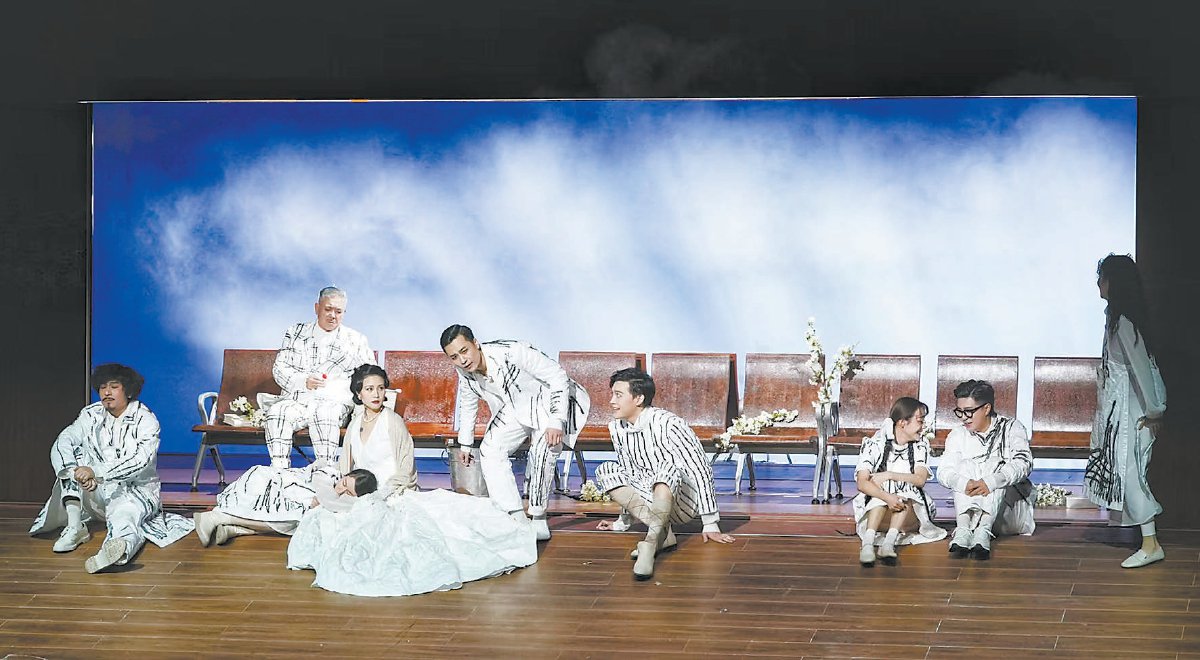
Core Viewpoint - The new production of "The Cherry Orchard" by the Beijing People's Art Theatre, directed by David Doiashvili, pays tribute to the legacy of Anton Chekhov and explores the themes of change and nostalgia in a contemporary context, marking the 120th anniversary of the birth of its influential translator, Jiao Juyin [1][3]. Group 1: Production Details - The new version of "The Cherry Orchard" utilizes Jiao Juyin's translation and features a collaborative effort with artists from Georgia, aiming for a bold reinterpretation of the classic [3]. - The play will premiere and run until January 11, 2026, showcasing a unique stage design that creates a metaphorical "wooden box" representing the characters' memories and the passage of time [1][4]. Group 2: Thematic Exploration - The production emphasizes the theme of transformation, as characters confront the sale of the cherry orchard, reflecting on their past and future amidst societal changes [4][9]. - The director's approach includes a blend of visual and auditory elements, enhancing the emotional impact and allowing for a deeper exploration of the characters' struggles with time and loss [9][11]. Group 3: Artistic Innovation - Doiashvili's direction challenges traditional performance styles, encouraging actors to engage physically and emotionally with the audience, thus breaking the fourth wall [11][13]. - The collaboration between Chinese and Georgian artists aims to convey the depth of Chekhov's work while innovating the form, creating a new dramatic core for the classic [13].
北京人艺跳出舒适区
Xin Lang Cai Jing· 2025-12-28 07:03
Core Perspective - The article highlights the innovative direction taken by Beijing People's Art Theatre (Beijing Renyi) under the direction of Georgian director David Doiashvili, particularly in the adaptation of Chekhov's "The Cherry Orchard" to commemorate the 120th anniversary of translator Jiao Ju-yin's birth [1][4] Group 1: Artistic Interpretation - Doiashvili's interpretation of "The Cherry Orchard" transcends the physical representation of a 19th-century Russian aristocratic estate, elevating it to a universal symbol of "everyone's childhood and past" [1] - The production breaks away from traditional interpretative patterns, allowing for a deeper dialogue between the classic text and contemporary themes [1] Group 2: Performance Style - The director merges emotional expressiveness from the Russian theatrical system with avant-garde elements from Western drama, injecting new vitality into Beijing Renyi's performances [2] - The portrayal of characters' loneliness and indifference is amplified, with overlapping dialogues creating a sense of emotional detachment that resonates with modern audiences [2] Group 3: Stage Design and Aesthetics - The stage design features symbolic and modern elements, creating a visually striking and metaphorically rich space, including slanted floors and rain effects [3] - The use of chalk drawings and projection technology blurs the lines between reality and illusion, enhancing the thematic depth of nostalgia and future aspirations [3] Group 4: Actor Performance and Challenges - Actors at Beijing Renyi are encouraged to explore new performance languages, moving away from their established Stanislavski-based methods, which presents both challenges and opportunities for growth [4] - While Doiashvili's creative approach is commendable, some repetitive techniques and pacing issues were noted, indicating areas for improvement [4]
以艺相聚 对话东西
Ren Min Ri Bao· 2025-12-18 22:30
Core Viewpoint - The 2025 Beijing People's Art Theatre International Drama Invitation Exhibition aims to bridge cultural exchanges through diverse performances from various countries, showcasing the universal language of drama and its emotional resonance across cultures [2][4]. Group 1: Event Overview - The exhibition will take place from October 11 to November 26, 2025, featuring 14 performances from 9 countries, totaling 42 shows [2]. - Notable productions include Italy's "One Servant, Two Masters," France's "The Screens," and Germany's "The Threepenny Opera," highlighting the event's international scope [2]. Group 2: Cultural Exchange and Collaboration - The exhibition serves as a platform for cultural exchange, celebrating the 50th anniversary of diplomatic relations between China and the EU, with participation from major European theatre companies [4][5]. - Beijing People's Art Theatre has established a cooperative mechanism for theatre exchanges, promoting mutual visits and equal exchanges with various international theatres [5]. Group 3: Innovation in Theatre - The opening performance will be a new adaptation of "Hamlet," showcasing the confidence of Chinese theatre artists and their innovative interpretations of classic works [6]. - The exhibition emphasizes innovation as a core principle, with directors like David Doiaashvili bringing fresh perspectives to classic plays, enhancing audience engagement [6][7]. Group 4: Audience Development - The theatre prioritizes nurturing audiences, especially students, by offering affordable ticket prices for educational performances, benefiting over 500,000 students [10]. - The exhibition includes lectures to deepen audience understanding of international productions, encouraging active engagement with the art form [11]. Group 5: Future Directions - The exhibition aims to enhance international collaboration and provide diverse content, aspiring to become a model for cultural exchange and elevate the influence of Chinese civilization [12].

在樱桃园中起舞
Ren Min Ri Bao· 2025-05-25 22:13
Core Points - The article highlights the enduring artistic vitality of French actress Isabelle Huppert, who continues to perform with passion and creativity at the age of 72, recently touring China with the play "The Cherry Orchard" [1][2] - Huppert's performance style is characterized by subtlety and precision, earning her recognition as one of the best actors of her time, with accolades including a second-place ranking in The New York Times' list of the best actors of the 21st century [2][4] - The production of "The Cherry Orchard," directed by Tiago Rodrigues, remains faithful to Chekhov's original work, focusing on the emotional struggles of a noble family facing the loss of their ancestral estate [2][6] Performance Insights - Huppert's portrayal of Lyuba Ranevskaya in "The Cherry Orchard" is marked by a restrained emotional expression, contrasting with previous interpretations that emphasized more overt emotionality [5][6] - The minimalist staging and non-naturalistic direction of the play allow for an open interpretation by the audience, encouraging personal connections to the character and the narrative [6][8] - Huppert's ability to convey complex emotions through subtle physicality and micro-expressions enhances the audience's engagement with the character's internal struggles [5][6] Cultural Exchange - Huppert expresses a strong appreciation for Chinese cinema, citing films like "Daylight Fireworks" and "Roadside Picnic" as examples of works that resonate with European audiences [7][8] - The actress emphasizes the universal language of film and theater as a means of fostering understanding and emotional connections across cultures [8] - Huppert is open to future collaborations with Chinese filmmakers and expresses a willingness to learn Mandarin to enhance her engagement with Chinese roles [8]