
战略价值

Search documents
AI涨上天,有色不动如山?懂了滞后性就知道该拿还是该跑,看懂的人已在悄悄布局
Sou Hu Cai Jing· 2026-02-05 16:20
Core Viewpoint - The current stagnation in the non-ferrous metals sector is not a sign of failure but rather a characteristic of its inherent lagging nature, which differs from the rapid movements seen in technology stocks [1][3] Group 1: Lagging Nature of Non-Ferrous Metals - Lagging nature means that positive developments do not immediately reflect in stock prices, requiring time for the market to react [3] - The non-ferrous metals industry has a long lead time for production, with mining projects taking 5 to 10 years from exploration to production, leading to limited new supply in the coming years [3] - The demand from sectors like electric vehicles and renewable energy takes time to translate into actual metal consumption, creating a growing supply-demand gap [3] Group 2: Market Dynamics and Capital Rotation - Market funds tend to focus on the most attractive sectors, currently dominated by AI and technology, which limits immediate investment in non-ferrous metals [4] - The narrative surrounding non-ferrous metals is less compelling compared to technology, making it harder to attract short-term speculative capital [4] - A rotation of funds from technology to non-ferrous metals requires a trigger point and typically occurs over a quarterly timeframe rather than daily [4] Group 3: Strategic Value of Non-Ferrous Metals - Non-ferrous metals are increasingly viewed as strategic assets rather than just cyclical commodities, with copper being likened to "new oil" and rare earths being essential for high-tech applications [4] - Recent actions by countries to regulate exports of key metals indicate a shift in how these assets are valued, necessitating a longer-term perspective on pricing [4] Group 4: Key Catalysts for Non-Ferrous Metals - The first catalyst is a shift in global liquidity, with expectations of a potential interest rate cut by the Federal Reserve, which could weaken the dollar and boost non-ferrous metal prices [6] - The second catalyst is the need for concrete data on the demand for renewable energy, such as consistent monthly sales figures for electric vehicles and actual orders for equipment [6] - The third catalyst is the observation of inventory levels, with low global inventories indicating that any unexpected demand increase could lead to significant price spikes [7] Group 5: Investment Strategies - Investors should focus on data-driven decisions rather than emotional reactions to market fluctuations, monitoring key industry metrics [9] - A gradual investment approach is recommended, utilizing a dollar-cost averaging strategy to mitigate risks associated with market volatility [9] - Concentrating on specific non-ferrous metals with the most favorable supply-demand dynamics, such as copper and strategic rare earths, is more effective than a broad investment strategy [9]


元素周期表里的投资密码:当“冷门”资源成为2026年“顶流”
Xin Lang Cai Jing· 2026-01-27 09:18
Core Viewpoint - The investment landscape for resources such as non-ferrous metals, rare earths, and gold is evolving, with these sectors transitioning from niche interests to mainstream investment opportunities, driven by underlying industrial logic and market dynamics [3][14]. Scientific Perspective - The periodic table serves as an industrial map, with 92 naturally occurring metal elements being crucial for current economic and industrial development. Metals are categorized into "ferrous" and "non-ferrous," with the latter being the focus of current investment interest. Rare earth elements, comprising 17 specific elements, and precious metals like gold and silver play significant roles in financial history [4][15]. Explosive Logic - The surge in resource sector interest is attributed to unexpected significant increases in commodity prices, driven by tightening supply and enhanced financial attributes under global liquidity conditions. Three main drivers are identified: the challenge to the dollar credit system, insufficient supply due to low capital expenditure, and the strategic value of rare earths in trade and security [5][16]. Investment Framework - The current supply side is characterized by vulnerabilities, including natural depletion of mining grades and increased resource nationalism. On the demand side, structural growth is supported by global energy transitions and infrastructure upgrades, particularly benefiting basic metals like copper and aluminum. Resources exhibit cyclical characteristics, but their strategic value is becoming more prominent, suggesting a potential for sustained high prices [7][18]. Opportunity Map - Investment opportunities in metals are categorized into four areas: basic metals (copper, aluminum) for electrification, precious metals (gold, silver) as hedges against currency risks, energy metals (lithium, cobalt, nickel) benefiting from energy transitions, and minor metals (tin, tungsten) with specific strategic applications. China's advantages in gold reserves and a complete rare earth supply chain position it favorably in the global market [8][19]. Participation Pathways - Investors are advised to align their investment strategies with their understanding of the resource cycle. Options include actively managed funds for broad exposure or sector-specific ETFs for targeted investments. Disciplined investment strategies, such as dollar-cost averaging, are recommended to mitigate volatility, while direct participation in high-risk products like futures is discouraged [9][20]. From Elements to Assets - The dialogue emphasizes that resource investment transcends simple cyclical trading, influenced by scientific, macroeconomic, and geopolitical factors. Understanding these dynamics is essential for investors to capitalize on emerging opportunities in the resource sector by 2026 [10][21].
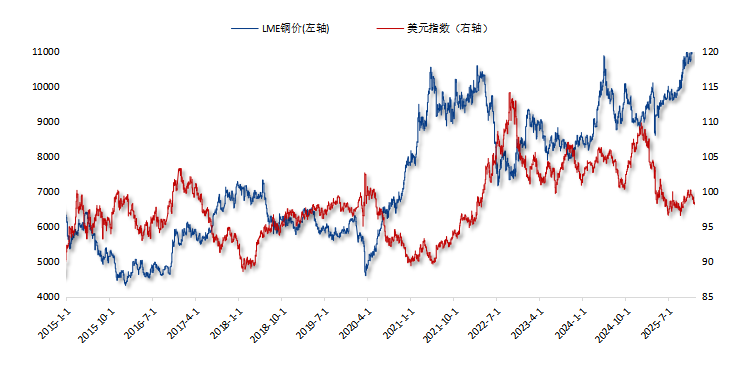
高铜价加速铜产业发展出现阶段性分化
Xin Lang Cai Jing· 2026-01-13 11:54
Core Viewpoint - The recent surge in copper prices on the London Metal Exchange and the Shanghai Futures Exchange reflects a fundamental transformation in the global copper industry, driven by long-term supply constraints and structural demand growth from new economic sectors such as electric vehicles, photovoltaic energy storage, and AI data centers [1][20]. Group 1: Copper Price Trends - From 2015 to 2025, copper prices transitioned from a bear market to a structural bull market, influenced by macroeconomic cycles and global monetary policy adjustments [2][21]. - The year 2021 marked a turning point for copper prices, as the global economy shifted from recovery to growth, supported by new technologies and expansive monetary policies [2][22]. - The current price increase is characterized by a dual support of macroeconomic conditions and structural industry changes, with significant demand growth from new sectors [3][22]. Group 2: Supply Constraints - The global copper supply system is facing a long-term dilemma of declining stock and limited incremental supply, exacerbated by deteriorating resource quality, extended development cycles, and increased geopolitical risks [5][24]. - The average grade of global copper mines is declining, leading to higher extraction costs, while new resource discoveries have significantly decreased [7][26]. - Geopolitical risks, such as nationalization discussions in Chile and labor strikes in Peru, have increased supply disruptions, contributing to a long-term unstable supply situation [8][27]. Group 3: Demand Growth from Emerging Sectors - The demand for copper is increasingly driven by the electric vehicle industry, with each electric vehicle requiring 80-100 kg of copper, significantly more than traditional vehicles [10][28]. - Renewable energy and energy storage sectors are forming a second growth curve for copper demand, with wind and solar energy applications expanding rapidly [11][29]. - The AI data center revolution is expected to significantly increase copper demand, with projections indicating a substantial rise in copper usage in clean energy sectors by 2030 [11][29]. Group 4: Industry Chain Differentiation and Value Reconstruction - The high copper prices are reshaping the value distribution logic within the copper industry, concentrating value towards resource-rich and high-value segments [12][30]. - Upstream mining companies are benefiting the most, with firms like Glencore and Freeport-McMoRan seeing profit increases of over 50% [12][30]. - The midstream smelting sector is facing challenges, with some companies forced to reduce production due to tight copper concentrate supplies and low processing fees [12][30]. Group 5: Future Trends in the Copper Industry - The structural transformation of the copper industry is irreversible, with copper evolving from a traditional industrial metal to a critical resource for energy transition [14][32]. - Future trends will focus on optimizing existing resources, increasing industry concentration, and emphasizing green transformation and technological innovation as core competitive advantages [14][32].
特朗普:必须“拥有”整个格陵兰
Yang Shi Xin Wen Ke Hu Duan· 2026-01-08 22:17
Core Viewpoint - The article discusses President Trump's assertion that the United States must "own" Greenland, emphasizing the strategic value of ownership over mere military and defense rights established by existing treaties [1] Group 1: U.S. Position on Greenland - Trump stated that ownership of Greenland holds strategic value that cannot be obtained through leasing or treaties [1] - Currently, the U.S. has broad rights to establish military bases and defense facilities in Greenland under a treaty signed in 1951 with Denmark [1] - Trump expressed that the existing arrangement does not meet U.S. strategic needs, advocating for more direct and comprehensive control over the island [1] Group 2: Diplomatic Engagement - Senior representatives from Denmark and Greenland met with White House officials in Washington to discuss the recent developments regarding Greenland [1] - U.S. officials attempted to temper Trump's remarks about "taking over" Greenland during the discussions, signaling a more restrained approach to Denmark and Greenland [1] - The White House did not respond to media requests for comments regarding the meeting [1]
重塑社会形象 提升上市公司多元社会价值
申万宏源研究· 2025-07-31 07:49
Core Viewpoint - The article emphasizes the importance of multi-dimensional social value for listed companies, highlighting the need for companies to reshape their social image and become long-term value creators by focusing on credit, green, cultural, and strategic values [1][2][3]. Group 1: Multi-Dimensional Social Value - Listed companies play a significant role as influential social entities, with their social behavior being a focal point of market attention [2]. - The evaluation of social value is multi-faceted, involving various stakeholders such as financial investors, employees, consumers, and non-profit organizations, each with different perspectives [2][3]. - The social value of listed companies is interconnected, forming a unified value system where credit value serves as the foundation [4]. Group 2: Enhancing Credit Value - Credit value reflects a company's ability and willingness to fulfill commitments, impacting its social trust capital [5]. - Companies should prioritize integrity and brand building to enhance credit value, addressing shortcomings in credit management and information disclosure [6][8]. - High-quality information disclosure is crucial for improving credit value, with companies encouraged to adopt transparent practices and actively communicate their values [8][9]. Group 3: Green Value Development - Green value is defined as a company's ability to transform ecological responsibilities into sustainable competitiveness through green technology innovation [10]. - The relationship between green ecological value and market performance is significant, with compliance to environmental standards becoming a new market entry barrier [11]. - Companies should integrate green technology investments into their strategic planning to balance short-term performance with long-term sustainability [12][13]. Group 4: Cultural Value Enhancement - Cultural value encompasses a company's ability to guide social cultural development and meet residents' quality of life needs [15][16]. - Companies face challenges in aligning their products and services with consumer demands for high-quality living, often lacking in cultural value management [17][18]. - To enhance cultural value, companies should focus on innovative offerings that resonate with consumer aspirations and cultural identity [19][20]. Group 5: Strategic Value Integration - Strategic value refers to a company's alignment with national development goals, leveraging core technologies and regional resources [21][22]. - Companies must actively integrate their strategies with national priorities to uncover new opportunities and expand their development space [23][24]. - Strategic resources associated with national policies can provide significant support for companies, enabling them to pursue new business avenues [25].
重塑社会形象 提升上市公司多元社会价值
Shang Hai Zheng Quan Bao· 2025-07-29 17:49
Core Viewpoint - The article emphasizes the importance of multi-dimensional social value for listed companies, highlighting the need for a shift in development philosophy to enhance corporate social image and create long-term value for society [1][2][3]. Group 1: Multi-Dimensional Social Value - Listed companies play a significant role as influential social entities, with their social behavior being a focal point of market attention [2]. - The evaluation of corporate social value is multi-faceted, involving various stakeholders such as employees, suppliers, consumers, local governments, and non-profit organizations [2]. - The social value of listed companies is interconnected with financial and industrial investment values, requiring a comprehensive approach to evaluation [3][4]. Group 2: Credit Value Enhancement - Credit value is defined as the ability and willingness of a listed company to fulfill commitments, forming a crucial aspect of social trust capital [6]. - Companies should prioritize credit management, including establishing credit asset management accounts and improving information disclosure practices [7][9]. - High-quality information disclosure is essential for enhancing corporate credit, with a focus on transparency and compliance with regulatory standards [9]. Group 3: Green Value Development - Green value refers to the ability of listed companies to transform ecological responsibilities into sustainable competitive advantages through green technology innovation [10]. - The relationship between green ecological value and market performance is significant, with compliance to environmental standards becoming a new market entry barrier [11]. - Companies are encouraged to integrate carbon footprint management into their operations to lead the green transformation of their supply chains [14]. Group 4: Cultural Value Enhancement - Cultural value encompasses the ability of listed companies to guide social cultural development and meet the high-quality living demands of residents [16][17]. - Companies face challenges in aligning their products and services with the evolving cultural needs of consumers, particularly in areas like elder care and ethical considerations in technology [19][20]. - The exploration of cultural genes and emotional value in products is becoming a key competitive advantage for companies [21]. Group 5: Strategic Value Integration - Strategic value is defined as the alignment of a company's operations with national development goals, leveraging core technologies and regional resources [25]. - Companies are encouraged to actively integrate their strategies with national and regional development plans to uncover new opportunities [26][27]. - The strategic value of listed companies is increasingly recognized as a vital resource for achieving competitive advantages and fostering sustainable growth [27].