
战略焦虑

Search documents
美国催“小圈子”成员减少对华依赖,专家:反映出美国强烈战略焦虑
Huan Qiu Shi Bao· 2026-01-12 22:48
Group 1 - The core focus of the meeting held by U.S. Treasury Secretary Yellen was to discuss reducing reliance on China for critical minerals among G7 and other nations, highlighting a perceived lack of urgency on this issue [1][2] - The meeting included finance ministers or cabinet officials from 12 countries, representing 60% of global demand for critical minerals, indicating the significant economic implications of this dependency [2] - The U.S. is taking a leadership role in addressing the issue, with plans to clarify subsequent action steps, although a concrete joint action is not expected to emerge from the meeting [2] Group 2 - Japan has initiated a deep-sea rare earth mining project, marking a significant step in efforts to reduce reliance on Chinese supplies, while other G7 nations remain heavily dependent on China [2] - Experts suggest that the U.S. is framing the critical minerals issue in terms of security and strategy, reflecting anxiety over China's dominant position in this sector [2][3] - It is noted that many countries will struggle to eliminate their dependence on China in the short term due to China's established technological and production advantages in the rare earth sector [3]
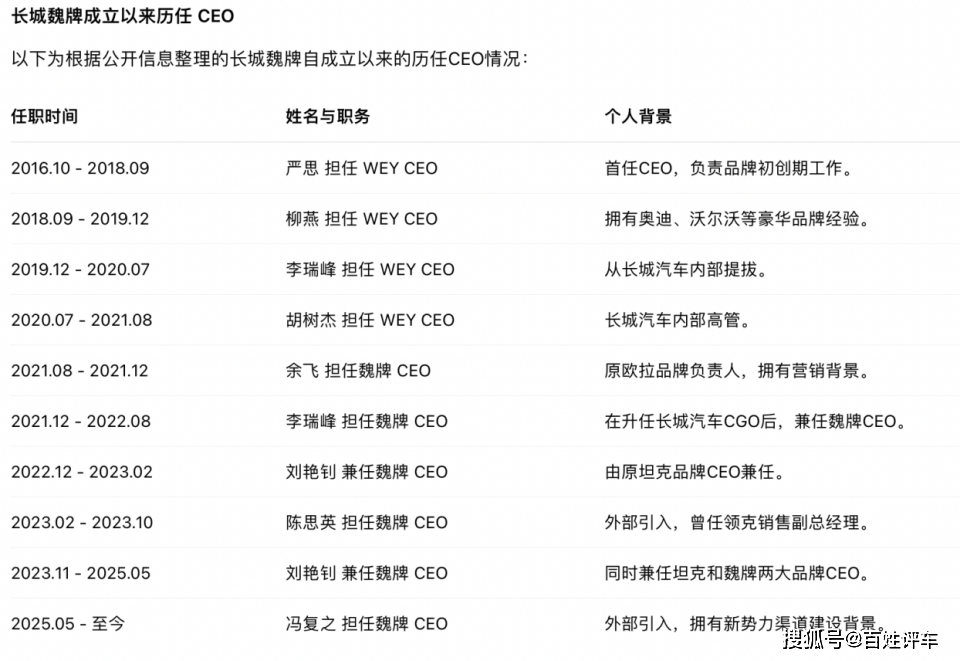
9年10任CEO,职业经理人为何如此"短命"?
Sou Hu Cai Jing· 2025-12-13 02:30
Core Viewpoint - The resignation of WEY brand CEO Feng Fuzhi appears to be a foregone conclusion, with his authority over approval processes being revoked, and his successor, Haval General Manager Zhao Yongpo, already appointed. This leadership change reflects deeper structural contradictions within WEY, a high-end brand closely tied to founder Wei Jianjun's vision, marked by frequent CEO turnover and strategic instability [1][4][15]. Group 1: Leadership Changes - Feng Fuzhi's tenure as CEO of WEY has been characterized by significant growth, with cumulative sales reaching 89,055 units in the first 11 months of 2025, a year-on-year increase of 93.94%, and the brand's average transaction price rising from approximately 150,000 yuan in 2021 to 293,700 yuan [3][4]. - The brand has seen ten different CEOs in nine years, indicating not a lack of talent but rather ongoing strategic ambiguity and concentrated power dynamics [1][2]. - Zhao Yongpo's appointment is seen as a strategic shift, as he is a long-time insider with over 20 years of technical and management experience, expected to better align with the founder's vision and stabilize the brand's direction [14][15]. Group 2: Challenges Faced by Feng Fuzhi - Feng Fuzhi's approach, influenced by his background in consumer electronics, struggled to align with the traditional automotive industry's hierarchical and process-oriented nature, leading to a mismatch in expectations and outcomes [10][12]. - Despite achieving initial sales growth, the high-pressure environment and unrealistic expectations set by the founder created a challenging atmosphere for Feng, who had previously expressed a desire to leave the position [9][10]. - The transition from a focus on channel development to a need for a comprehensive understanding of technology, product, and brand identity highlights the evolving demands of the role, which Feng was unable to fulfill [12][14]. Group 3: Strategic Implications - The leadership change is not a rejection of Feng Fuzhi's contributions but rather a recalibration of strategy, emphasizing the need for a balance between founder influence and market realities [15]. - The automotive industry is shifting towards a focus on technology credibility, product consistency, and brand value, rather than solely on sales channels, indicating a need for a more holistic approach to leadership [12][15]. - The future success of WEY will depend on finding a sustainable path that reconciles the founder's vision with market dynamics, rather than relying on frequent changes in leadership [15].


美国盲猜中国稀土管制三个原因,其背后细节不止于矿石
Sou Hu Cai Jing· 2025-10-14 09:40
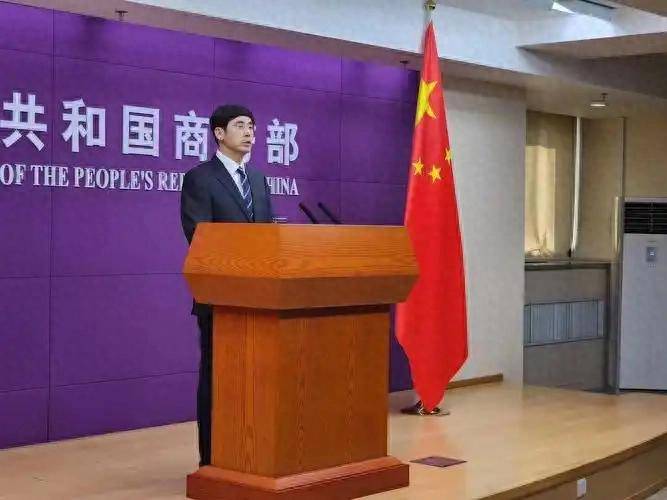
Core Viewpoint - China's Ministry of Commerce announced new export controls on specific rare earth technologies, particularly those related to military applications, which has sparked significant reactions from the U.S. and other countries [4][9][11]. Group 1: Export Control Announcement - On October 9, China's Ministry of Commerce decided to implement export controls on certain rare earth technologies, including extraction and separation processes for metals like terbium, erbium, and dysprosium [4]. - The policy aims to manage the use and flow of these technologies, particularly in areas that may pose national security risks, rather than completely halting exports [9][11]. Group 2: U.S. Reaction and Misinterpretations - The U.S. response was immediate, with Treasury Secretary Janet Yellen suggesting that China's move was a sign of economic distress and a distraction from other issues, such as the Middle East situation [6][11]. - The U.S. interpretations of China's motives reflect a misunderstanding of China's strategic intentions, which are based on compliance and sustainable resource management rather than economic desperation [6][8]. Group 3: Importance of Rare Earth Elements - Rare earth elements are critical for modern industries, including electric vehicles, batteries, wind power, semiconductors, and military equipment, making China's export controls significant on a global scale [4][11]. - The U.S. heavily relies on China for rare earth materials, with military applications being particularly sensitive, as seen in the F-35 fighter jet, which requires over 400 kilograms of rare earth materials per unit [11]. Group 4: Broader Implications and Strategic Context - The situation highlights the growing geopolitical tensions and the U.S.'s tendency to politicize trade and resource management issues, viewing them through a lens of national security [13][15]. - China's export control policy is part of a broader strategy to align with international responsibilities and ensure the sustainable use of its resources, contrasting with the U.S.'s approach of imposing restrictions on China in various sectors [9][13]. Group 5: Call for Dialogue - The article emphasizes the need for constructive dialogue between China and the U.S. to address mutual concerns about resource management and industry security, rather than engaging in speculation and misunderstanding [15][17]. - Establishing transparent rules and collaborative efforts for sustainable development is presented as a more effective approach than adversarial posturing [17].

日本新版《防卫白皮书》暗藏危险图谋 应停止为自身强军扩武寻找借口
Yang Shi Wang· 2025-07-20 06:34
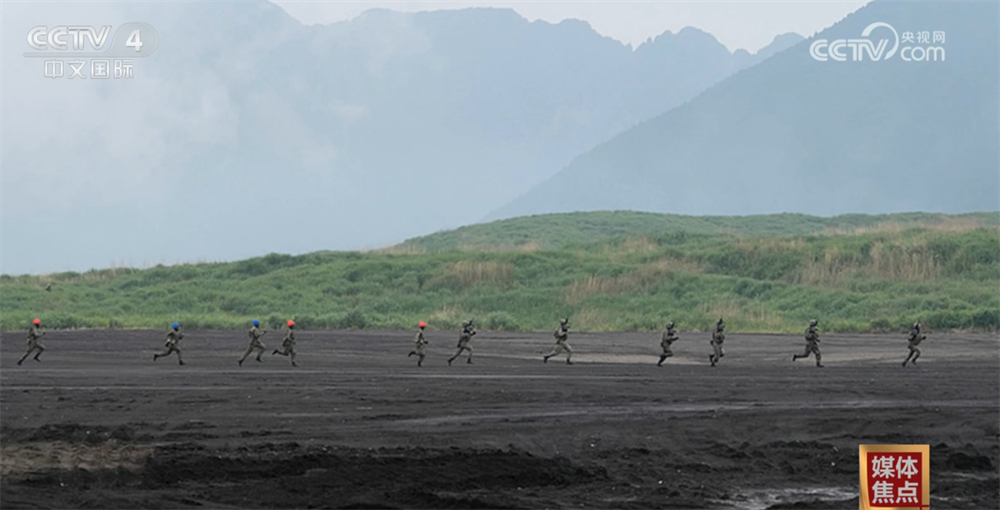
Core Viewpoint - Japan's 2025 Defense White Paper identifies China, Russia, and North Korea as security threats, reflecting underlying geopolitical anxieties and aligning with U.S. strategic demands [1][3][5] Group 1: Japan's Defense Strategy - The new Defense White Paper describes China as an "unprecedented strategic challenge" and highlights increased military activities from Russia and North Korea, indicating Japan's perception of these nations as adversaries [3] - Japan's military expansion is framed as a response to regional threats, with plans to enhance missile systems and increase defense spending, targeting 2% of GDP by 2027 [7] Group 2: Motivations Behind the White Paper - The "threat narrative" in the White Paper serves to justify Japan's military buildup and strengthen the Japan-U.S. alliance, while lacking factual basis and contradicting regional peace efforts [5] - Japan's portrayal of security threats is seen as a means to divert domestic issues and reinforce its military posture, raising concerns about its intentions in the region [5][9] Group 3: Regional Reactions - North Korea condemns the White Paper, viewing it as a script for Japan's militaristic ambitions and a threat to regional stability, urging vigilance against Japan's military expansion [9] - The international community is called to be alert to Japan's increasing militarization and its implications for regional and global peace [9]
俄乌直接会谈 欧盟为何“唱反调”加码制裁?
news flash· 2025-05-17 09:21
Core Viewpoint - The article discusses the recent direct talks between Russia and Ukraine in Turkey, while the European Union (EU) plans to impose new large-scale sanctions against Russia, indicating a divergence in strategies between the EU and the US regarding the Ukraine crisis [1] Group 1: EU's Response to the Ukraine Crisis - The EU is preparing to implement new extensive sanctions against Russia, as stated by European Commission President Ursula von der Leyen [1] - The defense ministers of France, Germany, the UK, Italy, and Poland convened to discuss strengthening European defense, reflecting a collective effort to enhance security measures in response to the ongoing conflict [1] Group 2: Strategic Concerns of Europe - European leaders express concerns that the US has engaged in "over-the-top diplomacy" regarding Ukraine, leading to strategic anxiety within Europe [1] - There is a fear among European nations of becoming mere bystanders in security matters, prompting them to reinforce their independent stance and continue sanctions against Russia as a core strategy [1] Group 3: EU's Efforts for Influence - The EU's series of policies are aimed at securing a stronger voice in the discussions surrounding the Ukraine issue, highlighting the bloc's desire for greater influence in international affairs [1]