房地产新旧动能转换

Search documents
专访全国人大代表姚劲波:今年楼市不会普涨,而是结构性复苏
21世纪经济报道· 2026-03-11 10:02
Core Viewpoint - The government work report emphasizes stabilizing the real estate market, focusing on controlling new supply, reducing inventory, and improving supply quality, while also integrating housing policies into the national population development strategy [1] Group 1: Policy Insights - The report highlights the introduction of housing security measures for newly married and childbearing families, aiming to reduce housing costs and support long-term population development [4] - Recommendations include increasing public housing fund loan limits for newly married families, offering differentiated housing subsidies based on the number of children, and prioritizing rental allocations for these families [4][5] - The real estate market is transitioning from "incremental expansion" to "stock optimization," with a significant shift towards the second-hand housing market, which is expected to account for over 68% of transactions in core cities by 2026 [4][5] Group 2: Market Trends - The focus is shifting towards the second-hand housing market, with data indicating that by 2025, over 64% of transactions in core cities will be second-hand homes [4][5] - The demand structure is evolving, with an anticipated increase in the proportion of improvement-driven housing needs, expected to exceed 40% by 2026 [5] - The quality of housing is becoming a priority, with a notable increase in attention towards high-quality second-hand homes, particularly in cities like Shenyang, where public housing loans for second-hand homes are being expanded [5] Group 3: Future Market Outlook - The real estate market is expected to experience a structural recovery in 2026, with core cities leading the way, while smaller cities may continue to face challenges [10] - The overall market is stabilizing, with core cities showing signs of recovery, which will gradually help the industry emerge from its bottom [10] - The demand for quality housing is projected to drive market dynamics, with a noticeable increase in replacement demand as consumers seek to upgrade their living conditions [10]

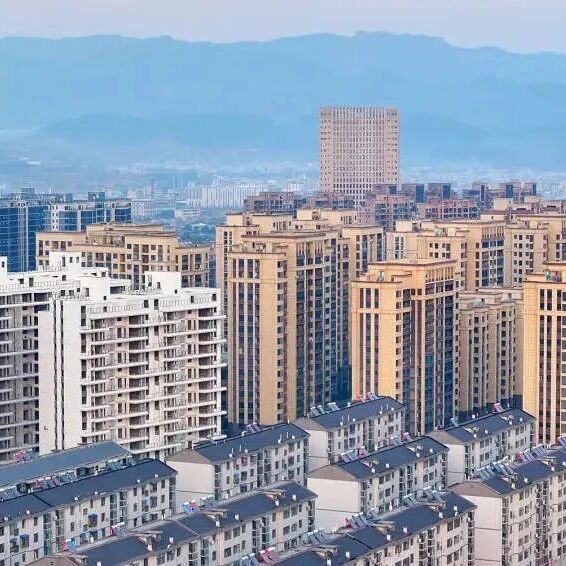
房地产市场不断趋稳
Jing Ji Wang· 2026-01-31 01:06
Group 1 - The core viewpoint of the articles indicates that by the end of 2025, China's real estate market is showing positive changes, with a significant reduction in unsold housing inventory and ongoing urbanization efforts [1][2]. - The total scale of real estate transactions is stabilizing, with a notable trend of combined sales in new and second-hand housing markets showing signs of recovery, particularly in major cities [2][3]. - The reduction in unsold housing inventory is attributed to both proactive measures to reduce stock and natural market balancing, which helps stabilize market expectations and confidence [3]. Group 2 - Effective policy measures from various regions are contributing to the stabilization of the real estate market, including relaxed purchasing conditions for non-local families and financial incentives for talent acquisition [4][5]. - The transition to high-quality development in the real estate sector is being accelerated, with significant progress in upgrading old housing and implementing safety management systems [6][7]. - Looking ahead to 2026, it is anticipated that improved pricing, increased availability of quality housing, and a friendly purchasing environment will lead to a surge in housing demand and continued activity in both new and second-hand home transactions [8].
锐财经|房地产市场不断趋稳
Ren Min Ri Bao Hai Wai Ban· 2026-01-30 04:36
Core Insights - By the end of 2025, China's economic and social development goals are expected to be achieved, with positive changes observed in the real estate market, including a reduction in unsold housing inventory [1] - The overall trend in the real estate market is stabilizing, despite some fluctuations in investment and sales figures, indicating a potential recovery [2][3] Group 1: Market Performance - As of 2025, the total real estate development investment reached 82,788 billion yuan, with new housing sales area at 88,101 million square meters [2] - The inventory of unsold commercial housing decreased by 3,259 million square meters compared to the beginning of the year, indicating effective inventory reduction measures [1][2] - In November 2025, the unsold housing inventory decreased by approximately 3 million square meters from October, reflecting the effectiveness of supply-side and demand-side policies [2] Group 2: Policy Measures - Various local governments have implemented effective measures to stabilize the real estate market, such as easing purchase conditions for non-local families in Beijing [4] - Qingdao City offers substantial housing subsidies for graduate students to attract talent, with subsidies of 300,000 yuan for PhD holders and 200,000 yuan for master's degree holders [4] - Hangzhou initiated a "housing + consumption voucher" subsidy program, leading to increased visitor and transaction volumes in related projects [4] Group 3: Transition and Development - The real estate sector is undergoing a transformation towards high-quality development, with 38 cities promoting the self-renewal of old housing and 42 cities piloting safety management for housing [7] - In 2025, 2.71 million urban old residential units were renovated, with an investment of 1,332 billion yuan, indicating a focus on urban renewal and quality improvement [7] - The industry is encouraged to align housing supply with population movement and industrial development to meet diverse housing needs [8]
2025年末商品房待售面积较年初有所减少 房地产市场不断趋稳
Ren Min Ri Bao Hai Wai Ban· 2026-01-29 23:15
Core Insights - By the end of 2025, China's economic and social development goals have been successfully achieved, with positive changes observed in the real estate market [1] - The real estate market is stabilizing, with a notable reduction in unsold housing inventory and a shift towards high-quality development [2][3] Group 1: Market Performance - As of the end of 2025, the unsold housing inventory in China is 76,632 million square meters, a decrease of 32.59 million square meters from the beginning of the year [1] - National real estate development investment reached 82,788 billion yuan, with new housing sales area totaling 88,101 million square meters [2] - The overall sales scale of the real estate market is stabilizing, with some major cities even experiencing slight year-on-year growth [2] Group 2: Policy Measures - Various effective measures have been implemented by local governments to support the real estate market, such as easing purchase conditions for non-local families in Beijing [4] - Qingdao City offers substantial subsidies for graduate students purchasing homes, with 300,000 yuan for PhD holders and 200,000 yuan for master's degree holders [4] - Hangzhou initiated a "housing + consumption voucher" subsidy activity, leading to a noticeable increase in project visits and transactions [4] Group 3: Transition and Development - The key to high-quality development in real estate is accelerating the transformation and upgrading of the sector [6] - In 2025, significant progress was made in the conversion of old and new dynamics, with 2.71 million households in urban old communities undergoing renovation [7] - Future housing demand is expected to become more differentiated and personalized, necessitating a better alignment of housing supply with population movement and industrial development [7] Group 4: Future Outlook - In 2026, factors such as price adjustments, an increase in quality housing, and a friendly purchasing environment are anticipated to accelerate housing demand release, leading to sustained activity in both new and second-hand housing transactions [8]
房地产市场不断趋稳(锐财经)
Ren Min Ri Bao· 2026-01-29 21:03
Group 1 - The core viewpoint of the articles indicates that by the end of 2025, China's real estate market is showing positive changes, with a significant reduction in unsold housing inventory and ongoing urbanization efforts [1][2] - The total scale of real estate transactions is stabilizing, with a notable trend of combined sales in new and second-hand housing markets showing signs of recovery, particularly in major cities [2] - The reduction in unsold housing inventory is attributed to both proactive measures to reduce stock and natural market balancing, which helps stabilize market expectations and confidence [3] Group 2 - Effective policy measures from various regions are contributing to the stabilization of the real estate market, including relaxed purchasing conditions for non-local families and financial incentives for talent acquisition [4] - The Ministry of Housing and Urban-Rural Development emphasizes the importance of tailored policies for different cities, focusing on controlling supply, reducing inventory, and supporting reasonable financing needs of real estate companies [5] - The transition to high-quality development in the real estate sector is progressing, with initiatives aimed at upgrading old housing and improving public facilities, reflecting a shift towards sustainable urban development [6][7] Group 3 - Looking ahead to 2026, it is anticipated that favorable conditions such as price adjustments and an increase in quality housing will lead to a surge in housing demand, boosting both new and second-hand home transactions [8]
赞一些地方楼市“有声有色的进步”丨社评
Sou Hu Cai Jing· 2025-09-20 10:25
Group 1 - Hong Kong has relaxed the threshold for investment immigration by reducing the minimum investment amount from HKD 50 million to HKD 30 million, which is expected to attract over RMB 58 billion in investment demand [1] - The real estate market is experiencing a shift with new policies aimed at stabilizing the market and enhancing housing quality, which are seen as critical drivers for growth [16][17] - In August, new home prices increased in nine cities, with Shanghai, Hangzhou, and Yichang leading with a 0.4% rise, indicating a positive trend in the housing market [16][18] Group 2 - The National Foreign Exchange Administration has introduced measures to facilitate overseas individuals in purchasing property in China, allowing them to handle foreign exchange payments before obtaining necessary documentation [10][11] - The new policy allows non-real estate companies to use foreign exchange income for purchasing operational properties, enhancing flexibility in asset management [10] - The "good housing" initiative is being emphasized, with cities like Jilin implementing policies to ensure that over 60% of new housing projects meet quality standards by 2030, aiming for a balanced supply and demand in the housing market [19]