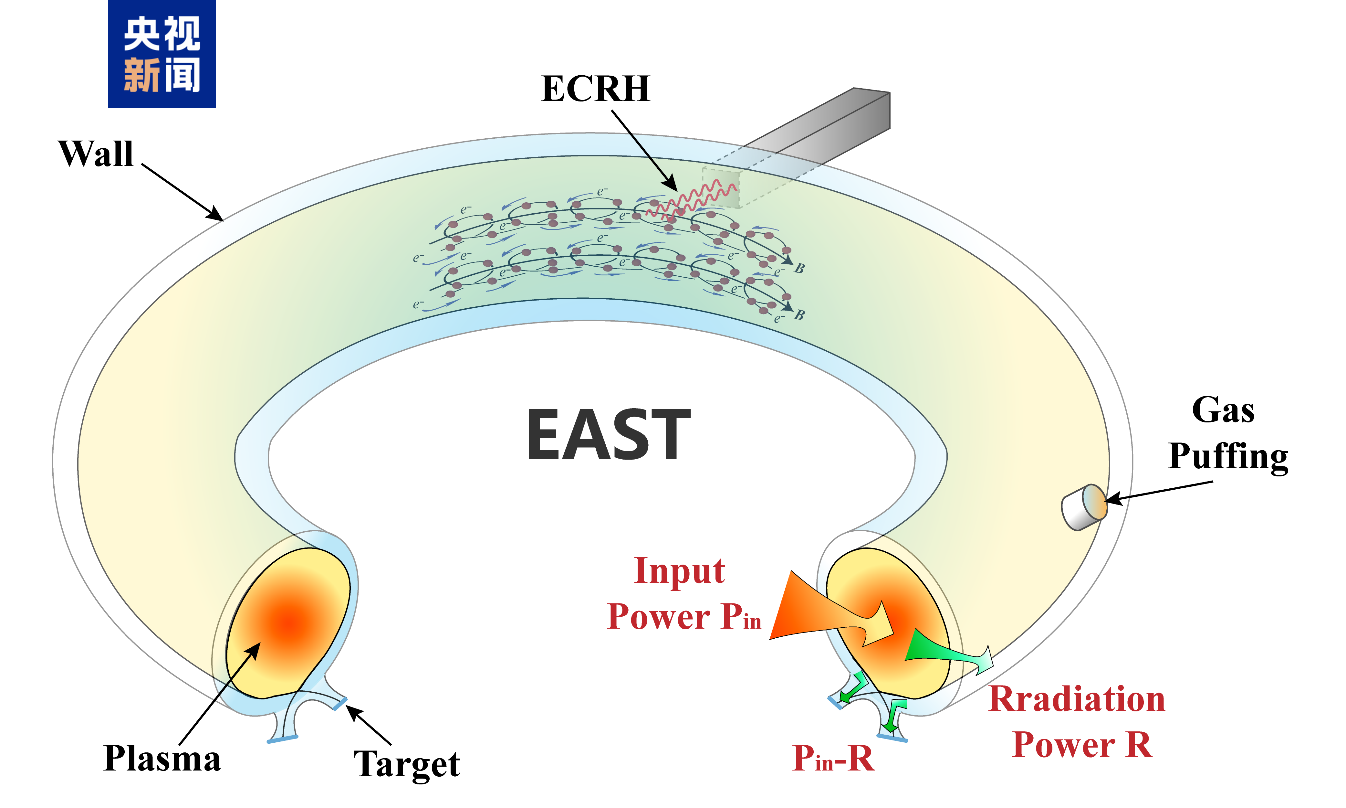
托卡马克密度自由区

Search documents
【人民日报】中国“人造太阳”找到突破密度极限新方法
Ren Min Ri Bao· 2026-01-12 02:53
Core Insights - The "artificial sun" known as the Experimental Advanced Superconducting Tokamak (EAST) has achieved significant results in physical experiments, confirming the existence of a density free zone in tokamaks [1] Group 1: Experimental Achievements - The research team developed a theoretical model called the Plasma-Wall Self-Organization (PWSO) model, highlighting the critical role of boundary radiation in triggering density limits [1] - The study analyzed the boundary of radiation instability and revealed the mechanism for triggering density limits, predicting the existence of a density free zone beyond these limits [1] - Experimental results closely matched the predictions made by the PWSO theory, marking the first confirmation of the existence of a density free zone in tokamaks [1]
中国“人造太阳”找到突破密度极限新方法
Ren Min Ri Bao· 2026-01-09 22:12
Core Viewpoint - The "artificial sun" known as the Experimental Advanced Superconducting Tokamak (EAST) has achieved significant results in plasma physics experiments, confirming the existence of a density free zone in tokamak operations [1] Group 1: Experimental Achievements - The EAST device utilizes magnetic confinement to achieve controlled nuclear fusion, functioning as a circular apparatus that locks high-temperature plasma [1] - The research team developed a theoretical model called the Plasma-Wall Self-Organization (PWSO) model, highlighting the critical role of boundary radiation in triggering density limits [1] - The experimental results align closely with the predictions made by the PWSO theory, marking the first confirmation of the existence of a density free zone in tokamak operations [1]
【新华社】中国“人造太阳”实验找到突破密度极限的方法
Xin Hua She· 2026-01-04 01:23
Core Viewpoint - The research team from the Hefei Institutes of Physical Science has confirmed the existence of a density free zone in the EAST (Experimental Advanced Superconducting Tokamak) device, providing significant physical evidence for high-density operation in magnetic confinement nuclear fusion [4][6]. Group 1: Research Findings - The EAST device has successfully demonstrated a method to overcome the plasma density limit, which is crucial for achieving controlled nuclear fusion [4][5]. - The research revealed that boundary impurities play a key role in triggering radiation instability, which is critical in reaching the density limit [6]. - The experimental results align closely with the predictions made by the newly developed boundary plasma-wall interaction self-organization (PWSO) theoretical model [6]. Group 2: Technological Implications - The findings provide important insights into the physical mechanisms behind the density limit, which has been a long-standing challenge in the field of nuclear fusion [5][6]. - By utilizing techniques such as electron cyclotron resonance heating and pre-filling gas, the research team was able to delay the onset of the density limit and plasma disruption [6]. - This innovative work is expected to facilitate the understanding and operation of tokamaks at high densities, potentially advancing the development of nuclear fusion technology [6].

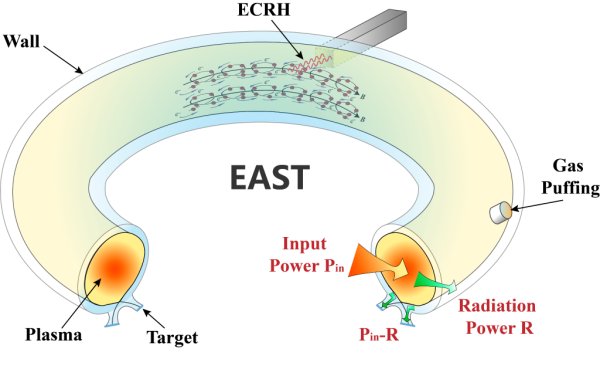
【科技日报】中国“人造太阳”找到突破密度极限方法
Ke Ji Ri Bao· 2026-01-04 01:23
Core Insights - The EAST (Experimental Advanced Superconducting Tokamak) has achieved significant results in nuclear fusion experiments, confirming the existence of a density free zone in tokamaks through boundary plasma and wall interaction self-organization theory [1][2] Group 1: Research Findings - The research team developed a new theoretical model called the Plasma-Wall Self-Organization (PWSO) model, which identifies the key role of boundary impurities in triggering radiation instability at the density limit [2] - The experiments utilized EAST's all-metal wall environment and methods such as electron cyclotron resonance heating to reduce impurity sputtering at the device's boundary, delaying the onset of the density limit and plasma disruption [2] - The successful breakthrough of the density limit and stable entry into the predicted density free zone were achieved by controlling the physical conditions of the target plate to minimize tungsten impurity sputtering, aligning experimental results with PWSO theory predictions [2]
中国“人造太阳”找到突破密度极限方法
Xin Lang Cai Jing· 2026-01-03 23:23
Core Insights - The Chinese "artificial sun," the Experimental Advanced Superconducting Tokamak (EAST), has achieved significant breakthroughs in overcoming the density limit in nuclear fusion experiments [1][2] - The research team has confirmed the existence of a density free zone in tokamak operations, which is crucial for enhancing the economic viability of fusion energy [1] Group 1: Breakthroughs in Fusion Research - The research team developed a new theoretical model called the Plasma-Wall Self-Organization (PWSO) theory, which identifies the critical role of boundary impurities in triggering the density limit [2] - The experiments conducted at EAST utilized a fully metallic wall environment and methods such as electron cyclotron resonance heating to delay the onset of the density limit and plasma disruption [2] Group 2: Experimental Results - The team successfully reduced physical sputtering caused by tungsten impurities on the target plate, allowing the plasma to surpass the density limit and enter the predicted density free zone [2] - The experimental results closely matched the predictions made by the PWSO theory, marking the first confirmation of the existence of a tokamak density free zone [2]
台积电1.4nm或明年试产|首席资讯日报
首席商业评论· 2026-01-03 05:02
Group 1 - TSMC's 2nm production plan is progressing as scheduled, with plans to build three new factories to meet strong market demand. The risk trial production for TSMC's 1.4nm process is expected to start in 2027 [2] - Black Sesame Technology announced a strategic acquisition of Yizhi Electronics, which will result in Black Sesame holding 60% of Yizhi's shares. The core team of Yizhi has committed to achieving a cumulative revenue of no less than 1.2 billion yuan and a net profit of no less than 90 million yuan over the next three years [3] - Jin Feng Technology's subsidiary, Jianghan Asset, holds a 4.14% stake in Blue Arrow Aerospace, making it the sixth-largest shareholder as the company prepares for its IPO [4] Group 2 - The EAST nuclear fusion experiment in China has confirmed the existence of a density-free zone in the Tokamak, with results published in the journal "Science Advances" [5][6] - Data analysis indicates that micro-vacations at hot springs and ice and snow tourism will dominate consumer spending during the New Year holiday, with an 8% increase in visitor numbers to hot spring resorts compared to last year [7] - SAIC Audi announced a retail target of 47,258 units for the year 2025, representing a 23% year-on-year increase [8] Group 3 - TrendForce has downgraded the global laptop shipment forecast for 2026 to a 5.4% year-on-year decline, reflecting conservative attitudes among brands due to rising costs [9] - Samsung Electronics reported positive feedback from customers regarding the competitiveness of its HBM4 chips, with market shares of 35% for Samsung, 53% for SK Hynix, and 11% for Micron as of Q3 2025 [10] - The Robotex World Robot Competition Asian Finals has commenced in Shanghai, focusing on sustainable development goals and providing an international platform for youth technology talent [11] Group 4 - The U.S. apartment market is experiencing its worst performance in over a decade, with a 1.9% year-on-year decline in apartment prices, the largest drop since 2012 [12] - The cryptocurrency market faced significant turmoil, with Bitcoin dropping nearly 30% from its peak two months ago, leading to over 106,000 liquidations and a total liquidation amount of $121 million [14]


中国“人造太阳”实验找到突破密度极限方法
Xin Lang Cai Jing· 2026-01-02 21:37
Core Viewpoint - The research team from the Hefei Institute of Physical Science, Chinese Academy of Sciences, has confirmed the existence of a density free zone in the EAST (Experimental Advanced Superconducting Tokamak) nuclear fusion device, providing significant physical evidence for high-density operation in magnetic confinement fusion devices [1] Group 1: Research Findings - The EAST device utilizes magnetic confinement to achieve controlled nuclear fusion, functioning as a spiral "magnetic track" that traps high-temperature plasma [1] - Plasma density is a critical parameter affecting fusion reaction rates, and the research developed a theory model (PWSO) to understand the interaction between boundary plasma and wall [1] - The study revealed that radiation instability caused by boundary impurities plays a key role in triggering the density limit, elucidating the mechanism behind this limit [1] Group 2: Experimental Methods - Researchers employed methods such as electron cyclotron resonance heating and pre-filling gas to reduce boundary impurity sputtering, actively delaying the onset of the density limit and plasma disruption [1] - By adjusting the physical conditions of the target plate, the team reduced tungsten impurity-induced sputtering, allowing plasma to surpass the density limit and enter a new density free zone [1] - The experimental results were in high agreement with the predictions made by the PWSO theory, marking the first confirmation of the existence of a tokamak density free zone [1]
首次证实!我国“人造太阳”实验获重要成果
Xin Lang Cai Jing· 2026-01-02 09:13
Core Insights - The "artificial sun" known as the Experimental Advanced Superconducting Tokamak (EAST) has achieved significant results in plasma physics experiments, confirming the existence of a density free zone in tokamaks [1][3] Group 1: Research Achievements - The research team developed a new theoretical model called the Plasma-Wall Self-Organization (PWSO) model, which identifies the critical role of boundary impurities in triggering radiation instability at the density limit [3] - The experiments utilized the fully metallic wall environment of the EAST device, employing methods such as electron cyclotron resonance heating and pre-filling to reduce impurity sputtering at the device boundary, thereby delaying the onset of the density limit and plasma disruption [3] - Researchers successfully lowered the physical sputtering caused by tungsten impurities on the target plate, allowing the plasma to surpass the density limit and smoothly enter the predicted density free zone, with experimental results closely aligning with PWSO theoretical predictions [3]
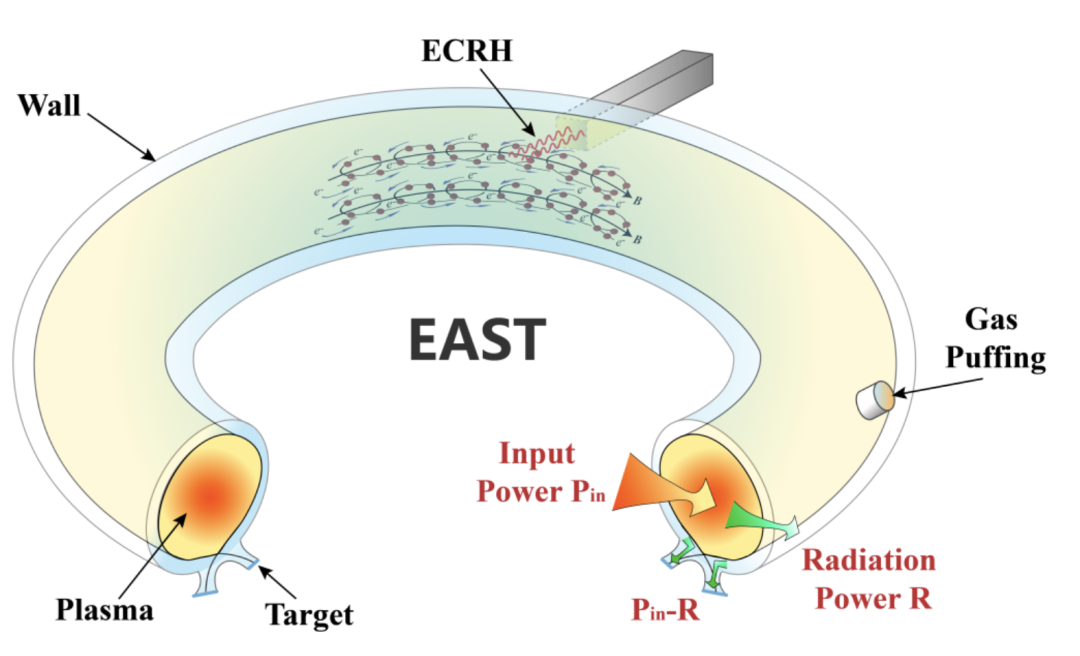
中国“人造太阳”EAST实验证实托卡马克密度自由区的存在
Yang Shi Xin Wen· 2026-01-02 07:53
Core Insights - The research team at the EAST facility in Hefei, China, has confirmed the existence of a "density-free zone" in tokamak operations, based on the theory of boundary plasma-wall interaction self-organization [1][5]. Group 1: Research Findings - The study developed a theoretical model (PWSO) that highlights the critical role of boundary radiation in triggering the density limit and reveals the physical mechanisms behind it [5]. - The experiments utilized a fully metallic wall environment and methods such as electron cyclotron resonance heating to reduce boundary impurity sputtering, which delayed the onset of the density limit and plasma disruption [5]. - The results of the experiments aligned closely with the predictions of the PWSO theory, marking the first confirmation of the tokamak density-free zone [5]. Group 2: Implications for Fusion Power - Higher density operation is essential for improving the economic viability of fusion energy, as fusion power is proportional to the square of fuel density [3]. - The understanding of the density limit and the newly identified density-free zone provides significant physical basis for high-density operation in tokamaks, which is crucial for future fusion reactors [5].
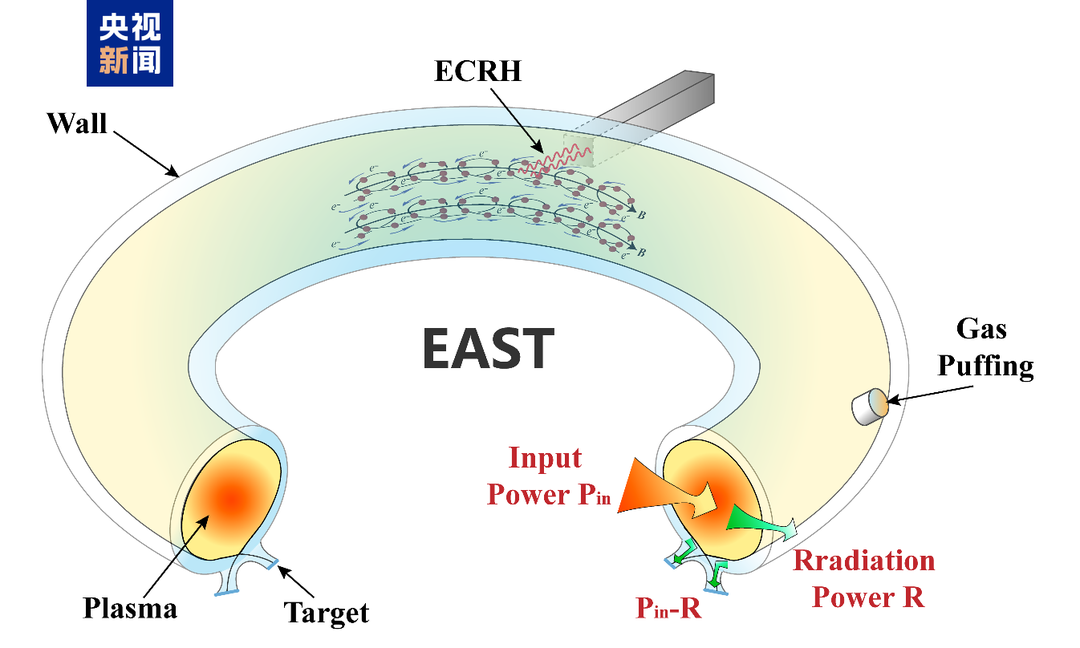
中国“人造太阳”实验,有新发现!
Huan Qiu Wang Zi Xun· 2026-01-02 05:36
Core Insights - The Chinese "artificial sun" EAST has confirmed the existence of a density-free zone in tokamak operations based on the boundary plasma-wall interaction self-organization theory, with results published in the journal "Science Advances" on January 1, 2026 [1] Group 1: Research Findings - The research team developed a boundary plasma-wall interaction self-organization (PWSO) theoretical model, highlighting the critical role of boundary radiation in triggering the density limit and revealing the physical mechanisms involved [5] - The experiments utilized the EAST all-metal wall environment and methods such as electron cyclotron resonance heating and pre-filling to reduce boundary impurity sputtering, actively delaying the onset of the density limit and plasma disruption [5][6] - The experimental results aligned closely with PWSO theoretical predictions, marking the first confirmation of the tokamak density-free zone, providing significant insights into understanding the density limit and offering a physical basis for high-density tokamak operations [6]