
技术本土化

Search documents
奔驰、宝马销量跌回十年前,押注“本土化”背水一战
Xin Hua Cai Jing· 2026-01-19 01:48
Core Viewpoint - The BBA (Benz, BMW, Audi) brands are experiencing significant sales declines in China, with projections indicating a return to sales levels not seen in a decade, highlighting the increasing pressure from domestic competitors and changing market dynamics [1][2][4]. Sales Performance - In 2025, Benz's global sales are projected to be 2.16 million units, a 10% decrease year-on-year, with sales in China at 551,900 units, down 19% [1]. - BMW's global sales are expected to reach 2.46 million units, a slight increase of 0.5%, while its Chinese sales are forecasted at 625,500 units, a decline of 12.5% [1]. - Audi's global sales are projected at 1.62 million units, down 2.9%, with Chinese sales at 617,500 units, a decrease of 5% [1]. - BBA brands have seen consecutive sales declines in China for two years, dropping to levels last seen in 2017 [1]. Market Dynamics - By 2026, both Benz and BMW are expected to forecast annual sales of less than 500,000 units in China, reverting to sales levels from a decade ago [2]. - Domestic high-end brands are setting ambitious sales targets, with NIO aiming for 456,400 to 489,000 units, Xiaomi targeting 550,000 units, and Hongmeng Zhixing projecting 1 to 1.3 million units by 2026 [3]. Financial Performance - BBA brands reported significant profit declines in recent financial statements, with Benz's net profit down 50%, Audi's down 25%, and BMW's down 6.8% [4]. Pricing Strategies - BMW initiated a price reduction across 31 models, with discounts reaching up to 301,000 yuan, indicating market pressure [6]. - The luxury car pricing structure is under significant strain, with reports of discounts reaching as low as 60-70% on various models [6]. Competitive Landscape - The BBA brands face intense competition from domestic brands that are rapidly gaining market share, particularly in the high-end segment [8]. - The shift towards electric and smart vehicles has left BBA brands lagging, as their products are often based on older platforms, leading to a competitive disadvantage [7][8]. Strategic Responses - BBA brands are beginning to adapt to the Chinese market by enhancing their product offerings and integrating local technology solutions [9][10]. - Benz plans to launch over 15 new models by 2026, while BMW aims to introduce around 20 new products, focusing on electric and smart vehicle technologies [10][11].

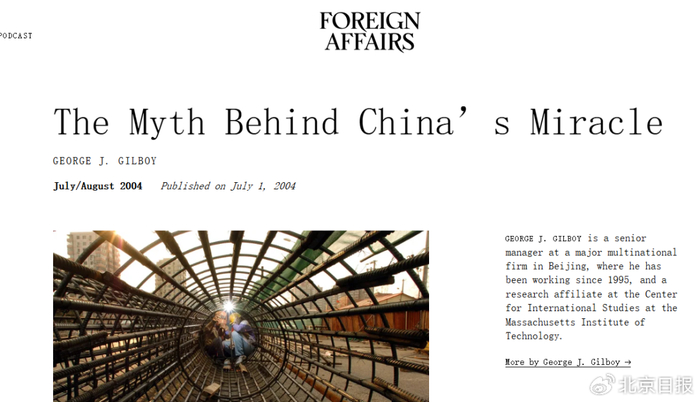
曾经他们说:中国只会代工
Xin Lang Cai Jing· 2025-12-27 00:17
Core Viewpoint - The article discusses the transformation of China's manufacturing capabilities over the past two decades, highlighting its shift from low-end manufacturing to becoming a leader in advanced manufacturing and technology, challenging previous Western narratives about China's industrial limitations [6][15][24]. Group 1: Manufacturing and Technological Advancements - China's share in global industrial production increased from less than 5% in 1995 to 32% in 2025, while Western countries' share fell below 50% [6]. - The article emphasizes that China's advancements in high-speed rail, shipbuilding, and aviation demonstrate its ability to develop core technologies and set industry standards [8][9][12]. - In the electric vehicle sector, China produced nearly 15 million new energy vehicles in the first 11 months of 2025, with exports growing over 100% year-on-year [12]. Group 2: Innovation and Systemic Changes - China has established a complete lithium battery supply chain, with 80% of global lithium batteries produced by Chinese manufacturers, showcasing its comprehensive industrial ecosystem [12]. - The article notes that China is not only a user of technology but is becoming a provider of systemic solutions, as seen in the advancements in robotics and artificial intelligence [14][20]. - China's R&D investment has increased nearly fivefold from 2007 to 2023, approaching levels seen in the United States, indicating a significant shift in innovation capabilities [20]. Group 3: Global Standards and Market Influence - China is increasingly participating in and even leading the formulation of global standards, such as those for new energy vehicle batteries and 5G technology, which alters the narrative of China as merely a low-end manufacturer [15][17]. - The article highlights that the ability to set standards translates to control over market access, technology pathways, and long-term profitability [17]. - International assessments are shifting, with experts acknowledging China's rise as a technology power in various fields, including AI and advanced manufacturing [21].

欧洲电池展,中企显现“扎根”决心
Huan Qiu Shi Bao· 2025-06-05 22:52
Group 1 - The European Battery Show held in Stuttgart from June 3 to 5 featured around 1,100 exhibitors showcasing products related to power batteries, electric vehicle technology, and energy storage systems [1] - Companies expressed that the unpredictable U.S. tariff policies pose significant challenges for cross-border trade in the battery industry, leading to uncertainties in the global battery supply chain [1] - Chinese exhibitors at the show highlighted the rapid technological advancements in China's battery industry, which have garnered significant attention from European clients despite challenges posed by the U.S.-initiated trade war and economic difficulties in Europe [1] Group 2 - During the event, French President Macron attended the inauguration of a super factory by Chinese battery technology company Envision in Douai, France, which has an annual battery production capacity of 24 GWh and is expected to create thousands of jobs [2] - A report from German and American think tanks indicated that 7 out of the top 10 direct investment projects from China to Europe in 2024 are related to electric vehicles, with the automotive sector accounting for over half of China's total investment in Europe, amounting to €5.2 billion, a 57% increase from the previous year [2] - European demand for electric vehicles and the desire to establish a complete industrial chain are driving the collaboration between Chinese companies and Europe, with recommendations for Chinese firms to focus on "controllable sharing" in technology output and "local integration" in capacity layout [2]
观车 · 论势 || 从旧时光走向新岁月
Zhong Guo Qi Che Bao Wang· 2025-05-07 01:07
Core Insights - The 2025 Shanghai Auto Show marks a significant shift in the global automotive industry, showcasing China's transition from a "follower" to a "leader" in the sector [1][4] - The event highlights the increasing participation of foreign companies and the emergence of Chinese brands as key players in the global market [1][2] Industry Dynamics - Chinese brands are becoming the focal point for international buyers, with companies like Slovakia's Vihorlat increasing their order volumes from hundreds to thousands [1] - The collaboration between foreign automakers and Chinese companies, such as the joint development of electronic architectures by Volkswagen and XPeng, signifies a shift in the traditional "market for technology" model [2] - The presence of component manufacturers in core vehicle exhibits indicates a restructuring of the automotive value chain, with companies like CATL showcasing advanced battery technologies [2][3] Technological Advancements - The demand for transparency in technology is pushing component manufacturers to take center stage, as seen with Joyson Electronics' innovative cockpit solutions [3] - The competitive landscape is evolving, with local companies like Horizon Robotics capturing significant market shares in advanced driver-assistance systems, challenging established foreign players [3] Market Evolution - The Chinese automotive industry has transitioned from relying on scale and cost control to focusing on technological sovereignty, which is now crucial for industry influence [4] - The Shanghai Auto Show reflects a broader narrative of China's automotive evolution, from imitation to innovation, and from isolation to global engagement [4]
