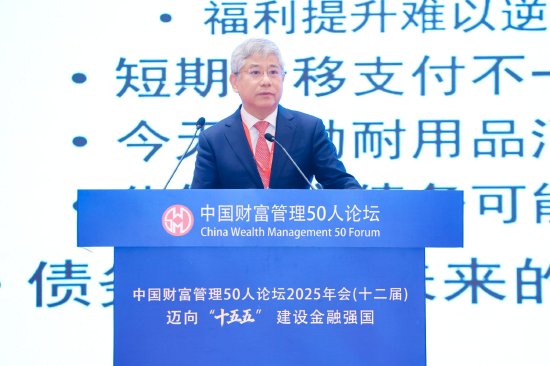
投资于改革

Search documents
投资于改革——兼论财政货币政策协同|政策与监管
清华金融评论· 2026-02-08 10:33
Core Viewpoint - The article emphasizes that the current economic environment in China, characterized by insufficient domestic demand and low prices, presents a prime opportunity for "investing in reform" through coordinated fiscal and monetary policies to achieve both short-term stimulus and long-term structural optimization [5][6]. Economic Context - Current price trends are weak, with both CPI and PPI at low levels, particularly PPI. The nominal GDP growth rate has been lower than the real GDP growth rate, indicating demand insufficiency and low prices [7]. - Achieving moderate inflation could stabilize nominal asset prices, including real estate. Implementing stimulus policies, particularly fiscal stimulus, is crucial [7]. Investment Focus - There is a shift from investing in physical assets like infrastructure to "investing in people," which presents challenges, especially regarding the sustainability of social welfare improvements [7][9]. - Direct cash transfers to consumers and policies like "trade-in" may boost current demand but could erode future consumption [7]. Debt Management - Addressing local government debt is a potential path, but it raises concerns about moral hazard and future debt accumulation. The central government issuing bonds to replace local debt could limit future fiscal space [8]. Reform Proposal - The concept of "investing in reform" is proposed, focusing on key areas like local government debt and the dual-track social security system. The aim is to balance short-term risk mitigation with long-term impacts [9][10]. - A systematic approach to reform is necessary, including precise cost assessments for transitioning to sustainable systems [10]. Historical Precedent - The article references past experiences, such as the bank reforms in the late 1990s, where significant measures were taken to address non-performing loans without triggering severe inflation, demonstrating that substantial policy actions can be effective under certain conditions [11][12]. Current Opportunities - Two main directions for reform are suggested: resolving local government debt issues and reforming the social security system, particularly the healthcare insurance disparity [16][17]. - Short-term goals include mitigating existing debt risks, while long-term objectives focus on fundamental reforms in local fiscal systems and financing platforms [19]. Healthcare Reform - The healthcare insurance system's dual structure creates significant disparities, with approximately 3.8 billion people covered by employee insurance and 9.5 billion by resident insurance. Bridging this gap is essential for sustainable development [21]. - Proposed reforms include enhancing resident insurance benefits to align more closely with employee insurance, with estimated additional annual costs of around 900 billion to 1.1 trillion yuan [22]. Policy Coordination - Effective coordination between fiscal and monetary policies is crucial for supporting structural reforms. The article stresses the importance of managing expectations and ensuring that monetary policy does not become overly expansive [23][24]. - The goal is to maintain moderate inflation while avoiding severe inflation and asset price volatility, with a focus on using fiscal measures to support necessary reforms [24]. Conclusion - The article concludes that while there are potential costs associated with these reforms, the current low inflation and demand environment makes it a suitable time to implement such policies, particularly if they are directed towards improving social welfare and supporting low-income populations [25].

白重恩:为什么要“投资于改革”?
和讯· 2026-01-08 09:36
Core Viewpoint - The article emphasizes the need to shift focus from traditional investments in physical assets and human capital to "investment in reform" to address current economic challenges and achieve long-term sustainable growth [4][5]. Group 1: Limitations of Traditional Investment Directions - Current investment strategies primarily focus on "investment in physical assets" and "investment in human capital," both of which face constraints in the current environment [6]. - "Investment in physical assets" is limited due to high inventory in real estate, diminishing returns in traditional infrastructure, and potential overcapacity in certain manufacturing sectors [6]. - "Investment in human capital" is crucial for sectors like healthcare and education, but it must consider fiscal sustainability, as such expenditures are rigid and difficult to reverse [6]. Group 2: Establishing a Strategic Direction for "Investment in Reform" - The article suggests establishing a policy direction focused on "investment in reform" to address issues of insufficient demand and weak prices [7]. - Utilizing the current low-cost environment for fiscal deficits and monetary expansion can help cover the transitional costs of reforms, thereby optimizing the fiscal structure and institutional arrangements [7]. Group 3: Historical Experience - Reform of State-Owned Commercial Banks - The reform of state-owned commercial banks in the late 1990s serves as a successful example of "investment in reform," where approximately 1.4 trillion yuan of non-performing assets were removed, accounting for about 17% of GDP at that time [9]. - This reform not only mitigated financial risks but also laid the groundwork for the modernization of the banking system and the establishment of a vertical management system to shield banks from local government interference [9]. Group 4: Pathway Suggestions for Local Fiscal and Financing Platform Reform - The article recommends applying the lessons from bank reforms to local fiscal reforms and financing platform transformations, addressing the structural issues underlying local debt [10]. - Suggestions include central government issuance of bonds to replace local debt, comprehensive reform of fiscal systems, and ensuring that financing platforms operate as true market entities [10]. - Coordination between fiscal and monetary policies is essential, with recommendations for increased bond issuance and liquidity support to stimulate demand and stabilize prices [10]. Conclusion - The article concludes that leveraging the current macroeconomic policy window to enhance fiscal and monetary policies and focus funding on transitional reform costs is an effective strategy for addressing short-term demand issues and achieving long-term goals of financial strength and high-quality development during the "14th Five-Year Plan" period [11].
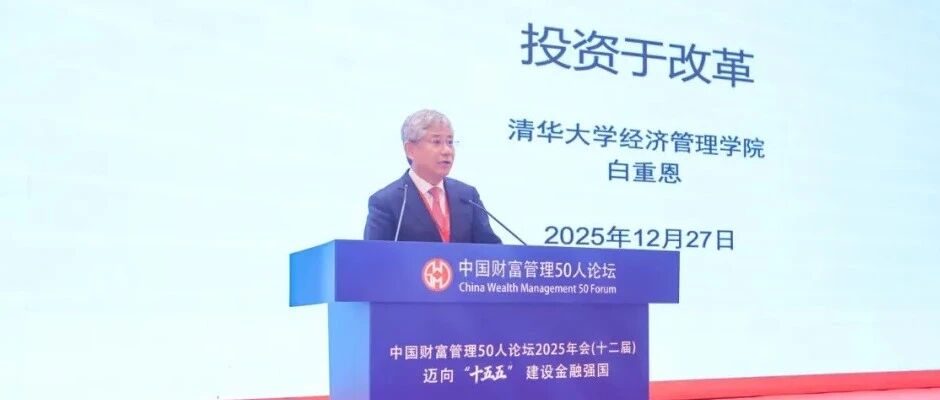
白重恩:我国要投资于改革 化解地方政府债务风险是重点领域
Bei Ke Cai Jing· 2025-12-27 11:16
Group 1 - The core viewpoint is that during the 14th Five-Year Plan period, China should invest in reforms alongside investments in goods and people, as this can address short-term demand issues without increasing long-term fiscal burdens [1] - Successful past examples of reform investments include the banking sector reforms at the end of the last century and the beginning of this century, which involved significant measures to remove risks from the banking system [1] - New areas for reform investment include addressing local government debt while simultaneously reforming local finance and financing platforms [1] Group 2 - The fundamental approach to resolving local debt issues involves comprehensive reforms of local finance and financing platforms, ensuring that the alleviation of debt pressure does not lead to new debt issues due to systemic reasons [2] - Key strategies include deepening local fiscal system reforms to align fiscal rights and responsibilities, thereby reducing local governments' reliance on land and hidden debts [2] - Financing platforms must transition to market-oriented operations, with debt based solely on operational cash flow and market credit, completely separating from local government fiscal credit [2]
白重恩:重视“投资于改革”价值 与投资于物、投资于人同等发力
Xin Lang Cai Jing· 2025-12-27 07:08
Core Viewpoint - The current economic environment in China faces challenges such as insufficient total demand, strong supply but weak demand, and price weakness, necessitating more proactive fiscal and monetary policy collaboration [3][7]. Investment Direction - Investment in both physical assets and human capital is crucial, but each faces practical considerations. Investment in new productive forces, technological self-innovation, and strengthening manufacturing is essential, while excessive investment in real estate is inadvisable due to high inventory levels. Traditional infrastructure investment has diminishing marginal returns and maintenance costs, and manufacturing investment must guard against overcapacity risks [3][7]. - Human capital investments in healthcare, elderly care, and education require increased funding but must be carefully planned due to their irreversible nature [3][7]. Funding Sources - The management of deficit size and debt levels must balance short-term effects with long-term sustainability. A new approach termed "investment in reform" is proposed, which involves using current strong fiscal and monetary policies to support the transitional costs of reforms, especially in the context of insufficient total demand [3][7]. Reform Directions - Local fiscal reform is highlighted as a key area for progress, suggesting that the central government should replace part of local debt with national bonds while coordinating with local fiscal reforms and market-oriented financing platform reforms [4][8]. - Financing platforms should transition from primarily serving fiscal needs to becoming genuine market entities, optimizing tax and expenditure structures to achieve fiscal balance [4][8]. Policy Coordination - After the issuance of national bonds by the fiscal department, the monetary department should actively purchase these bonds to mitigate market shocks. Expanding the central bank's balance sheet is not expected to have significant negative impacts and can alleviate local government debt pressure, enabling more active support for livelihoods and local development, thus stimulating economic growth and returning prices to reasonable levels [9]. - Moderate inflation, while appearing as an "inflation tax," can actually promote total demand growth, stabilize prices, increase employment, and enhance asset value, ultimately benefiting residents in the long run [9].