
抗量子加密

Search documents
从实验室到产业,量子计算如何引发全球科技格局重构
Sou Hu Cai Jing· 2026-01-14 19:41
Core Insights - Google has made significant advancements in quantum computing with its Willow quantum chip, which can perform calculations equivalent to what the best supercomputers would take 10^25 years to complete in just 5 minutes [1][3] Technological Breakthrough - The Willow chip operates in near absolute zero temperatures, which is lower than cosmic background radiation, allowing for stable performance [3] - Google has improved quantum error correction from a 3x3 grid to a 7x7 grid, significantly reducing error rates [5] - The T1 time for quantum bits has been increased to 100 microseconds, enhancing the reliability of calculations [5] - The QuantumEchoes algorithm is reported to be 13,000 times faster than traditional algorithms, marking a critical step in practical quantum computing [7] Market Potential - The global quantum technology market is projected to reach $8 billion by 2024, with China holding a significant share [9] - By 2035, the market size is expected to soar to $900 billion, prompting intense investment from various countries [11] Competitive Landscape - The U.S. is strong in quantum hardware, with major players like Google, IBM, and Microsoft, while China is rapidly advancing, evidenced by the recent launch of the Zuchongzhi 3 superconducting quantum computing prototype [11] - There are predictions that China could become the leader in quantum computing patents by 2027, indicating a heated competition in this field [11] Strategic Importance - The United Nations has declared this year as the "International Year of Quantum Science and Technology," highlighting the strategic significance of quantum technology [13] - Countries view quantum technology as a core component of national competitiveness, with substantial investments being made [13] Security Implications - Quantum computing poses risks to encryption security, with algorithms like Shor's potentially threatening a $3 trillion market [15] - The U.S. National Institute of Standards and Technology is developing post-quantum encryption standards to mitigate these risks [15] Application Prospects - Quantum computing has vast potential applications, including drug discovery, materials science, and addressing global challenges like climate change and energy crises [17][19] - The integration of quantum computing with artificial intelligence could lead to groundbreaking innovations [19] Industry Evolution - Quantum computing has transitioned from a technical threshold to an industrial competitive stage, reshaping future industry landscapes [20] - The ongoing developments in quantum technology present both opportunities and challenges for human civilization [22]


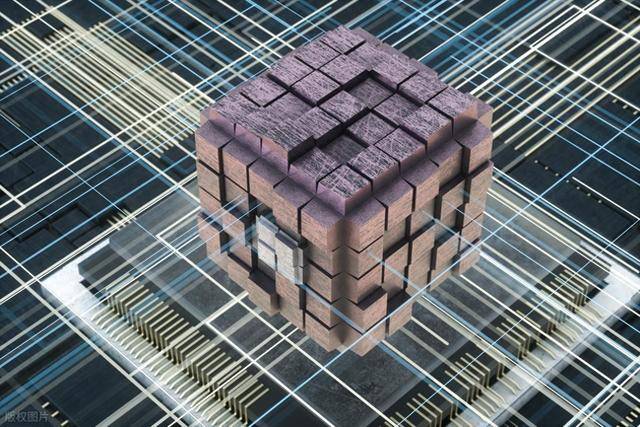
Cardano 创始人称抗量子加密已就绪,但全面部署代价高昂
Xin Lang Cai Jing· 2025-12-21 20:41
Core Viewpoint - The core viewpoint is that while quantum-resistant encryption standards have been established by NIST in 2024, the lack of hardware acceleration support may significantly reduce blockchain throughput, potentially leading to a performance loss of about an order of magnitude. The critical issue is not "how to do it," but "when to do it" [1]. Group 1 - Charles Hoskinson, the founder of Cardano, emphasizes that the computational costs and data scale of quantum-resistant encryption will impact blockchain performance [1]. - The assessment of when quantum computing risks become practical should reference DARPA's quantum benchmarking program, which aims to evaluate the feasibility of practical quantum computing by 2033 [1].
华尔街日报:量子计算怎么一下子成了“国家安全”下一个战场?
美股IPO· 2025-10-27 03:58
Core Insights - Major US quantum computing companies like IonQ are achieving technological breakthroughs, with predictions of reaching "quantum advantage" within 3-5 years, which could disrupt existing encryption systems and pose security threats to critical sectors like government and finance [1][3][4] Group 1: Technological Advancements - IonQ has announced a breakthrough with 99.99% gate fidelity, leading to optimism about achieving "quantum advantage" within a critical timeframe of 3-5 years [3][6] - Quantum advantage is defined by four criteria: at least 1000 qubits, at least 99.9% fidelity for two-qubit gates, gate speed of no more than 15 nanoseconds, and some form of error correction [6] - The transition from academic interest to a national security imperative is driven by the potential of quantum computing to solve complex problems traditional computers cannot handle [6][10] Group 2: Geopolitical Context - The competition between the US and China in quantum technology is intensifying, with China investing over $15.3 billion compared to the US's $3.2 billion [4][10] - Quantum technology is now viewed as a critical infrastructure, with significant government funding and strategic investments from major tech companies [9][10] Group 3: Investment Trends - The market is experiencing a surge in investment interest, with companies like Rigetti Computing seeing stock price increases of up to 3100% despite not yet achieving profitability [6][9] - Financial institutions are also ramping up their investments in quantum computing, with JPMorgan Chase announcing a $1.5 trillion plan that includes quantum technology as a key focus area [9] Group 4: Security Implications - The ability of quantum computers to break existing encryption methods poses a dual threat and opportunity, leading to increased government focus on post-quantum cryptography [8][9] - The Biden administration has enacted legislation to prepare federal systems for quantum threats, emphasizing the urgency of transitioning to quantum-resistant encryption [8][9]
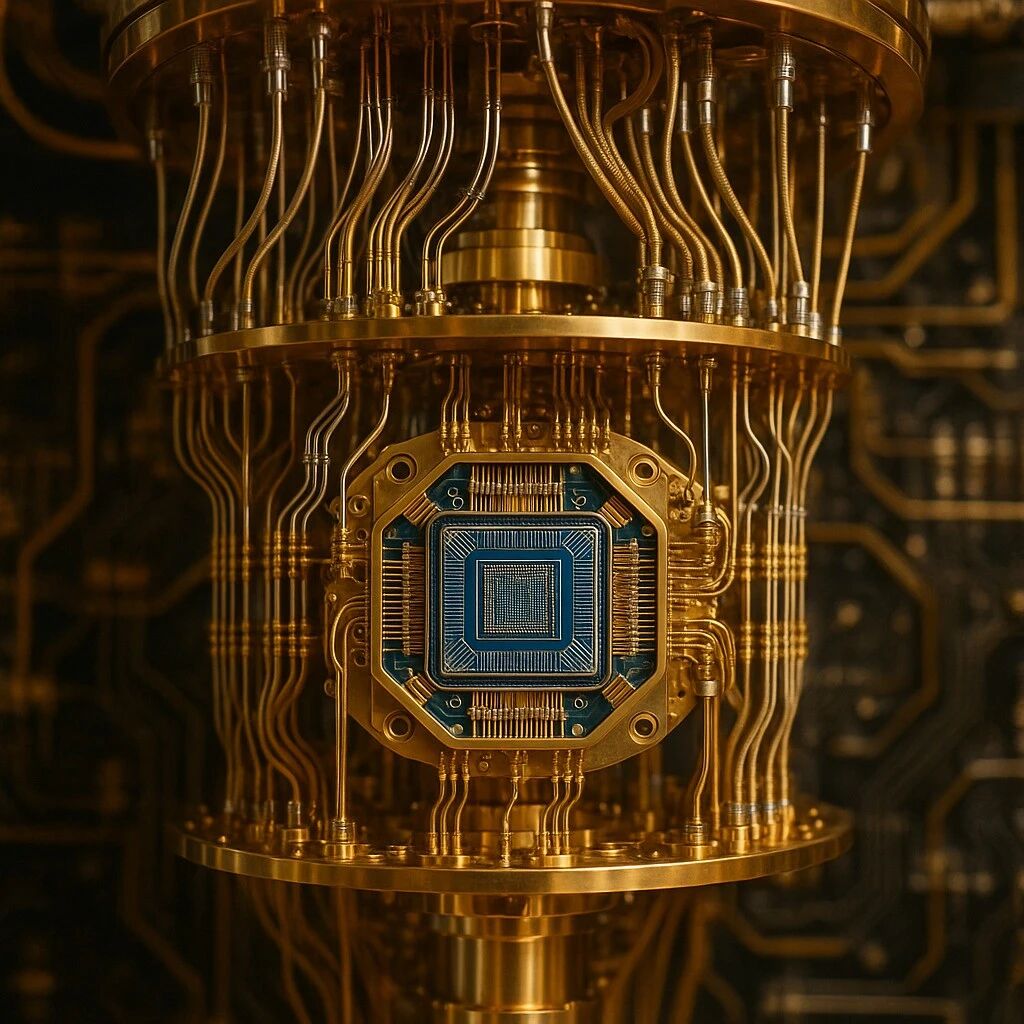
格尔软件(603232):抗量子加密大势所趋,公司有望占得先机
Orient Securities· 2025-08-23 11:46
Investment Rating - The report maintains a "Buy" rating for the company [3][6]. Core Views - The company is positioned to capitalize on the growing trend of post-quantum cryptography (PQC) as global standards are being established, with NIST releasing the first three PQC standards in August 2024 [10]. - The company has developed a comprehensive technical system from algorithm research to product development, integrating quantum key distribution and anti-quantum algorithms, which enhances its competitive edge in the cybersecurity market [10]. - The company has established partnerships with leading universities and is involved in multiple verification projects in the financial and research sectors, solidifying its industry position [10]. Financial Forecast and Investment Recommendations - Due to macroeconomic disruptions, the company has adjusted its revenue expectations downward and increased its expense ratio. The projected EPS for 2025-2027 is 0.19, 0.26, and 0.35 yuan respectively, down from previous estimates of 0.36 and 0.41 yuan for 2025 and 2026 [3][13]. - The target price for the company is set at 18.72 yuan based on a 72x PE ratio for 2026, reflecting a strong valuation compared to peers [3][13]. - The company's revenue for 2023 is projected at 561 million yuan, with a year-on-year decline of 14.9%, followed by a slight recovery in subsequent years [5][15]. Key Financial Metrics - The company's gross margin is expected to improve from 47.5% in 2023 to 54.2% in 2027, indicating enhanced profitability [5][15]. - The net profit attributable to the parent company is forecasted to grow from 37 million yuan in 2023 to 82 million yuan in 2027, with significant growth rates in the coming years [5][15]. - The company's market capitalization is approximately 3.859 billion yuan, with a total share capital of 23.415 million shares [6].

量子计算机能秒解密码吗
Jing Ji Ri Bao· 2025-06-17 22:26
Group 1 - The core viewpoint is that quantum computers, while having the potential to outperform classical computers in specific tasks, are still in the early stages of development and do not currently pose a threat to bank accounts [1][2][3] - Quantum computers operate based on quantum mechanics principles, allowing for unique phenomena such as quantum superposition and entanglement, which can enable them to solve certain problems much faster than traditional computers [1][2] - The claim that quantum computers can instantly crack all passwords is linked to Peter Shor's quantum factorization algorithm, which poses a potential threat to current RSA encryption but does not imply that all passwords can be easily compromised [1][2] Group 2 - The development of quantum computers faces significant challenges due to the stringent environmental requirements of quantum mechanics and the complexity of manipulating quantum states accurately [2] - Current quantum computing technologies, such as superconducting quantum circuits and photonic quantum systems, have made some progress but are far from maturity, with ongoing efforts needed to scale up and ensure error correction [2] - In response to potential threats from quantum computing, countries are advancing the research and implementation of quantum-resistant encryption, which is based on classical physics and presents fewer technical challenges compared to building quantum computers [2]