数字IP

Search documents
数字IP爆发 传媒科技与动漫游戏走向双向赋能
Zheng Quan Ri Bao Wang· 2025-12-29 07:27
Group 1 - The second Media Technology Animation Game Expo and Digital Content Industry Summit opened in Chengdu, focusing on the development direction and future path of the digital content industry under the themes of AIGC and globalization [1] - The president of the China News Culture Promotion Association emphasized the deep integration and mutual empowerment between media technology and animation games, which broadens their development boundaries and strengthens the narrative of Chinese stories [1] - The deputy dean of Chengdu University’s Film and Animation College highlighted that the southwest region, with its rich cultural resources and strong industrial vitality, has become a significant growth area for the digital content industry [1] Group 2 - The CEO of Beijing Manyou Valley Information Technology Co., Ltd. discussed that game exports have become a premium path for cultural exports, and IP is emerging as a new productive force, emphasizing the importance of emotional value in IP for user engagement [2] - The "Smart Media Newborn" digital content innovation ecosystem partner plan was officially launched, along with the 2025 annual digital content innovation case collection and global investment promotion for the second Media Technology Animation Game Expo [2] - The next Media Technology Animation Game Expo is scheduled for May 2026 in Chengdu, aiming to create an integrated event for exhibitions, forums, project matchmaking, and interactive experiences to promote deep integration and cooperation in technology, content, investment, and talent [2]
洛克特聂华军:发展文旅需要数字IP,“大湾鸡”可考虑影视化
2 1 Shi Ji Jing Ji Bao Dao· 2025-11-27 12:28
Core Insights - The development of digital IP is a crucial driving force for the growth of urban cultural tourism [1][2] - The success of the animated film "Nezha 2" with a box office of 15 billion yuan has led to a total sales of derivative products exceeding 100 billion yuan, contributing over 200 billion yuan to GDP [1] - The current urban cultural tourism faces issues of homogenization and lack of deep cultural exploration, which can be addressed through the creation of distinctive IP symbols [1][2] Company and Industry Summary - The company specializes in creating CG special effects for major films and emphasizes the importance of digital IP in urban cultural tourism [1][2] - The operational logic for developing digital IP involves systematically analyzing cultural symbols, industry characteristics, and the spiritual core of cities to create differentiated themes [2] - The company utilizes AI technology to enhance the efficiency and speed of IP creation, breaking traditional stereotypes associated with urban IP [2] - The example of the "Orange Dragon" IP from the Miao Autonomous County of Mayang illustrates successful marketing strategies and commercialization through various channels, achieving significant sales [4] - The company recognizes the potential of the Greater Bay Area for cultural industry development due to its vibrant commercial environment and strong manufacturing capabilities [4] - Future support for the cultural industry should focus on talent development and co-creation mechanisms to foster original content and cultivate management talent [5]


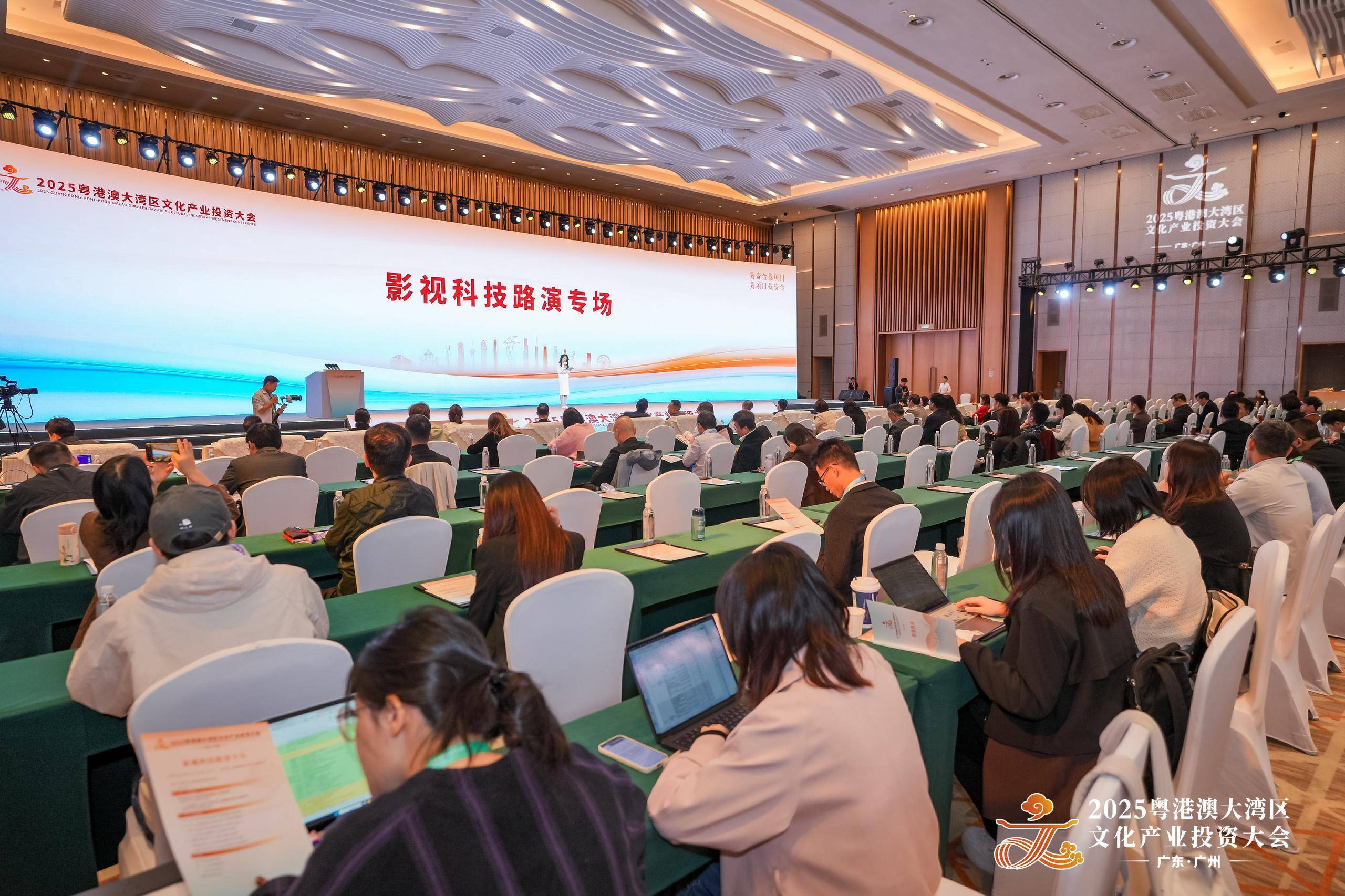
2025粤港澳大湾区文化产业投资大会影视科技路演专场举办 聚焦影视科技融合与产业创新
Sou Hu Cai Jing· 2025-11-27 07:24
Core Insights - The 2025 Guangdong-Hong Kong-Macao Greater Bay Area Cultural Industry Investment Conference focused on the integration of film and technology, aiming to explore innovative paths and investment opportunities in the film technology sector [1][25] Group 1: Event Structure - The event consisted of two main segments: thematic discussions and project roadshows, analyzing cutting-edge trends in film technology and showcasing quality industry projects [3] Group 2: Thematic Discussions - Xia Xiaohui, Executive President of Ying Universe Group, shared insights on the innovative paths and commercial value construction of micro-short dramas within the Ying Universe ecosystem [7] - Gong Jiajun, Senior Vice President of Zhuobo Group, discussed how AI technology can empower digital cultural asset trading and global content dissemination, emphasizing the need for a new infrastructure platform to handle the explosive growth of digital content [9] Group 3: Project Presentations - Zheng Yue, head of the investment production center at Guangzhou Happy Time Film Group, introduced projects like "Point to Stop" and adaptations of classic IPs such as "A Chinese Ghost Story" and "The Killer" [12] - Yuan Feng, Chairman and President of Shanghai Fushuo Film and Television Culture, highlighted the rapid growth of internet animation users, reaching 490 million in 2023, with the core user base at 120 million, and projected the Chinese animation industry to exceed 300 billion yuan in total output value by 2024 [16] - Nie Huajun, Chairman and Founder of Shenzhen Rocktech Visual Effects Technology, noted that the derivative sales of "Nezha: Birth of the Demon Child" are expected to surpass 100 billion yuan in 2025, identifying digital IP-centric cultural tourism projects as a blue ocean market [20] Group 4: Industry Collaboration - Guests from various companies, including Hangzhou Yanyan Jiemu Digital Technology and Huoyue Media, showcased innovative and market-potential film technology projects from multiple dimensions such as film production, special effects technology, and digital media [23] - A panel of investment experts provided feedback and guidance on the roadshow projects, facilitating efficient connections between project teams and capital [25]
到此一游VS深度入戏,别让数字文旅同质化“杀死”复购率
Guan Cha Zhe Wang· 2025-11-10 11:10
Core Insights - The article emphasizes the importance of digital transformation in the cultural and tourism industry, highlighting the integration of digital technology to enhance visitor experiences and operational efficiency [1][4][6] Group 1: Digital Transformation in Cultural and Tourism Industry - The Chinese government’s "14th Five-Year Plan" advocates for the deep integration of the digital economy with the real economy, particularly in cultural and tourism sectors [1] - Digital technologies such as online booking, virtual exhibitions, and AI are increasingly being adopted in the cultural tourism industry, improving visitor experiences and operational management [1][4] - The Beijing Dongcheng District is leading efforts in digital transformation by leveraging cultural roots and technology to create a robust digital IP ecosystem that supports economic development [2][4] Group 2: Trends and Opportunities - Cross-industry collaboration is a significant trend, with cultural tourism sites partnering with tech companies to enhance visitor engagement through AR and VR technologies [4][6] - The "Digital Cultural Tourism Industry Development Action Plan" aims to cultivate 100 benchmark digital cultural tourism projects by 2026, with a projected consumption scale exceeding 1.5 trillion yuan [5] - Digital cultural tourism is seen as a way to overcome the limitations of traditional tourism, allowing for a more interconnected and immersive visitor experience [6] Group 3: Challenges and Solutions - The cultural tourism market faces issues of homogenization, with over 60% of digital IPs focusing on similar themes, leading to low visitor satisfaction and repeat purchase intentions [7] - Many cultural tourism enterprises report that significant investments in digital technology do not yield expected results, with 30% indicating that VR/AR projects often fail due to poor user experience [9] - Strengthening copyright awareness and utilizing blockchain technology for IP protection are recommended to mitigate risks associated with digital IP infringement [9][10]