
文化经济融合

Search documents
广东省副省长、佛山市委书记唐屹峰:持续推动“三箭齐发” 加快迈向智造强市
Nan Fang Ri Bao Wang Luo Ban· 2026-01-08 03:41
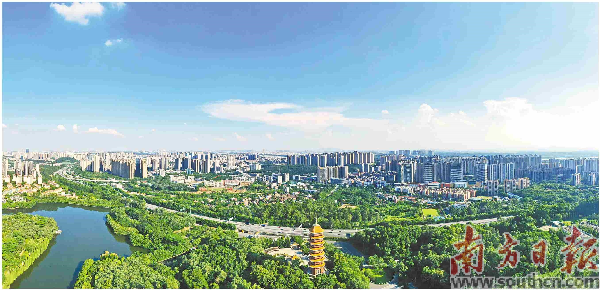
Core Viewpoint - Foshan aims to transition from a "manufacturing city" to an "intelligent manufacturing city" by building a more competitive modern industrial system, focusing on traditional industry upgrades, emerging industry development, and future industry cultivation [2][3]. Group 1: Modern Industrial System Development - Foshan will implement the "Artificial Intelligence + Manufacturing" initiative to enhance traditional industries through intelligent and digital transformation, creating modern factories that are green and smart [3][4]. - The city plans to develop new pillar industries by leveraging new momentum industry funds to grow sectors such as new power system equipment, robotics, and semiconductor chips, aiming to establish a high-tech and high-growth industrial cluster [3][4]. - Foshan will enhance its modern service industry by promoting both productive and life service sectors, driving specialization and high-end value chain development [4]. Group 2: Reform and Business Environment - The city will deepen market-oriented reforms, focusing on effective market and proactive government roles, and implement innovative reforms to improve the business environment [5][6]. - Foshan aims to optimize its enterprise service system and approval processes to become a benchmark for business environments among prefecture-level cities [5]. - The city will also focus on state-owned enterprise reforms to enhance governance and risk management capabilities [5]. Group 3: Regional Coordination and Development - Foshan will leverage the "Ring Two Rivers Pilot Zone" to promote urban-rural coordination and regional development, aiming to create a new growth pattern with balanced regional development [7][8]. - The city plans to build a modern industrial system that includes traditional industries like food and construction materials, alongside emerging sectors such as new energy and high-end equipment [7]. - Foshan will enhance its cultural tourism by integrating resources across regions and developing themed tourism areas to attract visitors [8]. Group 4: Cultural and Tourism Development - Foshan recognizes its cultural heritage as a vital asset and aims to protect and promote traditional cultural practices while integrating them with modern values [10][11]. - The city will implement a "cultural tourism chain" project to connect water, culture, and commerce, enhancing the cultural tourism landscape [10]. - Foshan seeks to develop new economic models that combine cultural tourism with various industries, stimulating local economies through events and cultural activities [11].

潍坊东方企业家俱乐部组织举办文化板块企业座谈会 共谋文化经济融合发展新路径
Sou Hu Cai Jing· 2025-11-06 09:27
Core Insights - The Weifang Entrepreneurs Club organized a discussion on "Cultural Empowerment for High-Quality Development" with representatives from the cultural sector [1] Group 1: Current Trends in Cultural Industry - Participants reviewed the current development trends in the cultural industry and reached a consensus on three main topics [1] - The first topic is the establishment of a cultural resource sharing platform to integrate resources from calligraphy and painting, intangible cultural heritage, and digital creativity [1] - The second topic involves planning a series of "Art Empowering Business" activities, including regular themed cultural salons and customized art exhibitions for enterprises [1] - The third topic focuses on innovating the integration model of cultural economy through a dual-channel operation of "auction + exhibition" to support the cultural economy [1] Group 2: Future Initiatives - The Entrepreneurs Club will continue to build a platform for communication among government, enterprises, academia, and research to promote the deep integration of the cultural industry with the real economy [1] - The club aims to contribute to the construction of a modern cultural strong city in Weifang through the efforts of entrepreneurs [1]
一颗荔枝里的人文经济学(评论员观察)
Ren Min Ri Bao· 2025-07-09 22:32
Group 1 - The cultural integration with the economy is driving new consumption trends, as seen in Guangdong where lychee culture is creating new business opportunities [1][2] - The advancement of cold chain technology and logistics has transformed lychee from a luxury item to a widely consumed product, enhancing its presence in daily life [1] - Cultural resources are being leveraged to create economic value, with various cultural events and products boosting local economies [1][2] Group 2 - The rise of new business models in cultural tourism is evident, with unique lychee-themed products and experiences attracting consumers [2] - The branding of lychee as the "Eastern Love Fruit" at cultural events is an example of how cultural narratives can enhance product appeal [2][3] - The emphasis on optimizing cultural products and services is seen as a key driver for high-quality economic development [3]
从“苏超”品读人文经济
Jing Ji Ri Bao· 2025-06-20 21:58
Group 1 - The "Su Super" league has seen a significant increase in attendance, with all matches except for two exceeding 20,000 spectators, and the Xuzhou home game reaching 30,823 attendees. This attendance surpasses the average attendance of the Chinese Super League and Japan's J1 League for the 2024-2025 season [1] - The league has successfully activated local cultural elements and tourism, showcasing Jiangsu's cultural heritage and products, which has resonated with the public and enhanced the region's image [1][2] - The league emphasizes a people-centered approach, providing excellent venue resources and affordable ticket packages to meet the diverse and evolving needs of the community, highlighting the value of individuals [1] Group 2 - Jiangsu's rich cultural heritage and its status as a significant birthplace of modern industrial culture provide a continuous source of material for the "Su Super" league, allowing for a blend of traditional and modern cultural elements [2] - The integration of culture and economy has led to a projected economic benefit of over 300 million yuan for the entire season, with an average revenue increase of over 20 million yuan for each city involved [2] - Other provinces can learn from Jiangsu's approach by focusing on cultural economics to promote local economic development, emphasizing the importance of unique historical and cultural identities [2] Group 3 - As summer approaches, cities are gearing up for competition in cultural tourism, but some are failing to leverage their local cultural resources effectively, leading to misaligned marketing strategies [3] - Successful city marketing requires the transformation of local cultural genes into unique regional identifiers to stand out in the competitive cultural tourism landscape [3]