文学

Search documents
一个人的文学微信群
Xin Lang Cai Jing· 2026-02-22 06:37
Group 1 - The core idea of the article revolves around the evolution of a literature group initiated by a former university student, which ultimately dwindled in participation, leading to a realization about the personal nature of literature [1][2] - Initially, the group started with over sixty members, but several members left shortly after its creation, indicating a lack of interest in literature among peers [1] - Despite the declining number of participants, the individual continued to write and share articles, eventually leading to a situation where only a few members remained, and ultimately, the group was left with just one active member [2] Group 2 - The individual found value in writing for oneself rather than seeking external validation, highlighting a shift in perspective regarding the purpose of literary expression [2] - The experience underscored the idea that literature can be a solitary pursuit, allowing for personal reflection and creativity without the need for audience engagement [2]
匆匆来相会
Xin Lang Cai Jing· 2026-02-20 07:17
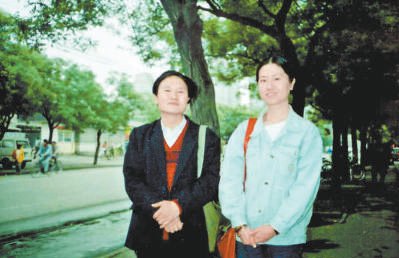
Group 1 - The article reflects on the passage of time and the evolution of friendships formed through a shared passion for writing and literature [1][4] - The author emphasizes the significance of reconnecting with old friends, highlighting how life experiences shape individuals while friendships remain intact [3][4] - The narrative illustrates the joy of unexpected reunions and the lasting impact of shared interests, despite the changes that come with time [2][4] Group 2 - The friendships discussed are rooted in a literary community, showcasing how connections can transcend geographical distances and time [1][4] - The author recalls specific moments of missed opportunities in past interactions, underscoring the importance of valuing time spent with friends [2][3] - The theme of nostalgia is prevalent, as the author reflects on the changes in personal circumstances and the enduring nature of friendships formed in youth [3][4]
心存幻想,不止于幻想
Bei Jing Ri Bao Ke Hu Duan· 2026-02-10 01:43
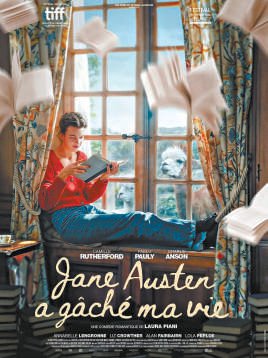
Core Perspective - The film "Jane Austen Ruined My Life" explores the life of Agathe, a bookstore employee in Paris, who is a devoted fan of Jane Austen and struggles with her romantic expectations shaped by literature [2][3]. Group 1: Character Development - Agathe, after losing her parents, lives with her sister and her sister's child, and is portrayed as a romantic idealist influenced by Austen's characters [2]. - Despite her fantasies, Agathe is content with her simple life and attempts to write her own novel in the style of Austen [3]. - The character Oliver, a descendant of Austen, contrasts with Agathe's literary views and plays a significant role in her journey [3]. Group 2: Creative Process - Agathe receives an invitation to a Jane Austen writing camp, which is set in a beautiful historical castle, but struggles to find inspiration there [3]. - After deciding to leave the camp, Agathe returns to a seaside home where she finally finds her creative voice and completes a work that attracts a publisher's interest [3]. Group 3: Thematic Elements - The film beautifully blends French romance with British charm, incorporating quotes from Austen and other literary figures, enhancing the connection between literature and life [4]. - Schubert's "Fantasy in F minor" serves as a thematic thread throughout the film, symbolizing Agathe's inner desires and emotional struggles [4][5]. - The narrative concludes with Agathe's return to Paris, where she reunites with Oliver, signifying the resolution of her creative and emotional conflicts [5]. Group 4: Philosophical Insights - The film suggests that fantasies can guide personal aspirations and growth, as demonstrated by both Agathe and Schubert [6]. - It emphasizes the importance of action in pursuing dreams, regardless of the outcome, highlighting the transformative power of creativity [6].

雪原里,有个热腾腾的文学小院
Ren Min Ri Bao· 2026-02-07 03:45
Core Viewpoint - The article highlights the development of the Mulan Academy in Yanghe Village, Ningxia, which serves as a hub for local farmers and writers to engage in literary activities and education, showcasing the intersection of culture and community development [1][4]. Group 1: Development of Mulan Academy - The Mulan Academy has become a significant center for over 1,600 writers in Xiji County, with more than 300 being local farmers, fostering a vibrant literary community [1]. - The installation of air heating systems and solar panels has improved the learning environment, allowing the academy to operate year-round despite previous seasonal closures [1][2]. Group 2: Community Engagement and Impact - The academy has hosted events like "Literary Village BA," which successfully sold over 800,000 yuan worth of agricultural products through live streaming, demonstrating the economic impact of literary initiatives [2]. - Local residents, including those who previously faced hardships, are now engaging in creative writing, with stories of personal transformation and community pride emerging from the academy's activities [3][4]. Group 3: Cultural Significance - The establishment of the Mulan Academy has not only attracted writers from outside but has also nurtured "literary seed" families within the village, promoting a culture of creativity and expression [4]. - The local government has recognized the importance of cultural development, incorporating initiatives like the publication of "Xiji Literary History" into its work report, indicating a commitment to strengthening cultural identity [4].
雪原里,有个热腾腾的文学小院(新春走基层·热气腾腾万家暖)
Ren Min Ri Bao· 2026-02-07 00:29
Core Viewpoint - The article highlights the development of the Mulan Academy in Yanghe Village, Ningxia, which serves as a hub for local farmers and writers to engage in literary activities and education, showcasing the intersection of literature and rural revitalization efforts [1][4]. Group 1: Development of Mulan Academy - The Mulan Academy has become a significant platform for over 1,600 writers in Xiji County, including more than 300 farmers, fostering literary creativity and community engagement [1][4]. - The installation of air-source heating and solar photovoltaic panels has improved the academy's infrastructure, allowing it to operate year-round despite harsh winter conditions [1][2]. Group 2: Community Engagement and Impact - The academy has hosted events like the "Literary Village BA," which successfully sold over 800,000 yuan worth of agricultural products through live streaming, demonstrating the economic potential of combining literature with local agriculture [2][4]. - The personal stories of local writers, such as Ma Qiaoqin, who began writing poetry later in life, illustrate the transformative impact of the academy on individual lives and the community [3][4]. Group 3: Cultural and Economic Initiatives - The local government has integrated cultural initiatives into its development plans, including the publication of "Xiji Literary History" and promoting cultural tourism, which are part of broader efforts to strengthen the county's cultural identity [4][5]. - The academy's influence extends beyond literature, contributing to the overall improvement of living conditions in the area, as seen in the infrastructure developments like paved roads and solar streetlights [3][4].
用一个字证明你不是AI?这堂语文课刷屏背后的故事
Yang Shi Xin Wen· 2026-01-25 01:45
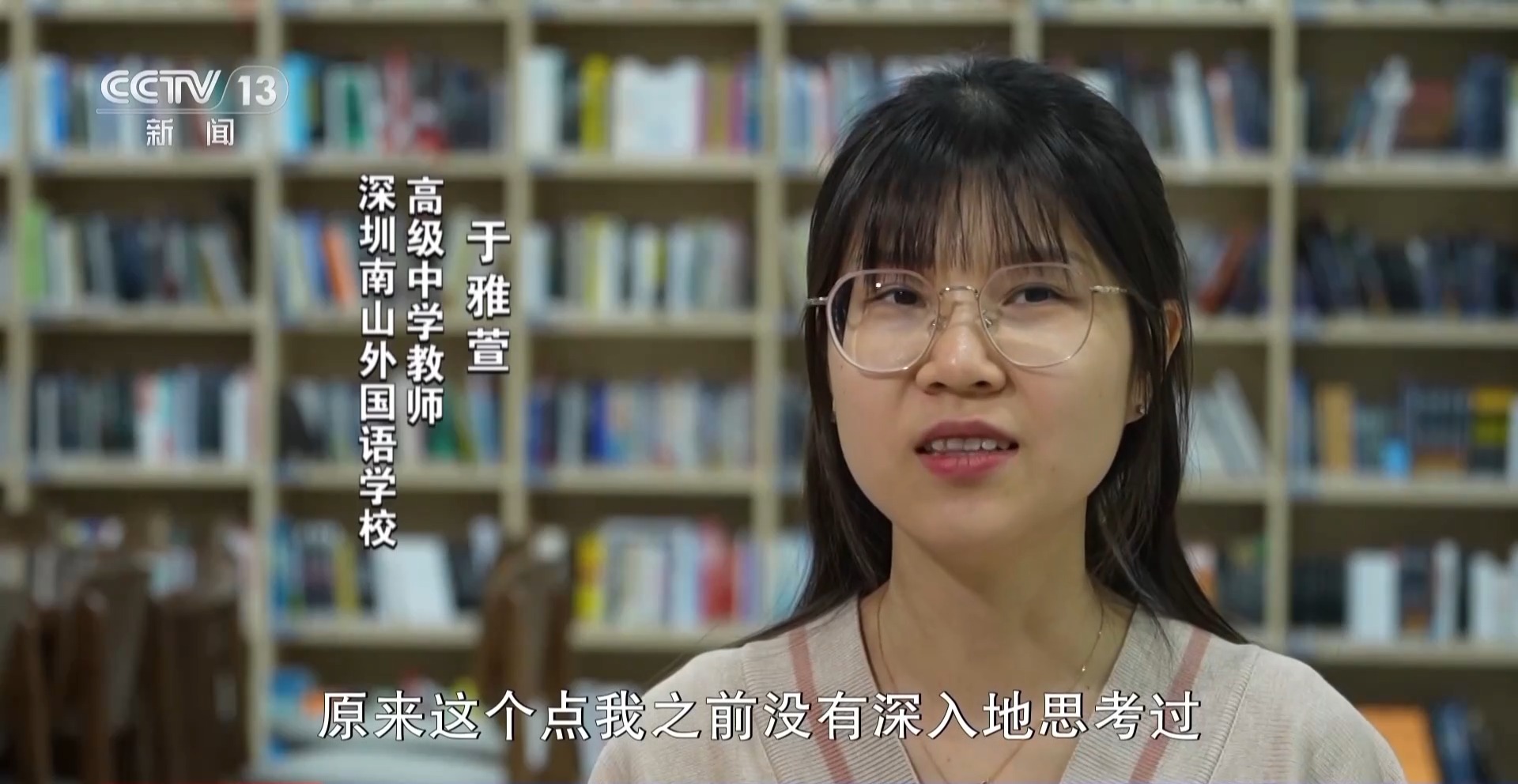
Core Viewpoint - The article highlights the impact of a high school teacher, Yu Yaxuan, who engages her students in deep discussions about identity and existence through a thought-provoking writing prompt, fostering a sense of self-worth and reflection among students in the context of an AI-driven world [1][3][24]. Group 1: Teacher's Approach and Philosophy - Yu Yaxuan encourages students to express their thoughts and feelings, creating a space for open dialogue about their struggles and uncertainties [12][24]. - The teacher believes that literature does not provide answers but rather prompts students to explore their own questions and meanings in life [18][20]. - The school emphasizes the importance of humanistic values in education, especially in the face of advancing artificial intelligence [22]. Group 2: Student Engagement and Responses - Students, like Dai Xixi, express their feelings of worth and individuality through their responses to the writing prompt, indicating a positive emotional impact from the teacher's approach [5][7]. - The discussions in class lead students to reflect on their identities and the significance of literature in understanding themselves [14][20]. - Students appreciate the freedom to explore complex themes, such as the meaning of adulthood and self-acceptance, in a supportive environment [12][26]. Group 3: AI and Education - The school has integrated AI into its learning environment, with students discussing its role in their academic work and the implications for human creativity [11][12]. - Yu Yaxuan raises questions about the uniqueness of human creativity in contrast to AI's capabilities, prompting students to consider what it means to be human [11][12]. - The dialogue around AI reflects broader concerns about the future of education and the role of technology in shaping student experiences [22].
“读者最喜爱的2025年度美文”出炉
Xin Lang Cai Jing· 2026-01-22 22:14
Core Insights - The "Most Beloved Literary Works of 2025" voting event has concluded, showcasing a strong engagement from readers and a diverse array of literary contributions [1] - The event highlighted the emotional connection between creators and readers, emphasizing the public's demand for quality literary content [1] Summary by Category Micro Fiction (5 Works) - "The Cat Raising Record" by Guo Hongwen - "The Persimmons Have Turned Red" by Liang Yumei - "Stepfather" by Li Haiyan - "Ben Er Tou and the Bench" by Jin Ziwei - "The Pears of the Wang Family" by Zhang Jianchun [2] Poetry (5 Works) - "City Walk" by Han Xingwei - "Starlight in the Rice Fields" by Guan Yingxian - "At That Time, Just Youth" by Zhang Deping - "The Leaves that Write Poetry" by Qu Lihua - "The Heart of Autumn Harvest" by Ma Touqin [2] Prose and Essays (10 Works) - "Searching for the Source of the Hunhe River at Rolling Horse Ridge" by Mu Xue - "Habitually Clear" by Zhang Danzhe - "Grandpa's War Stories" by Yu Chunlin - "The Autumn Sound by the Daling River" by Xue Lichao - "Wind and Snow at Tongtian Ridge" by Sun Chengwen - "Again, It's Time for Apricots to Weigh Down the Branches" by Cai Chunxin - "Looking at the Mountains" by Zhang Rixin - "Strainer Tofu" by Chen Baiqing - "New Year, On the Way Home" by Zi He - "Winter, the Finale of the Seasons" by Sun Lin [3]
文学的“花头巾”
Xin Lang Cai Jing· 2026-01-12 23:09
Core Viewpoint - The article reflects on the literary significance of the "flower scarf" as a symbol of beauty and the passage of time, intertwined with personal experiences and the impact of literature on life [1][2][4]. Group 1: Literary Influence - The "flower scarf" serves as a powerful literary image that evokes deep emotions and memories, representing both romantic ideals and the transient nature of life [2][4]. - The author recalls the profound impact of reading Chen Jianggong's short story "The Floating Flower Scarf," which explores themes of love, loss, and self-discovery [2][3]. Group 2: Author's Contribution - Chen Jianggong, a prominent writer, emphasizes the importance of authenticity in storytelling, encouraging writers to express their true selves and create new worlds for readers [3]. - His lecture highlights the significance of blending personal experiences with literary techniques, drawing inspiration from various sources to enrich his narratives [3].
带王安忆逛地坛
Xin Lang Cai Jing· 2026-01-02 06:06
Core Viewpoint - The article reflects on the significance of the Ditan Park in Beijing, particularly through the lens of the literary works of Shi Tiesheng, and highlights the personal connections and experiences of various writers, including Liu Qingbang and Wang Anyi, with the park and its cultural importance [4][7][17]. Group 1: Historical Context - Ditan Park has been a cultural event space in Beijing since the first book fair in 2002, hosting multiple events annually, thus becoming a public cultural celebration [4]. - The park was once described as desolate, filled with wild trees and grass, before it became a popular site for visitors [5][6]. Group 2: Personal Experiences - Liu Qingbang recounts his early experiences in Ditan Park, where he practiced martial arts and encountered Shi Tiesheng, who was also a frequent visitor [5][6][7]. - The article describes a visit by Wang Anyi to Ditan Park, where she expressed her admiration for Shi Tiesheng's work "I and Ditan," indicating the park's literary significance [8][12]. Group 3: Literary Significance - The connection between Shi Tiesheng and Ditan Park is emphasized, comparing it to other literary landmarks, suggesting that the park has become a "literary sanctuary" due to his writings [7][14]. - The article highlights the enduring impact of "I and Ditan," which continues to resonate with readers and visitors, reinforcing the park's cultural relevance [17][18].
以文学之名奔赴下一个春天!明晚,刘震云张嘉益等齐聚“文学·中国”跨年盛典
Xin Lang Cai Jing· 2025-12-30 09:47
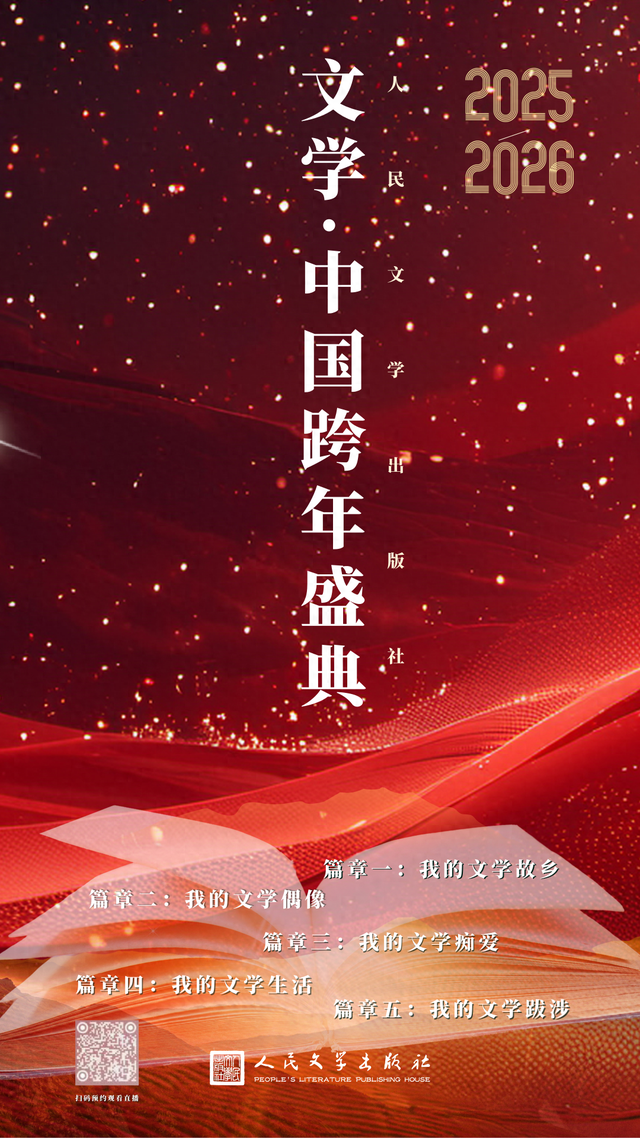
Core Viewpoint - The "Literature·China" New Year's Eve gala, hosted by the People's Literature Publishing House, will take place on December 31, featuring 20 literary figures and cultural celebrities, highlighting a literary journey through five chapters [2]. Group 1: Literary Hometown - In the "My Literary Hometown" chapter, authors such as Liu Zhenyun and Liang Xiaosheng will revisit their creative origins, exploring the cultural landscapes of regions like the Central Plains and Northeast China [5]. - The chapter will also include visual narratives from Feng Jicai and Jia Pingwa, illustrating how specific places nourish literature [5]. Group 2: Literary Idols - The "My Literary Idol" chapter will feature Kang Zhen discussing the enduring spirit of Su Dongpo, while Wen Zheng will interpret Dante's journey in China, positioning these figures as eternal coordinates in the literary cosmos [7]. Group 3: Literary Passion - In the "My Literary Obsession" chapter, the "takeout poet" Wang Jibing will share insights on finding poetry in everyday life, alongside Chen Hui and Ma Huijuan, who will explore how literature flourishes in ordinary settings like markets and fields [9]. Group 4: Literary Life - The "My Literary Life" chapter will see screenwriter Quan Yongxian sharing his narrative techniques, while musician Hu Haiquan and actor Zhang Jiayi will discuss how literature serves as an essential foundation for their artistic expressions [11]. Group 5: Literary Journey - In the "My Literary Journey" chapter, authors including Xu Zechen and Ge Liang will engage in discussions about their experiences in the literary field, sharing joys, challenges, and breakthroughs [13].