新兴经济体

Search documents
中方:愿同俄罗斯、印度继续推动双边关系向前发展
Zhong Guo Xin Wen Wang· 2025-12-08 08:32
Core Points - China expresses willingness to continue advancing bilateral relations with Russia and India, emphasizing the importance of these relationships for regional and global peace, security, stability, and prosperity [1] Group 1: China-Russia-India Relations - China, Russia, and India are recognized as significant members of emerging economies and the Global South, maintaining good relations that align with their own interests [1] - The collaboration among these three countries is seen as beneficial not only for themselves but also for broader regional and global stability [1] Group 2: China-India Relations - China is committed to working with India to view and manage their relationship from a strategic and long-term perspective [1] - The goal is to promote a sustained, healthy, and stable development of bilateral relations that benefits both nations and their peoples [1] - This cooperation is aimed at contributing to peace and prosperity in Asia and the world [1]
携手推动全球治理公正化
Jing Ji Ri Bao· 2025-11-13 22:20
Group 1 - Malaysia's Prime Minister Anwar expressed the country's willingness to join BRICS, highlighting the platform's role in fostering a more just and equitable global governance system [1] - Anwar's statement reflects Malaysia's proactive stance on multilateral cooperation and the shared desire among developing countries to enhance their international voice and improve global governance [1] - The current global governance system is primarily dominated by a few developed countries, leading to the underrepresentation of developing nations' interests in key decision-making processes [1] Group 2 - The growth rate of emerging markets and developing economies is projected to be 4.2% in 2024, more than double that of developed economies, indicating a significant shift in global economic dynamics [1] - Over the past 20 years, developing countries have contributed 80% to global economic growth, underscoring their increasing importance in the international economic landscape [1] - The BRICS cooperation mechanism has gained widespread recognition among global South countries, providing new development opportunities and promoting a more democratic international relationship [2]
全球主要塑料生产商:新兴经济体将是塑料行业重要增长点
Zhong Guo Hua Gong Bao· 2025-10-28 02:56
Core Insights - The plastic industry is currently facing a prolonged downturn characterized by weak demand and overcapacity, with global polyethylene (PE) and polypropylene (PP) prices under pressure as the market enters its fourth year of decline [1][2] - Despite the challenges, emerging economies are seen as a significant growth opportunity for the plastic sector, with expectations of robust demand growth in regions like South Asia and Southeast Asia [1][3] Group 1: Market Conditions - The global PE market remains oversupplied, but optimism is growing due to the shutdown of several production facilities this year, which may aid in industry recovery [1] - The report indicates that PE demand in South Asia is expected to grow at a compound annual growth rate (CAGR) of 7.6% from 2024 to 2029, while Southeast Asia is projected to grow at 5.1% [1] - The PP market is anticipated to see a modest demand growth of 3.6% in 2024, reaching 95.7 million tons, despite a bearish outlook for prices until at least 2027 [2] Group 2: Future Growth Drivers - Emerging markets are identified as key growth drivers for the plastic industry, with increasing demand for polymers fueled by population trends and end-use applications [3] - The demand for composite materials in clean energy sectors, such as wind and solar, is expected to surge, contributing to the overall growth of the plastic market [3] - The International Energy Agency (IEA) highlights that by 2030, the share of petrochemical feedstocks in crude oil consumption is projected to rise from 15.8% to 17.4%, driven by increased plastic demand [3] Group 3: Regional Consumption Trends - Industrialized countries account for 12% of the global population but represent 40% of global plastic demand, while emerging markets have seen a 177% increase in plastic consumption since 2000 [4] - The growth in emerging markets is linked to faster GDP and population growth, with projections indicating a global GDP growth of 3.0% to 3.1% from 2025 to 2026 [4] - As urbanization and industrialization continue in emerging markets, the gap in per capita plastic consumption compared to the U.S. and Europe is expected to narrow [4]
丘应桦:“内地企业出海专班”今日启动 香港多部门携手助力内地企业“走出去”
智通财经网· 2025-10-06 06:46
Core Viewpoint - The launch of the "Outbound Task Force" aims to support mainland enterprises in expanding into international markets, particularly through Hong Kong as a strategic base [1][2] Group 1: Objectives and Structure - The Outbound Task Force is designed to create a one-stop support platform for mainland enterprises, integrating resources across various sectors including law, finance, and accounting [2] - The initiative will be overseen by the Secretary for Commerce and Economic Development, who will coordinate efforts among multiple government departments and agencies [1][2] Group 2: Key Dimensions of Support - Collaboration and Win-Win: The Task Force will bring together various professional organizations to facilitate resource integration and knowledge sharing, enhancing collaborative efforts for outbound enterprises [2] - Network Expansion: The Task Force will leverage government resources to enhance international connections, with plans to establish a new economic office in Kuala Lumpur to tap into emerging markets [2] - Practical Effectiveness: Tailored support services will be provided based on the specific needs of enterprises, covering areas such as taxation, legal advice, financing, ESG compliance, and intellectual property protection [2] Group 3: Strategic Importance - The initiative aligns with national policies encouraging mainland enterprises to go global, aiming to transform their international expansion into new economic momentum for Hong Kong [2]
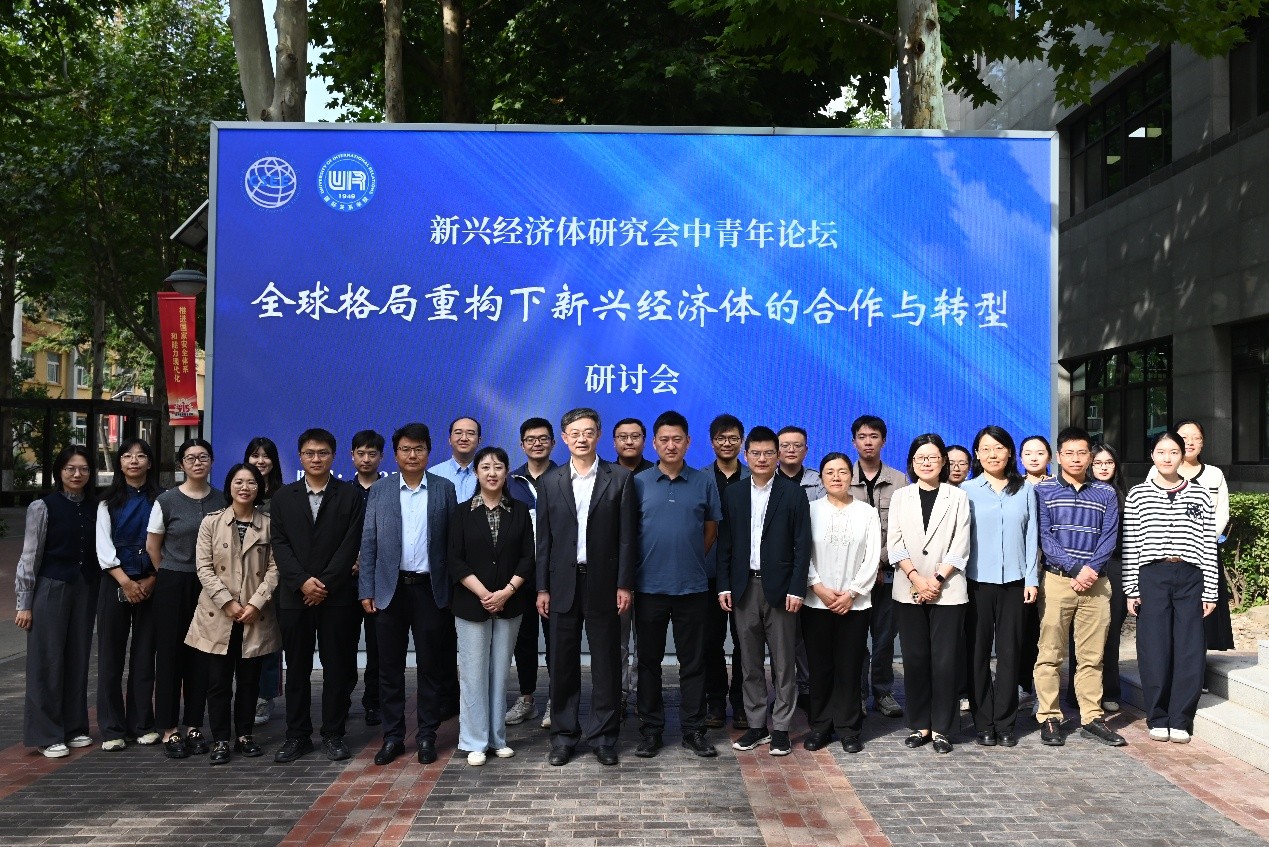
新兴经济体研究会中青年论坛在国际关系学院举办
人民网-国际频道 原创稿· 2025-09-28 05:32
Core Viewpoint - The forum focused on the cooperation and transformation of emerging economies under the theme of "Global Restructuring" and highlighted the importance of these economies in global governance and development [1][2]. Group 1: Challenges and Opportunities - The forum discussed the development dilemmas and differentiation faced by emerging economies, emphasizing the need for sustainable development paths. Scholars noted that the ability of these economies to bear debt changes with their rising status in the global economy, and internal differentiation exists [3]. - The need to enhance the institutional discourse power of emerging economies and the Global South in the context of global governance reform was emphasized. The rise of unilateralism and protectionism poses challenges, and emerging economies are transitioning from passive participants to active shapers of global governance [3][4]. Group 2: Digital and Green Transformation - The forum addressed the challenges emerging economies face in digitalization and green transformation, highlighting the disparities caused by technological advancements like artificial intelligence. Strengthening South-South technological cooperation and sharing innovative outcomes is deemed crucial [4]. - Emerging economies are actively promoting development-oriented rules in digital trade but face challenges such as weak digital infrastructure and difficulties in coordinating international and domestic regulations [4].

印度总理莫迪乘机抵达天津 出席2025年上合组织峰会
Yang Shi Xin Wen· 2025-08-30 10:10
Core Points - Indian Prime Minister Modi arrived in Tianjin to attend the Shanghai Cooperation Organization summit from August 31 to September 1 [1] - Both India and China are members of multiple multilateral mechanisms, including BRICS, SCO, and G20, highlighting their importance in global cooperation [1] - The year marks the 75th anniversary of India-China diplomatic relations, with India expressing a desire to deepen political trust and enhance economic cooperation with China [1] Group 1 - The SCO serves as a significant platform for multilateral collaboration between India and China [1] - Both countries are emerging economies at critical stages of their development [1] - India aims to strengthen cultural exchanges and maintain peace in border areas with China [1]
不服就干!印度打响反击第一枪,通告全球,断的就是特朗普退路
Sou Hu Cai Jing· 2025-08-11 02:00
Group 1 - India is at the center of global trade dynamics, facing significant pressure from the U.S. due to Trump's tariff policies aimed at addressing trade deficits, with tariffs reaching up to 50% on Indian goods starting August 2025 [2] - The trade conflict reflects deeper geopolitical considerations, as India utilizes historical data to challenge the U.S. on its perceived double standards, particularly regarding agricultural market barriers and energy imports from Russia [4][5] - India's strategic response includes a careful balance of retaliatory measures and diplomatic maneuvers, such as submitting a proposal for retaliatory tariffs to the WTO without immediate implementation, allowing room for negotiation [7][8] Group 2 - The conflict highlights the complexities of global economic governance, with emerging economies like India demanding fair rules rather than unilateral concessions, signaling a potential end to the era of unilateral pressure [8] - India's actions, including the revival of tourism visas for Chinese citizens and easing restrictions on Chinese investments, indicate a strategic pivot towards the East amidst Western pressures [7] - The situation underscores the challenges faced by the Trump administration, as the reliance on tariffs may not effectively resolve trade deficits, especially given India's large population and significant energy and agricultural needs [8]