
跨境二维码统一网关

Search documents
智慧养老、自动驾驶、跨境支付……互联网赋能千行百业激活“新”动能
Yang Shi Wang· 2026-02-06 04:03
Group 1: Internet Development and User Growth - As of December 2025, China's internet user base is projected to reach 1.125 billion, with an internet penetration rate exceeding 80% [1] - The user base for generative artificial intelligence is expected to reach 602 million, representing a growth of 141.7% compared to the end of 2024 [1] Group 2: AI in Elderly Care - The report highlights that during the 14th Five-Year Plan period, the accelerated application of digital technologies, particularly AI, is enhancing public services in healthcare, elderly care, and education [2] - By December 2025, approximately 30.9 million internet users aged 60 and above are expected to have used AI, with a half-year increase of 9.44 million [2] Group 3: Smart Elderly Care Initiatives - In Hangzhou, a dedicated space for elderly services features various AI robots designed for social interaction, emotional companionship, and health management [5] - The implementation of smart elderly care initiatives is transitioning from concept to daily practice, with cities like Hangzhou and Shanghai enhancing services through smart technology [7] Group 4: Autonomous Driving Developments - The report indicates that 2025 will mark the commercial launch of high-level autonomous driving, with the first L3 conditional autonomous vehicles receiving approval for trial operations in designated areas [10] - L4 level autonomous buses are already in operation in Shenzhen, showcasing advancements in driverless technology [16] Group 5: Cross-Border Payment Innovations - By 2025, China's online payment transaction volume is expected to remain high, with breakthroughs in cross-border payment interoperability enhancing the consumer experience for foreign visitors [19] - The "Nihao China" app, launched by China UnionPay, will serve as a core hub for international card payments, supporting over 160 currencies and facilitating seamless transactions for millions of merchants [21]


金融高水平开放稳步拓展
Jin Rong Shi Bao· 2026-01-12 01:10
Core Viewpoint - The People's Bank of China (PBOC) is advancing high-level financial openness and enhancing the interconnectivity of financial markets, with a focus on supporting foreign financial institutions and optimizing cross-border use of the Renminbi (RMB) [2][5][6]. Group 1: Financial Market Openness - The PBOC is implementing multiple measures to promote financial openness, including eight initiatives announced by Governor Pan Gongsheng, covering areas such as financial infrastructure and cross-border investment [2]. - By 2025, the PBOC aims to enhance the mechanisms of Bond Connect and Swap Connect, facilitating more foreign investors' participation in China's financial markets [3][4]. Group 2: Cross-Border Payment Systems - The launch of the cross-border payment system between the mainland and Hong Kong in June 2025 has significantly improved the efficiency of cross-border transactions, processing over 700,000 remittances by July 2025 [4]. - The PBOC has allowed foreign institutions to use bonds from Bond Connect as collateral for Swap Connect, extending the duration of interest rate swap contracts to 30 years [4]. Group 3: Renminbi Internationalization - The RMB has become the largest currency for cross-border payments in China and ranks among the top three global payment currencies, with a significant increase in cross-border RMB transactions [5][6]. - As of June 2025, the PBOC has signed bilateral currency swap agreements with 32 countries, with the total value of these agreements exceeding 4.5 trillion yuan [6]. Group 4: Cross-Border QR Code Payment - A unified gateway for cross-border QR code payments was launched in July 2025, facilitating over 1.98 million transactions worth 427 million yuan by September 2025 [7]. - This initiative is expected to accelerate the process of cross-border payment interconnectivity and enhance the use of RMB in international trade [7].

我们离“只带一部手机”游世界还有多远
2 1 Shi Ji Jing Ji Bao Dao· 2025-11-19 11:42
Core Insights - The article discusses the evolution of cross-border payment systems in China, highlighting the shift from outbound payments by Chinese consumers to facilitating inbound payments for foreign visitors and supporting Chinese enterprises in international transactions [1][3][5] - The growth of cross-border payment demand is driven by increased international exchanges, the rising recognition of Chinese goods and services abroad, and the feasibility of exporting domestic technological expertise [2][4] Group 1: Current Landscape of Cross-Border Payments - Chinese payment institutions are actively working to create a seamless payment experience for both outbound Chinese consumers and inbound foreign visitors [1][3] - In major cities like Shenzhen, Hong Kong, and Singapore, Chinese tourists can easily use local payment platforms, while foreign visitors can link their wallets or international cards to Chinese payment systems [1][2] - The current cross-border payment ecosystem is evolving to address the complexities of both individual and enterprise needs, with a focus on enhancing user experience and operational efficiency [3][4] Group 2: Innovations and Developments - Recent innovations include Tencent's launch of the "Global Cashier" service, which aims to streamline the payment process for foreign users in China by allowing them to use familiar payment methods [4][5] - The "Unified Cross-Border QR Code Gateway" is being developed to standardize payment processes across different countries, facilitating easier transactions for foreign visitors [6][8] - AI technology is being integrated into payment systems to enhance security and user experience, significantly reducing fraud rates and improving transaction efficiency [9] Group 3: Market Dynamics and Future Outlook - The market for cross-border payments is characterized by a competitive landscape where large state-owned banks primarily serve large enterprises, while third-party payment providers target small and medium-sized businesses [5][6] - The anticipated future of cross-border payments includes a reduction in the perception of cross-border transactions, making them as simple as domestic payments [2][7] - The collaboration among various payment platforms and institutions is essential for expanding the overall market and enhancing transaction volumes [7][8]

美国遏制也没用,人民币暴涨,中国CIPS覆盖全球189国,远超预期
Sou Hu Cai Jing· 2025-11-05 05:21
Core Insights - The Chinese yuan has shown resilience and even appreciation against the backdrop of U.S. restrictions, signaling a shift in international market dynamics [1][3] - The rise in yuan's value is attributed to both domestic economic stability and external factors, including a dovish shift in U.S. Federal Reserve policy [5][7] Domestic Factors - China's economy has remained stable, with advancements in technology, green energy, and new consumption driving growth [5] - The recovery of the capital market has led to a return of foreign investment, enhancing the attractiveness of yuan-denominated assets [5][15] External Factors - The U.S. Federal Reserve's recent dovish signals have weakened the dollar, benefiting non-U.S. currencies, including the yuan [5][15] - The yuan's appreciation is not merely a reaction to a weaker dollar but reflects its inherent strength and market confidence [7] CIPS System Expansion - The CIPS (Cross-border Interbank Payment System) has expanded its global reach to 189 countries, significantly exceeding initial expectations [9][11] - The efficiency of CIPS has improved transaction times dramatically, enhancing its appeal for international payments [11][13] Internationalization of the Yuan - The internationalization of the yuan is supported by a robust financial infrastructure and increasing foreign participation in Chinese markets [13][19] - The yuan is becoming a viable alternative to the dollar, with a growing recognition of its stability and reliability in international transactions [17][19] Future Outlook - Predictions indicate that the yuan could appreciate by at least 3% over the next year, reflecting positive market sentiment [15] - The ongoing development of payment systems and capital markets is expected to further solidify the yuan's position in the global financial landscape [19]
【首席观察】CIPS十年一跃:在世界金融坐标中的落点
经济观察报· 2025-10-01 04:30
Core Viewpoint - The development of CIPS represents both the maturity of the RMB cross-border payment technology and a significant leap in the design of financial openness systems [1][19]. Group 1: RMB's Role Transformation - The RMB is transitioning from a wholesale market to a retail market, expanding its role from a settlement tool to a complete currency function [2][4]. - The launch of the cross-border QR code unified gateway signifies a natural extension aimed at enhancing the penetration of RMB in cross-border circulation [4][5]. Group 2: CIPS Development and Expansion - CIPS has seen a nearly eightfold increase in total participants over the past decade, growing from 19 direct participants and 176 indirect participants at its inception to 176 direct and 1,552 indirect participants by August 2025 [8][17]. - The establishment of a RMB clearing bank in Turkey marks a substantial breakthrough for the RMB clearing system in the Eurasian region, enhancing the network's coverage and operational flexibility [7][13]. Group 3: Regulatory Framework and Upgrades - The release of the "RMB Cross-Border Payment System Business Rules (Draft for Comments)" represents a significant institutional upgrade for CIPS, covering all aspects from account management to risk management [10][11]. - The new rules reflect a shift from initial access guidelines to compliance norms, providing a standardized and compliant foundation for the RMB cross-border settlement system [11][14]. Group 4: Financial Infrastructure and Global Integration - CIPS is positioned as a crucial financial infrastructure that aligns with international regulatory standards, facilitating the internationalization of the RMB [14][18]. - The system's capabilities are being enhanced to support a broader range of cross-border transactions, including trade, investment, and personal remittances, thereby solidifying its role as the main channel for RMB payments [10][17].

【首席观察】CIPS十年一跃:在世界金融坐标中的落点
Jing Ji Guan Cha Wang· 2025-09-30 06:00
Core Viewpoint - The internationalization of the Renminbi (RMB) is gaining depth and resilience as it transitions from a wholesale currency for large-scale trade to a retail currency for everyday transactions [1] Group 1: RMB Cross-Border Payment System (CIPS) - The CIPS has evolved over ten years, transitioning from a technical launch to a mature institutional framework, facilitating cross-border RMB payments [2][6] - As of August 2025, CIPS has 176 direct participants and 1,552 indirect participants, marking an increase of nearly eight times since its initial launch in 2015 [4][11] - The CIPS system processed RMB cross-border payment transactions amounting to 175 trillion yuan in 2024, a 43% year-on-year increase, highlighting the growing use of RMB in cross-border transactions [12] Group 2: Global Expansion and Institutional Upgrades - The establishment of a RMB clearing bank in Turkey represents a significant breakthrough in the RMB clearing system, enhancing its presence in the Eurasian region [3][8] - The release of the draft rules for the RMB cross-border payment system signifies a major institutional upgrade, providing a standardized and compliant framework for CIPS operations [6][7] - CIPS is now aligned with international standards, aiming to enhance its global network and facilitate the use of RMB in international trade and finance [12][13] Group 3: Strategic Importance and Future Prospects - CIPS is positioned as a key financial infrastructure supporting China's "going out" strategy, facilitating the internationalization of the RMB [11][13] - The system's modular and internationalized design allows for greater flexibility and adaptability in the global financial landscape [7][10] - The ongoing development of CIPS is expected to further enhance its influence and market share in the international payment system [10]
人民币跨境支付系统业务覆盖189个国家和地区
Ren Min Ri Bao· 2025-09-29 21:59
Core Insights - The cross-border payment system for the Renminbi has expanded its coverage to 189 countries and regions, processing 4.0295 million transactions worth 90.19 trillion yuan in the first half of the year, highlighting its role in the internationalization of the Renminbi [1] Group 1 - The People's Bank of China (PBOC) is facilitating payment services for foreign personnel in China by guiding the establishment of a unified cross-border QR code gateway, addressing issues related to multiple connections for "foreign use within China" [1] - The unified gateway, as a cross-border payment infrastructure, adheres to principles of publicness, inclusiveness, and accessibility, allowing eligible market entities to engage in cross-border QR code payment services [1] - As of September 11, the unified gateway has processed 1.981 million transactions amounting to 427 million yuan [1] Group 2 - China UnionPay and the National Internet Finance Association of China are actively promoting interconnection with QR code networks in countries such as Thailand, Vietnam, and Indonesia, enhancing cross-border payment cooperation to benefit both Chinese and foreign citizens [1]
中国银联坚持新“四方模式” 创新探索跨境互联互通合作
2 1 Shi Ji Jing Ji Bao Dao· 2025-09-27 02:31
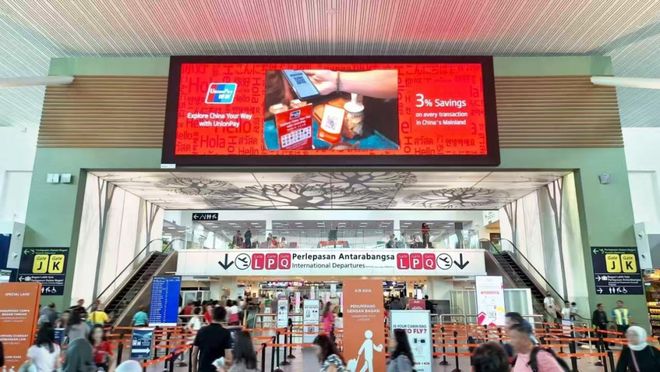
Core Viewpoint - The launch of the cross-border QR code unified gateway, guided by the People's Bank of China and developed by the China Payment and Clearing Association in collaboration with China UnionPay, aims to streamline cross-border QR code payments by addressing the issue of multiple connections in the industry [1][3]. Group 1: Unified Gateway and Cross-Border Payment Models - The unified gateway features a "one-point connection" interface to resolve previous issues in cross-border QR code payments [1]. - China UnionPay has introduced diverse cross-border connectivity models, including "Government to Government (G2G)" and "Network to Network (N2N)" under the guidance of the People's Bank of China [3]. - The G2G model involves central banks of two countries establishing a framework, with UnionPay acting as the external interface for business connections [3]. Group 2: Implementation and Partnerships - The G2G model has already facilitated projects in Vietnam and Indonesia, with a pilot program for cross-border QR code connectivity between China and Indonesia launched in September [3]. - In the N2N model, UnionPay directly collaborates with overseas QR code network operators, successfully implemented in markets like Malaysia, Singapore, Japan, and South Korea [5]. - In Malaysia, UnionPay partnered with PayNet to enable QR code cross-border payment connectivity, allowing Chinese tourists to use UnionPay apps at 2.5 million merchants [5]. Group 3: Expansion and Ecosystem Development - UnionPay has established partnerships in 19 countries and regions, leading to over 10 million overseas QR code acceptance merchants, with expectations to reach tens of millions by the end of the year [5]. - The company has integrated over 170 overseas QR code payment wallets into its network, covering 30 countries and regions [5]. - UnionPay is collaborating with various industry players to create a new "four-party model" for smoother participation in the cross-border payment ecosystem [7]. Group 4: Infrastructure and Standards - UnionPay's exploration of cross-border payments has evolved from "hard connectivity" to "soft connectivity" focusing on rules and standards [7]. - The company has assisted Laos in building its national payment system using UnionPay standards and technology [7]. - In Thailand, UnionPay has collaborated with other card brands to launch a local QR code payment standard, which is recommended by the central bank to local financial institutions and merchants [8]. Group 5: Future Directions - With the unified gateway now operational, UnionPay plans to continue exploring new cross-border connectivity models and collaborate with more domestic and international partners to enhance payment service interoperability [10].
中国银联坚持新“四方模式” 创新探索跨境互联互通合作
21世纪经济报道· 2025-09-27 02:21
Core Viewpoint - The launch of the cross-border QR code unified gateway aims to streamline cross-border payment processes by addressing the issue of multiple connections in the industry [1][3]. Group 1: Unified Gateway and Cross-Border Payment Models - The unified gateway, guided by the People's Bank of China and developed by the China Payment and Clearing Association in collaboration with China UnionPay, provides a "one-point connection" interface for cross-border QR code payments [1]. - China UnionPay has introduced diverse cross-border connectivity models, including Government-to-Government (G2G) and Network-to-Network (N2N) approaches, to enhance cross-border payment interoperability [3]. - The G2G model involves central banks of two countries establishing a framework, with UnionPay acting as the external interface for business connections. Projects in Vietnam and Indonesia have been successfully implemented, with cross-border QR code interoperability trials starting in September [3]. Group 2: N2N Model and International Expansion - The N2N model allows UnionPay to negotiate directly with foreign QR code network operators, successfully applied in markets like Malaysia, Singapore, Japan, and South Korea [5]. - In Malaysia, UnionPay partnered with PayNet to enable QR code cross-border payment interoperability, allowing Chinese tourists to use UnionPay's app at 2.5 million merchants [5]. - UnionPay has expanded its acceptance network to 19 countries and regions, with over 10 million overseas QR code merchants and more than 170 foreign QR code payment wallets integrated into its network [5]. Group 3: Industry Collaboration and New Payment Ecosystem - As the number of participants in cross-border payments increases, industry collaboration is essential for effective implementation of cross-border payment interoperability [7]. - UnionPay is building a new "four-party model" that includes wallet providers and payment service aggregators to facilitate smoother participation in the cross-border payment ecosystem [7][8]. - The collaboration among various industry players in the new model exemplifies the collective effort of the Chinese payment industry to expand internationally [8]. Group 4: Future Directions and Standards - With the unified gateway now operational, UnionPay plans to continue exploring new cross-border interoperability models and maintain the new "four-party model" to promote payment service connectivity [10]. - UnionPay's efforts have evolved from basic infrastructure connectivity to establishing regulatory standards, as seen in its collaboration with Laos and Thailand to develop local payment systems and standards [8].

统一网关已上线试运行 二维码跨境支付再进一步
Zhong Guo Jing Ji Wang· 2025-09-24 05:42
Core Insights - The People's Bank of China has made significant progress in cross-border QR code payment interoperability, with the unified gateway launched for trial operation at the end of July [1][2] - The unified gateway aims to enhance cross-border payment efficiency and meet the mobile payment needs of domestic and foreign users [1][3] Group 1: Unified Gateway Overview - The unified gateway provides a unified technical interface, cross-border transaction information transfer, monitoring, and analysis services for domestic and foreign institutions [2][3] - It aims to reduce system integration costs and resource waste for institutions, while promoting a unified standard for cooperation with foreign wallet institutions [3][5] - As of September 11, the unified gateway processed 1.981 million transactions amounting to 427 million yuan [4] Group 2: Institutional Participation and Collaboration - The unified gateway supports various market institutions, including wallet institutions and financial infrastructures, to apply for participation after meeting certain criteria [5][6] - Major institutions like Tencent and Ant Group have announced their participation in the unified gateway, enhancing cross-border payment capabilities [6][7] Group 3: User Experience and Security - The unified gateway is designed to improve user experience by facilitating seamless cross-border transactions without requiring users to change their payment methods [7][8] - It adheres to international standards for compliance and security, ensuring that participating institutions fulfill KYC and anti-money laundering obligations [8][9] - The system employs a multi-center deployment strategy to ensure high availability and resilience against failures [9]