
智能审批

Search documents
13项服务免申即享 34项秒批办结
Xin Lang Cai Jing· 2026-02-12 17:29
Core Viewpoint - The Hainan Housing Provident Fund Management System has optimized its approval processes through technology, significantly enhancing efficiency and service delivery for contributors [1] Group 1: System Improvements - 52 out of 66 service items have undergone intelligent approval transformation, resulting in a total of 26.0035 million transactions processed [1] - The intelligent approval now covers all areas including collection, withdrawal, and loans, achieving a processing rate of 93.43% [1] Group 2: Service Efficiency - 13 services are now available with instant access, while 34 services can be completed in seconds [1] - The average number of required documents has been reduced from 6 to 1, and the approval time has been compressed from 3 working days to 0.2 working days [1] - 127.6 million contributors benefit from a "zero materials" service approach [1]
审批“瘦身”服务“加码”,济宁高新区激活项目落地“新速度”
Qi Lu Wan Bao· 2026-02-11 04:49
Group 1 - The core viewpoint of the article highlights the significant improvements in project approval processes in Jining High-tech Zone, emphasizing efficiency and enhanced service for enterprises [1][3]. - Jining High-tech Zone has adopted a "project first" philosophy, integrating digital and customized services to optimize the business environment, resulting in a notable increase in approval efficiency and enterprise experience [3][6]. - The reform has consolidated multiple pre-construction procedures into a single "one-stop" service, reducing application materials by 73.1% and cutting average processing time from 30 days to 4 days [3][4]. Group 2 - The introduction of deep learning technology has led to the development of a new model combining "intelligent navigation, AI pre-review, and credit approval," significantly enhancing the approval process efficiency by over 90% [4][6]. - The system can generate a tailored approval roadmap in 3 minutes and reduce review times from over 30 minutes to under 10 seconds, effectively eliminating communication costs associated with material issues [4][6]. - A dual-track service mechanism has been established, combining online project management with offline dedicated service teams to provide comprehensive support throughout the project lifecycle [6]. Group 3 - Jining High-tech Zone aims to continuously improve the efficiency of approvals and the quality of services, focusing on creating a superior business environment that fosters high-quality regional economic development [6].


平安融易浙江分公司:金融活水助力“珍珠之都”生态蝶变与产业振兴
Cai Fu Zai Xian· 2026-02-03 03:48
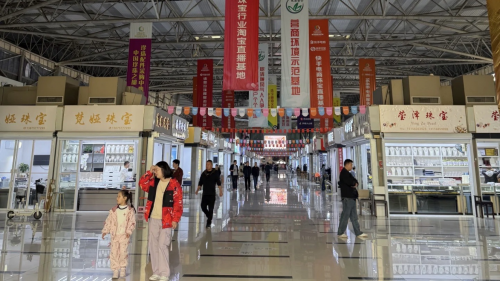
Core Viewpoint - The article highlights the transformation of the Shanshahu Town in Zhejiang into a global hub for freshwater pearl production, emphasizing its complete industrial ecosystem that includes breeding, processing, trading, and cultural tourism [1] Group 1: Industry Development - Shanshahu Town has become the largest pearl industry cluster globally, producing 80% of China's freshwater pearls and exporting to over 60 countries across six continents [1] - The town is undergoing a green transformation with strict regulations, including a "ban on breeding" for non-compliant farms, to reshape its ecological landscape [3] Group 2: Financial Solutions - Ping An Rongyi Zhejiang has introduced innovative financial services tailored to the unique needs of pearl farmers, addressing challenges such as lack of collateral and long loan approval times [3] - The company has implemented a "people + enterprise" risk assessment model, allowing for a multidimensional evaluation of personal credit and business qualifications, which has facilitated quicker access to funds for farmers [3] Group 3: E-commerce and Digital Transformation - In response to the rise of live-streaming e-commerce, Ping An Rongyi has launched batch credit services for local businesses, enabling them to convert online traffic into offline production effectively [4] - The use of an "AI + O2O" service model has streamlined the application process for farmers, significantly reducing approval times from weeks to just one working day [4] Group 4: Economic Impact - The financial support from Ping An Rongyi has led to substantial income increases for local communities, with one village reportedly generating over 3 million yuan from pearl sales during the National Day holiday [4] - By November 2025, the company aims to provide over 150 million yuan in funding to more than 1,200 small and micro enterprises in the region, enhancing the economic vitality of the pearl industry [5]
湖州政务服务“一网通办”率已达99.7%
Xin Lang Cai Jing· 2026-01-02 23:43
Group 1 - The core viewpoint of the articles highlights the significant improvements in local government services, particularly in pension application processes and the integration of online and offline services for residents [1][2] - In Huzhou, 1,284 community service points and 74 service centers have been established, achieving full coverage of grassroots service networks [1] - The "one-stop" service model has been enhanced through the use of RPA and AI technologies, leading to an 80% reduction in manual verification for educational enrollment [2] Group 2 - The city has achieved a 99.7% rate of online application processing for government services, indicating a strong push towards digitalization [1][2] - Collaborative efforts with 68 regions across the country have enabled cross-province handling of 151 high-frequency matters, enhancing service accessibility [2] - The government aims to further expand the depth and breadth of online services, focusing on creating a streamlined and efficient service environment for both citizens and businesses [2]
山东安丘市行政审批服务局:推行无干预智能审批,发出全市首张水行政许可电子决定书
Zhong Guo Fa Zhan Wang· 2025-12-04 15:24
Group 1 - The core viewpoint of the news highlights the innovative implementation of a non-intervention intelligent approval model by the Anqiu City Administrative Approval Service Bureau, which significantly streamlines the water conservation business process, allowing for online submissions and instant approvals without manual review [1][2] - The unified approval standards have been established to ensure "non-discriminatory" acceptance and processing, with clear application conditions, required materials, approval processes, and timelines, facilitating a standardized operation where applicants can prepare materials once and undergo intelligent review without delays [1] - The system utilizes a paperless approval module that enables "instant approval" for environmental assessments and water conservation matters, where companies can submit applications online, triggering an automatic intelligent approval process that generates licensed documents with electronic seals instantly [2] Group 2 - A strict closed-loop system has been constructed to ensure a "fast and worry-free" approval process, employing OCR technology to accurately extract key data from application materials, allowing for automatic acceptance and completion of approvals, while generating approval documents and QR codes for real-time information sharing with regulatory bodies [2] - Anqiu City plans to leverage this provincial pilot project to promote efficient implementation of intelligent approvals, focusing on increasing the volume of applications processed without human intervention, and aims to share replicable grassroots experiences for broader application across the province [2]
万宁:推行“智慧无感”审批持续优化营商环境
Hai Nan Ri Bao· 2025-11-13 01:56
Core Insights - The article highlights the implementation of a "smart and effortless" approval mechanism in Wanning, which significantly enhances the efficiency of administrative services by shifting from traditional methods to data-driven processes [1][2] Group 1: Approval Mechanism - Wanning has introduced a new administrative service reform that transforms the approval process from "passive waiting" to "active service," thereby improving the business environment [1] - The reform focuses on high-frequency administrative service items and urgent licensing matters, streamlining the approval process through categorized strategies [1] Group 2: Innovative Models - The reform relies on two innovative models: "免申即享" (enjoy without application) for data-sharing items that require no material submission, and intelligent approval for simple cases that allows for automatic verification [1][2] - The "海易办" platform integrates data from multiple departments, creating a closed-loop approval system that shifts services from "passive acceptance" to "active perception" [2] Group 3: Future Plans - Wanning plans to expand the coverage of the "smart and effortless" approval system, enhance the list of "免申即享" and intelligent approval items, and improve data sharing and credit evaluation systems [2] - The city aims to establish a closed-loop mechanism of "credit commitment—intelligent approval—post-regulation" to enhance efficiency while maintaining regulatory standards [2]
江苏省交通综合执法局发布十条措施 以法治助力统一大市场建设
Yang Zi Wan Bao Wang· 2025-10-14 14:34
Core Viewpoint - The Jiangsu Provincial Transportation Comprehensive Law Enforcement Bureau has issued "Ten Measures" to enhance the construction of a unified market in transportation law enforcement, focusing on breaking down market barriers and optimizing service efficiency [1][2][3] Group 1: Key Measures - The measures include the consolidation and reduction of law enforcement items in road, waterway, and engineering quality sectors, aiming to eliminate ineffective inspections and discriminatory practices against vehicles from other regions [1] - A coordinated penalty discretion standard will be implemented across regions, with city-level departments allowed to refine standards while county-level departments will no longer create localized rules [1] - Establishment of "green channels" for the transportation of key materials, ensuring rapid inspection and error correction for minor violations to facilitate efficient cross-regional flow of essential goods [1] Group 2: Regulatory Improvements - Joint law enforcement in highway service areas will be optimized to enhance service quality and combat unfair practices such as price fraud and monopolistic behavior [2] - Administrative inspection behaviors will be standardized, implementing a "double random, one public" regulatory approach to avoid redundant checks and promote flexible enforcement for compliant entities [2] - The approval process for oversized transport and vessel inspections will be streamlined through intelligent systems, allowing for unified processing across provinces [2] Group 3: Collaborative Efforts - Strengthening cross-provincial law enforcement collaboration and information sharing to unify enforcement standards and combat illegal activities such as overloading and illegal operations [3] - Enhanced supervision of law enforcement teams to ensure consistency in case handling and to address regional enforcement discrepancies [3] - Increased training for law enforcement personnel on national market policies and the use of technology such as drones and AI to improve enforcement efficiency [3]
人防审批从48小时缩短至2小时
Su Zhou Ri Bao· 2025-05-19 22:59
Core Insights - Wujiang District is leveraging intelligent technology to enhance the integration of artificial intelligence and government services, particularly in investment construction approval processes [1][2] - The introduction of a digital service assistant featuring "intelligent Q&A," "intelligent filling," and "intelligent review" aims to transition government services from digitalization to intelligence [1] Group 1: Intelligent Q&A and Project Submission - The digital service assistant facilitates precise understanding of the latest human defense policies, enabling quick project submissions with a one-time approval of application materials [1] - The "intelligent Q&A" feature provides 24/7 online policy expertise, significantly increasing the daily consultation response rate to over four times that of manual services, enhancing the standardization and accuracy of government consulting services [1][2] Group 2: Efficiency in Approval Processes - The system automates the matching of historical data with submission rules, allowing for "one-click filling" of relevant information, thus reducing the burden on enterprises [2] - The approval time for individual project filings has been reduced from 6 hours to 15 minutes, and human defense approvals have been shortened from 48 hours to 2 hours, showcasing significant efficiency improvements [2] Group 3: Future Developments - The Wujiang District Data Bureau plans to enhance intelligent approval performance through high-quality data supply and continuous model training, aiming to expand application scenarios across the district [2]