机器人基础模型

Search documents
广东机器人企业智平方完成超10亿元B轮融资,公司估值超百亿
Guang Zhou Ri Bao· 2026-02-23 15:36
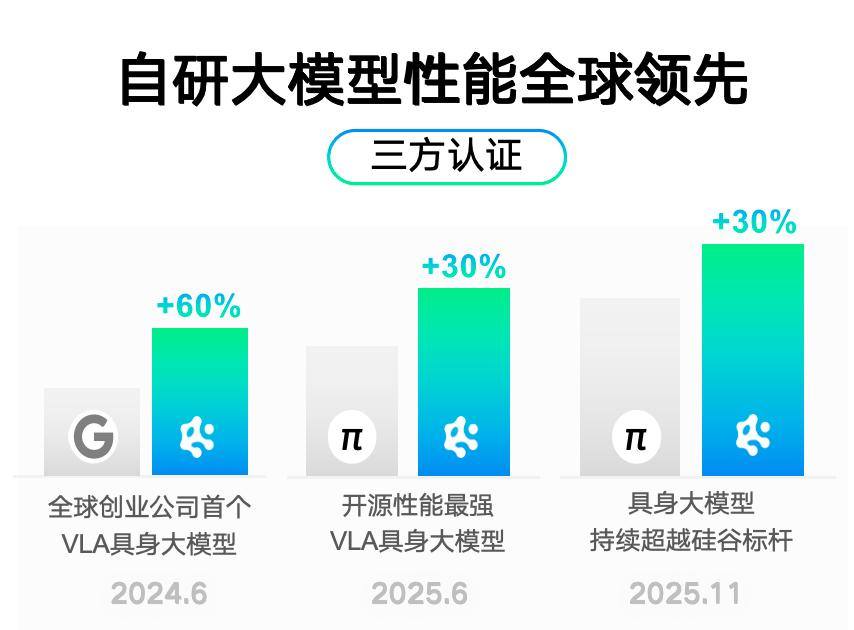
Core Viewpoint - The company, Zhifang, a leading global player in the field of robotic foundational models, has successfully completed a Series B financing round exceeding 1 billion RMB, achieving a valuation of over 10 billion RMB, and solidifying its position among the top tier of embodied intelligence enterprises in China [1] Group 1: Financing and Valuation - Zhifang announced a Series B financing round on February 23, 2026, with a scale exceeding 1 billion RMB, leading to a valuation surpassing 10 billion RMB [1] - The company has completed a total of 12 financing rounds within a year, including 5 significant rounds recently, indicating strong investor confidence [2] Group 2: Company Background and Team - Founded in 2023 by Dr. Guo Yandong, a national innovation leader, Zhifang is characterized by a high density of scientific talent, including 5 scientists ranked in the top 2% globally from Stanford [3] - The company is recognized as a "Chinese version of Tesla's robotics team," emphasizing its unique position in the market [4] Group 3: Technological Advancements - Zhifang has established a core technology direction for building physical world models, pioneering the VLA architecture and developing the world's first full-body VLA model, GOVLA, which has achieved significant performance improvements [5][7] - The company has released multiple versions of its models, with GOVLA 0.5 achieving a 30% performance improvement over competitors and redefining the capabilities of robots [5][7] Group 4: Production and Application - Zhifang has built a complete closed loop from hardware mass production to commercial deployment, achieving industrial-grade reliability in its AlphaBot series [8] - The company has secured significant contracts, including a 3-year order for 1,000 units with a major panel manufacturer, validating the stability of its models in complex industrial environments [8] - Zhifang's robots are operational in various sectors, including industrial flexible manufacturing, public services, and new retail, demonstrating their versatility and effectiveness in real-world applications [9]


微软Rho-alpha模型能否把机器人真正带入物理智能的世界?
Sou Hu Cai Jing· 2026-01-29 16:14
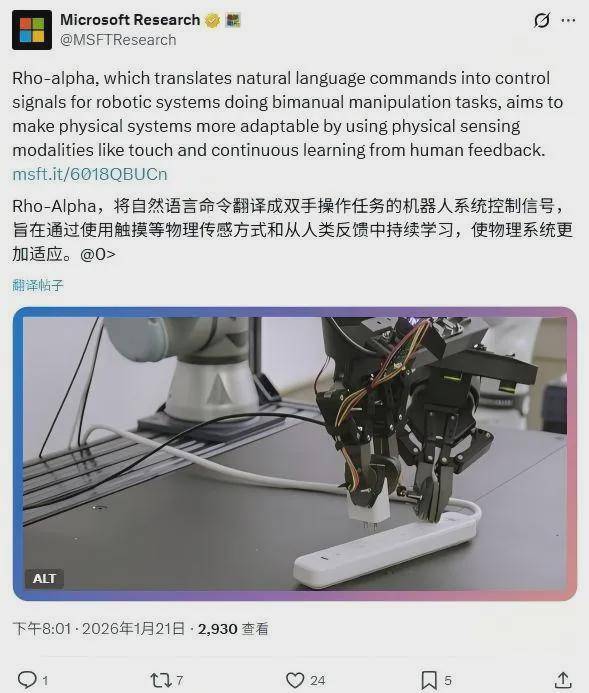
Core Insights - Microsoft has launched its first robot-specific Rho-alpha model, which innovatively incorporates a tactile perception module alongside visual and language capabilities, marking a significant advancement in physical intelligence for robots [1][4][6] Group 1: Model Capabilities - Rho-alpha is designed to convert natural language instructions into control signals for robots, enabling them to perform complex tasks that require coordinated hand movements [4][6] - The model aims to break the limitations of robots operating only in highly controlled environments, allowing them to work in real-world scenarios filled with uncertainty [6][10] - Rho-alpha integrates tactile feedback into its decision-making process, allowing robots to adjust their actions based on physical contact, which is a significant departure from traditional models that primarily rely on visual information [7][8] Group 2: Training and Learning - The model employs a novel training approach that combines real robot demonstration data, simulation task data, and large-scale visual question-answering data, addressing the long-standing data scarcity issue in robotics [9] - Rho-alpha features strong continuous learning capabilities, enabling it to optimize its performance based on human feedback during actual operations [9] Group 3: Industry Implications - The introduction of Rho-alpha signifies a fundamental shift in the focus of humanoid robotics from hardware and control algorithms to foundational models as the new competitive core [10][12] - The industry is witnessing a competitive landscape where major players like Tesla, Google, and Microsoft are pursuing different technological routes, with Microsoft emphasizing a "foundation model + cloud + ecosystem" strategy [12] - As the robotics sector evolves, the ability to define the next generation of foundational models will be crucial for companies to secure their future in the market [12]

机器人“大脑”60年进化史:基础模型五代进化与三大闭源流派
3 6 Ke· 2026-01-15 03:48
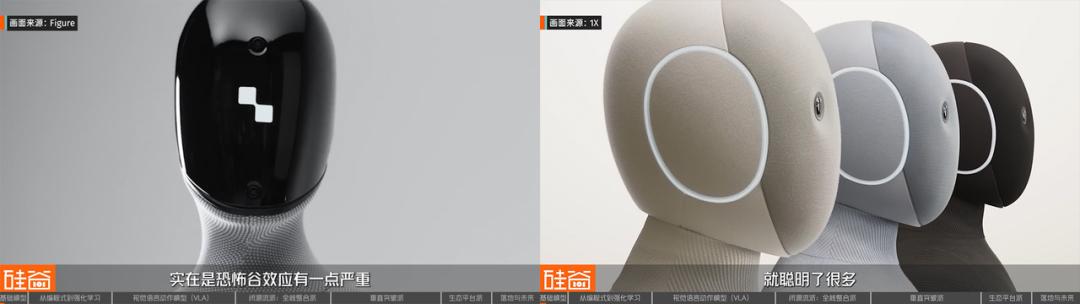
Core Insights - The article discusses the advancements in robotics, particularly focusing on the emergence of foundational models in robotics, which are expected to revolutionize the industry by 2025 [6][23][35]. Group 1: Robotics Developments - Figure AI released its third-generation robot capable of performing various household tasks, but its success rate is questioned due to design issues [1]. - Tesla's robot has faced significant challenges in mass production, leading to a pause in production for hardware redesign [3]. - The article emphasizes the importance of foundational models in robotics, likening them to the capabilities of large language models [6][17]. Group 2: Historical Context of Robotics - The evolution of robotics is categorized into five generations, starting from programmed robots in the 1960s to the current vision-language-action (VLA) models [6][8][17]. - The first generation relied on strict programming, while the second introduced environmental perception through SLAM technology [9][11]. - The third generation utilized behavior cloning, allowing robots to learn from human demonstrations, but faced data efficiency issues [13][15]. Group 3: The Rise of VLA Models - The VLA model integrates vision, language, and action into a single neural network, enabling robots to understand complex instructions and perform tasks more efficiently [18][19]. - The emergence of VLA models is attributed to the maturity of large language models, which provide the necessary capabilities for understanding commands and reasoning [24][26]. - The article identifies three key factors contributing to the rise of foundational models in 2025: the maturity of large language models, reduced computing costs, and a mature hardware supply chain [27][31][33]. Group 4: Market Dynamics and Competition - The market for humanoid robots is projected to be massive, with estimates suggesting a $5 trillion market and the potential for one billion robots globally by 2025 [35]. - Dyna Robotics, a notable player in the field, has secured significant funding and aims to deploy robots in commercial settings, focusing on specific tasks like folding towels [37][56]. - The competition among robotics companies is categorized into three factions: full-stack integrators, vertical breakthrough specialists, and ecosystem platform developers, each with distinct strategies for achieving general-purpose robotics [41][72][81]. Group 5: Future Outlook - The article concludes that while impressive demonstrations have been made, the practical deployment of these technologies remains uncertain, with companies like Tesla and Figure AI still facing challenges in commercialization [82][85]. - The potential for household robots to assist with mundane tasks is highlighted as a near-future possibility, with companies aiming to introduce robots capable of performing specific functions in homes [85][86].




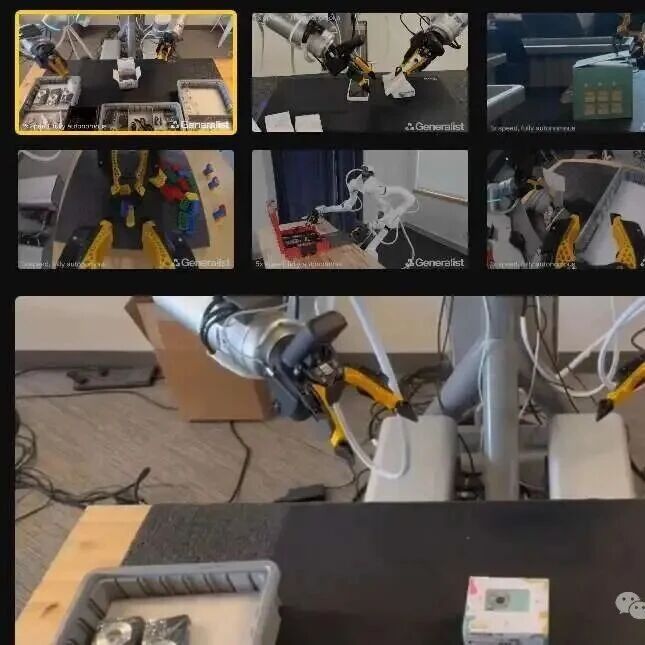
GEN-0:史上规模最庞大多元的具身真实世界操作数据集!
自动驾驶之心· 2025-11-11 00:00
Core Insights - The article discusses the introduction of GEN-0, a new type of embodied foundational model designed for multimodal training based on high-fidelity physical interactions, which aims to enhance robotic intelligence through real-world data [5][9]. Group 1: GEN-0 Model Features - GEN-0 inherits advantages from visual language models while achieving breakthroughs, such as capturing human-level conditioned reflexes and physical common sense [5]. - The model exhibits a strong scaling law, where increased pre-training data and computational power predictably enhance performance across multiple tasks [6][11]. - The "harmonic reasoning" mechanism allows the model to train seamlessly in synchronous thinking and action, enabling it to scale without relying on dual-system architectures [6][11]. Group 2: Data and Training Insights - GEN-0 has been pre-trained on over 270,000 hours of real-world heterogeneous manipulation data, with the dataset expanding at a rate of over 10,000 hours per week [20][22]. - Smaller models exhibit a "solidification" phenomenon when faced with data overload, while larger models continue to improve, revealing a significant "phase change" in model intelligence capacity [11][13]. - The article highlights that the scaling laws observed in the model's performance correlate with the amount of pre-training data, demonstrating a power-law relationship that can predict performance improvements [15][18]. Group 3: Future Directions - The Generalist AI Team is working on building the largest and most diverse real-world operational dataset to expand GEN-0's capabilities, covering a wide range of tasks across various environments [22]. - The model's ability to adapt to new tasks with minimal fine-tuning is emphasized, showcasing its potential for rapid deployment in diverse robotic applications [6][11].