柔性退出机制

Search documents
2024—2025年度政府投资基金竞争力评价研究报告发布
2 1 Shi Ji Jing Ji Bao Dao· 2026-01-09 23:08
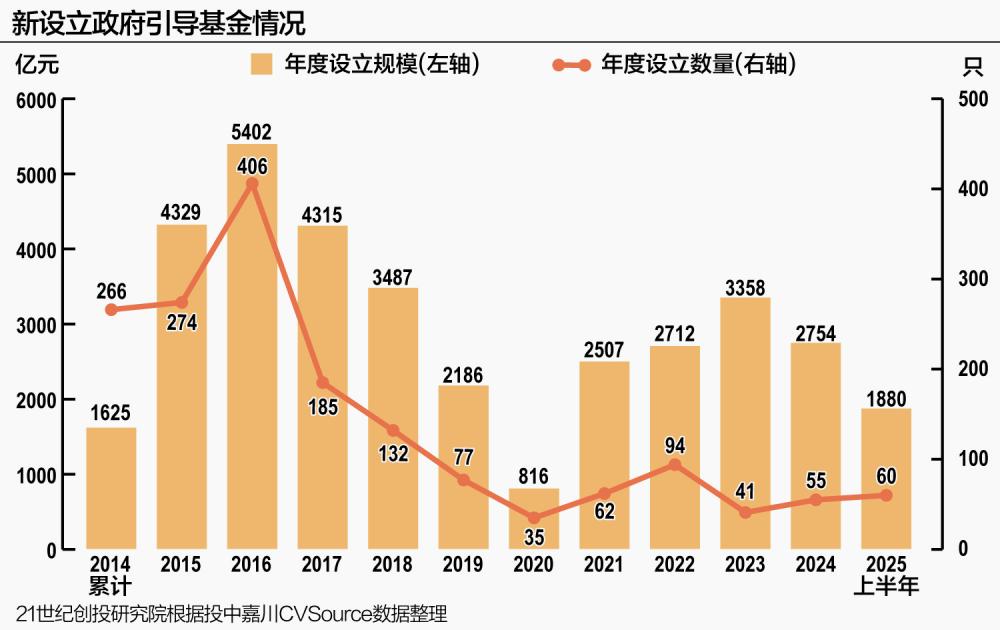
Core Viewpoint - Government investment funds have become a major source of capital in China's private equity investment industry, with increasing policy support and a focus on high-quality development in 2025 [1][9][23]. Group 1: Government Investment Fund Development - The State Council issued the "Guiding Opinions on Promoting the High-Quality Development of Government Investment Funds," outlining 25 measures across seven areas to enhance the fund's operational efficiency and effectiveness [1][9]. - In 2025, the establishment of new government investment funds showed a significant decline, with only 60 new funds set up in the first half of the year, compared to 55 in the entire previous year [4][19]. - The total scale of newly established government investment funds in the first half of 2025 reached 188 billion yuan, indicating a continued but slowing growth trend [4][19]. Group 2: Regional Disparities - The willingness to establish new government investment funds has significantly decreased in the central and western regions due to policy constraints and fiscal capacity, while regions like the Yangtze River Delta and the Guangdong-Hong Kong-Macao Greater Bay Area continue to show strong momentum [2][6][22]. - Local governments are increasingly focusing on optimizing existing funds rather than merely increasing the number of new funds, adopting a "fund cluster" model for more targeted investments [1][21]. Group 3: Investment Focus and Strategies - Government investment funds are primarily targeting strategic emerging industries such as new-generation information technology, biotechnology, and new energy vehicles, which are crucial for developing new productive forces [6][10]. - The investment strategy has shifted towards "early and small" investments, with a growing consensus on supporting early-stage projects while also considering investments in mature companies [6][10]. Group 4: Management and Operational Efficiency - The management model of government investment funds is evolving towards market-oriented and professional approaches, with a diverse range of fund managers being selected [25][27]. - Many local governments are offering more attractive conditions to fund managers, including lowering return ratios and extending fund durations to enhance operational efficiency [2][25]. Group 5: Exit Strategies and Market Conditions - The recovery of the A-share and Hong Kong IPO markets in 2025 has provided a favorable environment for government investment funds to realize exits, with many funds benefiting from the active M&A market [34][35]. - The introduction of S funds and the increasing flexibility in exit mechanisms are creating diverse exit pathways for government investment funds [34][39].

④资金效率提升:IPO、并购、S交易全线开花,退出路径多元化
2 1 Shi Ji Jing Ji Bao Dao· 2026-01-07 14:19
Group 1 - The core viewpoint of the article highlights the evolving landscape of government investment funds in China, particularly focusing on the challenges and opportunities for these funds as they enter a phase of exit and seek to enhance capital efficiency [1][2] - In 2025, the A-share and Hong Kong IPO markets are expected to recover, providing a favorable environment for state-owned capital institutions to realize returns, supported by policies aimed at broadening exit channels for funds [2][4] - The IPO boom in 2025 is marked by significant participation from venture capital and private equity (VC/PE) firms, with a 20.54% year-on-year increase in the number of listed companies backed by these institutions [4][5] Group 2 - The S fund market is gaining traction as a primary exit strategy, with its advantages such as clear underlying assets and shorter investment cycles attracting interest from various institutional players [7][8] - The establishment of S funds has been robust, with several government-led initiatives in 2025, including the launch of the first S fund in Zhejiang with an initial scale of 5 billion yuan [7][8] - The S market has seen a significant increase in transaction volume, with a 52.2% year-on-year growth in the first half of 2025, indicating heightened market activity [8] Group 3 - The M&A market is becoming increasingly active, with a 12.58% year-on-year increase in the number of completed transactions and a 51.64% rise in total transaction value in 2025 [10][13] - Local governments are emerging as key players in the M&A landscape, with several new funds being established to facilitate acquisitions and attract investment [13][14] - The introduction of flexible exit mechanisms is gaining attention, with a trend towards loosening repurchase requirements for early-stage tech companies, reflecting a shift in investment strategies [15][17] Group 4 - Innovative flexible exit strategies are being implemented, such as phased repurchase plans and equity transfer mechanisms, to support companies facing temporary difficulties while preserving investor interests [16][18] - The trend towards flexible exits signifies a deeper understanding of the high-risk, long-cycle nature of new productive forces, indicating a positive shift in investment practices [18]
A股IPO回暖,创投机构也赚翻了
2 1 Shi Ji Jing Ji Bao Dao· 2026-01-05 04:41
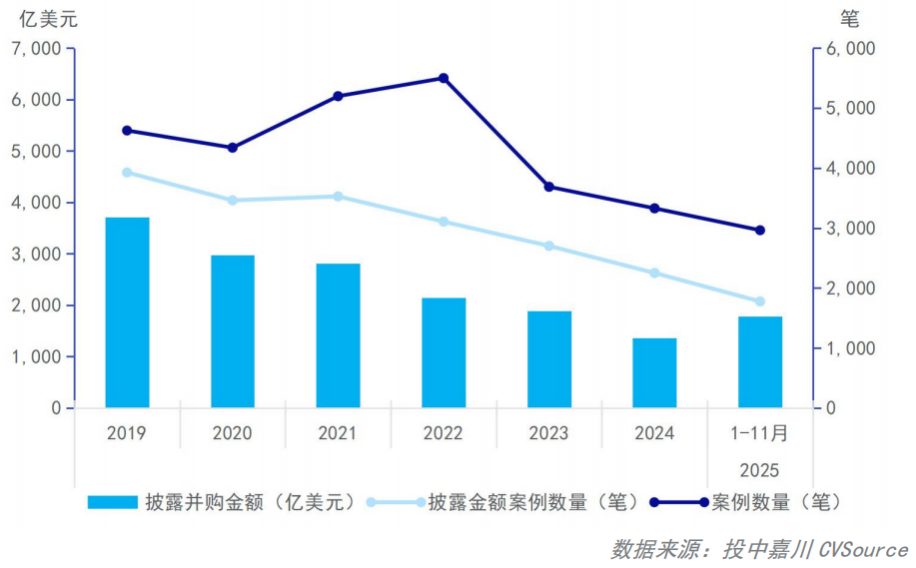
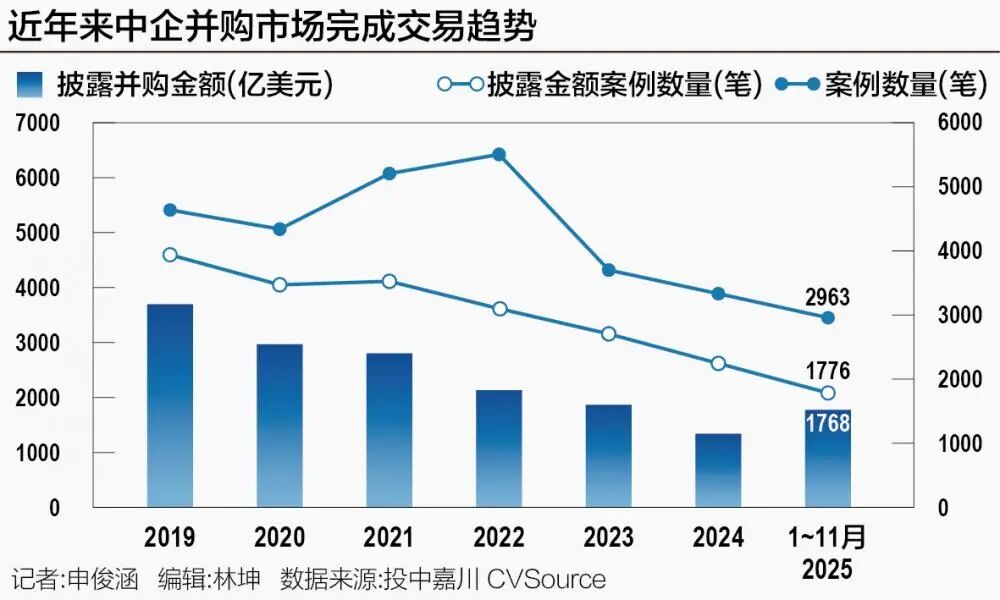
Core Insights - The IPO market in China is experiencing a significant revival, with multiple companies successfully listing on both the Hong Kong and A-share markets, supported by venture capital institutions [1][5][6] - The total amount raised by the AI-driven biotech company Insilico Medicine during its IPO reached 2.277 billion HKD, marking the highest fundraising for a Hong Kong biotech IPO in 2025 [1] - The number of Chinese companies with VC/PE backing that went public increased by 20.54% year-on-year, with 135 companies achieving IPOs from January to November 2025 [1] - The active M&A market and the emergence of diverse exit strategies are contributing to the growth of the venture capital industry [1][10] IPO Market Revival - In 2025, notable companies such as Insilico Medicine, Lin Qingxuan, and Moer Technology have successfully listed, indicating a robust IPO environment [1][5] - Moer Technology's stock surged by 425% on its debut, achieving a market capitalization exceeding 280 billion CNY, showcasing the potential returns for early investors [5] - The total number of IPOs in China is expected to continue rising, with projections indicating that the Hong Kong IPO market could reach 286.3 billion HKD (approximately 36 billion USD) in 2025, surpassing Nasdaq's expectations [6] M&A and Exit Strategies - The number of M&A transactions in China reached 2,963 in 2025, a year-on-year increase of 12.58%, with disclosed transaction amounts totaling 178.6 billion USD, up 51.64% [8] - S transactions are evolving from optional exit strategies to primary pathways for venture capitalists, with significant growth in transaction volumes and values [7][10] - Flexible exit mechanisms, such as installment buybacks and equity transfers, are becoming more common, reflecting a shift in investment strategies to accommodate the long-term nature of tech investments [10][11]
IPO回暖、S交易与并购市场活跃 创投多元化退出路径形成
2 1 Shi Ji Jing Ji Bao Dao· 2026-01-04 23:13
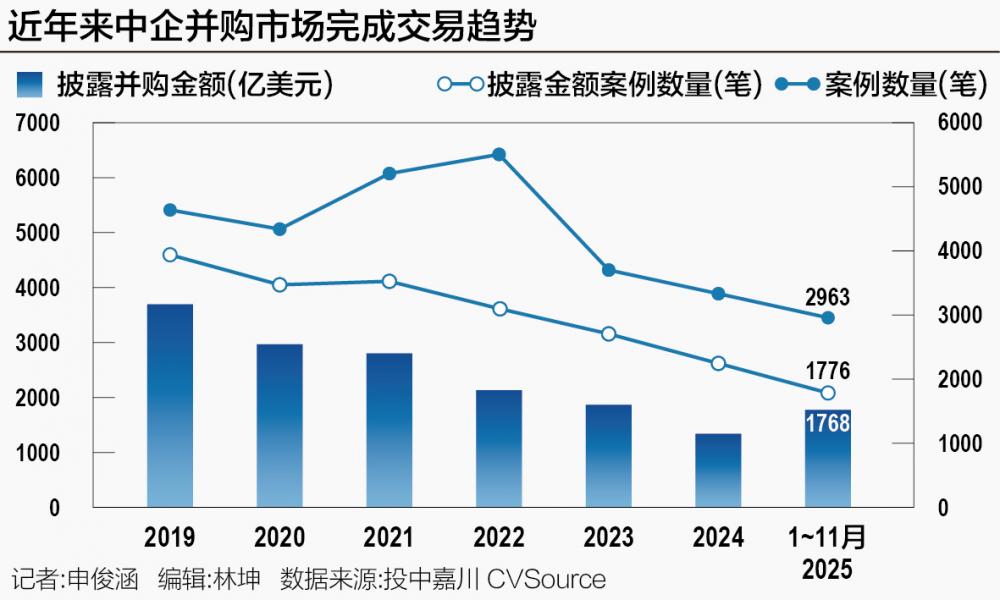
Core Insights - The IPO market in China is experiencing a significant revival, with multiple companies successfully listing on both the Hong Kong and A-share markets, indicating a robust investment environment for venture capital and private equity firms [1][4][5] IPO Market Performance - In 2025, a total of 135 Chinese companies with VC/PE backgrounds went public, marking a year-on-year increase of 20.54% [1] - The AI-driven biotech company Insilico Medicine raised a total of HKD 22.77 billion, becoming the highest fundraising biotech IPO in Hong Kong for 2025 [1] - The domestic IPO market is expected to continue its upward trend, with significant returns anticipated for supporting venture capital firms [1][4] Notable IPOs - The domestic GPU company Moore Threads saw its stock price surge by 425% on its debut, closing at CNY 600.5 per share, with a total market capitalization exceeding CNY 280 billion [4][5] - Early investors in Moore Threads, such as Qianyao Xing Technology, achieved returns exceeding 5000 times their initial investment [4] - The listing of Muxi Co. also yielded substantial returns for its backers, with notable firms reporting returns exceeding CNY 165 billion [4][5] Market Trends - The Hong Kong IPO market is projected to reach HKD 286.3 billion (approximately USD 36 billion) in 2025, surpassing Nasdaq's annual expectations [5][6] - S transactions and mergers and acquisitions (M&A) are evolving from optional exit strategies to primary pathways for venture capital firms [6][7] S Transactions and M&A Activity - In 2024, the domestic S fund transaction volume reached CNY 107.8 billion, a 46% increase year-on-year, with 2025 expected to set new records [6][7] - The number of M&A transactions in China reached 2963 in the first eleven months of 2025, reflecting a 12.58% increase, with disclosed transaction amounts totaling USD 178.6 billion, up 51.64% year-on-year [8][18] Flexible Exit Mechanisms - The trend towards flexible exit mechanisms is gaining traction, with many investment funds relaxing buyback clauses for early-stage tech companies [19][20] - Innovative strategies such as phased buybacks and equity transfers to new ventures are being implemented to enhance liquidity and support long-term value creation [20][21]
IPO回暖、S交易与并购市场活跃,创投多元化退出路径形成
2 1 Shi Ji Jing Ji Bao Dao· 2026-01-04 09:32
Group 1: IPO Market Overview - In December 2025, several companies including Insilico Medicine, Lin Qingxuan, and Woan Robotics successfully listed on the Hong Kong Stock Exchange, while Strong One Co., Yufan Technology, and Shuangxin Environmental Protection debuted on the A-share market, marking a vibrant end to the IPO market for the year [1] - Insilico Medicine raised a total of HKD 22.77 billion, becoming the highest fundraising biotech IPO in Hong Kong for 2025, with Warburg Pincus as its largest single shareholder since 2021 [1] - From January to November 2025, 135 Chinese companies with VC/PE backgrounds went public, a year-on-year increase of 20.54%, indicating a growing trend in IPOs supported by venture capital [1] Group 2: Performance of Notable IPOs - The domestic GPU company Moer Thread listed on the Sci-Tech Innovation Board on December 5, 2025, with its stock price soaring 425% on the first day, reaching a market cap of over CNY 280 billion [2] - Early investors in Moer Thread, including Qianyao Xing Technology, saw returns exceeding 5000 times their initial investment of CNY 1.9 million [2] - The listing of Nuxi Co. also yielded significant returns for its backers, with notable investors like Ge Weidong and his firm Chaos Investment reporting paper gains exceeding CNY 16.5 billion [2] Group 3: Trends in M&A and Exit Strategies - The M&A market for Chinese companies completed 2,963 transactions from January to November 2025, a year-on-year increase of 12.58%, with disclosed transaction amounts totaling USD 178.6 billion, up 51.64% [5] - The shift in exit strategies has seen S transactions and mergers and acquisitions become primary exit channels, with S fund transaction volumes reaching CNY 107.8 billion in 2024, a 46% increase [3][4] - Flexible exit mechanisms are gaining traction, with local governments relaxing repurchase requirements for early-stage tech companies, reflecting a shift towards more adaptable investment strategies [7][8] Group 4: Innovations in Exit Mechanisms - New flexible exit strategies include phased repurchase plans and equity transfer mechanisms, allowing for more adaptable responses to market conditions and company performance [8][9] - The trend towards flexible exits is seen as a deeper understanding of the high-risk, long-cycle nature of new productive forces, indicating a more benevolent approach to capital management [9]
2025中国母基金行业十大年度事件
母基金研究中心· 2026-01-04 08:53
Core Viewpoint - The year 2025 is seen as a pivotal year for the restructuring of China's equity investment mechanism, marking a transition from difficult transformation to a return of confidence in the industry [2] Group 1: Policy Developments - The State Council issued the "Guiding Opinions on Promoting the High-Quality Development of Government Investment Funds," marking a significant policy for the mother fund industry with 25 specific measures [3] - The document encourages venture capital funds to adopt a mother-child fund structure and allows for increased government contribution ratios and relaxed conditions for fund establishment [3][4] - It emphasizes the need for a unified national market and encourages the cancellation of registration restrictions for government investment funds, aiming to boost market investment confidence [4] Group 2: Investment Trends - The concept of "patient capital" has deepened, with many newly established mother funds and direct investment funds having a lifespan of 15 to 20 years, reflecting a shift towards longer investment horizons [5][6] - Local governments have increased their tolerance for losses, with some regions allowing for a loss tolerance rate of up to 80%, indicating a more flexible approach to investment failures [6] Group 3: New Financing Avenues - The introduction of "technology bonds" in March 2025 has opened a new fundraising channel for equity investment institutions, with over 40 institutions issuing bonds totaling over 20 billion yuan [7][8] - However, the debt nature of technology bonds adds financial pressure on investment institutions, which traditionally rely on a "light asset" model [8] Group 4: Fund Establishments - The National Venture Capital Guidance Fund was launched in December 2025, with a 20-year lifespan aimed at early-stage investments and market-oriented operations [9][10] - Multiple social security technology funds have been established across various regions, with significant initial capital aimed at supporting key industries [12][13] Group 5: Market Dynamics - The mother fund industry has shifted towards a more pragmatic approach, with no new billion-level mother funds established in 2025, focusing instead on a "fund group" model for better resource allocation [14] - The AIC funds have seen significant growth, with total signed amounts exceeding 3.8 trillion yuan, although they have not contributed as LPs to private equity funds [15][16] Group 6: Exit Strategies - The Hong Kong IPO market has rebounded, providing a favorable exit window for VC/PE firms, with IPO fundraising surpassing 200 billion HKD [17][18] - A trend towards "flexible exit" mechanisms is emerging, allowing for more adaptable strategies in managing investment returns [21][22]