
气候行动

Search documents
TERA-Award 智慧能源创新大赛全球布局再升级
Zhong Guo Neng Yuan Wang· 2026-02-27 00:44
Group 1 - TERA-Award has partnered with UNCTAD and CISL to enhance the integration of international resources and accelerate the application of innovative energy technologies and climate solutions [1] - UNCTAD will leverage its global policy research and cross-regional industry networks to support TERA-Award, facilitating efficient market alignment for participating projects [1] - CISL will contribute its research expertise in climate technology and energy innovation to enhance the depth of the evaluation system and identify high-quality projects with both scientific value and industrial potential [1] Group 2 - TERA-Award, initiated in 2021, aims to address climate challenges through innovative energy technologies, having attracted nearly 2,000 projects from 76 countries by 2025, with a total prize distribution of $4.65 million [2] - The 2026 edition of TERA-Award has opened registration, focusing on key technology areas related to emission reduction and energy transition, while introducing two new tracks: "AI×Energy" and "Next-Generation Energy Technologies" [2] - The "AI×Energy" track emphasizes the deep application of artificial intelligence in energy systems and the support of low-carbon, efficient energy technologies for sustainable AI development [2]
第十届阿拉伯财政论坛在迪拜开幕
Shang Wu Bu Wang Zhan· 2026-02-05 08:21
Core Insights - The 10th Arab Financial Forum opened in Dubai, focusing on fiscal sustainability, the application of digitalization and artificial intelligence in public finance, and balancing economic growth, climate action, and fiscal robustness [1] Group 1 - The forum is part of the prelude to the 2026 World Government Summit [1] - Key topics include fiscal sustainability and the integration of technology in public finance [1] - Discussions aim to find a balance between economic growth, climate initiatives, and maintaining fiscal health [1]
金立群卸任亚投行行长兼董事会主席
Mei Ri Jing Ji Xin Wen· 2026-01-15 21:24
Core Viewpoint - The Asian Infrastructure Investment Bank (AIIB) announced the resignation of its founding President Jin Liqun, who served since 2016 and was re-elected in 2020, marking a decade of leadership that significantly expanded the bank's operations and recognition in the international community [1] Group 1 - Under Jin Liqun's leadership, AIIB achieved high-standard operations and expanded its member base [1] - The bank made significant progress in key areas such as sustainable infrastructure, climate action, and regional connectivity [1] - AIIB has gained widespread recognition for its governance and robust operations, establishing itself as a model for multilateral cooperation [1]
世界经济论坛自然与气候中心经济议程团队总负责人:气候行动正为企业带来积极的增长回报
Xin Lang Cai Jing· 2025-12-15 03:08
Core Insights - The article discusses the significant shift in climate action and corporate responsibility since the Paris Agreement in 2015, highlighting the increasing role of market forces in driving climate initiatives [1][3][15] - It emphasizes that over 11,000 companies have committed to setting science-based carbon targets, covering approximately 40% of global market capitalization, indicating a rapid integration of climate goals into corporate strategies [4][16] - The article also points out that Asia, particularly China, is becoming a key player in setting and achieving these carbon targets, with companies actively engaging their supply chains in sustainability efforts [4][17] Group 1: Corporate Actions and Economic Performance - The World Economic Forum's CEO Climate Leaders Alliance, comprising around 130 CEOs from 12 industries, has collectively reduced absolute emissions by 12% while achieving a 20% increase in overall economic performance from 2019 to 2023 [3][15] - Companies are increasingly recognizing that effective emission reductions can coexist with high economic performance, leading to a more sustainable business model [4][15] Group 2: Strategies for Emission Reduction - Scope 3 emissions account for 75% to 85% of total corporate emissions, making their reduction challenging due to their occurrence outside direct corporate control [5][18] - Effective reduction strategies require distinguishing between upstream and downstream emissions, as they necessitate different approaches [5][18] Group 3: Global Clean Energy Investment Trends - Clean energy investment is projected to exceed $2 trillion in 2024, surpassing fossil fuel investments by $800 billion, indicating strong economic viability for clean technologies [7][20] - China is identified as a central hub for renewable energy technology manufacturing and deployment, despite facing challenges such as price declines and profit squeezes in the solar photovoltaic sector [7][20][21] Group 4: Future Trends in Climate Action - The article outlines four key trends in climate action: deepening regional cooperation, increased focus on climate resilience, ongoing market barriers in hard-to-abate sectors, and the integration of natural and climate agendas [9][23][24] - Companies are expected to invest more in climate adaptation services and products, shifting the focus from mere emission reductions to building resilience against climate impacts [9][23]


【环球财经】联合国环境规划署公布2025年“地球卫士奖”获奖名单
Xin Hua She· 2025-12-11 14:02
Core Viewpoint - The "Earth Guardian Award" recognizes individuals and organizations that have made significant contributions to climate action, announced by the United Nations Environment Programme during the seventh United Nations Environment Assembly [1][2]. Group 1: Award Recipients - Five recipients were honored for their innovative solutions in areas such as climate justice, methane reduction, forest protection, and climate-resilient building [1]. - Awardees include a student organization from Pacific island nations that successfully pushed for a landmark advisory opinion from the International Court, enhancing global climate law [1]. - Indian official Supriya Sahu contributed to climate resilience through promoting green jobs and ecosystem restoration [1]. - Architect Mariam Issoufou promoted climate-resilient building designs in the Sahel region of Africa [1]. - The Amazonian Institute for Environmental Research utilized science and AI to strengthen forest governance in the Amazon and curb deforestation [1]. - The late expert Manfredy Kaltagirone was posthumously recognized for advocating science-based and transparent methane reduction actions [1]. Group 2: Significance of the Award - The annual "Earth Guardian Award" is the highest environmental award given by the United Nations, aimed at recognizing transformative impacts on the environment by individuals and organizations [2].
联合国环境规划署公布2025年“地球卫士奖”获奖名单
Xin Hua She· 2025-12-11 11:15
Core Points - The "Earth Guardian Award" winners for 2025 were announced by the United Nations Environment Programme in Nairobi, recognizing five individuals and organizations for their significant contributions to climate action [1][2] - The award highlights innovative solutions in areas such as climate justice, methane reduction, forest protection, and climate-resilient building [1] Group 1: Award Recipients - Awardees include youth organizations, local government officials, architects, research institutions, and experts focused on methane reduction, showcasing a collective effort to address climate challenges [1] - Specific winners include: - A student organization from Pacific island nations that successfully pushed for a landmark advisory opinion from the International Court, strengthening global climate law [1] - Indian official Supriya Sahu, who contributed to climate resilience through promoting green jobs and ecosystem restoration [1] - Architect Mariam Issoufou, who promotes climate-resilient building designs in the Sahel region of Africa [1] - The Amazonian and Environmental Research Institute, which utilizes science and AI to enhance forest governance in the Amazon and curb deforestation [1] - The late expert Manfredo Kaltagirone, posthumously recognized for advocating science-based and transparent methane reduction actions [1]
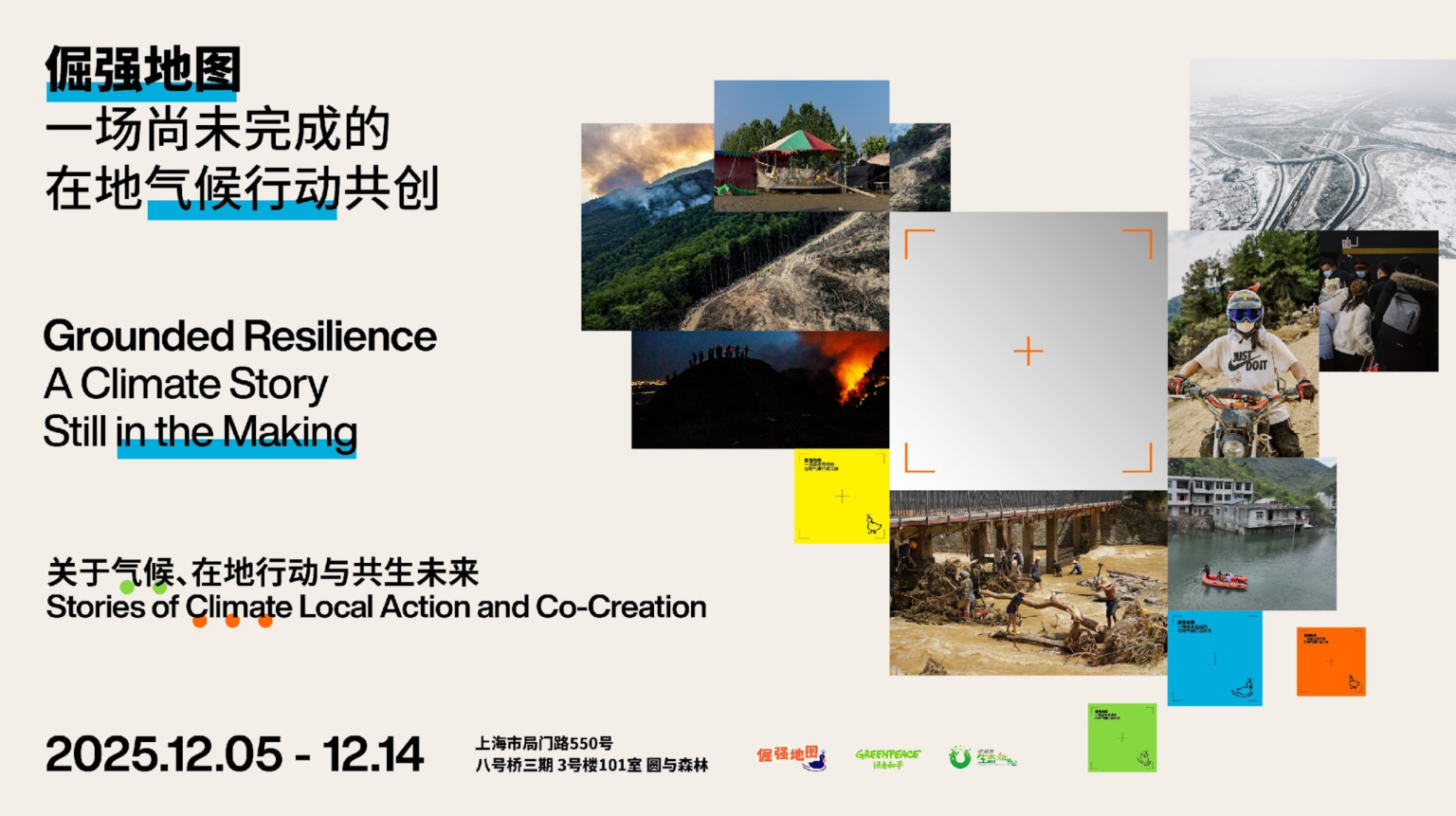
把记录作为气候行动|「倔强地图」展览回顾
Xin Lang Cai Jing· 2025-12-10 07:43
Group 1 - The core theme of the event is climate action and the importance of collective participation in addressing climate change, as highlighted by the "Stubborn Map" exhibition organized by the Hangzhou Ecological Culture Association and Greenpeace [1][38] - The exhibition features a combination of scientific sharing, creative exchanges, interactive displays, and roundtable discussions, aiming to bridge the gap between ordinary people and climate action [1][38] - The event emphasizes that climate change is no longer a distant issue but has become a daily survival concern, affecting various aspects of life, including energy structure and cultural heritage [6][43] Group 2 - The exhibition showcases the alarming trend of global temperature rise since 1977, with a particular focus on the disproportionate warming in the Arctic region, which leads to extreme weather events [5][42] - Specific domestic cases illustrate the impact of climate change, such as the increased probability of extreme heat in Chongqing by 7 times and its intensity rising by 50% [5][42] - The exhibition aims to break the perception that climate crises are unrelated to individuals, encouraging urban residents to recognize their role in climate action [6][43] Group 3 - The exhibition is divided into three sections: "Entering the Scene," "Staying in the Scene," and "Continuing to Happen," presenting a complete action chain from individual documentation to community co-creation [59] - Various creators share their artistic practices related to climate action, highlighting the importance of documenting climate issues and engaging communities in solutions [48][59] - The roundtable discussions focus on the collaboration between professional creators and community workers, emphasizing that climate action requires diverse perspectives and participation from all [68]
科特迪瓦引领非洲气候行动
Shang Wu Bu Wang Zhan· 2025-12-02 17:21
Core Viewpoint - Côte d'Ivoire has approved its third Nationally Determined Contribution (NDC 3.0) aiming for a 33% reduction in greenhouse gas emissions by 2035, with potential international support for up to 74% reduction [1] Group 1: Environmental Goals - The core strategy focuses on transforming environmental protection into an economic growth driver [1] - Specific measures include increasing the share of renewable energy to 46.3% by 2035 and restoring 1.5 million hectares of forest [1] - The "Blue Côte d'Ivoire" project plans to invest $378 million to establish marine protected areas and restore mangroves and coastal forests [1] Group 2: Economic Impact - The "Blue Côte d'Ivoire" initiative is expected to generate over $1 billion in additional annual revenue and create more than 200,000 jobs by 2035 [1] - The project aims to position Côte d'Ivoire's coastline as a global model for sustainable economic growth [1] Group 3: Climate Financing and Collaboration - At COP30, the Côte d'Ivoire delegation emphasized the need for African voices in global ecological transformation and advocated for a restructured climate financing system [1] - The country promotes carbon markets and circular economy as pillars for more equitable and effective cooperation [1] Group 4: Vision for the Future - Côte d'Ivoire envisions the green transition as a strategic opportunity for national modernization, youth employment, and innovation [1] - The goal is to translate ecological protection into community welfare and shared prosperity [1]
对话世界经济论坛自然与气候中心负责人:气候行动正为企业带来积极的增长回报
Xin Lang Cai Jing· 2025-11-28 07:31
Core Insights - The article discusses the evolving landscape of climate action and corporate decarbonization, highlighting the shift from policy-driven initiatives to market-driven responses in the past decade [3][4][9] Group 1: Climate Action and Corporate Engagement - Since the Paris Agreement in 2015, there has been a significant transformation in the role of policies and markets, with the latter now accelerating climate action [3][4] - Approximately 11,000 companies have set or committed to science-based carbon targets, covering about 40% of global market capitalization, indicating that climate goals are becoming integral to corporate strategies [4][5] - The World Economic Forum's CEO Climate Leaders Alliance, comprising around 130 CEOs from 12 industries with a combined annual revenue of $4 trillion and emissions of approximately 5 billion tons, has successfully reduced absolute emissions by 12% from 2019 to 2023 while achieving a 20% overall economic growth [3][4] Group 2: Decarbonization Strategies - Scope 3 emissions account for 75% to 85% of total corporate emissions, making their reduction challenging due to their occurrence outside direct control [5][6] - Effective decarbonization strategies should differentiate between upstream and downstream emissions, as they require distinct approaches [5][6] - Providing incentives to suppliers, especially in emerging markets, is crucial for reducing carbon footprints and overall corporate emissions [6][7] Group 3: Clean Energy Investment Trends - In 2024, clean energy technology investments are expected to exceed $2 trillion, surpassing fossil fuel investments by $800 billion, indicating strong economic viability [7][8] - China is identified as a key player in global decarbonization efforts, leading in renewable energy technology manufacturing and deployment [7][8] - The article notes a structural oversupply in China's solar photovoltaic sector, which is anticipated to stabilize through market consolidation and increased grid infrastructure investment [7][8] Group 4: Future Trends in Climate Action - Future climate action will likely see deeper regional cooperation, with mechanisms like ASEAN and the EU gaining prominence [9][10] - There will be an increased focus on climate resilience, with investments in climate-adaptive services and products becoming a new priority [9][10] - Industries with hard-to-abate emissions, such as transportation and heavy materials, will continue to face market barriers, necessitating collaborative efforts to share green premium risks [10][11]
美企因害怕特朗普而减少绿色投资?克里批美国政治寒蝉效应
Di Yi Cai Jing· 2025-11-26 08:12
Group 1 - John Kerry expressed shock at the level of fear among U.S. CEOs regarding President Trump, stating that despite the lucrative returns from green energy investments, many companies are still hesitant to invest due to potential political and legal repercussions [1][2] - Kerry highlighted that the recent COP30 climate conference was the first held without the participation of the U.S. federal government since the inception of the UN climate change conferences in 1995, yet several major companies like Microsoft, Google, and General Motors still attended, indicating a commitment to business development and supply chain security [4] - A recent analysis from the University of Maryland's Center for Global Sustainability indicated that existing policies could lead to a 35% reduction in U.S. emissions by 2035, largely driven by corporate initiatives [4] Group 2 - The renewable energy sector saw $2.2 trillion in spending over the past year, driven by market demand and consumer needs, despite some investors retracting their support due to fears related to climate change and political backlash [2] - Companies are recognizing the economic benefits of climate action, which also positively impacts health, food, and water security, as emphasized by Kerry [3]