
水光互补

Search documents
小湾水电站焕新记
Xin Lang Cai Jing· 2026-02-05 23:23
Core Insights - The Xiaowan Hydropower Station is a significant project in China's hydropower development, recognized as a leader in the cascade hydropower stations along the Lancang River, contributing to the clean energy supply for the southern region with an annual generation capacity of 19 billion kilowatt-hours [1][2]. Group 1: Engineering Challenges and Innovations - Xiaowan Hydropower Station is noted for its engineering difficulties, being recognized as one of the most challenging hydropower projects globally, with construction starting in 1999 and lasting 10 years [2]. - The project overcame significant technical challenges, including the construction of a 300-meter high arch dam and complex geological conditions, establishing a benchmark for high dam projects worldwide [2][3]. - The dam features 17,000 anchor cables installed to secure the slopes, with monitoring instruments integrated to ensure structural integrity [3]. Group 2: Technological Advancements - The station has achieved full domestic production of its core control systems, becoming the first hydropower station in China with a single unit capacity of 700,000 kilowatts to implement such a system [4]. - The implementation of smart technologies has enhanced operational efficiency, allowing for unmanned monitoring and smart scheduling in the control room [4]. Group 3: Renewable Energy Integration - Xiaowan Hydropower Station is integrating photovoltaic (PV) systems, enhancing its ability to stabilize the grid by balancing the intermittent nature of solar power with hydropower's rapid response capabilities [5][6]. - The addition of six new PV stations is expected to increase the clean energy output capacity to 5.435 million kilowatts, contributing to local economic development and energy supply stability [6].
戈壁变绿洲 “牧”“光”两相宜
Jin Rong Shi Bao· 2026-01-06 02:05
Core Viewpoint - The transformation of the Taratang area from a semi-desert to a thriving ecological zone is attributed to the innovative "water-light complementary" model and sustained financial support, showcasing a successful case of green finance empowering ecological and economic development [1][2][9]. Group 1: Ecological Transformation - The Taratang photovoltaic industrial park has evolved from barren land to a vibrant ecosystem, integrating photovoltaic power generation with sheep farming, creating a "pastoral photovoltaic city" [1][2]. - The "water-light complementary" system connects hydropower and photovoltaic power, allowing for flexible energy management and stable grid output [2][3]. - The installation of photovoltaic panels has led to a reduction in surface temperature by 2-3°C, a 50% decrease in wind speed, and a 30% reduction in soil moisture evaporation, promoting vegetation growth [3]. Group 2: Financial Support - The People's Bank of China (PBOC) in Qinghai has significantly supported green finance, providing 42.04 billion yuan in carbon reduction support tools and facilitating 70.06 billion yuan in carbon reduction loans [1][4]. - China Bank has approved 8.9 billion yuan in project loans for key green energy enterprises, ensuring financial backing for the development of clean energy projects [5][6]. - The establishment of a "green channel + special quota" service mechanism by China Bank aims to enhance financial service efficiency for green industries [5]. Group 3: Industry Development - Qinghai Province has leveraged its natural advantages to develop a clean energy industry, establishing three "million-kilowatt" clean energy bases and a high-capacity transmission line that has delivered over 68 billion kilowatt-hours of electricity [7][9]. - The local government has implemented policies to support the clean energy sector, resulting in a 46.04% increase in green loan balances since 2020, with clean energy loans growing by 157.21% [9]. - The collaboration between various financial institutions has created a robust support system for clean energy projects, with 33 out of 45 targeted enterprises receiving credit support since 2022 [8][9].


水电给光伏“撑腰”?全球最大水光互补项目藏了什么玄机?
Sou Hu Cai Jing· 2026-01-04 04:01
Group 1 - The core project involves the simultaneous commissioning of two large photovoltaic power stations by the Yalong River, creating the world's largest hydropower and solar energy complementary project with a total installed capacity of 6 million kilowatts, sufficient to meet the annual electricity needs of over 5 million households [2] - The project addresses the instability of solar power generation by integrating hydropower, allowing hydropower stations to act as a stabilizing partner for solar energy, thus providing a reliable electricity supply to the grid [4] - The Yalong River project is part of a national strategy to develop nine large clean energy bases, with the Yalong River basin planned to have a total installed capacity of 78 million kilowatts by 2035, capable of generating 200 billion kilowatt-hours of electricity annually, enough for two cities the size of Beijing [6] Group 2 - The construction of power stations in remote areas, such as at an altitude of 4,400 meters, brings significant economic benefits, including over 1 billion yuan in tax revenue and approximately 5,000 job opportunities during the construction phase [8] - The clean energy projects are transforming the development logic of western regions from merely exporting resources to establishing sustainable green energy bases, with ongoing benefits from tax revenues and infrastructure improvements [8] - The Yalong River basin's integrated hydropower and solar energy base currently has nearly 23 million kilowatts of installed capacity, with plans to reach 30 million kilowatts by 2035 [8][9]

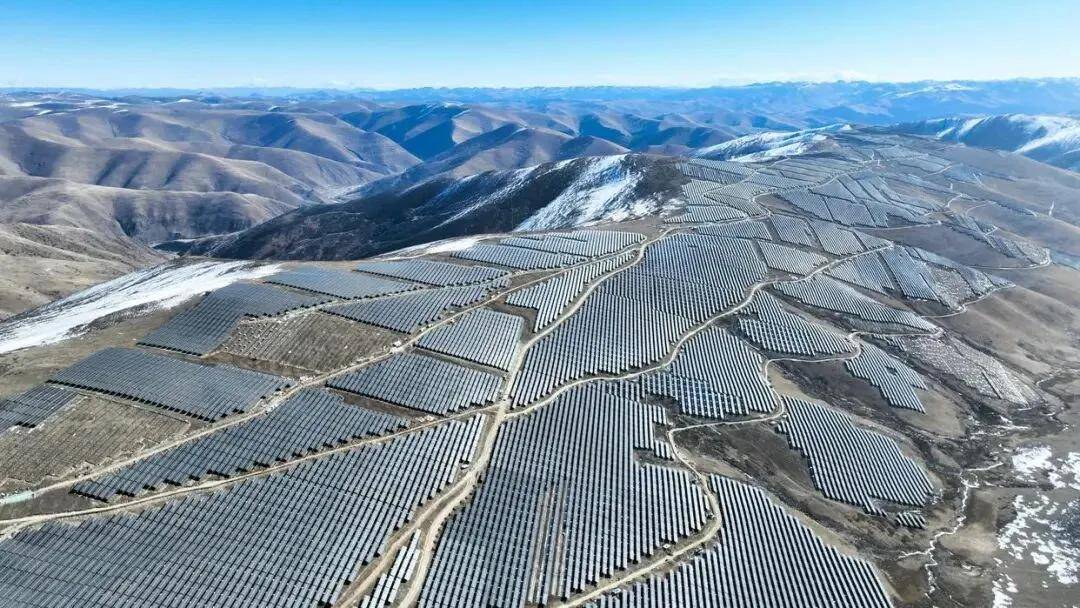
四川雅砻江两座百万千瓦光伏电站同步投产发电
Zhong Guo Xin Wen Wang· 2026-01-04 01:58
Core Viewpoint - The simultaneous commissioning of the 1 million kW solar power stations, Suorong and Chaburang, marks a significant step in the development of the world's largest water-solar complementary project, which aims to enhance the stability and reliability of renewable energy generation in China [1][2]. Group 1: Project Details - The Suorong Solar Power Station is located in Litang County, Garze Prefecture, Sichuan Province, with an installed capacity of 1 million kW [1]. - The Chaburang Solar Power Station is situated in Muli County, Liangshan Prefecture, Sichuan Province, also with an installed capacity of 1 million kW, and is noted as the largest ultra-high-altitude mountain solar project in China [1]. - The project site for Chaburang ranges from 4150 meters to 4700 meters above sea level, featuring steep terrain with some slopes exceeding 30 degrees, making it one of the most challenging ultra-high-altitude solar projects in the country [1]. Group 2: Technological Innovations - To address the challenges of steep terrain, the project has innovatively introduced "flexible support" technology, allowing solar panels to be installed on steel cables that can traverse complex landscapes [2]. - The project has also implemented an "aerial passage" solution using drones for transporting solar components, achieving a 2.5 times increase in efficiency compared to traditional manual transportation methods [2]. Group 3: Future Developments - With the commissioning of the Suorong and Chaburang solar power stations, the integrated water-solar-wind energy base in the Yalong River Basin has nearly 23 million kW of clean energy capacity in operation and approximately 12 million kW under construction [2]. - The Yalong River Basin Hydropower Development Company aims to leverage its advantages in hydropower development to further explore integrated development, joint scheduling, and market absorption of renewable energy [2].
我国首个水风光一体化基地两座百万千瓦光伏电站同步投产
Xin Lang Cai Jing· 2026-01-01 11:33
Core Insights - The Yalong River Basin has accelerated the construction of the first integrated water, wind, and solar energy base in China, with two solar power stations, Yalongjiang Suolong and Chaburang, set to start operations on December 31, 2025, contributing significantly to the new energy system and national energy security [1][2] Group 1: Project Details - The Suolong Solar Power Station, located in Ganzi Prefecture, Sichuan, has a capacity of 1 million kilowatts, while the Chaburang Solar Power Station, located in Muli County, Liangshan Prefecture, also has a capacity of 1 million kilowatts, making it the largest ultra-high-altitude mountain solar project in China [1] - Together with the Kela Phase I and II solar power stations and the Lianghekou Hydropower Station, these projects form the world's largest water-solar complementary project with a total capacity of 3 million kilowatts for hydropower and 3 million kilowatts for solar power [1] Group 2: Environmental Impact - The two solar power stations are expected to generate approximately 3.9 billion kilowatt-hours of clean electricity annually, saving about 1.2 million tons of standard coal and reducing carbon dioxide emissions by approximately 3.1 million tons each year [1] - The Yalong River Basin has established the three largest reservoirs in Sichuan Province, with a total storage capacity of 24.9 billion cubic meters and a regulation capacity of 14.8 billion cubic meters, accounting for 51% of the total regulation capacity of large reservoirs in the province [2]
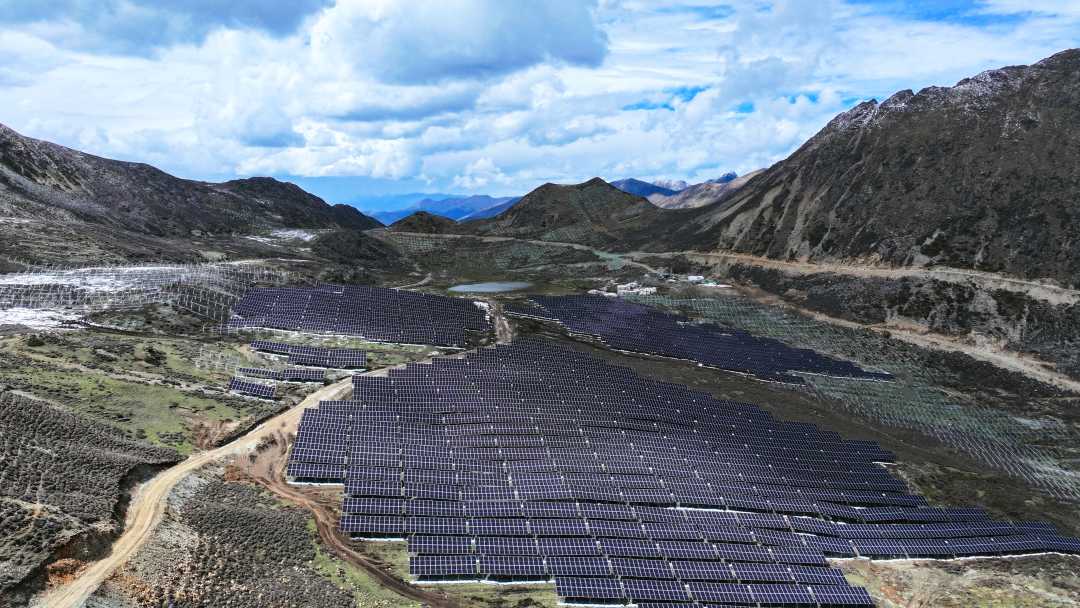
我国海拔最高百万千瓦级光伏电站投产 参与构建全球最大水光互补项目群
Xin Lang Cai Jing· 2026-01-01 08:30
Core Viewpoint - The successful grid connection of the Suorong photovoltaic project marks a significant advancement in the world's ultra-high altitude clean energy projects, contributing to the construction of China's first integrated water, wind, and solar energy base in the Yarlung Tsangpo River basin [1][3]. Group 1: Project Overview - The Suorong photovoltaic power station, located in Ganzi Tibetan Autonomous Prefecture, Sichuan Province, has a total installed capacity of 1 million kilowatts and an average annual power generation of approximately 1.98 billion kilowatt-hours [3][5]. - The project is expected to save 600,000 tons of standard coal annually and reduce carbon dioxide emissions by 1.64 million tons, thus enhancing the new energy system and ensuring national energy security [3][5]. Group 2: Environmental and Economic Impact - The project employs an ecological model of "pasture-solar complementarity" and "grass-solar complementarity," which allows for the unobstructed movement of yaks under the elevated solar panels, while also benefiting local grass growth through reduced soil moisture evaporation [3][5]. - As a key energy project in the national "14th Five-Year Plan" and the largest single investment in renewable energy in Sichuan during the same period, the Suorong photovoltaic station will optimize the regional energy structure and improve local infrastructure [5]. Group 3: Technical and Operational Challenges - The project faced severe challenges due to extreme natural conditions such as cold temperatures, low oxygen levels, strong winds, frozen soil, and significant temperature fluctuations, which were overcome through the technical and management experience accumulated from previous high-altitude renewable energy projects [5]. - The Suorong photovoltaic station will operate in conjunction with the nearby Kola photovoltaic station and the Yarlung Tsangpo River hydropower station, forming a world-class water-solar complementary project cluster with a total scale of 3 million kilowatts for both hydropower and solar energy [7].
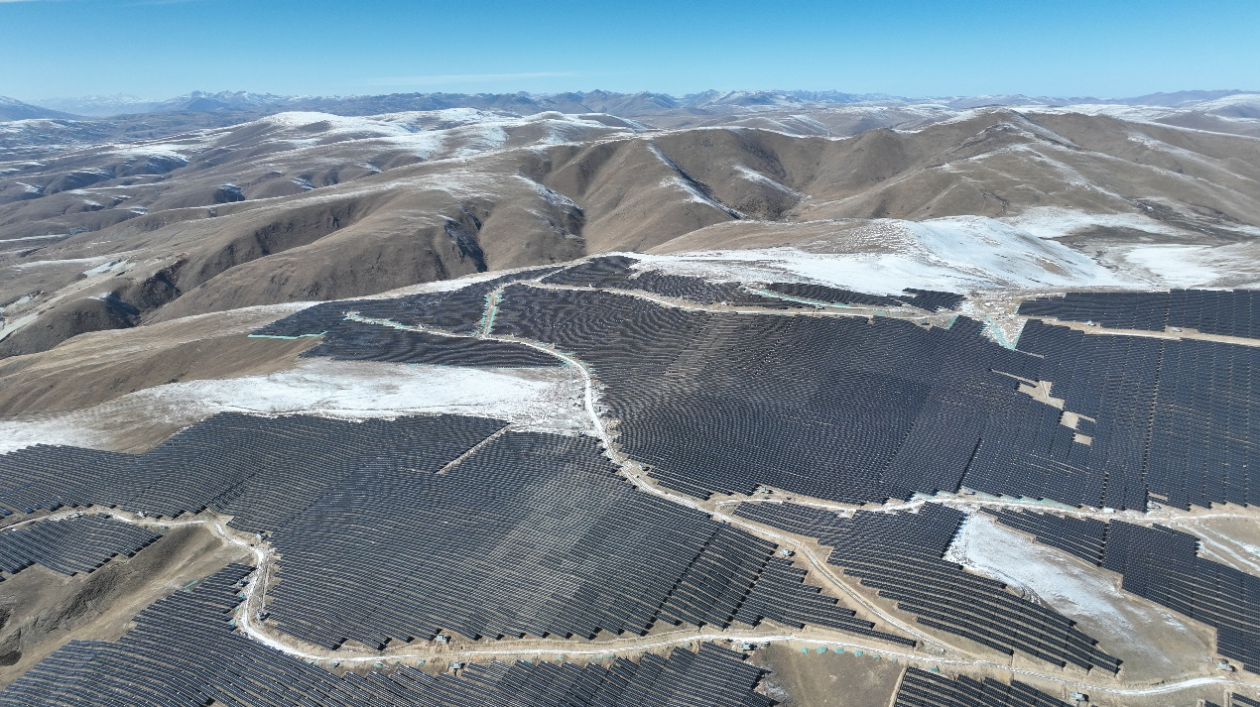
中国最大超高海拔山地光伏电站投产发电
Zhong Guo Xin Wen Wang· 2025-12-31 06:24
Core Viewpoint - The Yalong River Chaburang Photovoltaic Power Station, China's largest ultra-high-altitude mountain solar power station, officially commenced operation on December 31, 2025, with a total installed capacity of 1 million kilowatts [1][3]. Group 1: Project Details - The Yalong River Chaburang Photovoltaic Power Station is located in Muli County, Liangshan Yi Autonomous Prefecture, Sichuan Province, with an elevation ranging from 4,150 meters to 4,700 meters [3]. - The project is recognized as one of the most challenging ultra-high-altitude solar projects in China due to its steep terrain, with some slopes exceeding 30 degrees [3][5]. - Innovative "flexible support" technology was introduced to address construction challenges on steep slopes, allowing solar panels to be installed on steel cables that can traverse complex terrains [3]. - To tackle transportation difficulties in high-altitude areas, the project utilized an "aerial passage" solution, employing drones to transport solar components, achieving a 2.5 times increase in efficiency compared to traditional manual handling [3][5]. Group 2: Related Projects and Capacity - On the same day, the Yalong River Suorong Photovoltaic Power Station, also with an installed capacity of 1 million kilowatts, began operations [5]. - The Suorong station will work in conjunction with the Kela Phase I and II photovoltaic stations and the Lianghekou Hydropower Station to form the world's largest water-solar complementary project, totaling 3 million kilowatts of hydropower and 3 million kilowatts of solar power [5]. - As of now, the Yalong River basin's integrated wind-solar-hydro base has nearly 23 million kilowatts of clean energy capacity in operation, with an additional 12 million kilowatts under construction [5].
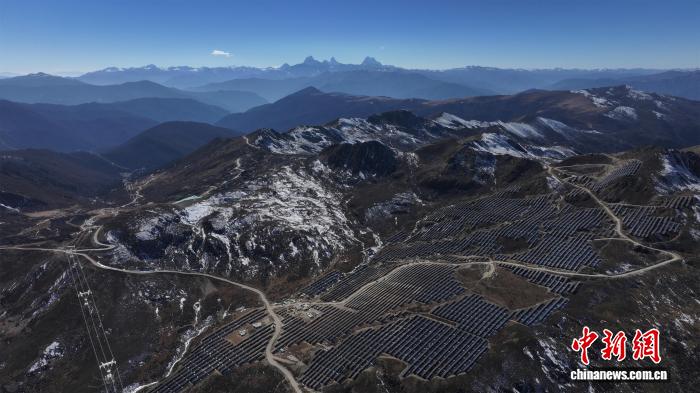
世界海拔最高特高压直流输电工程全线贯通
Si Chuan Ri Bao· 2025-05-28 01:16
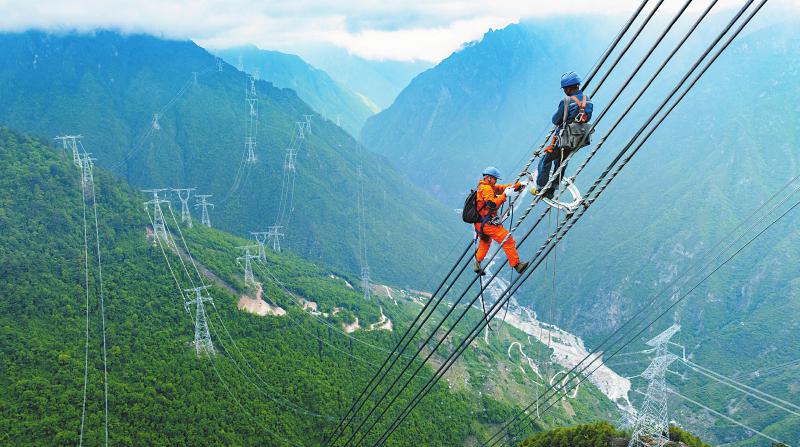
Core Points - The world's highest UHVDC project, the Jinsha River upstream to Hubei ±800 kV UHVDC transmission project, has achieved full line connectivity, marking a significant milestone in China's "West-to-East Power Transmission" initiative [2][3] - The project spans 1,901 kilometers across four provinces (Sichuan, Chongqing, Tibet, and Hubei) and is designed to transport 40 billion kilowatt-hours of electricity annually, integrating hydropower and new energy sources [2] - The Sichuan section of the project is 976.4 kilometers long, with the most challenging construction occurring in the western Sichuan region, characterized by steep terrain and high altitudes [2][3] Project Details - The highest tower in the project reaches an altitude of nearly 4,800 meters, making it the highest UHV tower in the world [2] - Over 300 construction cableways have been established to enhance transportation efficiency in the mountainous areas during the construction phase [3] - The project is currently in the final stages, with the State Grid Sichuan Electric Power accelerating the debugging and testing of converter stations and lines to ensure timely operation [3]
工业硅:盘面预计高开低走,多晶硅:减产消息发酵,盘面偏强运行
Guo Tai Jun An Qi Huo· 2025-05-13 01:53
Group 1: Investment Ratings - No investment ratings for the industry are provided in the report. Group 2: Core Views - The industrial silicon futures market is expected to open high and close low, while the polysilicon market is expected to be strong due to the fermentation of production cut news [1][2] - The trend strength of industrial silicon is -1, indicating a bearish view, while the trend strength of polysilicon is 1, indicating a bullish view [4] Group 3: Summary by Directory 1. Fundamental Tracking - **Futures Market Data**: For industrial silicon futures Si2506, the closing price was 8,320 yuan/ton, with a decrease compared to previous periods; the trading volume was 249,065 lots, showing a decline; the open interest was 171,625 lots, showing an increase. For polysilicon futures PS2506, the closing price was 38,450 yuan/ton, with an increase; the trading volume was 322,808 lots, showing a decline; the open interest was 69,417 lots, showing an increase [2] - **Basis and Spread**: The basis and spread of industrial silicon and polysilicon futures contracts showed different trends compared to previous periods. For example, the near - month contract to the continuous first spread of industrial silicon was -100 yuan/ton [2] - **Spot Prices and Profits**: Spot prices of industrial silicon and polysilicon showed varying degrees of change. For instance, the price of East China oxygen - passing Si5530 was 9100 yuan/ton, showing a decline. Silicon factory profits were mostly negative, while polysilicon enterprise profits were -2.5 yuan/kg [2] - **Inventory**: Industrial silicon social inventory (including warehouse receipt inventory) was 59.6 million tons, with a decrease compared to a week ago. The total industry inventory (social + enterprise) was 86.1 million tons, also showing a decline [2] - **Raw Material Costs**: The prices of raw materials such as silicon ore, washed coal, and petroleum coke showed different trends. For example, the price of Xinjiang silicon ore was 440 yuan/ton, remaining unchanged [2] - **Prices and Profits in Downstream Industries**: In the polysilicon (photovoltaic) industry, prices of products like silicon wafers, battery cells, and components showed declines. In the organic silicon and aluminum alloy industries, prices and profits also showed different trends [2] 2. Macroeconomic and Industry News - On the 9th, the 1.2 - gigawatt Huadian Xineng Zhongza photovoltaic project, the largest single - photovoltaic project under construction in Sichuan Province, officially started. It is located in Zhongza Town, Batang County, Ganzi Tibetan Autonomous Prefecture, Sichuan Province, and is a key project in the "14th Five - Year Plan" [2][4]