
光伏电站

Search documents
上海实业控股发布2025年度业绩 净利润20.2亿港元 末期股息每股50港仙
Zhi Tong Cai Jing· 2026-03-31 19:41
Group 1 - The company Shanghai Industrial Holdings (00363) reported a total revenue of HKD 20.832 billion for the fiscal year 2025, with a net profit of HKD 2.02 billion and basic earnings per share of HKD 1.858 [3] - The infrastructure and environmental business generated a profit of HKD 1.801 billion, a decrease of 31.5% compared to the previous year, primarily due to profits from the sale of equity in the Hangzhou Bay Bridge in the prior year [3] - The company is focusing on water treatment and resource utilization, aiming to expand market share and optimize business layout to strengthen its leading position in China's water and environmental industry [3] Group 2 - The consumer goods segment contributed a profit of HKD 0.756 billion, an increase of 17.5% year-on-year, accounting for approximately 39.2% of the group's net profit [4] - In the context of ongoing economic pressure and increased competition in the consumer goods market, the company is advancing new product development and improving existing products to adapt to market changes [4] - The company is implementing cost control measures and enhancing capacity utilization to ensure steady development across its various segments [4] Group 3 - As of the end of 2025, Shanghai Industrial New Energy Development Co., Ltd. holds solar power assets totaling 740 megawatts, with 15 solar power projects generating approximately 863.38 million kilowatt-hours, a 10% decrease from the previous year due to ongoing power restrictions [3] - The company continues to strengthen its research on macro policies, industry dynamics, and capital markets to meet market challenges [3]
上海实业控股(00363)发布2025年度业绩 净利润20.2亿港元 末期股息每股50港仙
智通财经网· 2026-03-30 09:08
Group 1: Financial Performance - The company reported a total revenue of HKD 20.832 billion and a net profit of HKD 2.02 billion for the fiscal year 2025, with basic earnings per share at HKD 1.858 [1] - A final dividend of HKD 0.50 per share and a special dividend of HKD 0.20 per share are proposed [1] Group 2: Business Segments - The infrastructure and environmental business generated a profit of HKD 1.801 billion, a decrease of 31.5% compared to the previous year, accounting for approximately 93.4% of the group's net profit [1] - The consumer goods segment contributed a profit of HKD 0.756 billion, an increase of 17.5% year-on-year, representing about 39.2% of the group's net profit [2] Group 3: Strategic Focus - The company is focusing on water treatment and resource utilization, aiming to expand market share and optimize business layout to strengthen its leading position in China's water and environmental industry [1] - The company is committed to innovation and product development in the consumer goods sector to adapt to market changes and maintain steady sales growth [2] Group 4: Renewable Energy - As of the end of 2025, the company's solar power assets reached 740 megawatts, with 15 solar power projects generating approximately 863.38 million kilowatt-hours, a 10% decrease from the previous year due to ongoing power restrictions [1] - The company continues to enhance its research on macro policies, industry trends, and capital markets to meet market challenges [1]
上海建工20260325
2026-03-26 13:20
Summary of Shanghai Construction Group Conference Call Company Overview - Shanghai Construction Group ranks 8th among the world's top 250 engineering contractors and 374th in the Fortune Global 500, maintaining a domestic credit rating of 3A and an international rating of 3B [3][3]. Industry and Market Position - The company has an order backlog close to 1 trillion yuan, with a market share of 68% in Shanghai and over 85% in the Yangtze River Delta [2][14]. - The focus is shifting from new construction to urban renewal, water conservancy, and new infrastructure, with significant orders in the semiconductor sector exceeding 10 billion yuan [2][8]. Key Business Developments - The company has been collaborating with the Chinese Academy of Sciences on thorium molten salt reactor technology for nearly 10 years, achieving stable operation of a 2MW experimental reactor and currently developing a 10MW to 20MW demonstration reactor [5][6]. - The overseas business strategy aims to expand into Southeast Asia and Belt and Road countries through a "design consulting first" model, targeting a significant increase in revenue share during the 14th Five-Year Plan period [2][9]. Financial Performance and Projections - The mining business, particularly the Eritrean Koka gold mine, is expected to contribute approximately 200 million yuan in profit for the first three quarters of 2025, with an annual profit forecast of 200-300 million yuan supported by high gold prices [2][11]. - The company anticipates a significant improvement in operational conditions in Q1 2026, with a construction rate exceeding 90% and a projected total fixed asset investment in Shanghai of around 255 billion yuan [2][12]. Strategic Focus Areas - The "15th Five-Year Plan" emphasizes urban renewal and new industries, including semiconductors and renewable energy, to adapt to changes in urban development [4][4]. - Risk management and compliance will be prioritized, focusing on reducing liabilities and improving asset turnover [4][4]. Future Investments - The photovoltaic business has an annualized investment return rate close to 10%, with over 30 operational solar power stations, and plans to enhance this segment in line with Shanghai's policies [2][7]. - The company aims to strengthen its cleanroom and semiconductor engineering capabilities, with current orders exceeding 10 billion yuan in the semiconductor sector [2][8]. Revenue and Order Outlook - The company is targeting a significant increase in overseas revenue share by the end of the 15th Five-Year Plan, with a reference goal of 2.5% by the end of the 14th Five-Year Plan [9][9]. - The outlook for new orders in 2026 is optimistic, with a target of approximately 255 billion yuan in major engineering investments in Shanghai, higher than the previous year [15][15]. Dividend Policy - The company has a consistent focus on dividends, with plans to disclose the 2026 dividend scheme in April, aiming to provide returns to shareholders as profitability improves [10][10].

新能源“攻上”矿山,千亿蓝海呼之欲出?
高工锂电· 2026-03-25 11:12
Core Viewpoint - The transition from diesel to renewable energy in mining is driven by economic factors rather than just environmental concerns, marking a significant shift in the industry [6][34]. Group 1: Economic Benefits of Renewable Energy in Mining - The introduction of renewable energy in mining drastically reduces costs, with electricity prices dropping from $0.4 per kWh to $0.1 per kWh, attracting global mining giants [7][8]. - In the Kamoa-Kakula copper mine in the Democratic Republic of Congo, a solar power project is expected to reduce electricity costs from $0.35 to $0.12 per kWh, a decrease of over 60% [8][9]. - A medium-sized mine with an annual electricity consumption of 100 million kWh can save $23 million annually by switching to renewable energy [9]. Group 2: Technological Advancements and Market Dynamics - The cost of battery technology has significantly decreased, with lithium carbonate prices dropping from 600,000 yuan per ton to around 200,000-300,000 yuan for a 700 kWh electric mining truck battery [15][16]. - The market for electric mining trucks is projected to reach nearly 100 billion yuan by 2030, driven by increasing penetration rates and the need for sustainable mining solutions [21][23]. Group 3: Industry Collaborations and Strategic Moves - Strategic partnerships are forming, such as the collaboration between CATL and Rio Tinto, aimed at supporting the electrification of mining operations [18]. - Companies like BYD are also investing in technology for autonomous mining trucks, indicating a competitive landscape for electric mining solutions [21][27]. Group 4: Challenges and Future Outlook - Despite the economic advantages, challenges such as grid stability, battery safety, and initial investment costs remain significant hurdles for the transition to renewable energy in mining [29][30][31]. - The shift towards distributed energy systems is gaining traction, with off-grid mining solutions already being implemented in regions like Africa [33][38].




读懂中国能源下一个五年
中国能源报· 2026-03-09 02:59
Core Viewpoint - The article emphasizes the importance of energy development in China's "14th Five-Year Plan" and the upcoming "15th Five-Year Plan," highlighting the country's advancements in renewable energy and the strategic planning for future energy projects [1][20]. Group 1: Energy Development Achievements - During the "14th Five-Year Plan," China's energy self-sufficiency rate increased from approximately 80% to over 84%, maintaining the largest energy scale globally [3]. - The cumulative installed capacity of renewable energy, particularly wind and solar, reached 3.4 times that of 2020, with the share of electricity from these sources increasing by over 12 percentage points [3]. - By 2025, China is projected to add 315 GW of new solar capacity, with significant potential for further capacity utilization [3]. Group 2: Future Energy Projects - The "15th Five-Year Plan" includes 109 major energy-related projects, focusing on new infrastructure such as super-large-scale computing clusters and future energy development [1]. - Key projects include controlled nuclear fusion, major hydropower and integrated wind-solar bases, zero-carbon parks, and zero-carbon transport corridors [1]. Group 3: Rural Energy Initiatives - The government aims to promote rural revitalization through solar energy projects, with a target of expanding coverage to 1,000 villages [4]. - Solar energy initiatives in rural areas not only enhance green electricity supply but also support rural electrification and economic benefits for local farmers [4]. Group 4: Hydrogen Energy Development - Hydrogen energy has been increasingly recognized as a key industry, with plans for 860 hydrogen production projects by 2025, targeting a production scale of approximately 10 million tons per year [6]. - The integration of hydrogen energy into high-energy-consuming industries is expected to support industrial decarbonization and provide flexible load support for the power grid [6]. Group 5: Coal and Oil & Gas Industry - By 2025, China's coal production is expected to reach 4.85 billion tons, with coal consumption accounting for 51.4% of total energy consumption [8]. - The oil and gas sector is projected to see significant production increases, with crude oil output reaching approximately 215 million tons and natural gas production exceeding 260 billion cubic meters [10]. - Innovations in deep drilling and unconventional oil and gas exploration are crucial for enhancing domestic production capabilities [10]. Group 6: International Cooperation and Trade - China's energy sector is increasingly involved in international cooperation, with investments in energy infrastructure in countries like Portugal and Australia [13]. - The export of high-tech products, including electric vehicles and solar batteries, is becoming a new growth point for China's foreign trade [13]. - The "new three samples" of products, services, and capital are expected to significantly enhance the internationalization of the RMB and reshape the global energy landscape [14].

Engie 考虑在巴西大型光伏电站引入比特币挖矿或储能系统
Xin Lang Cai Jing· 2026-02-23 19:42
Core Viewpoint - Engie is evaluating the deployment of energy storage systems or Bitcoin mining data centers at its Assu Sol solar power plant in northeastern Brazil to mitigate the impact of curtailment on project revenues [1] Group 1: Company Initiatives - Engie is considering local electricity usage strategies, including mining or storage, to enhance utilization rates amid curtailment pressures [1] - The Assu Sol solar power plant has an installed capacity of 895 MWp [1] Group 2: Industry Context - Since 2023, solar and wind projects in Brazil have faced curtailment pressures due to insufficient grid capacity, rapid growth in renewable energy installations, and the expansion of distributed solar [1] - The proposed solutions by Engie are expected to take several years to implement [1]
白酒老登的新能源春天
Sou Hu Cai Jing· 2026-02-23 05:46
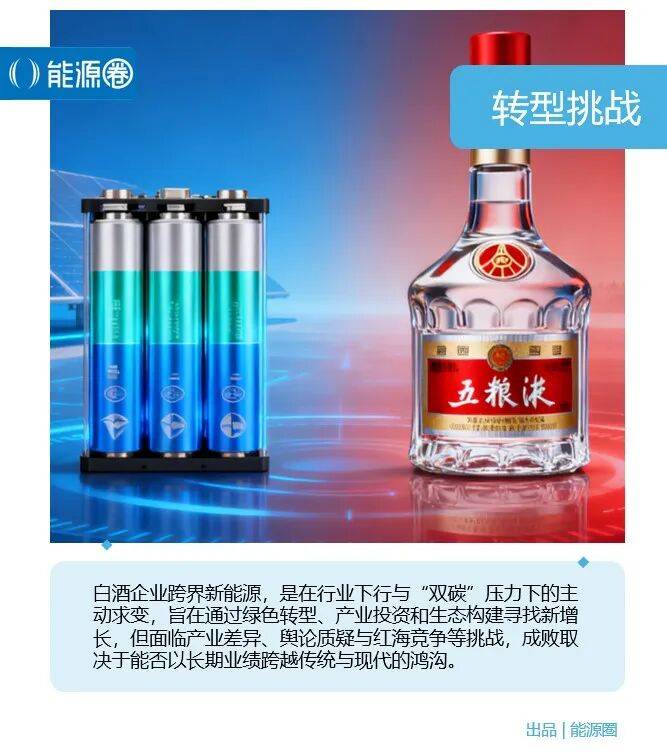
Core Viewpoint - The traditional perception of the liquor industry and the new energy sector as distant is changing, with major liquor companies increasingly venturing into new energy initiatives to seek growth opportunities amid declining liquor sales [4][10]. Group 1: Industry Trends - Major liquor companies like Moutai and Wuliangye are investing heavily in new energy, with Moutai establishing a 10 billion yuan new energy fund and Wuliangye focusing on solar, energy storage, and hydrogen energy [4][6]. - The liquor industry is facing significant challenges, with national liquor production expected to decline for the eighth consecutive year, showing an 11.5% drop in the first ten months of the year [6][10]. - Internal pressures from new regulations and external pressures from carbon reduction strategies are pushing liquor companies to explore new growth avenues [7][10]. Group 2: Strategic Initiatives - Wuliangye is actively participating in the regional industrial transformation of Yibin, which is transitioning from a liquor hub to a new energy hub, with over 110 new energy projects attracting investments exceeding 270 billion yuan [7][8]. - Companies are taking steps to address their energy consumption issues by building green factories and utilizing renewable energy sources, such as Wuliangye's commitment to using 100% green electricity by 2025 [8][9]. - Leading liquor companies are beginning to define industry standards by creating comprehensive "zero-carbon solutions" and influencing their supply chains to adopt sustainable practices [9]. Group 3: Challenges and Market Dynamics - The transition from liquor to new energy is fraught with challenges due to the fundamental differences between the two industries, with liquor relying on brand culture and consumer demand, while new energy is driven by technology and capital [10][11]. - There are concerns regarding the motivations behind liquor companies' investments in new energy, with skepticism about whether these moves are genuine or merely opportunistic [10][11]. - The new energy sector is becoming increasingly competitive, with profit margins tightening, making it difficult for liquor companies to replicate their traditional high-profit models in this new landscape [11][12].

一场开在沙漠里的早班会
Xin Lang Cai Jing· 2026-02-15 15:55
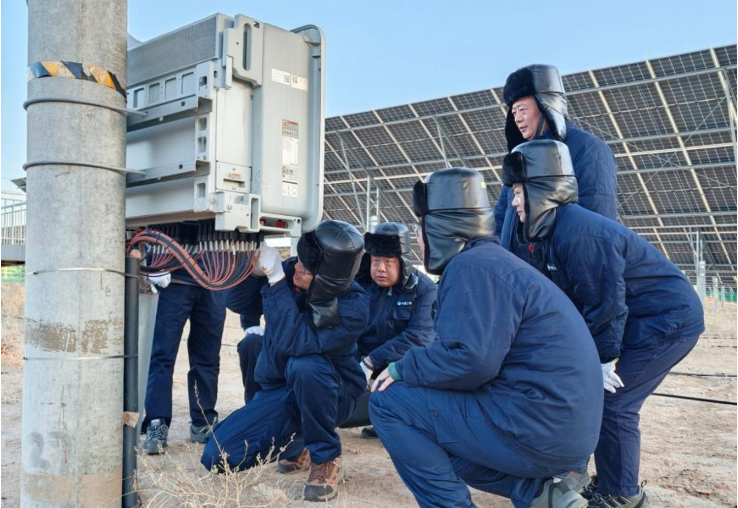
Core Viewpoint - The article highlights the proactive measures taken by the Three Gorges Group at the Kubuchi Desert photovoltaic power station to ensure operational safety and energy supply during the Chinese New Year, emphasizing the implementation of a "separation of operations and maintenance" model to enhance efficiency and skill development among staff [1][4][9]. Group 1: Operational Efficiency - The early morning meeting at the photovoltaic power station focused on troubleshooting a low insulation resistance alarm from an inverter, demonstrating a hands-on approach to skill enhancement and fault resolution [3][4]. - The "separation of operations and maintenance" model was initiated at the Kubuchi Desert photovoltaic power station, allowing dedicated teams to focus on monitoring and fault management, thereby improving operational efficiency [7][9]. - The maintenance team successfully completed fault checks on 304 box transformers within a week, showcasing the effectiveness of the new operational model [9]. Group 2: Employee Engagement and Training - Employees showed enthusiasm for learning and skill development, with new hires actively seeking hands-on experience in troubleshooting [3][4]. - The practical training session transformed the early meeting into an immersive training environment, enhancing team collaboration and knowledge sharing [4][9]. - The new operational model has led to increased employee motivation and higher work efficiency, contributing to a robust operational support system for energy supply during peak demand periods [9]. Group 3: Renewable Energy Contribution - The Kubuchi Desert photovoltaic power station, in conjunction with energy storage systems, is effectively contributing to regional energy supply and supporting low-carbon transition efforts [11]. - The integration of "light-storage interaction" models is enhancing the stability of green energy supply, further solidifying the role of renewable energy in the region [11].
中闽能源拟收购抽水蓄能股权,拓展新能源业务布局
Jing Ji Guan Cha Wang· 2026-02-14 08:08
Recent Events - Company plans to acquire 51% stake in Fujian Yongtai Mintou Pumped Storage Co., Ltd. from its controlling shareholder, Fujian Investment Development Group, for a cash consideration of 863.93 million yuan, aiming to expand its pumped storage business [2] - The target company has a total installed capacity of 1.2 million kilowatts, with projected net profits of 230 million yuan for 2024 and 158 million yuan for the first eight months of 2025 [2] Management Changes - The company announced the resignation of Deputy General Manager Yan Bo due to work-related changes, effective February 6, 2026 [3] Stock Performance - On February 11, 2026, the company's stock price increased by 2.02%, closing at 6.06 yuan per share, with a net inflow of 907,200 yuan in main funds and a turnover rate of 0.40% [4] - Since the beginning of 2026, the stock price has risen by 11.81%, and there was a 5.00% increase on December 5, 2025, due to favorable policies in Fujian Province [4] Business Developments - The company received approval for three solar power projects totaling 250 MW, which were included in the "Fujian Province Solar Power Station Development and Construction Project List (2025 Edition)" [5] - In 2025, the company generated a total electricity output of 2.875 billion kWh, a year-on-year decrease of 4.41%, with revenue of 1.08 billion yuan and a net profit of 328 million yuan for the first three quarters, showing a decline compared to the previous year [5] Strategic Initiatives - The company approved a proposal to establish a corporate group and amend its articles of association on December 12, 2025, aiming to integrate its subsidiaries under the parent company [6] - The company is also working on upgrading old wind farm equipment to enhance power generation efficiency [6]

2026年光伏行业将重点“反内卷”!光伏ETF华夏(515370)低开拉升
Mei Ri Jing Ji Xin Wen· 2026-02-06 03:02
Group 1 - The core message of the news highlights that the photovoltaic industry will focus on "anti-involution" in 2026, with a projected slowdown in domestic installation growth [1] - The conference on February 5 emphasized the ongoing exploration of specific actions under the anti-involution policy, indicating that the guiding principles remain unchanged [1] - China Galaxy Securities reported that the decreasing costs of commercial space launches and breakthroughs in battery technology may lead to the gradual commercialization of space photovoltaics in the next 10-15 years [1] Group 2 - The photovoltaic ETF Huaxia (515370) opened lower but rose by 0.1%, with notable increases in holdings such as Laplace (over 3%), JinkoSolar (over 2%), and GCL-Poly (over 1%) [1] - The Huaxia photovoltaic ETF and its connected funds (012885/012886) track the CSI Photovoltaic Industry Index, which includes companies across the entire photovoltaic industry chain, providing a comprehensive reflection of the industry's overall performance [1] - The tracked index has a space photovoltaic component of 18.49%, ranking first in the market across all dimensions [1]
