
消费供给侧改革

Search documents
上海28条新政锻造消费“强磁场”
Xin Lang Cai Jing· 2026-01-15 14:14
Core Insights - Shanghai's "28 Measures" aim to stimulate consumption through a systematic restructuring of the supply side rather than simple financial incentives, focusing on enhancing quality and efficiency in various sectors [2][8][20] Group 1: Policy Measures - The measures include 28 specific policies designed to optimize the supply side and activate the entire consumption chain [2][8] - The policies encourage financial institutions to develop tailored financial products for emerging consumption scenarios such as holiday, night, nostalgic, and two-dimensional economies [4][16] - The initiative promotes the integration of financial services with cultural and tourism sectors, aiming to create a comprehensive ecosystem that supports both supply and demand [5][17] Group 2: Financial Innovations - The measures facilitate the securitization of personal consumption loans, which can enhance banks' lending capabilities and foster a positive cycle of financial support for consumption [4][17] - Innovations in financial products are expected to extend beyond traditional large-item purchases to include experiences like themed exhibitions and night markets [4][16] - The optimization of inclusive insurance products provides a safety net for consumers, alleviating concerns and encouraging spending [5][17] Group 3: Digital Content and AI - The development of AI micro-dramas is highlighted as a key area for cultural consumption, with policies aimed at creating a hub for this content and fostering talent through competitions [6][18] - The integration of AI technology is expected to lower production costs and increase output efficiency in the digital content sector, leading to significant market growth [21][22] - The cross-industry collaboration between micro-dramas and tourism or commerce is anticipated to open new monetization channels for advertising and brand placement [21][22] Group 4: Industry Integration - The measures emphasize the deep integration of cultural, tourism, and commercial sectors, breaking down barriers and creating new opportunities for resource consolidation [10][22] - The focus on experiential consumption is expected to transform traditional shopping centers into experience centers, enhancing customer retention and rental income [10][22] - The promotion of event-driven consumption models, such as "travel with events," is likely to benefit the sports industry and related sectors [10][22] Group 5: Retail and Service Upgrades - Retail and service industries are encouraged to adopt digital tools for comprehensive upgrades, leading to innovations like unmanned retail and smart business districts [11][23] - The policies aim to expand the production service sector, including advertising and market research, to better align with high-quality consumer demand [11][23] - Sectors related to healthcare, childcare, and green consumption are expected to be activated through policy guidance and financial support, creating new family consumption engines [11][23]


12月29日热门路演速递 | 洞见2026投资主航道!全球配置、跨年行情、海外双宽、航天基建、机械全球化五重共振
Wind万得· 2025-12-28 22:31
Group 1 - The 2025 CICC Wealth Annual Investment Strategy Conference focuses on a comprehensive outlook for 2026, covering global macroeconomic trends, major asset classes, A-shares, Hong Kong stocks, bond markets, foreign exchange, and commodities, emphasizing the new investment paradigm under the theme "Ride the Momentum, Seek New Opportunities" [2] - Key speakers include leading analysts from CICC, providing insights into the impact of AI, easing trading conditions, economic recovery, and restructuring of order on investment strategies [2][3] Group 2 - The CICC Macro Strategy Weekly discusses strategies for positioning in the cross-year market, analyzing 50 key global and Chinese market charts, and exploring the implications of policy-driven supply-side reforms on consumption [5][6] - The report highlights the strengthening of the RMB and its effects on exchange rate dynamics and asset revaluation, aiming to assist investors in seizing opportunities at the beginning of 2026 [5][6] Group 3 - The macroeconomic outlook for the U.S. in 2026 includes considerations for the upcoming elections, with a focus on the interplay between monetary policy, fiscal measures, and tariff policies [8] - The U.S. economic forecast suggests a V-shaped recovery with a K-shaped structural outcome, indicating varied performance across sectors [9] Group 4 - The commercial aerospace sector is expected to benefit from the "14th Five-Year Plan," with significant opportunities arising from policy, performance, and technological advancements in 2026 [11] - Breakthroughs in rocket reusability are projected to significantly reduce launch costs and increase launch frequency, while advanced manufacturing concepts from the automotive industry will facilitate large-scale satellite production [11] Group 5 - The mechanical sector is witnessing a cyclical reversal and growth, with AI leading the charge in innovation and development [14] - Chinese industry leaders are positioned to shine on the global stage, reflecting a new wave of globalization [14]

2025四季度宏观策略报告-20250929
Guang Da Qi Huo· 2025-09-29 06:06
1. Report Industry Investment Rating No relevant content provided. 2. Core Viewpoints of the Report - The stabilization and recovery of fixed - asset investment growth require the central government to increase fiscal leverage, as real - estate storage and infrastructure funds face challenges [2][8]. - China is undergoing an economic re - balance from investment to consumption. The government's assessment method may shift from GDP to increasing the proportion of consumption in GDP. Future policies may reform the social security system to release consumption potential [2][25]. - A moderate recovery of inflation is a prerequisite for releasing consumption potential. Inflation recovery will drive corporate profit improvement, increase residents' income, and then achieve consumption recovery. Future inflation is expected to stabilize and rebound [2][52]. 3. Summary According to the Table of Contents 3.1 Investment: Central Fiscal Leverage Expected to Increase - **Real - estate**: The downward inertia is large, policy support is gradually increasing, but demand - side stimulus policies have under - performed expectations. The progress of real - estate storage is accelerating, and central fiscal funds are crucial for breaking the "impossible triangle" among storage parties, sellers, and commercial banks [9][10][11]. - **Infrastructure**: The growth rate of infrastructure investment is declining. As of September 14, the proportion of new special bonds invested in land reserves is 14.3%. If the scale of land - reserve special bonds continues to increase this year, the funds for traditional infrastructure may be less than in 2024. The infrastructure investment structure will continue to be divided, with central - government - led projects stronger and local - government - led projects weaker. The estimated overall infrastructure growth rate in 2025 is about 2.6% [14][18][20]. - **Manufacturing**: "Anti - involution" in emerging industries mainly restricts capital expenditure and capacity expansion, leading to a slowdown in manufacturing investment growth [22]. 3.2 Consumption: Structural Reform of Economic Re - balance - **Policy Support**: A series of consumption - related policies have been introduced, including measures to expand service consumption, financial support for consumption, and special action plans to boost consumption. These policies address both the supply and demand sides of consumption [25]. - **Problems in Consumption**: China's consumption rate is relatively low, mainly due to low household consumption rates. Factors include income polarization, large urban - rural income gaps, an imperfect social security system, and a low proportion of service consumption [28][33][37]. - **Solutions**: The "Boosting Consumption Special Action" addresses key consumption issues from multiple aspects such as income increase, consumption capacity support, service supply improvement, and policy support. Future consumption policies may focus more on service consumption [41][42][50]. 3.3 Inflation: An Important Tool to Stabilize Expectations and Promote Consumption - **Relationship with Consumption**: A moderate recovery of inflation is necessary for releasing consumption potential. Inflation recovery drives corporate profit improvement, increases residents' income, and promotes consumption recovery [52]. - **CPI Differentiation**: There are two significant differentiations in CPI. The core CPI and CPI are diverging, and service consumption and commodity consumption within the core CPI are also diverging. Future consumption policies may shift towards service consumption [55]. - **Inflation Outlook**: Considering the central bank's stance and the expected increase in "anti - involution" policies, future inflation will stabilize and rebound. Although inflation is in a state of "weak reality and strong expectation" in the second half of the year, the data recovery may occur in the first half of next year [58].
重庆主城9月四家“胖永辉”调改启幕:大坪、较场口、四公里、风临路店共筑品质生活新标杆
Sou Hu Cai Jing· 2025-09-12 06:52
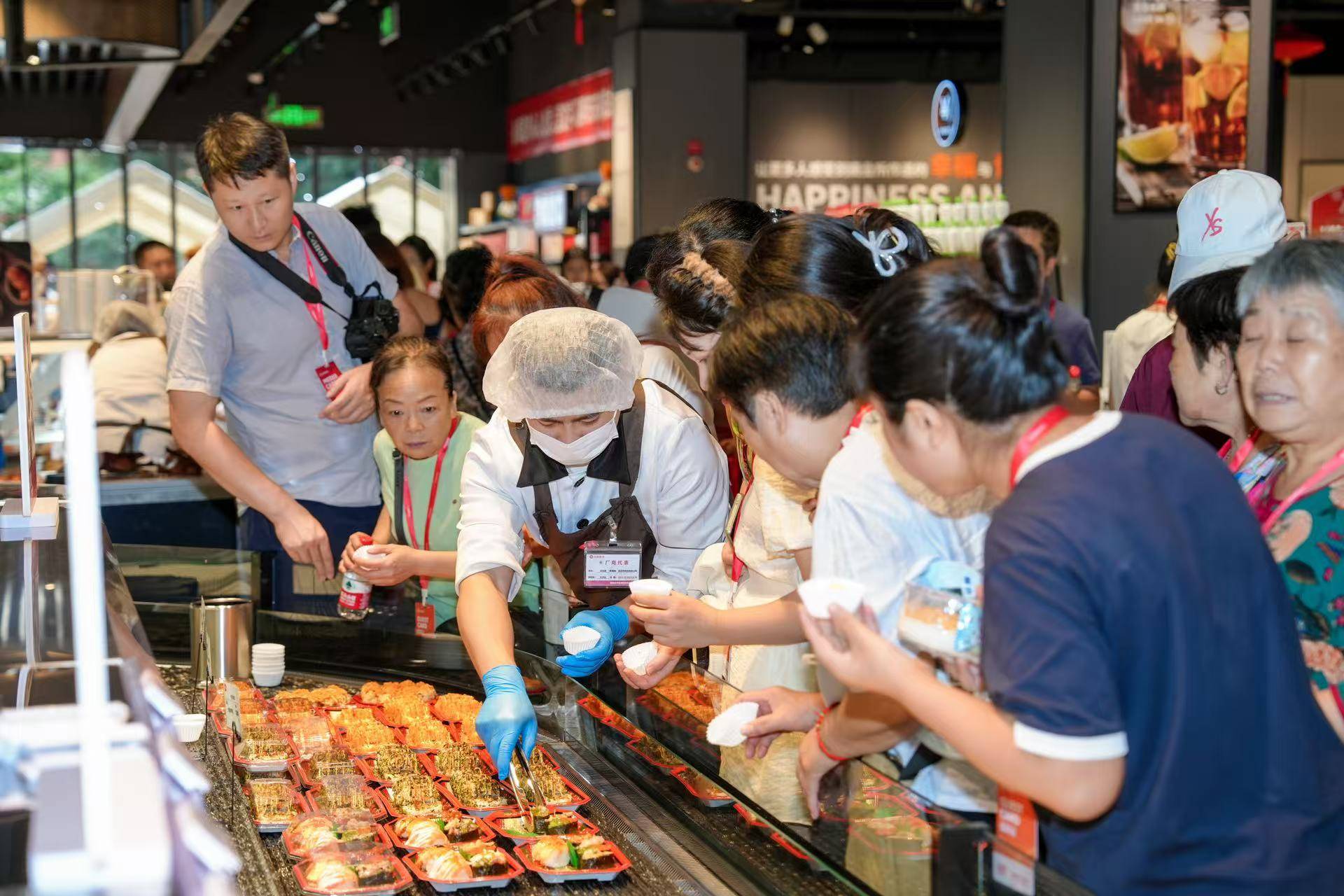
Core Viewpoint - The retail industry in Chongqing is undergoing a significant transformation focused on quality and expansion, with Yonghui Supermarket leading the way through innovative store formats and enhanced consumer experiences [1][12]. Group 1: Store Innovations - Yonghui Supermarket has launched four newly renovated stores in Chongqing within a month, adopting the "Pang Dong Lai" model to enhance product offerings and customer service [1][12]. - The new stores are strategically located in key urban areas, aiming to become quality living centers for local residents by providing convenient and high-quality shopping experiences [3][12]. Group 2: Product and Service Enhancements - The renovated stores have significantly increased the proportion of fresh and ready-to-eat products, introducing local specialties and seasonal seafood to cater to local tastes [3][5]. - The bakery section has become a highlight, featuring a variety of freshly baked goods that appeal to consumers, such as Swiss rolls and fruit tarts [5][9]. - The stores have implemented a "468 freshness principle" to ensure product quality, with dynamic pricing strategies to minimize inventory loss and offer fresh products at competitive prices [11]. Group 3: Customer Experience Improvements - Store layouts have been redesigned for better accessibility and comfort, with wider aisles and a more user-friendly arrangement of products [9][12]. - Enhanced customer services include facilities for health monitoring, pet care, and free product processing, which contribute to a more pleasant shopping experience [9][11]. Group 4: Employee Welfare and Community Impact - Employee compensation and benefits have been improved, fostering a positive work environment that translates into better customer service [11][12]. - The transformation of these stores is expected to stimulate local commerce, encouraging customers to engage in surrounding community businesses, thus enriching the local economy [12][15]. Group 5: Strategic Goals - Yonghui Supermarket aims to strengthen its presence in Chongqing as part of the city's development as an international consumption center, emphasizing quality retail to meet the needs of local families [15].

纺织服饰行业周报:体育服饰龙头稳增长,1-2月内需企稳
中国银河· 2025-03-26 05:30
Investment Rating - The report maintains a "Recommended" rating for the textile and apparel industry [1]. Core Insights - The leading domestic sports brands, including Anta Sports, Xtep International, and 361 Degrees, have shown resilient growth in 2024, with revenues of 70.826 billion, 13.577 billion, and 10.074 billion yuan respectively, reflecting year-on-year growth rates of 13.6%, 6.5%, and 19.6% [3][6]. - The retail sales of clothing in China for January-February 2025 reached 262.4 billion yuan, a year-on-year increase of 3.3%, indicating a steady recovery in consumer demand supported by favorable policies [7][15]. - The report anticipates a quarterly improvement in clothing consumption throughout 2025, driven by ongoing consumer policy support and the effects of a low base in 2024 [7][15]. Summary by Sections 1. Industry Overview - The textile and apparel industry is experiencing stable growth, with a focus on domestic consumption recovery in early 2025 [1]. 2. Key Industry Data Review (a) Stock Market Review - The Shanghai Composite Index fell by 1.6%, while the textile and apparel sector saw a decline of 1.29% during the week of March 17-21, 2025 [11][12]. (b) Retail Performance - The total retail sales of consumer goods in China for January-February 2025 amounted to 83,731 billion yuan, with clothing retail sales contributing 2,624 billion yuan [15]. (c) Upstream Textile Exports - In February 2025, textile yarn, fabric, and related products exported amounted to 6.219 billion USD, a year-on-year decrease of 25.3% [22]. (d) Upstream Raw Materials - As of March 21, 2025, the domestic cotton price index was 14,905 yuan per ton, showing a slight increase from the previous week [31][32]. 3. Key Company Announcements - Anta Sports, Xtep International, and 361 Degrees reported significant revenue growth for 2024, with net profits increasing by 52.4%, 20.2%, and 19.5% respectively [3][6].
