
消费培育

Search documents
万字详解:2026年酱酒行业发展趋势与应对丨争鸣
Sou Hu Cai Jing· 2026-01-13 10:16
Core Insights - The Chinese sauce liquor industry has transitioned from a phase driven by category dividends to a mature stage driven by quality and brand, with a competitive landscape characterized by "stability at the top, breakthroughs in the middle, and elimination at the bottom" as it approaches 2026 [2][32] - The long-term development logic of the sauce liquor industry remains unchanged, but the regional competition landscape and industrial ecology will undergo significant restructuring [2][32] Industry Characteristics - The core competitiveness of the sauce liquor industry stems from its unique brewing process and category attributes, which create high costs, long cycles, and strong barriers to entry, ensuring robust long-term development [3][6] - The industry has shown strong resilience against short-term market fluctuations and price adjustments, maintaining a solid fundamental performance [3] Capital Investment and Resource Constraints - Major players like China Resources, Fosun, and COFCO have invested approximately 20 billion yuan in the sauce liquor sector from 2018 to 2023, primarily in high-quality enterprises in the core production area of Moutai Town [5] - The core production area of the sauce liquor industry, the Chishui River Valley, is limited in land resources, with top enterprises occupying over 80% of the core area resources [5][6] Long-term Strategy and Innovation - Sauce liquor enterprises must adhere to long-termism, focusing on core advantages and building differentiated competitiveness to seize opportunities during industry transformations [4][32] - The industry is moving towards a model of integrated cooperation between manufacturers and distributors, emphasizing sustainable practices over short-term price subsidies [4][32] Pricing and Market Dynamics - The pricing structure of the sauce liquor industry is becoming more rational, with the main consumption focus shifting to the 100-300 yuan mid-range price segment, which is expected to dominate the market further in 2026 [12][14] - The high-end market above 600 yuan is limited, with Moutai dominating this segment, accounting for 90% of the market share [15][32] Regional Focus and Differentiation - The industry is shifting from a national expansion model to a focus on core regional markets, with three major core markets (Guizhou, Henan, Shandong) accounting for 45% of total sales [18][19] - There is a growing trend towards diversified production areas, with northern sauce liquor brands emerging as significant players, creating new growth opportunities [21][22] Organizational and Consumer Engagement - Companies need to build professional teams that align with the long-term development of the sauce liquor industry, emphasizing specialized skills in brewing, marketing, and operations [30][31] - Enhancing consumer engagement through localized marketing strategies and educational initiatives is crucial for building brand loyalty and market demand [31][32]


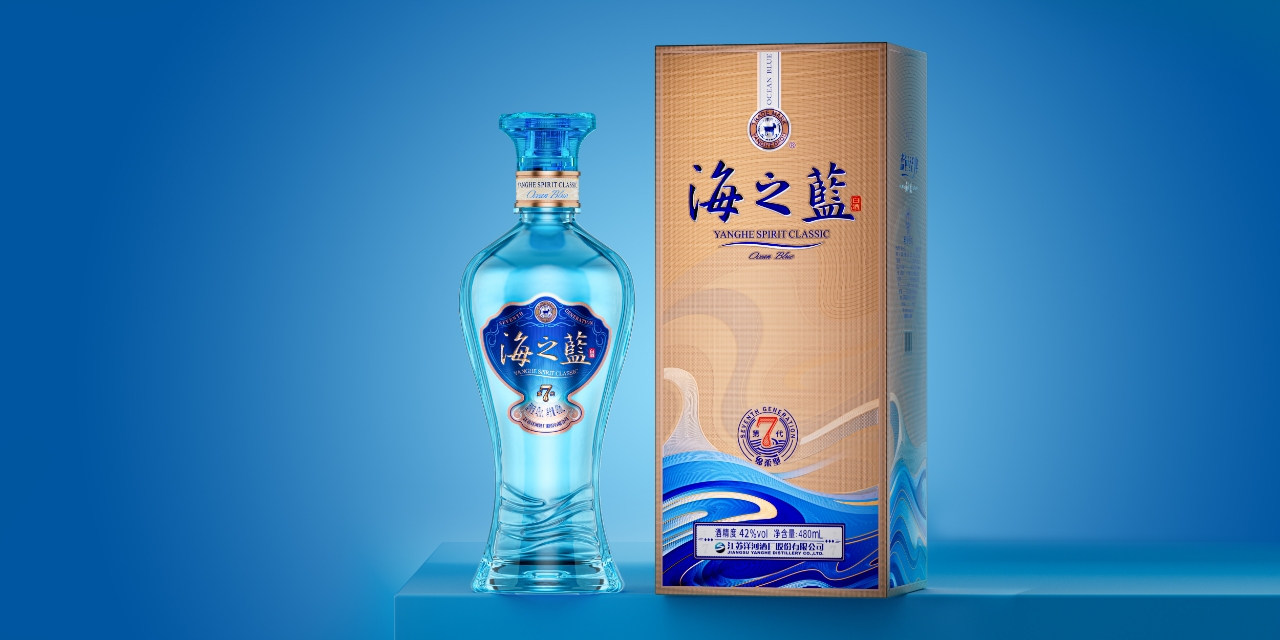
洋河半年报解码:中高档酒毛利率逆势上扬,年轻社交场里的“绵柔破局”
Zheng Quan Zhi Xing· 2025-08-26 02:45
Core Viewpoint - The liquor industry is undergoing a deep adjustment cycle, with leading companies facing significant pressure. In this context, Yanghe Co., Ltd. has reported revenue of 14.796 billion yuan and a net profit of 4.344 billion yuan in the first half of the year, demonstrating strategic resilience during the cycle [1] Group 1: Company Performance - Yanghe's revenue in Jiangsu, its home market, reached 7.12 billion yuan, accounting for nearly half of its total revenue [1] - The company has optimized its dealer system, enhancing efficiency and deepening market penetration both domestically and in external markets [1] - The seventh generation of Hai Zhi Lan has been upgraded, continuing its legacy of selling 10 million bottles annually, while the Dream Blue Handcrafted series has established itself in the high-end market with "true vintage" certification [1][6] Group 2: Strategic Focus - Yanghe is implementing a "Four Focus" strategy, concentrating on its leading brands, mid-range and next-high-end price segments, domestic markets, and core business [2] - The seventh generation of Hai Zhi Lan has been launched with an extended base liquor aging of over three years, enhancing its appeal in the consumer market [2] Group 3: Market Positioning - The Yanghe Daqu high-end light bottle series has shown strong competitive differentiation, selling over 10,000 bottles within 48 hours of its pre-sale on JD.com [4] - Tian Zhi Lan has become a benchmark product in the mid-range segment, penetrating key scenarios such as business banquets and wedding gifts [6] Group 4: Consumer Engagement - Yanghe is focusing on consumer insights and long-term value, aligning its products with the emotional values of younger consumers through various activities [7] - The company has launched events like the Tian Zhi Lan Fun Run and the "Super Fan Festival" to engage younger demographics and enhance brand interaction [7] Group 5: Inventory and Supply Chain Management - Yanghe has proactively slowed its operational pace to alleviate pressure on dealers and reduce inventory, resulting in a 33.96% year-on-year decrease in white liquor inventory [8] - The company maintains a robust base liquor reserve of 70,000 cellars and 700,000 tons of original liquor, supporting its product quality claims [8]

聚焦主导产品与重点市场 洋河股份推动公司长期价值回归
Zhong Zheng Wang· 2025-08-22 09:01
Core Viewpoint - Yanghe Co., Ltd. reported a decline in both revenue and net profit for the first half of 2025, reflecting ongoing pressure in the liquor industry and intensified competition [1] Group 1: Financial Performance - The company achieved revenue of 14.796 billion yuan and a net profit of 4.344 billion yuan in the first half of 2025, both showing a year-on-year decline [1] - The liquor industry is experiencing a sustained downturn, with increasing competition and a trend towards industry consolidation and differentiation [1] Group 2: Strategic Focus - Yanghe Co. aims for long-term and rational development, focusing on core products and key markets while enhancing quality and brand reputation [2][3] - The company is implementing strategies to stabilize prices and reduce inventory for its main products, such as Meng Liu+ and Hai Zhi Lan, while launching the seventh generation of Hai Zhi Lan in Jiangsu [2] Group 3: Product and Consumer Engagement - Yanghe Co. is enhancing product quality by upgrading its offerings like Hai Zhi Lan and applying advanced brewing techniques, evidenced by its success in the national sommelier competition [3] - The company is actively engaging with consumers through various events and campaigns to strengthen brand loyalty and enhance interaction with younger demographics [3][4] Group 4: Brand and Channel Development - Despite facing cyclical adjustments, Yanghe Co. believes in the long-term value of the liquor industry and is committed to brand and channel development [4] - The company plans to deepen its brand culture and optimize advertising strategies, utilizing AI to enhance effectiveness [4][5] Group 5: Market Strategy - Yanghe Co. is focusing on the Jiangsu market, which is highly competitive, while also planning to expand strategically in other regions like the Yangtze River Delta [5] - The company aims to enhance its market share through targeted consumer engagement and digital tools, while also improving its distribution network [5]