消费观

Search documents
高人预测:今年春节后,社会上出现这4大“变化”,太真实了!
Sou Hu Cai Jing· 2026-02-17 23:35
Group 1 - The first change indicates that job security for workers is becoming more challenging, yet skilled labor is increasingly valuable. The overall employment situation remains stable, with an expected 12.67 million new urban jobs in 2025 and an average unemployment rate of around 5.2% [5][11]. However, the number of college graduates is at a record high, with over 12 million expected in 2026, leading to intense competition for entry-level positions [7]. Conversely, there is a persistent labor shortage in skilled trades, with higher salaries compared to typical white-collar jobs [9][13]. Group 2 - The second change reflects a shift in consumer behavior towards more prudent spending. During the 2026 Spring Festival, over half of the population opted for "moderate consumption," prioritizing savings while still maintaining essential spending for family gatherings and necessary purchases [17][20]. The government has also introduced initiatives to stimulate consumption, such as subsidies and vouchers for various sectors [20]. Group 3 - The third change highlights a trend of increasing divorce rates post-Spring Festival, as couples confront economic pressures and communication issues that become apparent during family gatherings. The normalization of divorce procedures and a shift in marriage perspectives, particularly among women valuing quality of life, contribute to this trend [22][28][26]. Group 4 - The fourth change indicates a decline in the traditional "return home" phenomenon during the Spring Festival, as many individuals find employment opportunities closer to home. The development of local economies and the financial benefits of staying in urban areas during the holiday season are influencing this trend [30][33][35].


零花钱总是不够 如何化解矛盾与孩子直面“谈钱”?
Bei Jing Qing Nian Bao· 2025-12-10 00:30
Core Viewpoint - Financial literacy education is essential for children, helping them establish a correct view of consumption and money management that will benefit them throughout their lives [1][2]. Group 1: Financial Literacy Education - Financial literacy education should start with managing pocket money, where parents can set an appropriate amount based on family circumstances and the child's age, establish a regular distribution cycle, and review spending habits together [1]. - Children should be encouraged to manage their desires and make rational purchasing decisions, distinguishing between wants and needs, and comparing prices to assess value for money [1][2]. Group 2: Financial Planning and Investment - Children should be guided to read age-appropriate financial books to develop an understanding of financial planning, and parents can share their experiences to illustrate the relationship between consumption, saving, and investment [2]. - Pocket money can be divided into spending, saving, and investing, with parents introducing children to various investment options like savings accounts, government bonds, insurance, and stocks [2]. Group 3: Philanthropy and Giving - Encouraging children to donate a portion of their pocket money to help those in need can foster a sense of joy and responsibility, while also teaching them to discern genuine needs and decide how much to donate [2]. Group 4: Long-term Process - Financial literacy education is a long-term process that requires children to practice money management, learn from their experiences, and gradually build a solid foundation for their future financial lives [2].
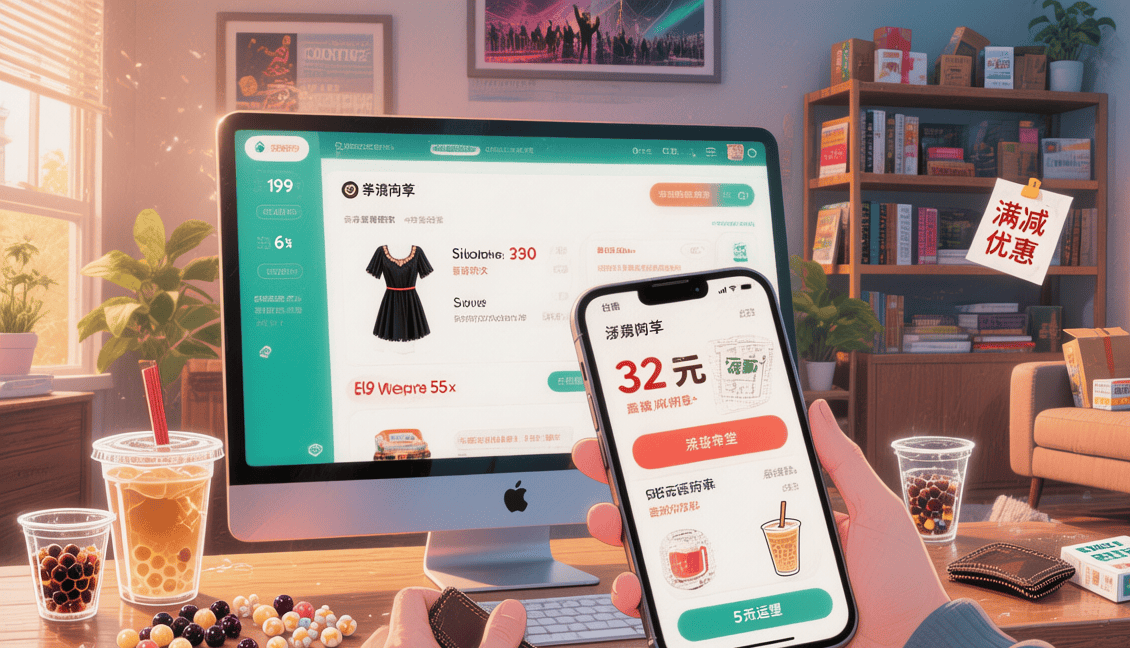
人间真实时刻: 我的消费观:30一杯奶茶可以,5块钱运费不行。
Sou Hu Cai Jing· 2025-11-18 15:42
Group 1 - The article highlights consumer behavior regarding small expenses and the tendency to avoid perceived unnecessary costs while making larger purchases [2][3][4][5] - It illustrates various scenarios where consumers prioritize saving on minor fees, such as delivery charges or packaging costs, even when it leads to higher overall spending [2][3][4][5] - The narrative emphasizes the contrast between spending on experiences or items deemed valuable versus being frugal on smaller, seemingly trivial expenses [3][4][5] Group 2 - The article presents a series of anecdotes that reflect common consumer dilemmas, showcasing how individuals often overthink minor costs while being willing to spend significantly on other items [2][3][4][5] - It suggests that these behaviors are relatable and reflect a broader trend in consumer psychology, where the perception of value influences spending decisions [2][3][4][5] - The humorous tone of the anecdotes serves to engage readers and encourage them to reflect on their own spending habits and experiences [5]
超前消费、活在当下,坑了多少欧美人
Hu Xiu· 2025-08-19 09:38
Group 1 - The article discusses the lack of financial awareness and responsibility within a family, particularly focusing on the author's sister-in-law's spending habits and the influence of family upbringing on financial behavior [4][5][6][10]. - It highlights that the father of the author's sister-in-law is disinterested in family finances, which has contributed to a lack of financial literacy among the children [7][9][10]. - The author notes that discussions about frugality and financial planning are absent in family conversations, leading to a culture of excessive spending and a lack of critical evaluation of purchases [21][22][24]. Group 2 - The article points out that the culture of consumerism in Germany encourages young people to live in the moment, often leading to financial difficulties due to easy access to loans and credit [36][56]. - It explains how the structure of loans, particularly in housing, can create a false sense of affordability, resulting in significant financial burdens later on [48][50]. - The author emphasizes that without financial education and awareness, individuals are prone to falling into debt traps created by a consumer-driven society [60][61]. Group 3 - The article contrasts the financial attitudes of different generations, noting that older generations often emphasize frugality and saving, while younger generations may prioritize immediate gratification [61][72]. - It suggests that traditional values of hard work and saving can lead to financial success, as seen in the experiences of the author's family [70][71]. - The author concludes that a balanced approach to spending and saving is essential, advocating for enjoying life while also being mindful of financial responsibilities [73][74].

看完小米新闻,我有三个消费建议
Sou Hu Cai Jing· 2025-05-14 22:21
Core Viewpoint - The article discusses recent negative news surrounding Xiaomi, particularly focusing on the controversy regarding the SU7 model's horsepower and the quality of its carbon fiber hood, while also presenting a consumer perspective to avoid pitfalls in purchasing decisions [3][5][7]. Group 1: Xiaomi's Recent Controversies - The SU7 model initially advertised a maximum horsepower of 1548, but Xiaomi later restricted it to 900, leading to customer dissatisfaction and questions about price adjustments [3][5]. - The carbon fiber hood of the SU7 faced scrutiny after automotive bloggers revealed that the design was flawed and the production cost was significantly lower than the retail price, raising concerns about value for money [5][7]. Group 2: Consumer Perspective - The article emphasizes the importance of purchasing from established brands, citing examples like a well-known computer brand and Apple, which have proven reliability over time [8]. - It suggests avoiding brands that overly hype their product launches, as this may indicate insecurity about the product's quality [10][13]. - The article warns against brands with overly zealous fanbases that do not tolerate criticism, as this can hinder the brand's ability to improve and protect consumer rights [15][16].