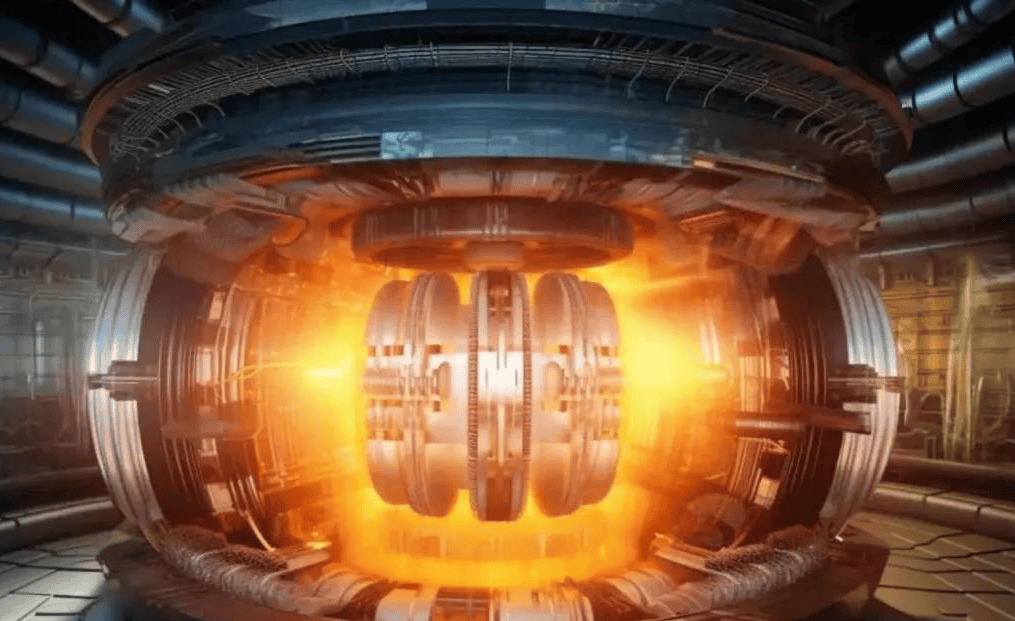
燃烧等离子体

Search documents
中国“点燃”全球聚变合作新火种
Xin Hua She· 2025-11-27 02:18
Core Insights - The article highlights the global collaboration in fusion energy research, particularly through China's BEST project, which aims to advance the development of fusion energy as a clean and sustainable power source [1][2][3] Group 1: Global Collaboration in Fusion Research - The Chinese Academy of Sciences has launched an international scientific program focused on "burning plasma," allowing global scientists to access advanced fusion energy experimental facilities, including BEST [1][2] - The BEST device is designed to achieve high fusion power output, with goals of producing between 20 megawatts and 200 megawatts, demonstrating energy output exceeding energy input [3] Group 2: Scientific Advancements and Future Goals - The focus on "burning plasma" represents a critical phase in fusion research, where the heat generated from the fusion reaction itself sustains the process, essential for continuous energy production [2][3] - The BEST project is seen as a significant step forward, with its compact high-field technology enabling higher fusion power in a smaller volume, marking a new stage in China's fusion research [2][3] Group 3: International Support and Commitment - Experts from various countries, including France, the UK, and Germany, have expressed strong support for the BEST initiative, emphasizing its potential as a model for global scientific cooperation [3][4] - The signing of the "Hefei Fusion Declaration" by international scientists underscores a commitment to open collaboration and shared goals in fusion research, reflecting a collective effort to address global energy challenges [3][4]
【新华社】中国“点燃”全球聚变合作新火种
Xin Hua She· 2025-11-26 02:48
Core Insights - The "Hefei Fusion Declaration" was signed by fusion scientists from over ten countries, marking a commitment to global collaboration in fusion energy research [2][6] - The Chinese Academy of Sciences announced the opening of multiple leading fusion energy experimental facilities, including the BEST device, to international researchers [4][5] Group 1: Scientific Collaboration - The international scientific plan launched is timely, as nuclear fusion is seen as a potential "ultimate energy" source due to its clean and abundant fuel derived from seawater [4] - Richard Kamenje, from the EU Fusion Energy Commission, emphasized the necessity for global collaboration to address energy challenges [4][6] - The focus on "burning plasma" is crucial, as it represents a new phase in fusion research, with China aiming to achieve significant advancements in this area [4][5] Group 2: BEST Device Development - The BEST device utilizes compact high-field technology to achieve higher fusion power in a smaller volume, with its first key component successfully installed [5] - The goal for the BEST device is to conduct deuterium-tritium burning plasma experiments, aiming for fusion power output between 20 megawatts and 200 megawatts [5] - International experts expressed optimism about participating in the BEST research plan, viewing it as an exemplary model of global cooperation [5][6] Group 3: Global Scientific Ecosystem - The Hefei Fusion Declaration promotes an open and collaborative spirit among nations, encouraging researchers to engage in fusion studies in China [6] - The initiative reflects a broader call for a new ecosystem where humanity collectively addresses scientific challenges [6] - The emphasis on science as a driver of peace highlights China's commitment to advancing global scientific goals for the benefit of all [6]


【新华社】携手全球点亮能源未来!中国发布燃烧等离子体国际科学计划
Xin Hua She· 2025-11-25 02:47
Core Insights - The "Burning Plasma" International Scientific Program initiated by the Chinese Academy of Sciences aims to collaborate globally on fusion energy research, including the compact fusion energy experimental device BEST [1][2] - The program will establish an open research fund, facilitate expert exchanges, and create joint experimental platforms to tackle frontier issues in fusion physics [1] - The initiative is supported by scientists from over ten countries, promoting a spirit of open sharing and cooperation in fusion research [1] Group 1 - The BEST device is positioned as China's next-generation "artificial sun," focusing on deuterium-tritium burning plasma experiments to achieve a fusion power output between 20 megawatts and 200 megawatts [3] - The project aims to demonstrate energy output exceeding energy consumption, which is crucial for future sustainable power generation [3] - The research will enter a new phase of burning plasma, which is essential for maintaining fusion reactions through heat generated by the reaction itself [2] Group 2 - The Chinese Academy of Sciences has established stable collaborations with over 120 research institutions across more than 50 countries, enhancing its role in global fusion research [1] - The initiative is expected to face numerous engineering and physical challenges, marking a significant exploration into uncharted territories of fusion energy [2] - The program's launch is seen as a way to leverage China's superconducting tokamak team's advantages while gathering global scientific expertise to overcome fusion challenges [2]
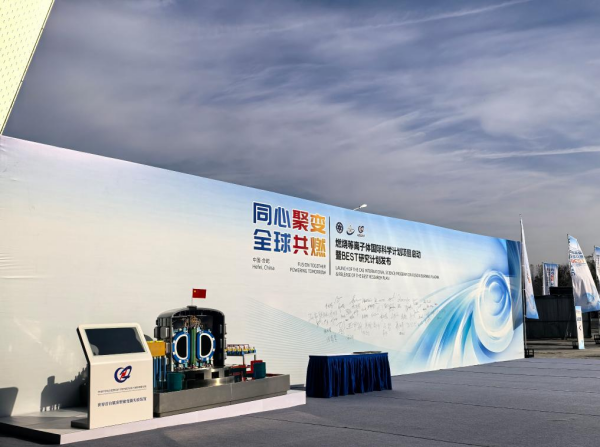
点燃人造太阳:下一代能源的中国时刻
Sou Hu Cai Jing· 2025-11-24 13:31
Core Viewpoint - The article discusses China's advancements in nuclear fusion technology, particularly the construction of the BEST facility in Hefei, which aims to achieve self-sustaining plasma burning and contribute to the global energy landscape through nuclear fusion as a clean and abundant energy source [3]. Group 1: Nuclear Fusion Technology - Nuclear fusion mimics the sun by fusing light atomic nuclei into heavier ones, releasing significant energy, and is considered the "ultimate energy" due to its abundant fuel, low carbon emissions, and safety [3]. - The BEST facility aims to ignite "burning plasma" in a laboratory setting, targeting a fusion power output of 20 to 200 megawatts, with the goal of achieving energy output greater than energy input [3]. Group 2: International Collaboration - The new international scientific initiative openly shares the research blueprint of BEST with global peers, transforming it into a "shared laboratory" for top experimental setups [3]. - The initiative includes an open fund, expert exchanges, and a joint experimental platform, with scientists from over ten countries, including France, the UK, and Germany, signing the "Hefei Fusion Declaration" [3]. Group 3: China's Leadership in Fusion Research - China has transitioned from a "follower" to a "leader" in key areas of nuclear fusion research, having set multiple world records in plasma temperature and confinement time [3]. - The article emphasizes that global fusion research is moving from theoretical concepts to essential energy strategies, with China actively shaping the technological standards and collaborative ecosystem in this new field [3].

“人造太阳”研究加速!我国启动聚变领域国际科学计划
Huan Qiu Wang Zi Xun· 2025-11-24 10:39
Core Insights - The Chinese Academy of Sciences has officially launched the "Burning Plasma International Science Program" and announced the global research plan for the compact fusion energy experimental device BEST, with scientists from over ten countries signing the "Hefei Fusion Declaration" to promote the development of "artificial sun" fusion energy [1][3]. Group 1: Fusion Energy Development - The concept of "artificial sun" refers to creating controllable nuclear fusion conditions on Earth by simulating the energy release from hydrogen nuclei fusing into helium in the sun, aiming to provide clean, safe, and unlimited energy for future human development [1]. - Fusion energy is viewed as the ultimate direction for future clean energy, with current advancements in international thermonuclear experimental reactors and devices like BEST marking a new phase in fusion research [1]. Group 2: International Collaboration - The challenge of achieving burning plasma physics under strong magnetic confinement in tokamaks, specifically utilizing deuterium-tritium fusion, is recognized as a significant hurdle that requires global scientific collaboration to address the scientific and engineering issues faced by fusion energy [3]. - China is acknowledged as one of the leading countries in the field of fusion and a key partner in the International Thermonuclear Experimental Reactor (ITER) project, with deepening cooperation between China and Europe being crucial for advancing fusion science [5]. Group 3: Research Partnerships - China has established stable collaborations with over 120 research institutions from more than 50 countries, leveraging major scientific platforms like the fully superconducting tokamak EAST, and actively participating in the ITER project to contribute to global fusion research [7].
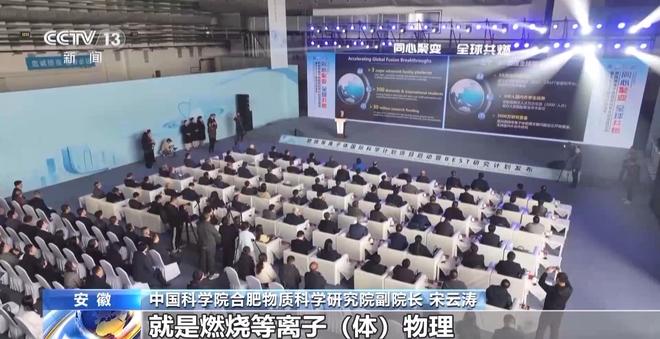
我国发布燃烧等离子体国际科学计划
Xin Hua She· 2025-11-24 09:27
Core Viewpoint - The "International Scientific Program on Burning Plasma" initiated by the Chinese Academy of Sciences aims to open multiple leading fusion energy experimental devices, including the compact fusion energy experimental device BEST, to global collaboration in addressing scientific challenges and advancing clean energy solutions [2]. Group 1 - The program will provide access to several nuclear fusion large scientific device platforms, including the establishment of an open research fund and support for frequent expert exchanges [2]. - The initiative encourages researchers from various countries to conduct fusion research in China, as highlighted by the signing of the "Hefei Fusion Declaration" by fusion scientists from over ten countries [2]. - China's fusion research has accelerated in recent years, breaking multiple world records, with the Plasma Physics Research Institute being a key player in the international ITER project and maintaining stable collaborations with over 120 research institutions across more than 50 countries [2].
赌上国运的技术!中国核聚变突破403秒大关,全球能源洗牌倒计时!
Sou Hu Cai Jing· 2025-08-05 07:19
Core Insights - The recent achievement of sustaining nuclear fusion for 403 seconds by the EAST project in China marks a significant milestone towards harnessing clean energy through controlled nuclear fusion [2][3][5] - This breakthrough mimics the energy production of stars, utilizing nuclear fusion, which combines atomic nuclei under extreme conditions to release vast amounts of energy [2][3] - The potential of nuclear fusion as a clean energy source could revolutionize the global energy landscape, making energy production cheaper and more sustainable, thus eliminating reliance on fossil fuels [5] Summary by Sections Nuclear Fusion Technology - Nuclear fusion involves combining atomic nuclei at extremely high temperatures, starting from over a hundred million degrees Celsius, to release energy [3] - The EAST project has successfully contained a superheated plasma within a magnetic confinement system, achieving stability for 403 seconds, which is crucial for future continuous energy output [3] Implications for Energy Production - The successful containment of plasma for extended periods is a critical step towards achieving sustainable nuclear fusion energy, which could lead to a new era of clean energy [3][5] - If the challenges of maintaining a self-sustaining plasma state are overcome, it could unlock a virtually limitless source of clean energy, fundamentally changing energy consumption and production [5] Future Prospects - The achievement of 403 seconds is seen as a precursor to further advancements in nuclear fusion technology, with the potential to significantly extend burn times and increase power output [3][5] - The implications of successful nuclear fusion technology could lead to a dramatic shift in energy costs and environmental impact, making current energy sources like coal and oil obsolete [5]