理财产品收益

Search documents
同业存单净融资连续三月为负 现金管理类理财收益持续下降
Sou Hu Cai Jing· 2026-02-03 13:39
Core Viewpoint - The banking sector is experiencing a significant contraction in interbank liabilities, with a notable decline in net financing of interbank certificates of deposit (CDs) among major state-owned and joint-stock banks, indicating a shift in liquidity dynamics [1] Group 1: Interbank Liabilities - Major state-owned and joint-stock banks have reported negative net financing in interbank CDs for three consecutive months, with the negative values expanding each month [1] - The issuance rate of interbank CDs has been continuously declining, reaching approximately 1.59% by the end of January [1] Group 2: Contributing Factors - Improvements in deposit levels, ongoing support for liquidity from the central bank, and a slower pace of credit issuance are contributing to the reduced marginal dependence on interbank liabilities [1] - The banking system is characterized by a state of "ample liquidity," which is influencing bond markets and the yields of wealth management products [1]
同业存单净融资连续三月为负,现金管理类理财收益持续下降
Di Yi Cai Jing· 2026-02-03 12:48
Core Viewpoint - The continuous negative net financing of interbank certificates of deposit (CDs) and declining interest rates are strengthening the bond market while suppressing the yields of wealth management products. Group 1: Interbank CD Financing - The net financing of interbank CDs for state-owned and joint-stock banks has been negative for three consecutive months, with negative values expanding each month, indicating that the maturity amount exceeds the new issuance scale [1][2] - The decline in reliance on interbank liabilities is attributed to improved deposit conditions, sustained liquidity support from the central bank, and a slower pace of credit issuance [1][4] Group 2: Interest Rate Trends - The issuance interest rate of interbank CDs has decreased, with the one-year rate dropping to approximately 1.59% by the end of January 2026, down from 2.03% in November 2025 [2] - Short-term interbank CD rates have seen a more significant decline, reflecting reduced demand for medium and short-term funds and reinforcing expectations of a loose funding environment [3] Group 3: Factors Driving Changes - The stability of deposits has significantly improved, with a notable increase in personal fixed deposits and overall deposit growth outpacing loan issuance [5] - The central bank has increased liquidity support, conducting a net injection of over 1 trillion yuan in January 2026 through various tools, alleviating pressure on banks to rely on high-cost interbank CDs for financing [6] - The pace of credit issuance has been slow, with weak demand for corporate financing reflected in low bill rates, further reducing the motivation for banks to supplement liabilities through interbank CDs [7] Group 4: Market Impacts - The "abundant liquidity" environment supports the bond market, with declining interbank CD rates providing a crucial anchor for bond yields [8] - The decline in funding costs for banks enhances their willingness to allocate to bonds, with net financing in the bond market reaching 20.33 trillion yuan in 2025, a year-on-year increase of 31.8% [8] - Wealth management product yields are under pressure due to the decline in interbank CD rates, with cash management products seeing a decrease in annualized yields to 1.27% as of January 25, 2026 [9]
33.29万亿元!历史新高
中国基金报· 2026-01-24 13:09
Core Insights - The scale of bank wealth management reached a historical high of 33.29 trillion yuan by the end of 2025, marking an increase of 11.15% from the beginning of the year [5] - In 2025, wealth management products generated a total return of 730.3 billion yuan for investors, reflecting a growth of 2.87% compared to the previous year [3][14] Group 1: Market Overview - By the end of 2025, there were 136 banks and 32 wealth management companies that launched a total of 33,400 new wealth management products, raising 76.33 trillion yuan [5] - The total number of existing wealth management products reached 46,300, an increase of 14.89% from the start of the year [5] Group 2: Product Types - Fixed income products accounted for 97.09% of the total wealth management product scale, with a total size of 32.32 trillion yuan, which decreased by 0.24 percentage points from the beginning of the year [8][9] - Mixed products saw an increase in their share, reaching 2.61% with a total size of 0.87 trillion yuan, up by 0.17 percentage points [8][9] Group 3: Asset Allocation - As of the end of 2025, the asset allocation of wealth management products remained predominantly in fixed income, with investments in bonds, non-standardized debt assets, and equity assets amounting to 18.52 trillion yuan, 1.82 trillion yuan, and 0.66 trillion yuan respectively [12] - The proportion of assets allocated to public funds increased to 5.1%, up by 2.2 percentage points from the previous year [12] Group 4: Investor Growth - The number of investors holding wealth management products reached 143 million by the end of 2025, a growth of 14.37% from the beginning of the year [15] - Among these, the number of individual investors increased by 17.69 million, while institutional investors grew by 310,000 [15] Group 5: Distribution Channels - In 2025, wealth management companies expanded their distribution channels beyond their parent banks, with 31 out of 32 companies offering products through other banks [18] - A total of 593 institutions engaged in cross-bank distribution of wealth management products by December 2025, an increase of 31 from the start of the year [18]


报告:2025年,理财产品平均收益率为1.98%
Sou Hu Cai Jing· 2026-01-23 09:48
Core Insights - The report indicates that in 2025, a total of 136 banking institutions and 32 wealth management companies launched 33,400 new wealth management products, raising a total of 76.33 trillion yuan [2] - By the end of 2025, there were 159 banking institutions and 32 wealth management companies with active wealth management products, totaling 46,300 products, an increase of 14.89% from the beginning of the year [2] - The total scale of active products reached 33.29 trillion yuan, reflecting an increase of 11.15% year-on-year [2] - Wealth management products generated a total return of 730.3 billion yuan for investors in 2025, representing a growth of 2.87% compared to the previous year [2] - Banking institutions contributed 113.2 billion yuan to investor returns, while wealth management companies accounted for 617.1 billion yuan [2] - The average yield of wealth management products in 2025 was 1.98% [2]

三季度理财产品累计为投资者创造收益1792亿元
Xin Lang Cai Jing· 2025-10-23 07:34
Core Insights - The report indicates that the total returns generated by wealth management products for investors reached 568.9 billion yuan in the first three quarters of 2025 [1] - In the third quarter alone, wealth management products generated returns of 179.2 billion yuan, with banks contributing 28.3 billion yuan and wealth management companies contributing 150.9 billion yuan [1] Summary by Category Overall Market Performance - Total returns from wealth management products for the first three quarters of 2025 amounted to 568.9 billion yuan [1] - In the third quarter, the cumulative returns were 179.2 billion yuan [1] Contributions by Institutions - Banks generated a total of 28.3 billion yuan in returns for investors during the third quarter [1] - Wealth management companies were responsible for generating 150.9 billion yuan in returns in the same period [1]
上半年理财收益率降至2.12%,二季度新增千万投资者
Di Yi Cai Jing· 2025-07-29 11:29
Core Insights - The average annualized return of wealth management products in the first half of the year was 2.12%, down 68 basis points from 2.8% in the same period last year [1][5] - The total scale of the wealth management market reached 30.67 trillion yuan, with a year-to-date increase of 720 billion yuan [2][3] - The number of investors holding wealth management products increased by over 8% to 136 million, with a significant influx of new investors in the second quarter [4][5] Wealth Management Market Overview - As of June 30, 2025, there were 194 banks and 32 wealth management companies offering 41,800 products, with a total scale of 30.67 trillion yuan, which is 3.72 trillion yuan less than the public fund scale [2] - The wealth management market's growth rate has slowed, with a year-to-date increase of 2.38% and a year-on-year increase of 7.53% [2][3] - The wealth management companies' product scale reached 27.48 trillion yuan, accounting for 89.6% of the total market, reflecting a 1.8 percentage point increase from the beginning of the year [3] Investor Behavior and Preferences - The number of personal investors increased by 10.29 million in the first half of the year, with a notable shift in risk appetite towards higher-risk products [4][5] - The average annualized return for wealth management products was 2.12%, with a total of 389.6 billion yuan generated for investors, marking a 14.18% increase from the previous year [5] - The proportion of low-risk and high-risk investors has shown a contrasting trend, indicating a shift in investor sentiment [5] Product Structure and Trends - Cash management products have seen a significant decline, with a scale reduction of nearly 1 trillion yuan, attributed to low yields and regulatory constraints [7][8] - As of June 30, 2025, the scale of fixed-income products was 29.81 trillion yuan, accounting for 97.20% of the total, while mixed and equity products saw slight increases [8][9] - The trend towards longer-term products is evident, with over 72.86% of closed-end products having a duration of more than one year [10] Asset Allocation Strategies - Wealth management products have increased their allocation to public funds, cash, and deposits, while reducing exposure to credit bonds [11][12] - The total investment assets of wealth management products reached 32.97 trillion yuan, with a significant increase in cash and bank deposits [11] - The allocation to public funds rose to 1.38 trillion yuan, reflecting a growing preference for high liquidity assets [12]
6月破净率创新低,权益类平均涨超10%
2 1 Shi Ji Jing Ji Bao Dao· 2025-07-29 06:52
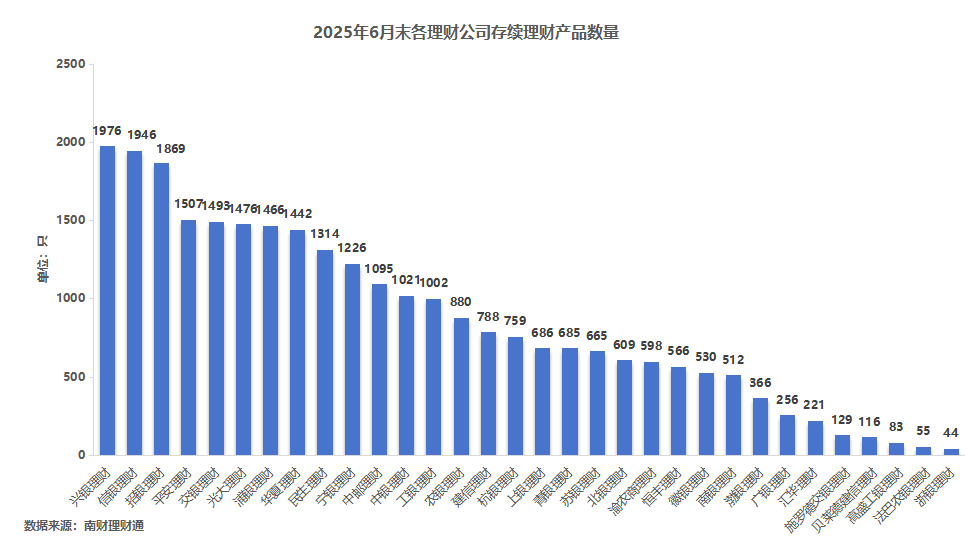
Core Insights - The performance of equity products was the best in the first half of the year, while fixed income products performed the worst [1][3] - The overall number of existing wealth management products reached 27,381, with a significant majority being fixed income products [1][12] - The average net value growth rate for equity products was 5.82%, while fixed income products had a much lower average growth rate of 1.26% [3][10] Product Distribution - As of June 30, 2025, 72.97% of existing wealth management products were rated as medium-low risk (Level 2), followed by medium risk (Level 3) at 12.22% and low risk (Level 1) at 12.11% [1] - Fixed income products dominated the investment nature, accounting for 92.55% of the total, while equity products only made up 0.55% [1] Performance Analysis - Equity products experienced a significant rebound in the A-share and Hong Kong stock markets, leading to their strong performance in the first half of the year [3][12] - Fixed income products showed the lowest performance, with an average maximum drawdown of only 0.19%, indicating their stability despite lower returns [3][6] Company-Specific Insights - The top three wealth management companies by the number of existing products were Xingyin Wealth Management (1,976 products), Xinyin Wealth Management (1,946 products), and Zhaoyin Wealth Management (1,869 products) [1][18] - The highest average net value growth rate for fixed income products was recorded by Su Yin Wealth Management at 1.61% [10] Break-even Rate Trends - The break-even rate for wealth management products reached a new low by the end of June 2025, with nine companies reporting a break-even rate of 0% [12][16] - The break-even rate for fixed income products decreased to 0.17%, while mixed products had a break-even rate of 5.58% [16][18]
上半年理财产品发行量同比增幅超40%,短期限开放式成发力方向
2 1 Shi Ji Jing Ji Bao Dao· 2025-07-28 07:29
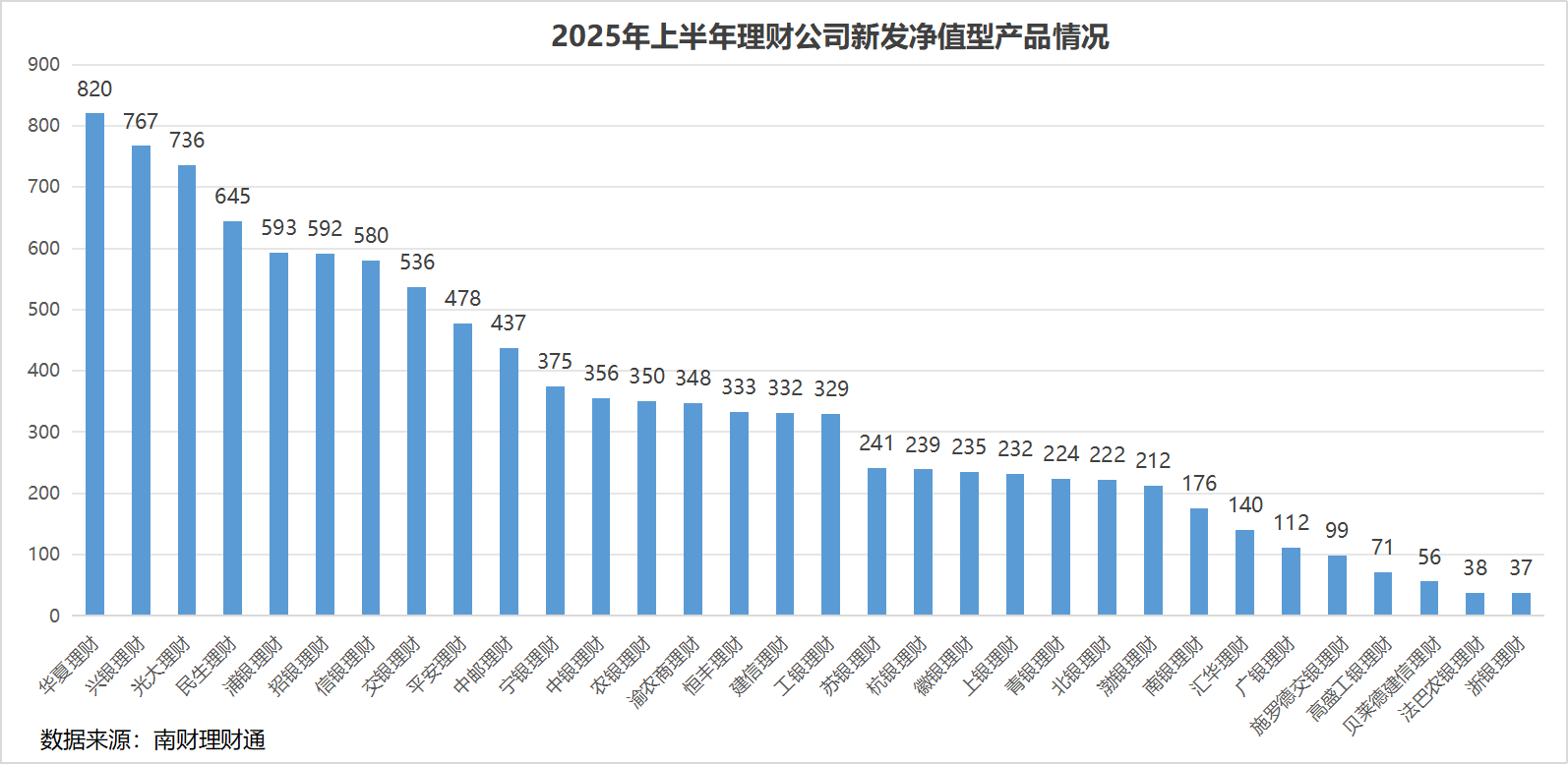
Core Insights - In the first half of 2025, banks lowered deposit rates, enhancing the attractiveness of wealth management products, leading to a significant shift of funds from deposits to these products [1][2] - The issuance of net value-based wealth management products increased by over 40% year-on-year, with 10,941 products launched by 32 companies compared to 7,805 in the first half of 2024 [1][2] - The product structure is shifting towards multi-asset and multi-strategy approaches, with a notable increase in the issuance of mixed and equity products [4][5] Product Issuance - The number of newly issued products reached 10,941, with a year-on-year increase of over 40% [2] - Leading issuers include Huaxia Wealth Management with 820 products, followed by Xingyin Wealth Management and Everbright Wealth Management, each exceeding 700 products [2] - The majority of new products are public offerings, accounting for approximately 90.6%, while private offerings make up 9.4% [4] Investment Characteristics - Fixed-income products represent 97.4% of the total, a slight decrease of 0.9 percentage points year-on-year, while mixed and equity products have seen an increase in issuance [4] - The proportion of closed-end net value products has dropped significantly to 59.9%, while open-end products have risen to 40% [4] - Short-term products (less than one month) now account for 22.2% of new issuances, up 5.5 percentage points from the previous year [4] Pricing Trends - The performance benchmark for wealth management products has been on a downward trend, with one-month products dropping below 2%, recorded at 1.88% in June 2025 [7][8] - The pricing for products with longer durations has also decreased, with two to three-year products falling to 2.71% and three-year products below 2.5% [7][8] Fundraising Dynamics - The total fundraising for newly issued products in the first half of 2025 was approximately 17,579.06 billion yuan, with an average fundraising size of 2.69 million yuan, down 13.5% from 3.11 million yuan in the same period of 2024 [8][9] - Only one product exceeded 100 billion yuan in fundraising, the "Anying Xiang Fixed Income Stable Profit 14-Month Series" from Xinyin Wealth Management [9][11] - The competition for fundraising has intensified, with the top ten products raising a total of 823.2 billion yuan, a year-on-year increase of 24.88% [9]
金溢科技:预计2025年上半年净利润亏损900万元–1200万元
news flash· 2025-07-14 12:31
Group 1 - The company, Jin Yi Technology (002869), expects a net profit loss attributable to shareholders of 9 million to 12 million yuan for the period from January 1, 2025, to June 30, 2025, compared to a profit of 15.56 million yuan in the same period last year [1] - The net profit loss after deducting non-recurring gains and losses is expected to be between 18 million to 21 million yuan, while the previous year's figure was a profit of 2.61 million yuan [1] - The basic earnings per share are projected to be a loss of 0.05 to 0.07 yuan per share, down from a profit of 0.09 yuan per share in the same period last year [1] Group 2 - During the reporting period, the company completed the acquisition of 100% equity in Che Lu Tong Technology (Chengdu) Co., Ltd., which will be included in the company's consolidated financial statements starting from May 1, 2025 [1] - The decline in performance is primarily attributed to intensified industry competition, a decrease in the selling prices of certain products, pressure on overall gross profit margins, and reduced income from financial products [1]