
生成式智能

Search documents
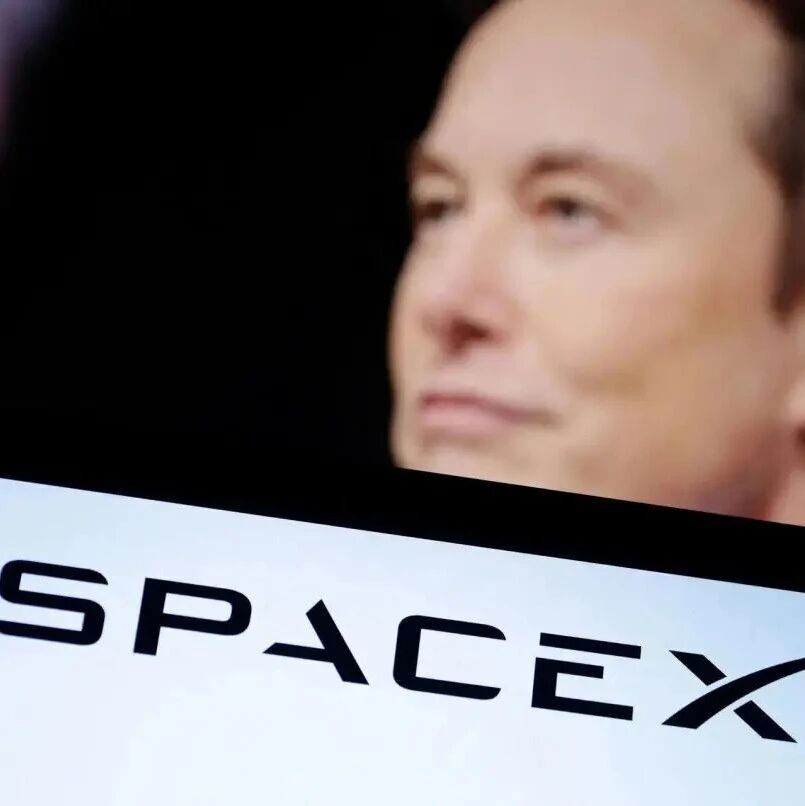
SpaceX和xAI合并,估值或高达1.25万亿美元!为潜在的500亿美元IPO做准备
美股IPO· 2026-02-02 23:15
Core Viewpoint - Elon Musk is merging SpaceX with his AI startup xAI to integrate his ambitions in orbital infrastructure and generative intelligence under a single corporate structure [1][3]. Group 1: Merger Details - The combined entity is expected to be valued at $1.25 trillion, with an estimated share price of approximately $527 [3]. - SpaceX is exploring a historic IPO to raise $50 billion [3]. - The merger aims to unify two of the world's most valuable private companies and clarify the increasingly blurred lines between Musk's various businesses [3]. Group 2: Strategic Vision - Musk's vision includes launching 1 million satellites to support a space-based data center, which would provide the necessary computational power for AI without the limitations of ground-based energy [3]. - Musk stated that current AI advancements rely heavily on large ground data centers, which require significant power and cooling resources, and that space-based AI is the only viable long-term solution for scaling [3]. Group 3: Future Predictions - There is speculation that Musk's ultimate goal may be to merge his companies, including Tesla, SpaceX, and xAI, to leverage real-world data from electric vehicles and robotics for physical AI [3][4]. - Walter Isaacson, Musk's biographer, predicted that Tesla and xAI would merge, emphasizing Musk's preference for centralized control over companies involved in physical AI [4]. Group 4: Ongoing Negotiations - Reports indicate that SpaceX has been in talks with Tesla regarding a potential merger, although it is unclear if these discussions have been paused in light of the xAI merger and IPO plans [5].


人工智能生成广告:机遇、挑战与对策
腾讯研究院· 2025-12-09 08:53
Core Viewpoint - The article discusses how generative artificial intelligence (AI) is transforming the advertising industry by evolving from traditional advertising methods to intelligent systems that understand user intent and behavior, thereby creating a complete feedback loop in advertising processes [3][4][5]. Group 1: Evolution of Advertising Technology - Generative AI is reshaping the underlying logic of advertising systems globally, moving from programmatic advertising to intelligent systems that can analyze user emotions and behaviors [3]. - The integration of AI in advertising processes, such as content generation and intelligent auditing, is becoming widespread, as seen in platforms like Google's Gemini model and Tencent's "Miao Si" [3][4]. - The advertising logic has fundamentally changed, with generative AI enhancing precision and efficiency in cross-border e-commerce advertising through insights and automated content generation [4][6]. Group 2: Advertising Mechanisms and User Experience - The rise of AI assistants is diversifying advertising entry points, moving away from traditional app-centric models to AI-driven interactions [7]. - Generative AI significantly boosts the efficiency of ad material production, allowing for real-time understanding of user intent and enhancing the effectiveness of supply-demand conversion [8]. - The goal of achieving "one person, a thousand faces" in advertising is becoming feasible, as AI can generate personalized content based on individual user contexts and preferences [9]. Group 3: Transformation of Advertising Agencies - AI is replacing repetitive tasks in advertising agencies, prompting a shift towards higher-value activities such as consumer insights and creative strategy [11]. - New roles are emerging within advertising agencies, such as "model optimizers" and "intelligent material arrangers," reflecting the industry's adaptation to AI technologies [11][12]. - The collaboration between AI and human creativity is evolving, with AI acting as a real-time collaborator in the creative process [12]. Group 4: Regulatory and Governance Challenges - The rapid adoption of AI in advertising raises governance challenges, including the need for a new regulatory framework that balances innovation and risk management [20][21]. - Issues such as algorithmic bias, data privacy, and the need for transparency in AI-generated content are critical concerns for the industry [13][15][17]. - The complexity of cross-border advertising compliance and cultural adaptation presents additional challenges for brands leveraging AI in global markets [18][19]. Group 5: Strategies for Addressing Challenges - Companies are encouraged to explore a "light regulation + co-governance" model to foster innovation while managing risks associated with AI in advertising [22]. - Platforms should enhance their risk control mechanisms by investing in algorithm optimization and ensuring compliance with advertising standards [23]. - Brands are advised to develop their own intelligent systems to maintain consistency in content generation while leveraging AI's efficiency [26].


产业资本与“深口袋”投资加持,灵宇宙抢滩AI消费硬件市场
2 1 Shi Ji Jing Ji Bao Dao· 2025-11-20 08:46
Core Insights - The article highlights the growing interest in AI consumer hardware, particularly focusing on the company Lingyu Universe, founded by Gu Jiawei, which is gaining significant attention from investors [1][2]. Company Overview - Gu Jiawei, a seasoned entrepreneur with a background in AI and robotics, founded Lingyu Universe in 2023 to create "partner-type" AI robot products for households and individuals [1]. - The company has developed the "Lingyu Universe Small Square Machine," which has achieved impressive sales growth, with a more than 230% increase in sales during the Double Eleven shopping festival compared to the 618 shopping festival [1]. Funding and Investment - Lingyu Universe recently completed a 200 million yuan Pre-A round of financing, with participation from major financial institutions and listed companies, indicating strong investor confidence [1][6]. - The company has completed three rounds of financing within six months of its establishment, attracting investments from various notable firms [2]. Product Development and Technology - The Small Square Machine utilizes multi-modal AI interaction technology and a proprietary "relationship algorithm" to create personalized learning experiences for users [3][4]. - Lingyu Universe has developed the LingOS operating system, which integrates various AI capabilities, aiming to build a comprehensive smart home ecosystem [4]. Market Position and Future Outlook - The company aims to leverage its AI hardware and software integration to establish a sustainable growth path, similar to leading players in the market [6]. - The potential market for the Small Square Machine is projected to reach millions of units, with future expansions into broader demographics and applications [7][8].