
溶解浆

Search documents
纸浆专家交流
2026-03-22 14:35
Summary of Pulp Industry Conference Call Industry Overview - The global pulp market is influenced by several factors, including supply and demand dynamics, pricing strategies, and production capacity uncertainties [3][4][6]. Key Points Supply and Demand Situation - Major hardwood pulp suppliers, such as Brazil's Suzano and Chile's Arauco, implemented a price increase of $20 per month for three consecutive months in Q1, despite limited acceptance from customers in March [3][4]. - Domestic customers in China have ample inventory, leading to a cautious approach towards new orders, especially with spot prices dropping from 5,000 RMB to 4,600 RMB, which pressures paper mill profits [4][6]. - The softwood pulp market shows a mixed performance, with Canada facing high costs and U.S. tariff threats, while Finland maintains stable pricing, and Chile sees a $10 increase due to quality stability [4][5]. Pricing Dynamics - There is a significant price disparity between domestic and international pulp markets, with international hardwood pulp prices around $610, while domestic prices are lower due to recent declines [6][8]. - The U.S. has seen a price increase for softwood pulp due to a 25% tariff on Canadian imports, which has not been mirrored in the Chinese market where customers are less willing to accept price hikes [11]. Future Market Changes - The pulp market is expected to experience changes in the coming months, particularly in hardwood pulp where supply pressure is anticipated to remain low due to production adjustments [7][8]. - The domestic pulp market is not operating smoothly, with limited release of self-produced pulp capacity and a forecasted increase in hardwood pulp production capacity by 2025 [8][9]. Investment and Cost Control Trends - Despite declining investment returns in the Zhejiang region, the industry continues to expand, with new projects focusing on integrating pulp and paper production capabilities [12]. - The cost of integrated production in China remains higher than in Brazil, impacting international competitiveness [10]. Inventory Levels - Current inventory levels among traders are moderate, with a strong willingness to sell due to falling spot prices, leading to a lack of upward momentum in the market [13]. Price Stability and Market Sentiment - The willingness of companies to maintain pricing may be tested within 1 to 3 months, depending on market conditions and customer demand [14]. - Tyson Foods' announcement of a price increase may reflect a strategy to stimulate transactions rather than a definitive market trend [15]. Additional Insights - The global demand for pulp is primarily driven by China, which has seen a decrease in import volumes from 35 million tons in 2020 to below 30 million tons by 2024 [8]. - The overall economic growth in China is expected to stabilize, which may lead to reduced consumption of paper and pulp, mirroring trends observed in developed markets [8].
“全村最靓的仔”:太阳纸业生存指南
市值风云· 2026-03-11 10:12
Core Viewpoint - The paper industry is experiencing significant differentiation, with Sun Paper (002078.SZ) demonstrating resilience and strong performance amidst overall industry decline, reporting a revenue of 39.18 billion yuan, a decrease of 3.8% year-on-year, and a net profit of 3.26 billion yuan, an increase of 5.1% [4][5]. Industry Overview - The paper industry is currently facing challenges due to overcapacity and declining prices, particularly in cultural paper, where production capacity has increased by nearly 50% from 2021 to 2025 [8][9]. - Major competitors in the A-share market are struggling, with companies like Bohui Paper and Shanying International reporting significant profit declines and losses [10]. Company Performance - Sun Paper has maintained profitability exceeding 3 billion yuan for three consecutive years, with a gross margin of 15.7% in the first three quarters of 2025, outperforming its peers [13]. - The company has established a cost advantage through early investment in "integrated forestry, pulp, and paper" operations, achieving a self-sufficiency rate of 70% in pulp production [15]. Product Diversification - Sun Paper's product mix includes cultural paper, packaging paper, and pulp, allowing it to mitigate risks associated with reliance on a single product type. Despite a decline in cultural paper revenue, the company saw growth in boxboard paper and improved margins in dissolving pulp [15][16]. Capital Expenditure and Expansion - Sun Paper's capital expenditure reached 6.925 billion yuan in the first three quarters of 2025, significantly higher than its competitors, indicating aggressive expansion plans [20][21]. - The company has completed projects that added 1 million tons of high-end packaging paper and 300,000 tons of household paper, with further expansions planned for 2026 [22]. Market Trends and Pricing - The paper pulp market is showing signs of recovery, with international prices increasing and domestic demand for paper packaging driven by new regulations against single-use plastics [25]. - Sun Paper has announced price increases for cultural paper, reflecting a potential recovery in industry confidence, with a total increase of 400 yuan per ton, approximately 8%-9% [29].


太阳纸业:公司四季度点评Q4符合预期,文化纸集体发布提价涵-20260303
GUOTAI HAITONG SECURITIES· 2026-03-03 02:35
Investment Rating - The investment rating for the company is "Accumulate" with a target price of 23.04 CNY [4]. Core Insights - The company's Q4 performance met expectations, with cultural paper prices stabilizing and a potential price increase of 200 CNY anticipated due to seasonal demand [2][12]. - The company is adjusting its profit forecasts for 2025-2027, estimating EPS of 1.17, 1.44, and 1.59 CNY respectively, based on industry valuation levels [12]. - The company is expected to benefit from a decrease in investment intensity in 2026, with ongoing projects including 130,000 tons of new capacity [12]. Financial Summary - Total revenue for 2023 is projected at 39,544 million CNY, with a slight decrease of 0.6% year-on-year, while net profit is expected to be 3,086 million CNY, reflecting a 9.9% increase [10]. - The company’s net profit margin is projected to improve, with net profit for 2026 expected to reach 4,012 million CNY, a 23.1% increase from 2025 [10]. - The company maintains a net debt ratio of 59.11% and a current price-to-earnings ratio of 15.61 [6][10].
太阳纸业(002078):快报点评:25Q4符合预期,看好后续业绩趋势向上
Changjiang Securities· 2026-03-02 12:43
Investment Rating - The investment rating for the company is "Buy" and it is maintained [6]. Core Views - The company reported its 2025 performance, achieving revenue of 39.184 billion yuan, net profit attributable to shareholders of 3.258 billion yuan, and net profit excluding non-recurring items of 3.200 billion yuan, with year-on-year changes of -3.79%, +5.05%, and -1.07% respectively [2][4]. - In Q4 2025, the net profit attributable to shareholders was 760 million yuan, reflecting an 18% year-on-year increase, while the net profit excluding non-recurring items was 730 million yuan, up 13% year-on-year [2][4]. - The performance in Q4 met expectations, with the new production capacity of 2.05 million tons from the Nanning base contributing to volume growth, despite weaker seasonal performance in cultural paper [5]. - The boxboard paper segment benefited from seasonal demand, showing improved performance, while the company is expected to flexibly shift some dissolving pulp production to chemical pulp, maintaining stable profitability [5]. Summary by Sections Financial Performance - For 2025, the company achieved total revenue of 39.184 billion yuan, with a net profit of 3.258 billion yuan and a net profit excluding non-recurring items of 3.200 billion yuan [2][4]. - The Q4 2025 results showed a net profit of 760 million yuan, which is an 18% increase year-on-year, and a net profit excluding non-recurring items of 730 million yuan, up 13% year-on-year [2][4]. Market Outlook - The cultural paper segment faced price declines due to increased competition and delayed bidding, with prices hitting a new low in Q3 2025 [5]. - The boxboard paper segment experienced less pressure from new capacity compared to cultural paper, with prices improving during the peak season from September to November 2025 [5]. - The company anticipates a potential price increase in the paper market, with expectations for improved performance in Q1 2026 due to the ramp-up of new capacity from the Nanning base [10]. Long-term Perspective - The long-term outlook suggests a reduction in new capacity globally from 2026 to 2027, which may lead to improved supply-demand dynamics and a potential increase in pulp prices [10]. - The company is expected to maintain a competitive cost advantage through its self-sufficient raw material supply and operational efficiencies, particularly with its own forest resources in Laos [10].
太阳纸业20260228
2026-03-01 17:22
Summary of the Conference Call for Sun Paper Industry Industry Overview - The cultural paper market is expected to remain weak, with prices at low levels. The rising pulp prices have led to industry losses, creating a motivation for price increases. It is anticipated that attempts to pass on costs will occur in March-April, depending on whether paper prices can absorb these costs [2][4] - The boxboard paper market is expected to perform well in October-November 2025, but prices fell sharply in October. A slight increase was observed after the Spring Festival, indicating potential demand growth in the second half of the year if consumer recovery occurs [2][5] - Overseas pulp prices are strong due to supply constraints, changes in Indonesian logging policies, and currency appreciation. The trend of pulp prices will depend on the transmission of paper prices after March [2][6] Company Insights - The Nanning project is expected to reach full production by the end of 2025, while the Yantian project is anticipated to start production around the National Day in 2026. The main incremental contributions in 2026 will come from the full production release of the Nanning project, and in 2027 from the Yanbian base project [2][7][8] - 2025 is projected to be a significant investment year with total investments exceeding 7-8 billion. Capital expenditures for 2026 are estimated at around 5 billion, with a noticeable decrease in 2027. Shareholder returns will focus on stability [2][9] Market Dynamics - The cultural paper prices have been declining since October 2025, reaching new lows. The industry is facing significant operational pressure, with pulp prices rising from 500 to 620, while paper prices remain low, leading to overall industry losses and cash flow pressures [4][12] - The boxboard paper market is expected to see better performance in the second half of 2026 due to increased demand from logistics and express delivery sectors, with a slight increase in demand observed after the Spring Festival [5] Pulp Supply and Pricing - The overseas pulp price is under pressure due to supply constraints and seasonal factors. The rising exchange rate of the RMB also supports pulp prices. Future trends will depend on the successful transmission of paper prices [6] - The company is shifting its strategy from focusing on quantity to quality in wood chip supply, with potential supply issues expected to emerge in the long term as demand for wood chips grows [10][11] Capital Expenditure and Shareholder Returns - The capital expenditure for 2025 is expected to exceed 7-8 billion, with significant investments in the Nanning and Yantian projects. The capital expenditure for 2026 is projected to be around 5 billion, with a decrease expected in 2027 [9] - Shareholder returns will focus on stability, with dividends or buybacks being the primary approach [9] Environmental and Regulatory Considerations - The "3060" carbon reduction target is expected to impact the paper industry significantly by 2027, with stricter regulations on new capacity approvals anticipated. This may lead to increased industry concentration as smaller companies struggle to meet carbon reduction requirements [13][14][17] - The company is actively working on carbon reduction initiatives and aims to achieve zero-carbon factory goals, particularly in its Thai industrial park [13][17] Conclusion - The company is navigating a challenging market environment with rising costs and operational pressures. Strategic investments and a focus on quality in supply chains are key to maintaining competitiveness. The anticipated regulatory changes regarding carbon emissions will also shape future operational strategies and market dynamics.
汇率-提价利好-造纸个股再推荐
2026-02-13 02:17
Summary of Conference Call on the Paper Industry Industry Overview - The paper industry is experiencing an improvement in the mid-term supply-demand structure, with a marginal reduction in new capacity additions expected in 2026-2027, indicating an industry cycle turning point [2][4] - The appreciation of the RMB is expected to enhance the profitability of paper companies by lowering the cost of imported pulp and increasing returns on dollar-denominated assets [2][5] Key Companies Nine Dragons Paper - Nine Dragons Paper is the leading global player in pulp and paper production with a total capacity of approximately 25 million tons [8] - The company has transitioned its product structure from waste paper-based products to include wood pulp-based products, achieving profitability with an expected profit of over 2 billion RMB in the first half of the fiscal year 2026 [8] - The net profit per ton has recovered to around 170 RMB, although it remains at historical lows [8] Sun Paper - Sun Paper is noted for its cost advantages and has performed well during cyclical downturns, making it a preferred investment choice [9] - The company is expected to maintain stable profits in Q1 2026, with a recovery anticipated in Q2 due to price increases [9] - The company’s boxboard business in Shandong has shown steady profitability, while the Nanning base is expected to maintain stable earnings due to improved production efficiency [10] Financial Insights - The RMB's appreciation is projected to improve the net profit of direct enterprises by approximately 1% if the exchange rate reaches 6.9 [5][6] - The global context of interest rate cuts is expected to lead to a balanced supply-demand situation for wood pulp, with prices likely to rise moderately in 2026 [7] Production and Cost Management - Sun Paper's Laos operations are expanding, with an increasing self-sufficiency in wood chips, which will enhance cost advantages [3][13] - The company has integrated and adjusted its dissolving pulp capacity, maintaining full production in Laos, which contributes to cost advantages in pulp and paper production [11] Growth Potential - Sun Paper is expected to maintain a certain scale of expansion, with new capacities coming online in Nanning and Shandong, leading to single-digit percentage growth in volume [12] - The company’s effective management and cost control measures position it for excess profitability compared to peers [12] Conclusion - Overall, Sun Paper is considered a solid growth investment opportunity in the current market environment, supported by favorable industry dynamics and internal efficiencies [14]
超300亿!200万吨生物基大项目签约,剑指全球第一
DT新材料· 2026-02-12 16:04
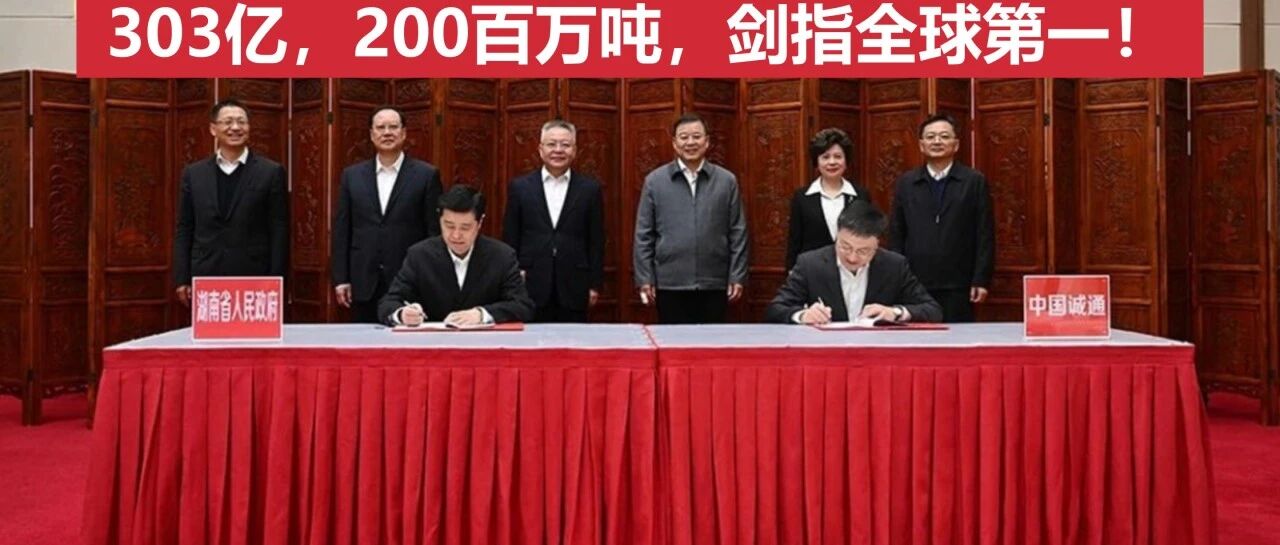
Core Viewpoint - The article discusses a significant investment project in the bio-based materials sector, highlighting a partnership between the Yueyang government and China Chengtong Holdings Group to establish a 200,000-ton bio-based materials project, which is expected to become the world's largest production capacity for specialty cellulose [4][5][9]. Group 1: Project Overview - The total investment for the project is 30.3 billion yuan, making it the second-largest single industrial project in Hunan Province, following ethylene refining [8]. - The project will be constructed in two phases: the first phase involves an investment of 17 billion yuan to build 1.1 million tons of specialty cellulose and 450,000 tons of household paper, with production expected to start by the end of 2027 [12]. - Once fully operational, the project is projected to generate an annual output value of 25.05 billion yuan [12]. Group 2: Specialty Cellulose Insights - Specialty cellulose refers to high-value cellulose derivatives that have been chemically or physically modified, including acetate cellulose and nitrate cellulose [7][13]. - The primary product from this project is likely to be dissolving pulp, which is used to produce viscose fibers, a key material in the textile industry [14][16]. - The global demand for dissolving pulp is significant, with projections indicating that by 2024, the global consumption will reach approximately 6.2 million tons, with China being the largest consumer [19][20]. Group 3: Market Context and Implications - China currently imports over 4 million tons of dissolving pulp annually to meet domestic demand, indicating a high dependency on foreign sources [20][23]. - The establishment of this 200,000-ton capacity is expected to significantly reduce China's import reliance, potentially cutting it by nearly half [33]. - The project aligns with the broader trend of domestic industrialization and the shift towards bio-based materials as alternatives to petrochemical products, especially in the context of carbon neutrality goals [29][30]. Group 4: Strategic Advantages - Yueyang's strategic advantages include its port access, established petrochemical industry, and available land resources, which facilitate the project's implementation [24][33]. - The project is backed by China Chengtong, a major state-owned enterprise, which enhances its financial and operational capabilities [26][28]. - The operational management is likely to be handled by Hunan Juntai New Materials Technology Co., a subsidiary of Yueyang Lin Paper, which has a strong market presence in dissolving pulp production [27][28].

剑指全球第一!央企303亿签约200万吨生物基项目
合成生物学与绿色生物制造· 2026-02-12 06:07
Core Viewpoint - The article discusses a significant investment of 30.3 billion yuan by China Chengtong Holdings Group in collaboration with the Yueyang government to establish a 2 million ton bio-based materials project, which is expected to become the world's largest production capacity upon completion [2][3]. Project Overview - The project involves the construction of a 2 million ton specialty cellulose and 450,000 ton household paper production base, with a total investment of 30.3 billion yuan [3][5]. - The project will be developed in two phases: the first phase will invest 17 billion yuan to build 1.1 million tons of specialty cellulose and 450,000 tons of household paper, starting construction in the first half of 2026 and expected to be operational by the end of 2027, generating an annual output value of 13.05 billion yuan [8]. - The second phase will focus on an additional 900,000 tons of specialty cellulose, with the timeline dependent on the completion of the first phase [8]. Specialty Cellulose Insights - Specialty cellulose refers to high-value cellulose derivatives that have undergone chemical or physical modification, including acetate cellulose and nitrate cellulose [7][9]. - The project is likely to focus on dissolving pulp, which is a key raw material for producing viscose fibers used in clothing [10][12]. - The global demand for dissolving pulp is projected to reach approximately 6.2 million tons in 2024, with China being the largest consumer, requiring over 4 million tons annually, leading to a significant import dependency [15][16]. Market Position and Competitive Landscape - Upon completion, Yueyang Lin Paper is expected to become the world's leading producer of dissolving pulp, significantly reducing China's import needs by nearly half [18][22]. - The project is strategically located in Yueyang, which has advantages such as port access, a developed petrochemical industry, and ample land resources for large-scale projects [19][25]. Operational and Strategic Implications - The operational management of the project is likely to be handled by Hunan Juntai New Materials Technology Co., a subsidiary of Yueyang Lin Paper, which has recently expanded its capabilities in the dissolving pulp market [24][30]. - The investment aligns with the growing trend towards bio-based materials as alternatives to petrochemical products, indicating a shift in the industry towards sustainable practices [26][27].
太阳纸业:深入布局林浆纸一体化,成长节奏明确可兑现-20260129
SINOLINK SECURITIES· 2026-01-29 00:24
Investment Rating - The report assigns a target price of 21.04 RMB for the company, based on a 13X PE for 2027 [5]. Core Views - The company has effectively integrated its forestry, pulp, and paper operations, demonstrating strong profitability across industry cycles. Its core advantages stem from cost advantages through integrated operations, differentiated products, and precise market control, maintaining industry-leading profitability with an average ROE of 14.96% from 2015 to 2024 [3][15]. - The pulp supply-demand dynamics are expected to improve, providing a cost support for paper prices to enter a moderate recovery phase. Domestic pulp production is nearing its peak, and limited new overseas capacity is anticipated, which may lead to sustained price recovery [3][30]. - The company is set to achieve significant capacity growth from 2025 to 2027, with 1.7 million tons of new production in packaging and cultural paper, ensuring a high degree of certainty in future earnings growth [4][5]. Summary by Sections 1. Industry Leadership and Profitability - The company has maintained a steady growth rate with a CAGR of 12.20% in revenue and 12.71% in net profit from 2015 to 2024, supported by a diversified product range and strategic geographic bases [15]. - The company operates three major production bases, ensuring a robust supply chain and market responsiveness, with a total pulp and paper capacity exceeding 12 million tons by the end of 2024 [15][19]. 2. Pulp Supply-Demand Dynamics - The domestic pulp production capacity is projected to reach 36.05 million tons by 2025, with a CAGR of 13.79% from 2021 to 2025, although the supply remains excessive, leading to price pressures [30]. - The report anticipates that the pulp price will stabilize and recover due to reduced new capacity and increased demand from domestic paper manufacturers [30][33]. 3. Integrated Operations and Cost Advantages - The company is expected to enhance its profitability through the concentrated production of self-manufactured pulp, which will further solidify its integrated operational advantages [4][19]. - The company’s self-supplied energy maintains a cost advantage of 300 RMB per ton, which is expected to become more pronounced as energy regulations tighten [4][19]. 4. Earnings Forecast and Valuation - Projected revenues for 2025-2027 are 471.22 billion, 473.10 billion, and 516.25 billion RMB, with corresponding net profits of 33.60 billion, 38.67 billion, and 45.24 billion RMB, reflecting growth rates of 8.34%, 15.11%, and 16.97% respectively [5][9].
岳阳林纸(600963.SH):子公司签订木质素销售合同
Ge Long Hui A P P· 2025-12-31 08:08
Core Viewpoint - The company has signed a sales contract for approximately 1,500 air-dry tons of softwood lignin with Hunan Lvjunn New Materials Co., Ltd., indicating a strategic move to enhance its product offerings in the bio-based materials sector [1] Group 1 - The contract duration is from the signing date until December 31, 2026, showcasing a long-term commitment to supply [1] - The subsidiary, Hunan Juntai Bio-based New Materials Technology Co., Ltd., focuses on utilizing agricultural and forestry residues as raw materials to produce and sell a range of bio-based materials and biomass energy products [1] - The company aims to leverage its advanced technology in the bio-based materials and biomass energy fields to expand its green and environmentally friendly product line, addressing market demands for sustainable development [1]