特种纤维素

Search documents
国泰君安期货·能源化工:纸浆周度报告-20260301
Guo Tai Jun An Qi Huo· 2026-03-01 10:47
1. Report Industry Investment Rating - Not provided in the document 2. Core View of the Report - The pulp market is expected to maintain a narrow - range oscillation pattern in the short term, with limited upside and downside space. In the medium term, the key to the pulp price trend lies in the actual recovery of downstream demand after March. If the paper mill's operating rate rises steadily and terminal orders improve, the restocking demand is expected to be gradually released. The market is expected to follow the market sentiment and oscillate slightly to the upside [99]. 3. Summary by Directory Industry News - As of February 26, 2026, the inventory of pulp in Changshu Port was 685,000 tons, an increase of 87,000 tons from the previous period, a month - on - month increase of 14.5%. The inventory in Qingdao Port was 1.52 million tons, an increase of 82,000 tons from the previous week, a month - on - month increase of 5.7%. The inventory in Gaolan Port was 62,000 tons, an increase of 30,000 tons from the previous week, a month - on - month increase of 93.8%. The total inventory of mainstream ports in China was 2.401 million tons, an increase of 206,000 tons from the previous period, a month - on - month increase of 9.4% [5][6]. - In January 2026, the total inventory of wood pulp in European ports decreased by 14.7% month - on - month and 10.9% year - on - year, from 1.5086 million tons at the end of December to 1.2865 million tons [7]. - Yueyang City Government and China National Paper Industry signed a cooperation intention for a 30.3 - billion - yuan project to build a 2 - million - ton special cellulose and 450,000 - ton household paper production base [6]. - Jindong Paper's 280,000 - ton special paper project is advancing as planned and is expected to be put into production in mid - April [8]. Market Data Market Trends - On February 27, 2026, the basis of Yinxing pulp was 4 yuan/ton, a 140% increase from the previous period; the basis of Russian needle pulp was - 146 yuan/ton, a 30.48% increase from the previous period; the price difference between Yinxing and Russian needle pulp was 150 yuan/ton, a 25% decrease from the previous period [14]. Month - to - Month Spread - On February 27, 2026, the 05 - 07 month - to - month spread was - 32 yuan/ton, a 45.45% decrease from the previous period; the 07 - 09 month - to - month spread was - 34 yuan/ton, a 54.55% decrease from the previous period [19]. Fundamental Data Price - The price difference between Yinxing and Jinyu decreased, while the price difference between Russian needle and Jinyu increased. The import profits of softwood and hardwood pulp were slightly repaired. The price of the main pulp contract rose and then fell slightly. The spot price of imported softwood pulp increased slightly compared with before the Spring Festival, and the spot price of imported hardwood pulp also increased. The prices of natural color pulp and chemimechanical pulp also had corresponding changes [23][27][31][35]. Supply - The wood chip purchase price of some paper enterprises in East China increased before the festival. The supply of domestic chemimechanical pulp recovered. In January 2026, the inventory of European paper pulp ports decreased year - on - year and month - on - month, and the global pulp shipment volume in November 2025 continued to decline. In November 2025, the shipment volume of W20 softwood pulp was at a low level, and the inventory was high; the inventory of hardwood pulp was at a high level, the shipment volume decreased, and the inventory days returned to a year - on - year high. In December 2025, the export volume of softwood pulp from four countries (Canada, Chile, Finland, and the United States) to China increased month - on - month. In January 2026, the export volume of Chilean softwood pulp to China was flat month - on - month and decreased year - on - year. In December 2025, the export volume of hardwood pulp from four countries (Brazil, Indonesia, Uruguay, and Chile) to China increased significantly month - on - month. In January 2026, the export volume of Brazilian and Uruguayan hardwood pulp to China decreased month - on - month, while the export volume of Chilean hardwood pulp to China increased significantly year - on - year and month - on - month. In December 2025, China's pulp imports were divided, with softwood pulp increasing by 7.27% month - on - month, hardwood pulp decreasing by 23.38% month - on - month, and natural color and chemimechanical pulp increasing significantly month - on - month [42][46][50][54][58][64][66]. Demand - The domestic offset paper market was generally stable with minor adjustments, and the trading was gradually recovering. The domestic coated paper market continued to be stable, lacking directional breakthroughs. The white cardboard market was dull, with inventory accumulation in paper mills. The price of household paper tended to be stable, and the overall trading enthusiasm was average. In December 2025, the retail sales of books, newspapers, magazines, Chinese and Western medicines, and tobacco and alcohol products, as well as the output of dairy products, increased significantly month - on - month, while the retail sales of cosmetics decreased significantly month - on - month. The retail sales of cultural and office supplies and cosmetics were at a high level year - on - year [70][74][78][82][88]. Inventory - The overall port inventory was at a historical high, and the inventory of mainstream ports in China showed a trend of inventory accumulation. After the Spring Festival, the inventory in Qingdao Port continued to accumulate, and the inventory in Changshu Port also continued to accumulate at a high level [93]. This Week's View Summary - Supply: The port inventory remains at a high level, and the supply pressure continues. - Demand: The demand side is in the process of slow post - festival recovery, but the overall purchasing sentiment is still light. - View: The pulp market is expected to maintain a narrow - range oscillation pattern in the short term. In the medium term, the key lies in the actual recovery of downstream demand after March. - Valuation: The basis of Yinxing softwood pulp in Shandong is 4 yuan/ton, an increase of 66 yuan/ton. - Strategy: 1) Unilateral: Wait and see, and wait for opportunities to short at high prices. 2) Inter - period: Consider the 5 - 9 positive spread strategy. 3) Inter - variety: Observe [98][99].
国泰君安期货·能源化工纸浆周度报告-20260301
Guo Tai Jun An Qi Huo· 2026-03-01 10:36
1. Report Industry Investment Rating - Not provided in the document 2. Core Viewpoints of the Report - In the short - term, the pulp market is expected to maintain a narrow - range oscillation pattern with limited upside and downside space. The cost support of hardwood pulp and the lower - than - expected inventory accumulation pressure at ports limit the downside space, while softwood pulp is restricted by futures market fluctuations and abundant supply, and the lack of substantial increase in downstream procurement restricts the upside. In the medium - term, the key to pulp price trends lies in the actual recovery of downstream demand after March. If the paper mill's operating rate rises steadily and terminal orders improve, restocking demand is expected to be gradually released. Considering the impact of the US - Iran conflict on the shipping market, the market is expected to oscillate slightly upwards following market sentiment [99][100]. 3. Summary by Directory 3.1 Industry News - As of February 26, 2026, the pulp inventory at Changshu Port in China was 685,000 tons, an increase of 87,000 tons from the previous period, a 14.5% month - on - month increase; the pulp inventory at Qingdao Port was 1.52 million tons, an increase of 82,000 tons from the previous week, a 5.7% month - on - month increase; the pulp inventory at Gaolan Port was 62,000 tons, an increase of 30,000 tons from the previous week, a 93.8% month - on - month increase. The total inventory of mainstream port samples in China was 2.401 million tons, an increase of 206,000 tons from the previous period, a 9.4% month - on - month increase [5][6]. - In January 2026, the total wood pulp inventory at European ports decreased by 14.7% month - on - month and 10.9% year - on - year, from 1.5086 million tons at the end of December to 1.2865 million tons [7]. - Yueyang City government and China Paper signed a cooperation intention for a 30.3 - billion - yuan project to build a 2 - million - ton special cellulose and 450,000 - ton household paper production base [6]. - Jindong Paper's 280,000 - ton special paper project is expected to be put into production in mid - April, which will enhance the company's competitiveness in the high - end special paper market [8]. 3.2 Market Data 3.2.1 Market Trends - On February 27, 2026, the basis of silver star pulp was 4 yuan/ton, a 140% month - on - month increase; the basis of Russian needle pulp was - 146 yuan/ton, a 30.48% month - on - month increase; the price difference between silver star and Russian needle pulp was 150 yuan/ton, a 25% month - on - month decrease [14]. - On February 27, 2026, the 05 - 07 month - spread was - 32 yuan/ton, a 45.45% month - on - month decrease; the 07 - 09 month - spread was - 34 yuan/ton, a 54.55% month - on - month decrease [19]. 3.3 Fundamental Data 3.3.1 Price - The price difference between silver star and goldfish pulp decreased, while the price difference between Russian needle and goldfish pulp increased. On February 27, 2026, the price difference between silver star and goldfish pulp was 650 yuan/ton, a 2.99% month - on - month decrease; the price difference between Russian needle and goldfish pulp was 500 yuan/ton, a 6.38% month - on - month increase [23][25]. - The import profits of softwood and hardwood pulp slightly recovered. On February 27, 2026, the import profit of silver star softwood pulp was - 384 yuan/ton, a 3.43% month - on - month increase; the import profit of star hardwood pulp was - 173 yuan/ton, a 15.36% month - on - month increase [27][29]. - The price of the main pulp contract rose and then fell slightly. The spot price of imported softwood pulp increased slightly compared with before the Spring Festival, but the actual transaction was light. The spot price of imported hardwood pulp increased due to cost pressure and tight supply, but the downstream replenishment was not active [31][35]. 3.3.2 Supply - The wood chip purchase price of some paper enterprises in East China increased before the festival. On February 28, 2026, the purchase price of eucalyptus wood chips by Liansheng Pulp and Paper was 1,160 yuan/ton, with no month - on - month change [42][44]. - The supply of domestic chemimechanical pulp recovered this period. On February 26, 2026, the daily average price of domestic chemimechanical pulp was 3,883.33 yuan/ton, with no month - on - month change; the weekly production was 86,000 tons, a 1.18% month - on - month increase [46][48]. - In January 2026, the pulp inventory at European ports decreased year - on - year and month - on - month; in November 2025, the global pulp shipping volume continued to decline [50][52]. - In November 2025, the shipping volume of W20 softwood pulp was low and the inventory was high; the inventory of hardwood pulp was at a high level, the shipping volume decreased, and the inventory days returned to a year - on - year high [54][56]. - In December 2025, the export volume of softwood pulp from four countries (Canada, Chile, Finland, and the US) to China increased month - on - month; in January 2026, the export volume of Chilean softwood pulp to China remained flat month - on - month and decreased year - on - year [58][60]. - In December 2025, the export volume of hardwood pulp from four countries (Brazil, Indonesia, Uruguay, and Chile) to China increased significantly month - on - month; in January 2026, the export volume of Brazilian and Uruguayan hardwood pulp to China decreased month - on - month, while the export volume of Chilean hardwood pulp to China increased significantly year - on - year and month - on - month [64][66]. - In December 2025, China's pulp imports were polarized. The import volume of softwood pulp increased by 7.27% month - on - month, the import volume of hardwood pulp decreased by 23.38% month - on - month, and the import volume of unbleached and chemimechanical pulp increased significantly [66][68]. 3.3.3 Demand - The domestic offset paper market was generally stable with minor adjustments, and the trading was gradually recovering. The supply was abundant, but the terminal consumption was weak, and the downstream replenishment was average [70][72]. - The domestic coated paper market remained stable, lacking directional breakthroughs. The supply was sufficient, but the demand was weak, and the paper mills' inventory increased [74][76]. - The white cardboard market was dull. The cost supported the market, the supply recovered quickly, but the demand was weak, and the paper mills' inventory accumulated [78][80]. - The price of household paper was stable, the market trading was average, the terminal demand was poor, but the major paper mills signaled price increases, and the industry's operating rate was expected to improve [82][84]. - In December 2025, the retail sales of books, newspapers, magazines, Chinese and Western medicines, and tobacco and alcohol products, as well as the production of dairy products, increased significantly month - on - month; the retail sales of cosmetics decreased significantly month - on - month. Year - on - year, the retail sales of cultural office supplies and cosmetics were at a high level [88][87]. 3.3.4 Inventory - On February 27, 2026, the warehouse receipt quantity of pulp in the warehouse was 138,000 tons, a 1.15% month - on - month decrease; the warehouse receipt quantity of pulp in the factory was 15,000 tons, with no month - on - month change [89]. - The port inventory was at a historical high, and the inventory of mainstream port samples in China increased this period. After the Spring Festival, the inventory at Qingdao Port and Changshu Port continued to increase [94][96].
超300亿!200万吨生物基大项目签约,剑指全球第一
DT新材料· 2026-02-12 16:04
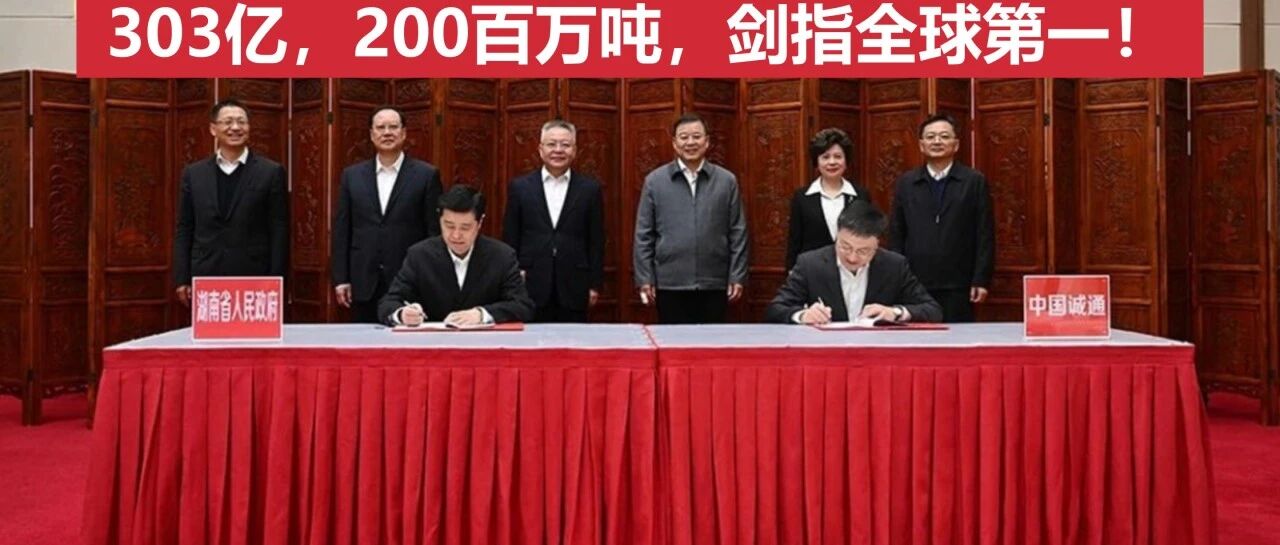
Core Viewpoint - The article discusses a significant investment project in the bio-based materials sector, highlighting a partnership between the Yueyang government and China Chengtong Holdings Group to establish a 200,000-ton bio-based materials project, which is expected to become the world's largest production capacity for specialty cellulose [4][5][9]. Group 1: Project Overview - The total investment for the project is 30.3 billion yuan, making it the second-largest single industrial project in Hunan Province, following ethylene refining [8]. - The project will be constructed in two phases: the first phase involves an investment of 17 billion yuan to build 1.1 million tons of specialty cellulose and 450,000 tons of household paper, with production expected to start by the end of 2027 [12]. - Once fully operational, the project is projected to generate an annual output value of 25.05 billion yuan [12]. Group 2: Specialty Cellulose Insights - Specialty cellulose refers to high-value cellulose derivatives that have been chemically or physically modified, including acetate cellulose and nitrate cellulose [7][13]. - The primary product from this project is likely to be dissolving pulp, which is used to produce viscose fibers, a key material in the textile industry [14][16]. - The global demand for dissolving pulp is significant, with projections indicating that by 2024, the global consumption will reach approximately 6.2 million tons, with China being the largest consumer [19][20]. Group 3: Market Context and Implications - China currently imports over 4 million tons of dissolving pulp annually to meet domestic demand, indicating a high dependency on foreign sources [20][23]. - The establishment of this 200,000-ton capacity is expected to significantly reduce China's import reliance, potentially cutting it by nearly half [33]. - The project aligns with the broader trend of domestic industrialization and the shift towards bio-based materials as alternatives to petrochemical products, especially in the context of carbon neutrality goals [29][30]. Group 4: Strategic Advantages - Yueyang's strategic advantages include its port access, established petrochemical industry, and available land resources, which facilitate the project's implementation [24][33]. - The project is backed by China Chengtong, a major state-owned enterprise, which enhances its financial and operational capabilities [26][28]. - The operational management is likely to be handled by Hunan Juntai New Materials Technology Co., a subsidiary of Yueyang Lin Paper, which has a strong market presence in dissolving pulp production [27][28].



剑指全球第一!央企303亿签约200万吨生物基项目
合成生物学与绿色生物制造· 2026-02-12 06:07
Core Viewpoint - The article discusses a significant investment of 30.3 billion yuan by China Chengtong Holdings Group in collaboration with the Yueyang government to establish a 2 million ton bio-based materials project, which is expected to become the world's largest production capacity upon completion [2][3]. Project Overview - The project involves the construction of a 2 million ton specialty cellulose and 450,000 ton household paper production base, with a total investment of 30.3 billion yuan [3][5]. - The project will be developed in two phases: the first phase will invest 17 billion yuan to build 1.1 million tons of specialty cellulose and 450,000 tons of household paper, starting construction in the first half of 2026 and expected to be operational by the end of 2027, generating an annual output value of 13.05 billion yuan [8]. - The second phase will focus on an additional 900,000 tons of specialty cellulose, with the timeline dependent on the completion of the first phase [8]. Specialty Cellulose Insights - Specialty cellulose refers to high-value cellulose derivatives that have undergone chemical or physical modification, including acetate cellulose and nitrate cellulose [7][9]. - The project is likely to focus on dissolving pulp, which is a key raw material for producing viscose fibers used in clothing [10][12]. - The global demand for dissolving pulp is projected to reach approximately 6.2 million tons in 2024, with China being the largest consumer, requiring over 4 million tons annually, leading to a significant import dependency [15][16]. Market Position and Competitive Landscape - Upon completion, Yueyang Lin Paper is expected to become the world's leading producer of dissolving pulp, significantly reducing China's import needs by nearly half [18][22]. - The project is strategically located in Yueyang, which has advantages such as port access, a developed petrochemical industry, and ample land resources for large-scale projects [19][25]. Operational and Strategic Implications - The operational management of the project is likely to be handled by Hunan Juntai New Materials Technology Co., a subsidiary of Yueyang Lin Paper, which has recently expanded its capabilities in the dissolving pulp market [24][30]. - The investment aligns with the growing trend towards bio-based materials as alternatives to petrochemical products, indicating a shift in the industry towards sustainable practices [26][27].