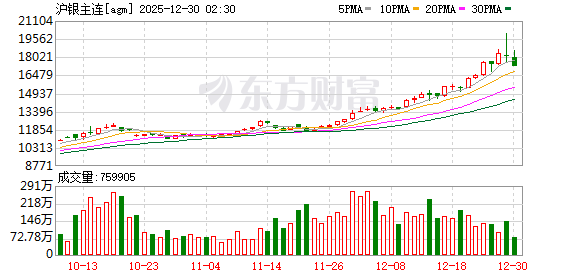
白银出口管制

Search documents
黄金白银无视监管“降温” 双双奔赴历史新高
Jin Tou Wang· 2026-01-14 06:08
Group 1 - The core viewpoint of the articles highlights the significant rise in gold and silver prices driven by global geopolitical tensions and supply shortages, with gold reaching historical highs around $4634 and silver hitting $89.13 [1][2] - The recent surge in gold prices is attributed to the investigation of Federal Reserve Chairman Jerome Powell, while silver's increase is primarily due to physical supply shortages and export controls implemented by China [1] - The U.S. CPI data released recently met expectations, leading to a muted reaction in gold and silver prices, although a speech by St. Louis Fed President James Bullard indicated no immediate reasons for further interest rate cuts, contributing to a short-term price pullback [1] Group 2 - For gold, the current bullish trend is noted, but caution is advised due to the rapid pace of price increases, with key support levels identified between $4560 and $4670 [2] - Silver remains strong above $86, with potential to challenge the $90 mark, but the rapid gains in the first half of the week warrant vigilance against risks [2] - As of the latest update, spot gold is priced at $4627.79 per ounce with a daily increase of 0.93%, while spot silver is at $90.70 per ounce with a daily rise of 4.36% [2]
果然财经|黄金开年由涨转跌,线下金店促销揽客消费回温
Sou Hu Cai Jing· 2026-01-03 05:04
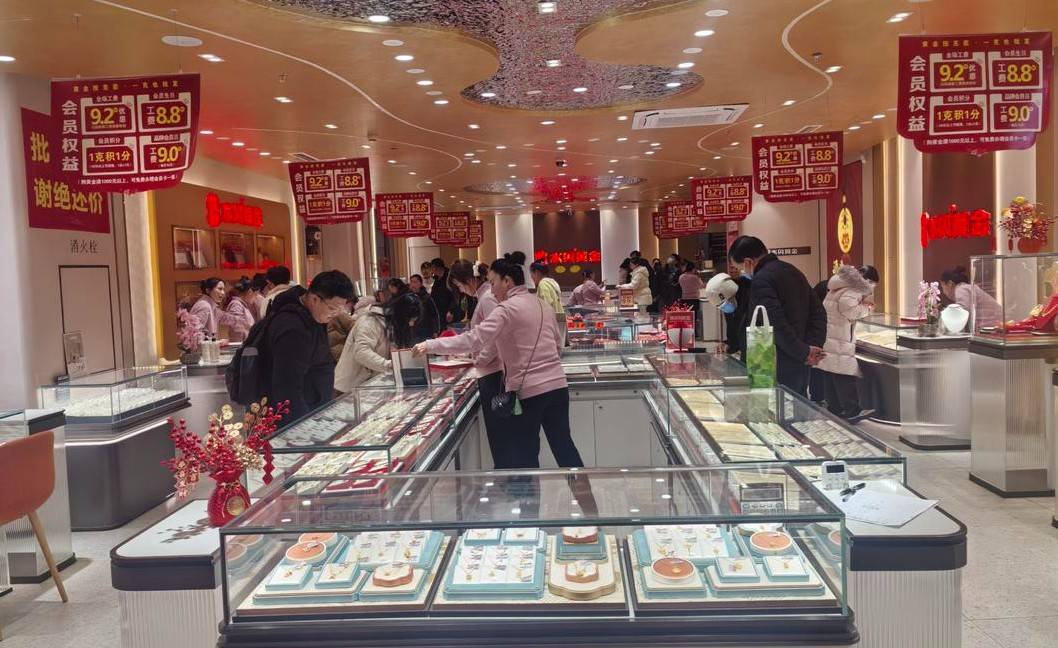
Group 1 - The precious metals market experienced significant volatility on the first trading day of 2026, with gold and silver initially rising before gold suddenly reversed its gains [2][4] - On December 31, 2025, precious metals saw a broad correction, with New York gold futures dropping over 1% and silver futures plummeting by 8.91% [3] - On January 2, 2026, spot gold opened high, reaching over $4400 per ounce, with a daily increase of 1.89%, while silver peaked at $74.34 per ounce, driven by low domestic silver inventories and increased demand [4] Group 2 - By the end of the trading day on January 2, 2026, spot gold fell below $4310 per ounce, marking a daily decline of 0.21%, and silver also retreated below $74 [5] - Data from January 2 indicated that major jewelry brands maintained stable prices, with slight variations in gold prices across different brands [6] - Physical gold stores in Jinan saw increased foot traffic due to promotional activities, with significant discounts attracting consumers [7] Group 3 - The popularity of lower-weight gold jewelry items surged, with consumers purchasing small gold items as gifts for the upcoming Spring Festival [9] - High-end gold products experienced strong sales, as evidenced by long queues at luxury jewelry stores following the announcement of new products [11] - Institutions maintain a long-term optimistic outlook on gold, citing factors such as a weak dollar and geopolitical risks supporting gold prices [12] Group 4 - Major investment banks like Goldman Sachs and JPMorgan predict significant increases in gold prices, with forecasts of $4900 and $5055 per ounce, respectively [13] - The outlook for silver is more cautious, with concerns about potential price corrections despite long-term demand from technology and green industries [12][13] - Recent changes in U.S. interest rate expectations, driven by resilient labor market data, may exert short-term pressure on precious metal prices [14]

白银急涨,马斯克拿中国出口管制说事:这不好,很多生产需要白银
Guan Cha Zhe Wang· 2025-12-30 01:51
Core Viewpoint - Silver prices have surged significantly, making it the highest-gaining precious metal of the year, driven by tight physical supply and speculative fervor, while concerns have been raised regarding China's upcoming silver export licensing regulations [3][4]. Group 1: Market Dynamics - Silver prices have increased nearly 150% this year, attributed to multiple factors including tight global supply, strong industrial demand, geopolitical tensions, and expectations of interest rate cuts by the Federal Reserve [6][14]. - The recent spike in silver prices was followed by a sharp decline, with silver futures dropping nearly 9% on October 29, influenced by profit-taking and increased margin requirements by the Chicago Mercantile Exchange [5][13]. - Analysts suggest that the recent price drop may be a temporary correction within an overall upward trend, although there are concerns about potential further declines if selling pressure continues [6][15]. Group 2: Supply and Demand Factors - Demand for silver is at an all-time high across various sectors, including jewelry, medical devices, electric vehicles, and notably, solar panel production, which consumes nearly 30% of the global silver supply [7][14]. - The supply side is constrained, with little potential for large-scale new production, as most current silver output comes as a byproduct of mining other metals like copper and zinc [7][14]. Group 3: Regulatory Environment - China has announced that starting January 1, 2024, silver exports will require government licenses, a measure that is a continuation of existing regulations aimed at protecting domestic resources and the environment [3][4]. - This regulatory change has drawn criticism from figures like Elon Musk, who expressed concerns about its impact on industrial processes reliant on silver [3][4].

我国白银新政即将落地 全球供需格局或被重构
Qi Huo Ri Bao· 2025-12-30 00:28
Core Viewpoint - The new silver export control policy in China, effective from January 1, 2026, will significantly impact the international silver market by reducing supply and altering the demand-supply dynamics, as silver is elevated to a strategic resource status [2][3]. Group 1: Policy Changes - China's new silver export control policy marks the transition of silver from a "common commodity" to a "strategic material," aligning its management with that of rare earths [2]. - The policy introduces a strict "one application, one review" licensing system for silver exports, requiring companies to have an annual production of over 80 tons (40 tons for Western enterprises) and a three-year export track record to qualify [2]. - The approval process will scrutinize buyer backgrounds and compliance with usage, with controls expected to last until at least the end of 2027 [2]. Group 2: Market Impact - In 2025, China's silver export volume accounted for 23.4% of global trade, approximately 9,126 tons, and the new policy is expected to reduce this by 4,500 to 5,000 tons annually [3]. - The global silver supply-demand gap reached 3,660 tons in 2025, marking the fifth consecutive year of shortage, with projections for 2026 indicating a potential increase in the gap to 7,000 to 8,000 tons [3]. - Despite the ongoing supply gap, improvements in scale have been noted compared to previous years [3]. Group 3: Production and Costs - Global silver mine supply is projected to be around 31,788 tons in 2025, remaining stable compared to 2024, with production increases in Mexico and Russia offset by declines in Peru and Indonesia [3]. - The World Silver Association forecasts that the average all-in sustaining cost (AISC) for silver will drop to $13 per ounce in the first half of 2025, the lowest since the first half of 2022, as lower operational costs offset rising mining fees and taxes [3]. - The potential for significant profits due to rising silver prices and lower operational costs may incentivize mining companies to increase production, supported by sound capital management and rich mineral reserves [3]. Group 4: Global Trends - Following the U.S. inclusion of silver in its critical minerals list in 2025, several countries, including India, UAE, Saudi Arabia, Turkey, Brazil, Kazakhstan, and Indonesia, have also recognized silver as a strategic asset [4]. - The outcome of the U.S. "232 investigation," expected by January 17, 2026, will influence resource import tariff policies, potentially intensifying global resource competition and exacerbating market shortages [4].