
白银价格走势

Search documents
伦敦银重回80美元关口 能源基础设施成打击重点
Jin Tou Wang· 2026-02-09 13:16
Group 1 - The price of silver has seen a significant increase, currently trading at $80.86 per ounce, up 3.70% from an opening price of $78.33, with a high of $81.66 and a low of $78.24, indicating a short-term volatile trend in the market [1] - The recent surge in silver prices follows a breakout from a rising channel above $50, suggesting strong support in the $50 to $60 range, with the recent pullback from $64 indicating a continuation of the bullish trend [3] - Current support levels for silver are noted at $77.70 and $74.70, while resistance levels are identified at $83.10 and $86.10 [3] Group 2 - Ukrainian President Zelensky has reported that Russian forces launched over 2,000 attack drones and 1,200 precision-guided bombs against Ukraine, targeting energy and logistics infrastructure, leading to widespread power outages [2] - Zelensky announced a strategic shift to target Russia's energy sector as a legitimate target for Ukrainian attacks, linking the funding of Russian military operations to its oil sales [2] - New sanctions will be imposed on foreign companies supplying key components for Russian drones and missiles, indicating a broader strategy to undermine Russia's military capabilities [2]
2026年白银价格走势分析
Sou Hu Cai Jing· 2026-02-06 12:02
Core Viewpoint - The silver price in 2026 is expected to show a "volatile upward trend," with an annual core operating range projected between $55 and $100 per ounce, potentially reaching $150 per ounce under extreme conditions, driven by structural supply-demand gaps, the Federal Reserve's easing monetary policy, and explosive industrial demand [1][20]. Group 1: Price Trend and Key Phases - The overall trend for silver prices in 2026 is characterized by independent and strong upward movement, breaking away from the previous passive trend of following gold, primarily due to surging industrial demand [2]. - The price movement can be divided into three phases: 1. Phase 1 (Jan-Apr): Consolidation around $55-$75 per ounce, awaiting the Federal Reserve's first rate cut [6]. 2. Phase 2 (May-Sep): Accelerated rise to $75-$100 per ounce, driven by peak solar installations and AI data center construction [6]. 3. Phase 3 (Oct-Dec): High-level consolidation between $85-$100 per ounce, with potential for extreme highs [6]. Group 2: Supply and Demand Dynamics - The supply-demand gap for silver is expected to widen to 5,000 tons, with a conservative estimate of 3,000 tons, and could exceed 8,000 tons if demand from solar and AI sectors surpasses expectations [4]. - Industrial demand for silver has surpassed 60% of total demand, with significant contributions from solar energy, AI data centers, and electric vehicles [5]. - The solar industry alone is projected to consume 1.2 million tons of silver in 2026, accounting for over 40% of global annual silver production [5]. Group 3: Macroeconomic Factors - The Federal Reserve's monetary policy is a key macroeconomic variable influencing silver prices, with expectations of 2-3 rate cuts totaling 50-75 basis points in 2026 [9]. - The U.S. dollar index is expected to weaken, providing additional support for silver prices as the Federal Reserve implements rate cuts [10]. Group 4: Geopolitical and Policy Influences - Geopolitical factors and policy adjustments can trigger short-term price fluctuations, such as China's export control policies and global geopolitical tensions [11]. - China's new export control policy, effective January 1, 2026, is expected to reduce global silver supply by 4,500-5,000 tons, significantly impacting market dynamics [11]. Group 5: Technical Analysis - The long-term technical outlook indicates that silver prices have broken out of a previous range (40-60 USD/oz) and are in an upward channel for 2026 [13]. - Short-term technical indicators show a neutral to bullish sentiment, with key support levels around $63-$65 per ounce [14]. Group 6: Practical Investment Strategies - Investors are advised to focus on the long-term upward logic of silver prices while managing short-term volatility [15]. - For industry players, strategies include locking in silver costs through long-term contracts and optimizing silver usage to mitigate price fluctuations [15][17].
2026年白银是否还会涨价 全面解析
Sou Hu Cai Jing· 2026-02-06 06:32
Core Conclusion Summary - The silver market is expected to remain strong in 2026, with significant price increase potential driven by supply-demand shortages, loose liquidity, and rising risk aversion. Silver prices may reach $120 per ounce, with global silver demand growth rates of 1.4%, 2.6%, and 1.6% from 2024 to 2026, while supply growth rates are projected at 1.0%, 2.8%, and 2.8% respectively, indicating a persistent supply-demand gap [2] Silver Price Dynamics - Silver prices are influenced by both commodity and financial attributes, primarily driven by supply-demand relationships, dollar trends, liquidity environments, and risk aversion. Industrial demand (solar, electronics) and jewelry demand dominate the demand side, while supply is constrained by the nature of silver mining [3] - Historical data shows that silver price volatility is significantly greater than that of gold, with geopolitical conflicts and liquidity easing often leading to substantial price increases. The current geopolitical risks and liquidity expectations align with historical price surge drivers, providing strong reference value for 2026 [4] Key Factors Influencing Silver Price in 2026 - The global silver market is expected to maintain a long-term supply shortage, with the photovoltaic sector being a core growth driver. The CAGR for silver demand in the photovoltaic sector from 2023 to 2026 is projected at 5.7%, while supply growth is limited due to mining constraints [5] - The global economic growth rate for 2026 is estimated to be between 2.7% and 3.1%, with emerging economies showing strong performance, which will boost industrial silver demand. However, developed economies face stagnation risks, potentially increasing risk aversion and driving demand for silver as a safe-haven asset [6] - The Federal Reserve's monetary policy is a key variable, with expectations of interest rate cuts that could lower the cost of holding silver and drive prices up. However, inflationary pressures could lead to a policy shift, impacting silver prices [7] - Geopolitical factors and trade environments will also affect silver prices through risk aversion and industrial demand. Increased geopolitical tensions and a recovering global trade environment may support silver demand, although trade protectionism could pose challenges [8] Investment Decision Signals for Silver in 2026 - Key signals to monitor include supply-side indicators such as lower-than-expected growth in mining output and ongoing inventory depletion, demand-side indicators like exceeding photovoltaic installation expectations, financial indicators such as Fed rate cuts, and sentiment indicators related to geopolitical tensions [9]
2026年白银是否还会涨价
Sou Hu Cai Jing· 2026-02-06 05:57
Core Conclusion Summary - The silver price in 2026 is expected to exhibit a "strong first half, weak second half" trend, driven by explosive demand from the photovoltaic industry and an expanding global supply-demand gap. The macroeconomic environment will be significantly influenced by the Federal Reserve's monetary policy and global economic growth rates. Goldman Sachs predicts silver prices may reach $120 per ounce in Q2, while UBS expects prices to hit $100 per ounce in the first half and decline to $75 per ounce by year-end. Short-term trading structure adjustment risks should be monitored, but long-term industrial demand presents structural opportunities [1]. Understanding Phase: Key Drivers and Basic Information - The core drivers of the silver price increase in 2026 include explosive industrial demand, an expanding supply-demand gap, and macroeconomic support. The photovoltaic industry is the main growth driver, with global installed photovoltaic capacity expected to grow over 25% year-on-year, leading to an 18% increase in silver demand in this sector, which accounts for 32% of total industrial demand. On the supply side, silver production growth is limited, with only a 1.9% increase expected in 2026, while London deliverable stocks have fallen to 233 tons, sufficient for only 15 days of industrial consumption [2]. - The relationship between silver prices and macroeconomic factors is strong. The global economic growth rate is projected to decline to 2.6% in 2026, affecting industrial demand for silver. If the economy underperforms, safe-haven demand may temporarily support silver prices. Monetary policy from the Federal Reserve and other central banks will also significantly impact silver prices, with potential dollar index fluctuations influencing market dynamics [3]. Analysis Phase: Supply-Demand Dynamics and Institutional Predictions - The supply-demand gap for silver is expected to continue widening. Supply growth is rigid, with a projected 0.6% decline in silver production in 2025 and a 1.9% increase in 2026. Industrial demand is anticipated to exceed 60%, primarily driven by the photovoltaic sector, with significant increases in silver consumption per unit of energy produced [5]. - Major institutions have differing short-term and long-term views on silver prices. Goldman Sachs expects silver prices to surge to $120 per ounce in Q2 2026 due to industrial demand, while UBS predicts a peak of $100 per ounce in the first half, followed by a decline to $75 per ounce in the second half. Both institutions caution about the volatility of silver compared to gold and the risks associated with capital withdrawal [6]. Decision-Making Phase: Investment Opportunities and Risk Management - Key investment opportunities in 2026 are concentrated in the first half due to the photovoltaic supply replenishment cycle and potential short-term gains from geopolitical tensions and Federal Reserve rate cuts. The silver demand explosion in the photovoltaic supply chain presents opportunities for silver futures and ETFs. Additionally, if global inflation rebounds, silver's anti-inflation properties may enhance its appeal as a hedge [9]. - The main risks include macroeconomic policy risks, demand shortfalls, and short-term trading risks. If U.S. inflation remains sticky, the Federal Reserve may delay rate cuts, leading to a stronger dollar and suppressed silver prices. A decline in photovoltaic installation growth or advancements in silver alternatives could also weaken industrial demand [10]. Practical Phase: Investment Products and Timing - Mainstream investment products for silver include silver futures, ETFs, physical silver, and silver stocks, each catering to different investor needs. Silver futures are suitable for high-risk investors due to their leverage and volatility, while silver ETFs offer a more stable investment for medium-risk investors. Physical silver is ideal for long-term value retention, and silver stocks are linked to silver prices and company performance [12]. - Entry points for investment should focus on the photovoltaic supply replenishment period in early 2026 and the timing around Federal Reserve rate cuts. Exit strategies should be aligned with institutional target prices and risk signals, with gradual profit-taking recommended as prices approach $95-$100 per ounce [14].
2026年白银是否还会涨价?全维度QA解析(含机构预判与投资指南)
Sou Hu Cai Jing· 2026-02-05 11:43
Core Viewpoint - The article emphasizes the significant fluctuations in silver prices in 2026, highlighting the factors driving these changes and providing insights for investors to make informed decisions regarding silver investments [1]. Group 1: Current Status and Historical Trends of Silver Prices - In 2026, silver prices experienced extreme volatility, peaking at $112.24 per ounce in early January, a ten-year high, before dropping over 12% by early February, with a maximum single-day drop of 10%, setting a historical record [2]. - As of February 5, 2026, the price of silver was reported at $77.131 per ounce in London and 20,000 yuan per kilogram in Shanghai, showing a significant decline from the peak but still a substantial increase from approximately $29 per ounce at the beginning of 2024 [2]. Group 2: Core Logic Behind the Surge in Silver Prices - Over the past year, silver prices have surged over 110%, driven by three main factors: a boom in industrial demand, a widening supply-demand gap, and a combination of investment and safe-haven demand [3]. - Industrial applications of silver in sectors like solar energy, electric vehicles, and AI infrastructure have significantly increased, contributing to price growth [3]. - The global silver supply-demand gap is projected to reach 3,659 tons by 2025, equivalent to four months of global production, further supporting price increases [3]. Group 3: Key Factors Influencing Silver Price Increases in 2026 - Industrial demand, particularly from the photovoltaic sector, is expected to be a major support for silver prices in 2026, with predictions of continued growth in industrial applications [4]. - The supply-demand imbalance is unlikely to reverse in the short term, providing ongoing support for silver prices, although technological advancements could impact this dynamic [5]. - The performance of the US dollar is a critical external factor affecting silver prices, with a negative correlation between the two; a potential interest rate cut by the Federal Reserve could weaken the dollar and boost silver prices [6]. Group 4: Institutional Predictions for Silver Prices in 2026 - Several institutions maintain a bullish outlook for silver prices in 2026, with predictions that prices could exceed $100 per ounce, citing ongoing supply-demand imbalances and industrial demand as key drivers [9]. - Conversely, some institutions express caution, highlighting concerns over high valuations, potential technological advancements in silver alternatives, and the impact of a recovering global economy on silver prices [10]. - Domestic brokerages generally adopt a neutral to optimistic stance, forecasting a "volatile upward" trend for silver prices in 2026, while emphasizing the need to monitor technological developments and Federal Reserve policies [11]. Group 5: Investment Strategies for Silver in 2026 - Ordinary investors can consider five main methods for investing in silver, including physical silver, paper silver, silver futures, silver T+D, and silver ETFs, each catering to different risk preferences [12]. - Investment strategies should be tailored to individual risk profiles, with conservative investors focusing on physical silver or ETFs, while more aggressive investors may engage in futures trading [13].
2026年白银是否还会涨价?机构分歧下的走势拆解与投资参考
Sou Hu Cai Jing· 2026-02-05 11:14
Core Viewpoint - The silver market in 2026 is characterized by extreme volatility, with significant price fluctuations driven by supply-demand imbalances, macroeconomic factors, and geopolitical risks. Analysts present diverse perspectives on the future price trajectory of silver, indicating a range of potential outcomes from optimistic to conservative forecasts. Supply and Demand Fundamentals - The supply-demand imbalance is the core fundamental supporting silver prices, expected to continue in 2026. Global silver production is projected to decline by 0.6% year-on-year, marking the fifth consecutive year of decrease. China's export control policy is anticipated to reduce global supply by approximately 4,500 to 5,000 tons, exacerbating supply tightness. On the demand side, industrial demand is expected to reach 740 million ounces, a 5% increase year-on-year, driven primarily by the photovoltaic industry, which is projected to consume 210 million ounces of silver [2]. Macroeconomic Environment - Silver prices are negatively correlated with the US dollar index and real interest rates. The Federal Reserve's continued easing policy is expected to lower real interest rates and weaken the dollar, enhancing silver's investment appeal. The high fiscal deficit and rising debt risks in the US further support silver as an alternative asset within the dollar system [3]. Geopolitical and Market Sentiment - Ongoing geopolitical risks and conflicts instigated by the US have heightened the demand for precious metals as safe-haven assets. The low inventory levels in the London Bullion Market Association (LBMA) make the market sensitive to capital flows, potentially leading to rapid price increases. Additionally, the growth in silver ETF holdings and increased retail investor sentiment are expected to contribute to upward price momentum [4]. Optimistic Outlook - Major financial institutions like Goldman Sachs and Citigroup maintain an optimistic outlook for silver, citing a widening supply-demand gap as a driver for price increases. Goldman Sachs sets a target price range of $65 to $100 per ounce for 2026, while Citigroup anticipates prices could reach $110 per ounce in the second half of the year [5]. Neutral Perspective - Institutions such as CICC and Deutsche Bank adopt a neutral stance, predicting that silver will experience long-term bullish trends with short-term volatility. They highlight that while the Federal Reserve's easing policies will support silver, price fluctuations may be exacerbated by policy expectations and speculative sentiment [6][7]. Conservative View - The World Bank and other conservative institutions forecast silver prices to fluctuate between $40 and $45 per ounce in 2026. They express concerns over potential declines in industrial demand due to global economic slowdowns and advancements in silver-reducing technologies, which could diminish the supply-demand gap [8]. Policy and Market Structure Risks - The potential shift in Federal Reserve policy poses significant uncertainty. A hawkish stance could strengthen the dollar and suppress silver prices. Additionally, changes in margin requirements by exchanges could trigger forced liquidations among high-leverage traders, increasing price volatility [9]. Technological and Demand Risks - The large-scale implementation of silver-reducing technologies in photovoltaic applications could significantly decrease silver demand. Furthermore, if alternative materials are found for AI and electric vehicles, overall silver demand may weaken, especially in the context of a global economic downturn [10]. Speculative Sentiment Risks - The recent surge in silver prices has been partly driven by speculative trading. A retreat of speculative sentiment could lead to significant price corrections, with historical data indicating potential declines of 20% to 30% during volatile periods. Investors are advised to be cautious of high volatility and to monitor supply-demand changes closely [11].
外资投行喊话金价调整目标位,将大举买入,普通人如何应对?
Sou Hu Cai Jing· 2026-02-05 00:55
Group 1 - Silver and gold experienced significant volatility, with silver futures rising by 10% to around $92 before dropping to $83, ultimately closing up 5% [1] - Gold futures also saw fluctuations, initially rising by 2.72% before falling to a 1% decline, closing at $4980 [1] - The analyst believes that $100 for silver and $5000 for gold represent major resistance levels, which will become more evident over time as market volatility decreases [1] Group 2 - UBS predicts that international gold prices will reach $6200 next month, followed by a decline to $5900 by the end of the year [2] - A prominent fund manager from Fidelity International stated that they would significantly buy into gold if there is a 5% to 7% market correction, as they believe the current market has eliminated a lot of excess [2] - The analyst agrees with the Fidelity manager, suggesting that if gold prices drop below $4500, it would present a good buying opportunity, although predicting such a drop is challenging [4] Group 3 - The current technical outlook suggests that a second bottom around $4500 would be favorable, with short-term rebounds above $5000 seen as a selling opportunity [4] - The analyst believes that the risk-reward ratio favors buying around the $4500 level, indicating that opportunities may outweigh risks at that price point [4]

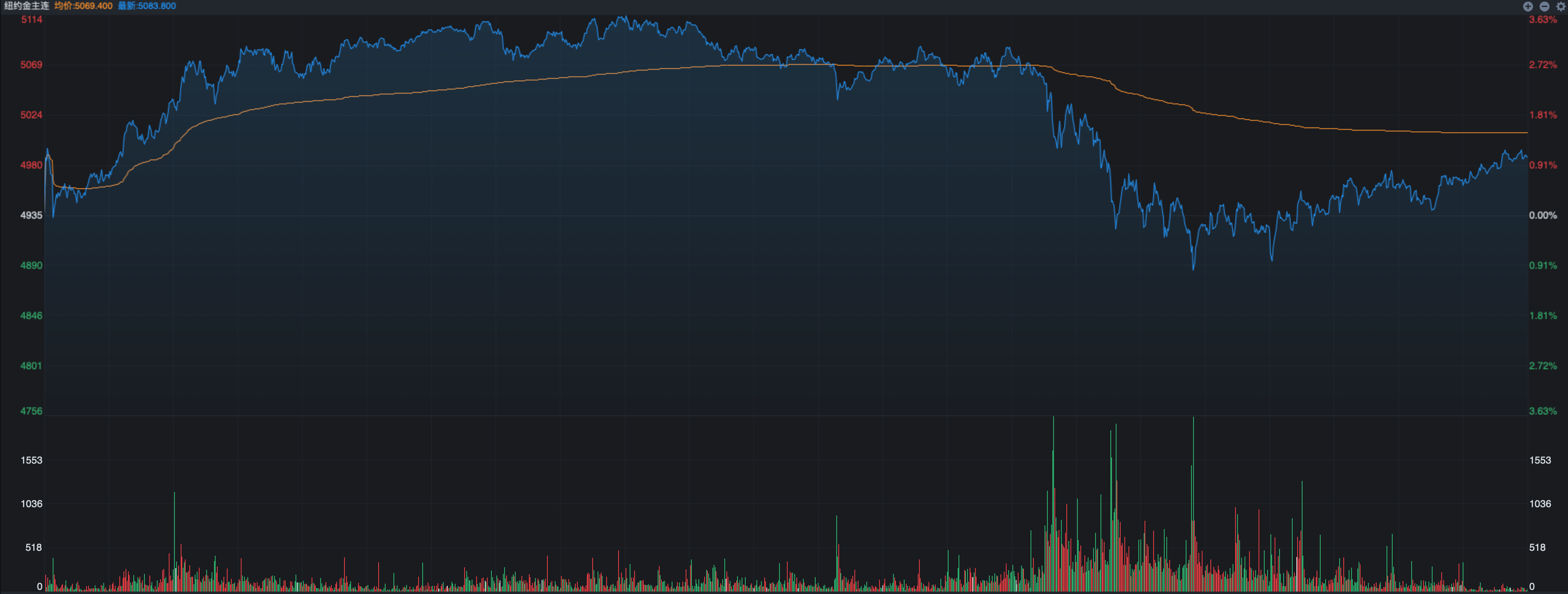
“网红基”国投瑞银白银LOF连续三跌停
Sou Hu Cai Jing· 2026-02-04 04:54
Core Viewpoint - The recent drastic decline in the net asset value of the Guotou Ruijin Silver Futures (LOF) fund has sparked market controversy, primarily due to valuation adjustments amid extreme volatility in the international silver market [2][3]. Group 1: Fund Performance and Valuation - On February 2, the fund's A-class share net value plummeted from 3.2838 yuan to 2.2494 yuan, marking a single-day drop of 31.5%, which set a record for the largest single-day decline in public funds [2]. - Following the valuation adjustment, the market trading price of the fund diverged significantly from its net asset value, with a premium rate of 64.6% calculated based on the latest net value of 2.3238 yuan [4]. - The Guotou Ruijin Silver Futures LOF is the only fund primarily investing in silver futures, focusing on contracts from the Shanghai Futures Exchange [4]. Group 2: Market Conditions and Price Movements - On January 30, the global precious metals market experienced extreme fluctuations, with spot silver prices dropping by 35% to around 73 USD/ounce, marking the largest single-day decline on record, and closing down 26.93% at 84.63 USD/ounce [4]. - Following this, silver prices rebounded slightly, with spot silver reported at 87.05 USD/ounce, reflecting a 2.33% increase [5]. - Major financial institutions maintain a positive long-term outlook for silver prices, despite increasing short-term discrepancies [5]. Group 3: Future Price Predictions - Goldman Sachs is optimistic about silver's performance during the photovoltaic restocking cycle, predicting that silver prices may reach 120 USD/ounce in the second quarter [6]. - Zheshang Futures anticipates that the average silver price will continue to rise in 2026, although overall volatility may increase, necessitating caution regarding potential pullbacks [6]. - Galaxy Futures believes that the current international macroeconomic environment and supply-demand fundamentals are converging, projecting that silver prices could benefit from loose liquidity and industrial demand, potentially reaching 100 USD/ounce [6].
伦敦银试探上行空间 美通过法案结束部分停摆
Jin Tou Wang· 2026-02-04 03:25
Group 1 - The U.S. House of Representatives passed a significant funding bill to end a partial government shutdown, with a vote of 217 in favor and 214 against, which will be sent to President Trump for signing into law [2] - The funding bill will provide financial support to various federal departments until September 30, the end of the fiscal year, with the exception of the Department of Homeland Security, which will receive funding for only two weeks to allow for further negotiations [2] - The final deadline for funding the Department of Homeland Security is set for February 13 [2] Group 2 - Current silver prices have broken through the resistance levels of $87.00 to $88.00, and if the price successfully surpasses $88.00, it may reach the next resistance level between $95.00 and $96.00 [2] - Support levels for silver are noted at $81.30 and $78.00, while resistance levels are at $89.50 and $96.00 [2]
国泰海通:白银价格中长期仍然受支撑 短期警惕银价回调风险
智通财经网· 2026-01-29 00:11
Core Viewpoint - Silver prices have surged to new highs since 2025, driven by a combination of industrial and financial demand, with silver's commodity attributes being stronger than those of gold [1][2] Group 1: Price Dynamics - The price of silver is more volatile than gold due to its stronger commodity attributes and broader industrial demand [2][3] - The historical relationship between gold and silver prices shows that they tend to move in sync, but silver's price is more elastic due to its financial attributes [2][3] - In the short term, financial attributes will amplify silver price fluctuations, influenced by speculative trading and market sentiment [4] Group 2: Demand Factors - Industrial demand is a core driver of silver prices, closely linked to global industrial cycles; increased demand during economic expansions supports higher prices [3] - Emerging industries such as photovoltaics, electric vehicles, and AI servers have created a structural and sustained increase in silver demand [3] - The global supply-demand gap for silver has been evident since 2020 and is expected to persist until 2025, providing a solid fundamental support for price increases [3] Group 3: Market Behavior - Speculative trading can lead to significant price volatility, with increased futures positions and ETF mechanisms contributing to market tightness [4] - The accumulation of silver in regions like India has reduced the available supply in the international market, exacerbating structural tensions in the spot market [4] - The recent surge in silver prices may lead to short-term overvaluation, necessitating caution regarding potential price corrections [4]
