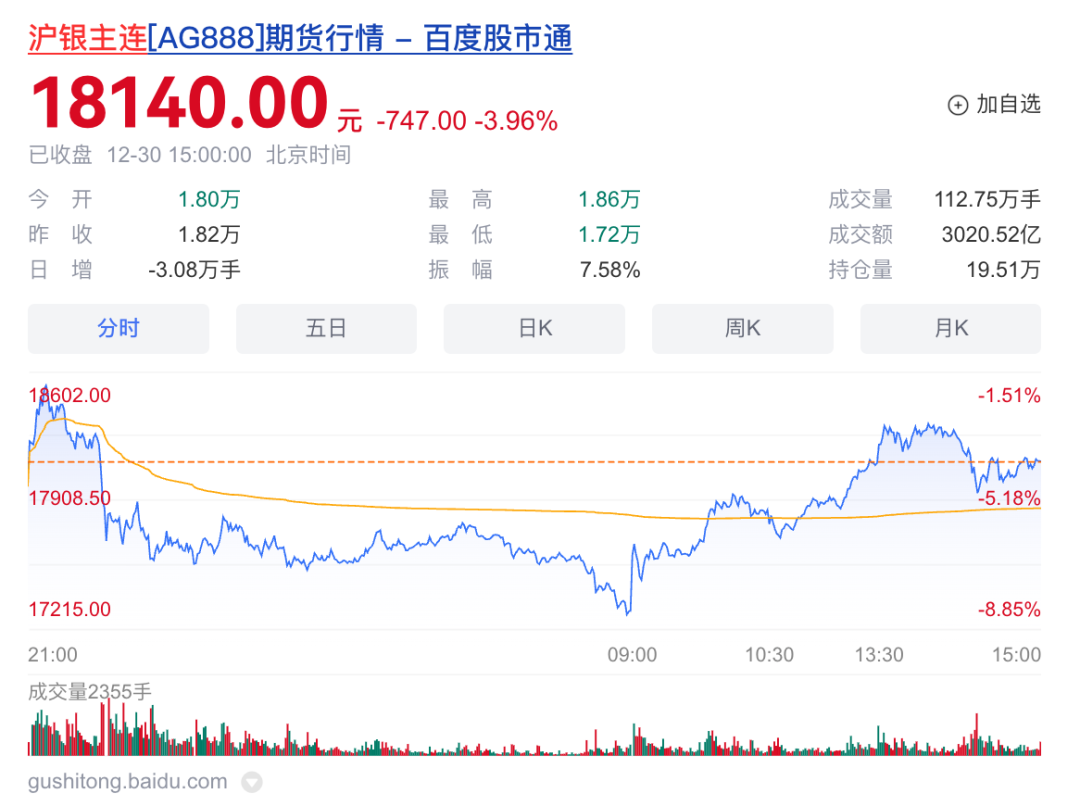
白银工业需求爆发

Search documents
2026年白银是否还会涨价 全链路QA解析
Sou Hu Cai Jing· 2026-02-07 12:30
Core Viewpoint - Silver is expected to continue a trend of oscillating upward in 2026, driven by structural supply-demand shortages, the Federal Reserve's easing cycle, and surging industrial demand, despite short-term risks from dollar fluctuations and speculative sentiment [1][2]. Supply and Demand Dynamics - The global silver supply-demand gap is projected to widen to 6,000-8,000 tons in 2026, with inventory levels hitting a low point and industrial demand remaining robust [1][2]. - On the supply side, silver production is expected to decline to 25,400 tons in 2026, with 70% coming from copper-lead-zinc by-products, and recycling growth at only 2.5% [3]. - Industrial demand is anticipated to account for 58% of total demand, with the photovoltaic sector consuming 7,560 tons annually, driven by a global installed capacity of over 600 GW [3]. Macroeconomic Factors - The Federal Reserve's continued easing cycle is expected to weaken the dollar, providing support for silver prices, with a predicted 3% decline in the dollar index in 2026 [4]. - The dollar's negative correlation with silver suggests that a weaker dollar will bolster silver's financial attributes [4]. Geopolitical and Industrial Demand - Geopolitical tensions are expected to enhance safe-haven demand for silver, while industrial applications in sectors like photovoltaics and AI are projected to significantly increase silver consumption [2][3]. - The shift in the gold-silver ratio, which has dropped to below 1:30, indicates silver's independence in pricing, with industrial demand becoming a core driver [2]. Policy Impacts - China's upgrade of silver export controls to a "one order, one review" system is expected to tighten global supply, as China accounts for over 50% of silver imports and 40% of industrial demand [4]. - Stricter environmental regulations on mining are limiting the number of active pure silver mines globally, further constraining supply [4]. Investment Considerations - Silver is deemed suitable for investors with moderate to high risk tolerance, with various investment options available, including physical silver and silver funds [5]. - The volatility of silver prices, highlighted by significant fluctuations in 2025 and early 2026, necessitates careful timing for entry into the market [5][6]. Market Tracking and Information Sources - Key market indicators to monitor include COMEX silver futures, London LBMA spot silver, and Shanghai Futures Exchange silver contracts [6]. - Continuous tracking of supply-demand data, macroeconomic policies, industrial dynamics, and institutional viewpoints from major banks will be crucial for informed investment decisions [7].
帮主郑重:金银暴涨失控?揭秘三轮暴涨真相,本轮走势独树一帜!
Sou Hu Cai Jing· 2026-01-26 14:14
Core Viewpoint - The recent surge in gold and silver prices is attributed to a unique combination of factors, marking a departure from previous market behaviors, with a focus on long-term investment strategies rather than speculative trading [1][4][6]. Group 1: Historical Context of Precious Metals Surge - The first major surge occurred in the 1970s when the dollar was decoupled from gold, leading to gold prices rising from $35 to over $800, while silver was driven to $50 due to speculative trading, resulting in a sharp decline when regulation was introduced [3]. - The second surge happened during the 2008 financial crisis, where gold prices increased from $800 to $1900 due to rampant money printing by central banks, driven by a singular focus on safe-haven assets, while silver lagged due to weak industrial demand [3]. - The third surge in 2020 was initially led by gold, with silver following as industrial demand from sectors like photovoltaics and new energy emerged, indicating a shift towards a combination of monetary easing and industrial demand [3]. Group 2: Current Market Dynamics - The current surge is driven by a "triple logic" of monetary credit loosening, explosive industrial demand for silver, and geopolitical risks combined with Federal Reserve policy expectations, creating a unique market environment [4]. - Central banks are increasingly purchasing gold, with projections indicating a net purchase of nearly 300 tons by 2025, signaling a shift towards gold as a new "hard currency" [4]. - Silver's industrial demand is surging due to its essential role in photovoltaics, electric vehicles, and AI servers, with a global shortage expected to continue for five consecutive years [4]. Group 3: Investment Strategies - Investors are advised to treat gold and silver as "asset allocation anchors" rather than ordinary commodities, with recommendations to consider gold ETFs and leading stocks related to silver and new energy for better liquidity and exposure to price increases [4][6]. - A suggested investment strategy includes maintaining a position of 5%-10% of total assets in precious metals to hedge against risks, while avoiding high-leverage futures trading [6]. - For those already holding positions, it is recommended to set profit-taking levels to secure gains while allowing for potential further increases in prices [6].


黄金+白银,价格持续走强的真相
Sou Hu Cai Jing· 2026-01-21 14:25
Group 1: Gold Market Dynamics - Gold prices have surged, with COMEX futures reaching $4,865 per ounce and London spot gold at $4,859.02 per ounce as of January 21, 2026, driven by weakening dollar credit, geopolitical uncertainties, and expectations of Federal Reserve rate cuts [1][2] - The U.S. federal debt reached $38.51 trillion by the end of 2025, with a federal deficit of $1.98 trillion, leading to a decline in global trust in dollar assets [2][20] - In 2025, gold prices set 53 historical records, with global gold ETF inflows totaling $89 billion, and central banks purchasing a net total of 297 tons of gold, providing strong support for prices above $4,000 [3][23] Group 2: Silver Market Dynamics - Silver's intrinsic value is being redefined due to its irreplaceable role in solar energy, electric vehicles, and AI data centers, with industrial demand expected to grow significantly [5][72] - The global silver market is facing supply constraints, with production growth limited by declining ore grades and mining difficulties, leading to a projected supply of 32,100 tons against a demand of 35,700 tons in 2025 [8][57] - As of January 20, 2026, COMEX silver prices reached $94.06 per ounce, reflecting a 216.5% increase since the beginning of 2025, driven by both industrial demand and financial attributes [8][74] Group 3: Macro Environment and Policy Impacts - The Federal Reserve's policy challenges and mixed economic data are key factors influencing short-term gold prices, with expectations of further rate cuts amid economic uncertainty [10][41] - Global economic growth momentum is slowing, with manufacturing PMIs in major economies indicating a deceleration, reinforcing gold's defensive asset appeal [11][42] - The ongoing trend of de-dollarization and the rise of gold in global reserves, which increased to 25.94% by January 2026, highlights gold's role as a hedge against credit risk [22][43] Group 4: Investment Opportunities - Companies like Zijin Mining and Chifeng Jilong Gold are projected to see significant earnings growth, with Zijin's EPS expected to rise from 1.21 yuan in 2024 to 2.31 yuan in 2026, indicating strong investment potential [12] - The performance of silver-focused companies such as Xingye Silver and Jiangxi Copper is also expected to benefit from rising silver prices and sustained industrial demand [12]
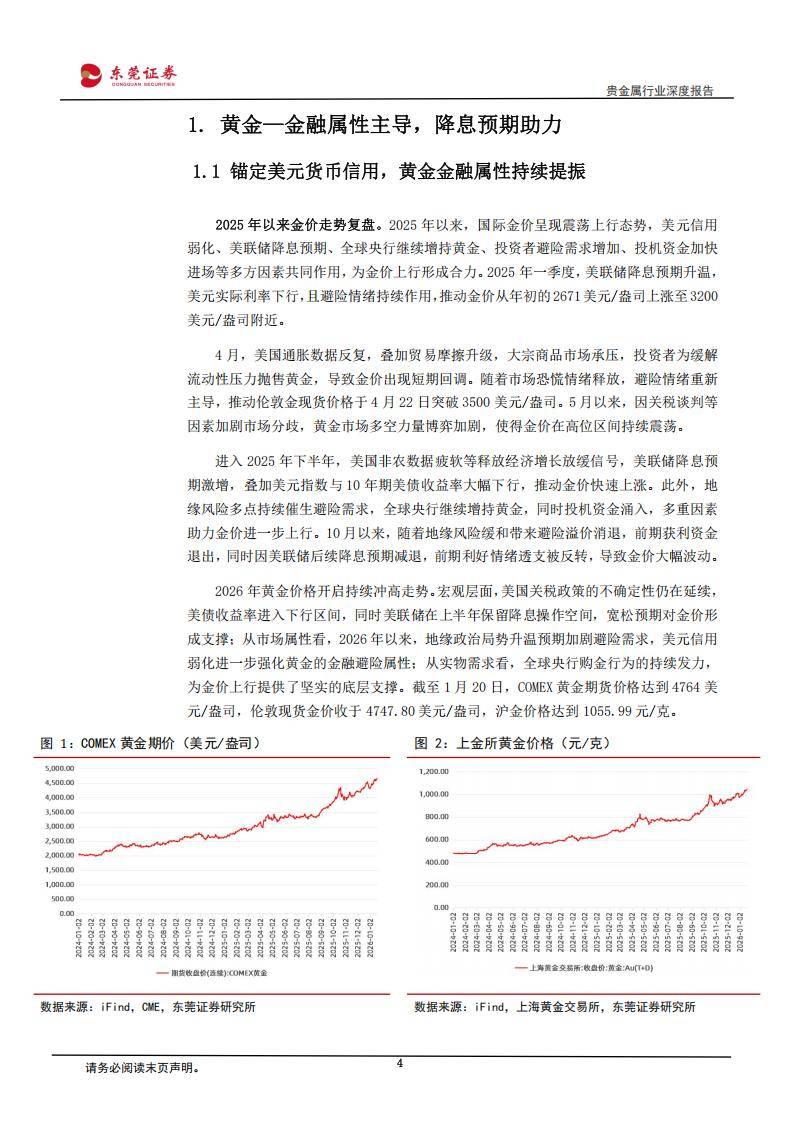
涨幅碾压黄金,投资者疯狂抢购银条,深圳水贝老板采购也靠抢:工厂不接单,回消息慢两分钟“秒光”
3 6 Ke· 2025-12-31 01:53
Core Viewpoint - The significant increase in silver prices in China, with prices rising from 12,000 yuan per kilogram to over 18,000 yuan, reflecting a 50% increase, has attracted considerable attention from investors [1][5]. Price Trends - Since late November, domestic silver prices have surged, with the Shanghai silver futures reaching a historical high of 19,998 yuan per kilogram on December 29 [5][13]. - The price of physical silver in Shenzhen reached 18.81 yuan per gram, indicating a strong demand amidst limited supply [3][10]. Supply and Demand Dynamics - The surge in silver prices has led to a shortage of silver bars, with sellers reporting that they are unable to fulfill orders due to high demand and factories not accepting new orders [3][5]. - Some sellers are requiring customers to pay a deposit to secure orders for silver bars, highlighting the competitive nature of the market [5][10]. Market Segmentation - While investment-grade silver bars are in short supply, silver jewelry stores have not experienced a significant impact on sales, indicating a divergence in consumer behavior [7][9]. - The processing fees for silver bars have become a notable part of the pricing structure, with some fees accounting for 21% of the selling price [10][11]. Industry Insights - The recent rise in silver prices is attributed to a combination of factors, including the return of silver's financial attributes, increased industrial demand, and market sentiment [13]. - Silver's industrial applications, particularly in electronics and photovoltaics, are expected to support long-term demand, with industrial usage accounting for over 50% of total silver demand [14].
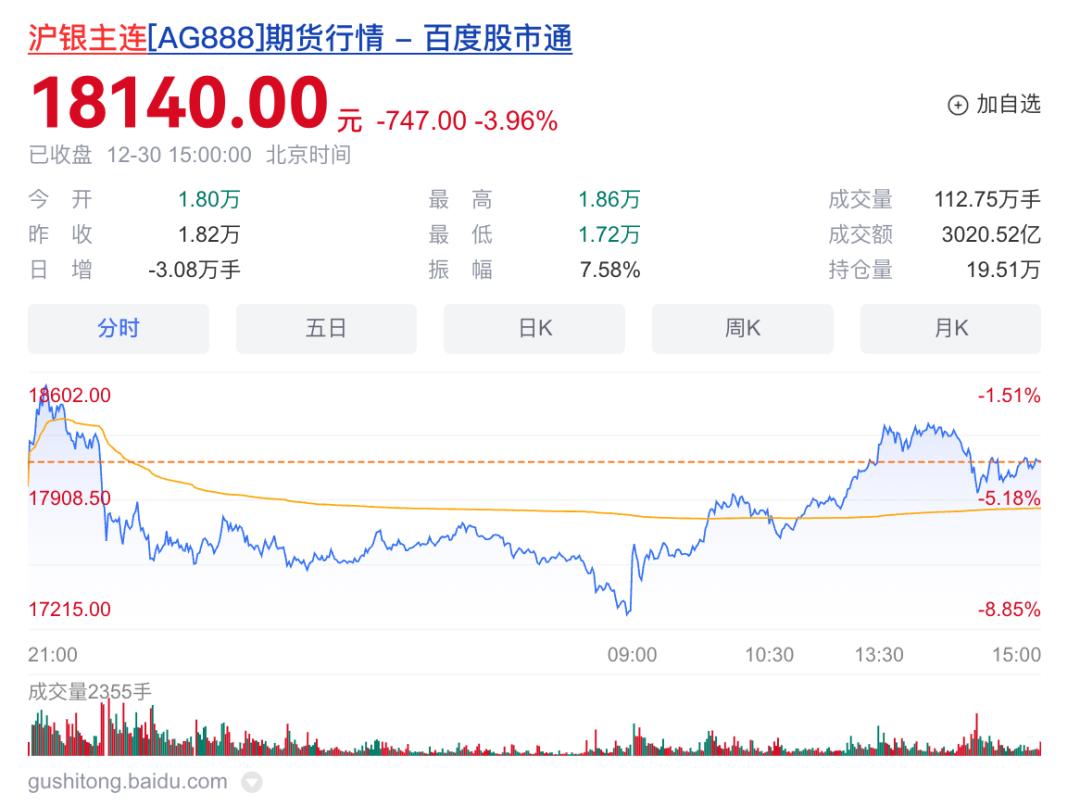
涨幅碾压黄金!投资者疯狂抢购银条,深圳水贝老板采购也靠抢:工厂不接单,回消息慢两分钟“秒光”
Mei Ri Jing Ji Xin Wen· 2025-12-30 10:08
Core Viewpoint - The significant increase in silver prices in China, with prices rising from 12,000 yuan per kilogram to over 18,000 yuan, reflecting a 50% increase, has attracted considerable attention from investors [1][5]. Price Trends - Since late November, domestic silver prices have surged, with the Shanghai silver futures reaching a historical high of 19,998 yuan per kilogram on December 29 [5][14]. - The international silver price has also seen a remarkable increase, with London spot silver rising from approximately $28.91 per ounce to $80 per ounce, marking an increase of nearly 160% for the year [5][14]. Market Demand and Supply - The surge in silver prices has led to a shortage of physical silver, with sellers reporting that silver bars are out of stock and factories are not accepting new orders [3][6]. - Retailers are experiencing high demand for silver bars, with some requiring customers to pay a deposit to secure their orders due to limited availability [6][11]. Industrial Demand - The increase in silver prices is attributed to a combination of factors, including the return of silver's financial attributes, a surge in industrial demand, and a rapid mean reversion of the gold-silver ratio [14][15]. - Silver's unique properties make it a critical raw material in industrial production, with industrial demand consistently accounting for over 50% of total silver demand [15]. Price Structure and Costs - The processing fees for silver bars have become significant, with some retailers indicating that these fees can account for up to 21% of the selling price [11][12]. - The current selling price for silver is approximately 18.81 yuan per gram, with additional processing fees impacting the overall cost for consumers [12][13]. Market Sentiment - The rising silver prices have raised concerns among industrial leaders, such as Tesla's CEO Elon Musk, who expressed worries about the implications of increasing silver costs on industrial development [15]. - The Shanghai Futures Exchange has issued warnings to the market to manage risks associated with the volatility in silver prices [15].