爽肤水

Search documents
与城市发展同步前行 屈臣氏今年要改造1500家门店
Sou Hu Wang· 2026-03-24 02:55
Core Viewpoint - Watsons has opened its first retro-themed pop-up store in Guangzhou, celebrating its 185th anniversary and reflecting on its historical roots in the city [3][4]. Group 1: Historical Context and Significance - The establishment of Watsons in Guangzhou dates back to 1828 with the opening of "Canton Dispensary," marking the beginning of its long-standing relationship with the city [4]. - Guangzhou's favorable business environment has supported Watsons' growth, with approximately 60,000 foreign enterprises, including 368 Fortune 500 companies, operating in the city [4]. - The city has become a hub for international brands, particularly in the beauty industry, with over 1,800 cosmetic manufacturers and an annual output value exceeding 100 billion yuan [5][6]. Group 2: Consumer Trust and Brand Evolution - Watsons has evolved from a pharmacy to a multi-category retailer, responding to changing consumer needs by introducing a variety of products, including personal care items and local brands [7][8]. - The pop-up store has attracted diverse consumers, serving as a nostalgic connection for older generations while also appealing to younger shoppers with contemporary products [10][11]. - Watsons' consistent presence in consumers' lives has established it as a trusted brand, bridging the gap between traditional and modern retail experiences [11]. Group 3: Innovation and Future Growth - Watsons focuses on three key dimensions for sustainable growth: accessibility, choice, and experience [12]. - The company has integrated digital solutions to enhance accessibility, allowing consumers to order online and receive products quickly through its "flash delivery" service [13]. - Watsons continues to introduce international brands while increasing the presence of local products, thus enhancing consumer choice [14]. - The retail experience is being redefined with clear functional areas in stores, professional consultations, and interactive elements to engage consumers [15][17]. - Watsons plans to upgrade 1,500 stores nationwide by 2026, aiming to enhance the immersive shopping experience and adapt to market changes [17].



汕头“数字枢纽”加快推动本地特色产业乃至全国产业走向全球 春节不打烊 广货出海忙
Nan Fang Ri Bao Wang Luo Ban· 2026-02-24 08:45
Core Insights - The Shantou Cross-Border Digital Economy Industrial Park has attracted 130 companies since its launch, serving as a digital platform for local products to reach global markets [1][2] - The West Moon & 1688 Shantou Cross-Border Selection Center operates a digital B2B platform, serving over 100 brands and facilitating nearly 100,000 daily shipments [2] - The collaboration between Shantou's textile and apparel industry and Thailand's Charoen Pokphand Group marks a significant milestone, with orders valued at nearly 10 million yuan [3] Group 1 - The Shantou Cross-Border Digital Economy Industrial Park is the first of its kind in Guangdong, focusing on an innovative model of "industrial belt + cross-border e-commerce" [1] - The West Moon platform provides a comprehensive solution for cross-border sellers, including product selection, sales, and fulfillment, enabling lightweight operations [2] - The platform has established over 30 self-operated warehouses overseas, covering regions such as North America, Europe, and Southeast Asia [2] Group 2 - The rise of industrial clusters in the Chaoshan region has led to an increase in the export of local products, with significant orders being fulfilled for the first time by companies like Guangdong Bailian [3] - The Shantou Cross-Border Digital Economy Industrial Park aims to innovate cross-border data flow and serve as a new hub for cross-border digital economy [3] - Companies like Baoshuan Cross-Border are focusing on building a one-stop cross-border service ecosystem to enhance local enterprises' global outreach [3]
为什么皮肤科医生不显老?真正的养颜秘诀你也可以学会
Yang Shi Xin Wen· 2026-02-13 02:14
Core Insights - The article emphasizes that 90% of skin issues stem from a damaged skin barrier rather than mere dehydration, highlighting the importance of proper skincare routines [1][2]. Group 1: Skin Barrier Damage - The skin barrier, composed of a lipid layer, stratum corneum, and moisture, serves as the first line of defense against external stimuli. Factors such as temperature fluctuations, dry air, and UV exposure can weaken this barrier, leading to symptoms like dryness and redness [2]. - Improper skincare habits, such as using hot water, harsh cleansers, and frequent exfoliation, can exacerbate barrier damage [3][4]. - Scratching and the use of irritating skincare products can further harm the skin barrier [5]. Group 2: Symptoms Requiring Medical Attention - Signs of potential inflammation or skin disease include erythema (red patches), papules (small raised bumps), exudation (fluid discharge), and severe itching, which may disrupt sleep [6]. Group 3: Sensitive Skin Groups - Elderly individuals may experience thinner, drier skin with reduced barrier function, necessitating enhanced moisturizing [7]. - Infants require specialized moisturizing products due to their delicate skin [8]. - Adults may face skin issues due to genetic predispositions or poor habits, such as frequent scratching or inadequate post-cleansing moisturization [9]. - Individuals who over-care for their skin, such as through excessive cleansing or reliance on strong exfoliants, may inadvertently damage their skin barrier [10]. Group 4: Three-Step Skin Repair Method - The recommended skincare routine consists of cleansing, moisturizing, and sun protection. Gentle cleansing is advised to avoid over-intervention [12]. - Proper moisturizing involves distinguishing between hydration (adding moisture), water retention (preventing moisture loss), and overall moisturizing to maintain skin hydration [13]. - Different skin types should select appropriate products: creams for dry skin, lightweight formulations for oily skin, and a combination for mixed skin types [14][15][16]. Group 5: Expert Recommendations - Simplifying skincare routines to meet the basic functions of cleansing, moisturizing, and sun protection is encouraged, avoiding excessive layering of products [17]. - The order of application should follow a "thin to thick" principle, starting with toners and ending with sunscreen [19]. - Strict sun protection is crucial to prevent UV damage, which can silently harm the skin barrier [21]. Group 6: Sensitive Skin Care and Advanced Recommendations - For sensitive skin, it is vital to enhance moisturizing to repair the barrier and minimize external irritants, avoiding exfoliating products [23]. - In cases of mild discomfort, applying a thick layer of moisturizer can provide relief [24]. - Caution is advised with cosmetic procedures; treatments like hydrating injections should only be performed when the skin barrier is intact [25].

2025年面部护肤电商消费趋势
知行战略咨询· 2026-01-14 14:24
Investment Rating - The report indicates a positive investment outlook for the facial skincare industry, particularly in the e-commerce segment, with a projected growth rate of 19.4% year-on-year [9]. Core Insights - The facial skincare category is leading the beauty and skincare market, with significant sales growth on e-commerce platforms, especially on Douyin, which is expected to surpass 1340.39 billion in sales by 2024 [9][10]. - Tmall's market share is declining, projected to drop to 30.5% by 2024, while Douyin is rapidly gaining market share [9][10]. - The report highlights various product categories within facial skincare, noting that while some categories are experiencing growth, others are facing declines [12][14][16]. E-commerce Market Trends - The overall e-commerce market for facial skincare is expected to grow by 19.4% year-on-year, with Douyin becoming the leading platform [9]. - Tmall's sales are projected to decline, while Douyin's sales are expected to grow significantly, reaching 1340.39 billion by 2024 [9][10]. - The report provides detailed sales figures for major platforms, indicating a shift in consumer preferences towards Douyin [10]. Product Category Performance - The report categorizes facial skincare products into several key segments, including serums, creams, masks, and cleansers, with varying growth rates across these categories [8][12][14][16]. - Specific product categories such as lotions and toners are showing positive growth, while others like facial scrubs and certain masks are declining [12][14][16]. - Douyin shows remarkable growth in categories like facial care sets and liquid serums, with growth rates of 48.6% and 54.0% respectively [16][17]. Brand Performance - The report lists top-performing brands in the facial skincare market, highlighting significant sales figures and growth rates for brands like Proya, L'Oreal, and Estee Lauder [19][20][21]. - Proya is noted for its strong growth, with a sales increase of 103.9%, while other brands like Sk-II and Olay are experiencing declines [19][20][21]. - The competitive landscape is shifting, with emerging brands gaining traction alongside established players [19][20][21].




行业周报:柬埔寨公布对中免签政策,蜜雪、古茗进军早餐-20251207
KAIYUAN SECURITIES· 2025-12-07 14:41
Investment Rating - The report maintains a "Positive" investment rating for the industry [1] Core Insights - The report highlights the growth in tourism between China and Cambodia, driven by the new visa-free policy, which is expected to boost tourist flows [5][15] - The breakfast market in China is identified as a significant opportunity, with major brands like Mixue and Guoming entering the segment [6][33] - The education sector is experiencing a shift towards vocational training due to declining numbers in traditional higher education applications, emphasizing employment-oriented education [39][44] - Lin Qingxuan, a high-end domestic skincare brand, is showing strong growth in both online and offline sales, with a notable increase in revenue and profit margins [45][50] Summary by Sections 1. Travel and Tourism - Cambodia has implemented a visa-free policy for Chinese citizens, expected to increase tourist numbers significantly, with a 45% year-on-year increase in Chinese tourists from January to October 2025 [5][15] - In November 2025, Hainan's duty-free shopping reached 2.38 billion yuan, a 27.1% increase year-on-year, despite a slight decrease in shopping visitors [23][24] 2. Breakfast Market - The breakfast market in China is valued at approximately 1.7 trillion yuan, with the external breakfast market estimated between 700 to 800 billion yuan [6][33] - Mixue has launched breakfast offerings in several cities, targeting consumers with affordable pricing [37][38] 3. Education Sector - The number of students taking the national college entrance examination has decreased for the first time in eight years, with a significant drop in graduate school applications [39][40] - Vocational education is gaining traction as students seek better employment outcomes, with a reported 95%+ employment rate in vocational programs [44] 4. Skincare Industry - Lin Qingxuan reported a revenue of 1.05 billion yuan in the first half of 2025, marking a 98.3% year-on-year increase, with online sales growing significantly [45][47] - The brand's product mix includes a high proportion of premium skincare items, contributing to improved profit margins [50][55] 5. Market Performance - The Hong Kong stock market saw the consumer services and media sectors underperforming, while the retail sector outperformed the market [59][65] - Notable stock performances included significant gains in retail and education sectors, with specific companies like Liufu Group and Gaoxin Retail leading the gains [65][66]
林清轩递表港交所 联席保荐人为中信证券和华泰国际
Zheng Quan Shi Bao Wang· 2025-12-04 00:19
Company Overview - Lin Qingxuan has submitted an application to list on the main board of the Hong Kong Stock Exchange, with CITIC Securities and Huatai International as joint sponsors [1] - The company is a high-end domestic skincare brand in China, focusing on the anti-wrinkle and firming skincare market, characterized by its use of natural camellia flower ingredients and the innovative "oil-based skincare" concept [1] Product Performance - Lin Qingxuan launched its camellia facial essence oil in 2014, with cumulative sales exceeding 45 million bottles, maintaining the top position in the national facial essence oil product rankings for 11 consecutive years [1] - It is the only facial essence oil that has achieved over 100 million RMB in retail sales for 8 consecutive years [1] Product Range and Market Position - As of June 30, 2025, Lin Qingxuan will offer 230 SKUs, covering a full range of high-end skincare solutions including essence oils, creams, toners, emulsions, serums, masks, and sunscreens [1] - According to data from Zhi Zhi Consulting, Lin Qingxuan ranks first among all high-end domestic skincare brands in China by retail sales in 2024, with a market share of 1.4% [1] - The company is also the only domestic brand to enter the top 15 high-end skincare brands in China (including both domestic and international brands), ranking 13th [1] Market Growth Potential - The market size for high-end skincare products in China is expected to grow from 114.4 billion RMB in 2024 to 218.5 billion RMB by 2029, with significant growth potential in the high-end anti-wrinkle and firming products market and the facial essence oil market, projected to reach 155.5 billion RMB and 13.9 billion RMB respectively by 2029 [1] Sales Strategy - The company has established an OMO (Online-Merge-Offline) integrated sales network, combining online direct sales, online retailers, and offline stores, including direct stores, partner stores, retailers, corporate clients, and distributors [1]

研判2025!中国爽肤水行业发展历程、市场政策、产业链图谱、市场规模、竞争格局及发展趋势分析:国产品牌加速突围,抢滩步伐加速[图]
Chan Ye Xin Xi Wang· 2025-11-27 01:48
Overview - The consumption of toner in China is expanding beyond female consumers as male skincare awareness increases, leading to a new growth point in the market [1][9] - The sales revenue of toner in China reached 20.863 billion yuan in 2021, with a year-on-year growth of 2.98%, but is projected to decline to 17.865 billion yuan in 2024, a decrease of 3.25% [1][10] - High-end toners account for approximately 55.47% of the market, while mass-market toners make up about 44.53% [1][10] Industry Development - The toner industry in China has evolved from basic cleansing products to a mature category with diverse sub-segments, entering a phase of high-quality development characterized by multiple innovations [4] - The rise of "ingredient-focused" consumers has led to the popularity of natural plant extracts and additive-free formulations, while new technologies like micro-ecological skincare and nano-encapsulation enhance product efficacy [4] - Online channels such as e-commerce and live streaming have emerged, allowing both domestic and international brands to expand their reach, while offline stores upgrade consumer experiences through smart skin testing [4] Market Policies - The Chinese government has implemented a series of regulations to enhance the development of the cosmetics industry, including guidelines for production quality management and safety assessments, pushing the toner industry towards standardization and sustainability [6] Industry Chain - The upstream of the toner industry includes suppliers of raw materials like glycerin, hyaluronic acid, and packaging materials, while the midstream involves research and production, and the downstream encompasses various sales channels including e-commerce and retail [4][8] Consumer Insights - The core consumer group for toners in China is predominantly female, accounting for 87.6%, but the male consumer segment is growing, with increasing acceptance of refreshing and non-greasy products [8] - The age demographic shows that consumers aged 18-35 represent over 68.3% of the market, with younger consumers particularly influenced by online marketing and product safety [8] Competitive Landscape - The toner market in China is highly competitive, featuring both international brands like L'Oréal and Shiseido, and domestic players such as Proya and Beitaini, with the latter gaining market share through high cost-performance ratios [10][11] - Proya, for instance, focuses on technology-driven skincare targeting young professional women, while Beitaini offers a range of skincare and cosmetic products, achieving significant revenue growth [11][12] Future Trends - The toner market is expected to move towards more specialized products catering to specific skin types and conditions, with a focus on "no-additive" formulations and the use of gentle, natural ingredients [14] - Brands will increasingly emphasize ingredient transparency and safety, enhancing consumer trust through clear sourcing and testing information [14]


“保湿≠补水”!秋冬季皮肤保湿的8大误区
Ren Min Wang· 2025-10-24 01:32
Core Points - The article discusses common misconceptions about skincare during the winter season, emphasizing the importance of proper hydration and moisture retention methods [1][4][6]. Misconceptions Summary - **Misconception 1: Applying toner multiple times for hydration** Toner only temporarily moistens the skin and does not lock in moisture. Overuse can strip the skin's natural oils, leading to increased dryness. The correct approach is to apply toner once and follow with serum and cream for effective hydration and moisture retention [4][6]. - **Misconception 2: Thicker cream equals better moisturization** The effectiveness of a cream is determined by its ingredients rather than its thickness. Heavy creams may not be absorbed properly and can lead to clogged pores. It is essential to choose creams based on skin type [6][8]. - **Misconception 3: Frequent mask application ensures hydration** Daily mask use can overhydrate the skin, damaging the skin barrier and leading to sensitivity. It is recommended to use masks 2-3 times a week during autumn and winter [8][10]. - **Misconception 4: "Oil-based skincare" is suitable for everyone** While oil-based products can help lock in moisture, they are not suitable for all skin types. Oily or acne-prone skin may experience clogged pores and breakouts from heavy oils [10][12]. - **Misconception 5: No need for sunscreen in autumn** UVA rays can penetrate deeper in autumn, damaging collagen and leading to dryness. It is crucial to use sunscreen with SPF 30+ and reapply every 4-6 hours [12][14]. - **Misconception 6: Switching to a full set of rich products during seasonal change** Abruptly changing to richer products can overwhelm the skin, leading to sensitivity. A gradual transition is recommended [14][16]. - **Misconception 7: Frequent exfoliation improves dryness** Over-exfoliating can damage the skin's protective barrier, making it drier and more sensitive. It is advised to reduce exfoliation frequency in winter [16][18]. - **Misconception 8: A universal moisturizer works for all skin types** Different skin types have unique hydration needs, and there is no one-size-fits-all moisturizer. Tailoring products to specific skin types is essential for effective hydration [18][21].

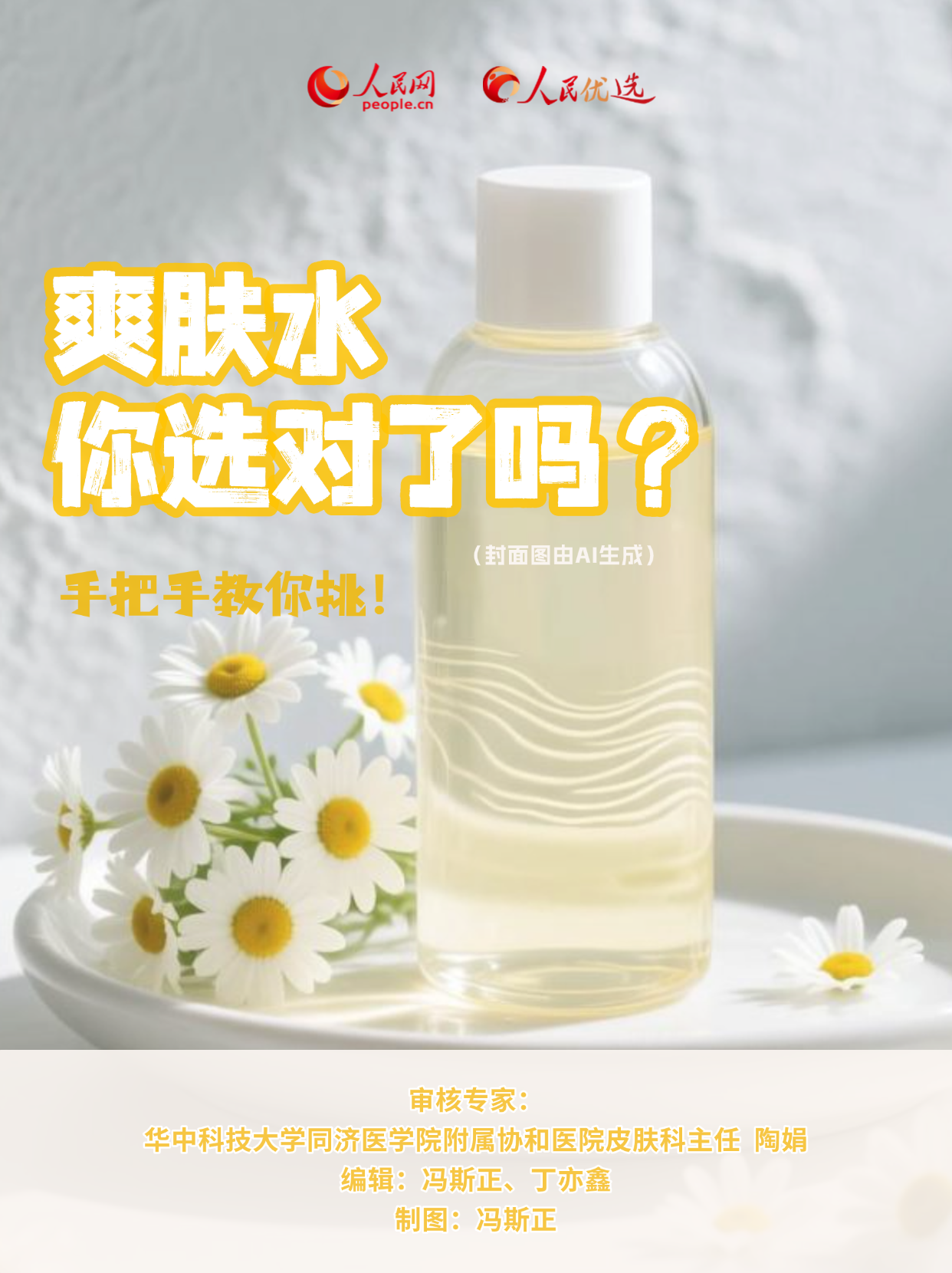
爽肤水你选对了吗?手把手教你挑
Ren Min Wang· 2025-09-02 01:34
Core Viewpoint - The article discusses the importance and various aspects of toner in skincare routines, highlighting its role as a foundational product for hydration and skin preparation. Group 1: Toner Overview - Toner, also known as astringent or lotion, is a basic skincare product used after cleansing to replenish moisture and adjust skin pH to a weakly acidic state, preparing the skin for subsequent skincare steps [3][4]. - The main functions of toner include hydrating the skin, soothing it, and enhancing the effectiveness of other skincare products [3]. Group 2: Choosing the Right Toner - For dry skin, moisturizing toners containing ingredients like hyaluronic acid and glycerin are recommended to retain moisture [4]. - Oily skin types should opt for astringent or oil-control toners with alcohol or witch hazel to manage oil and minimize pores [4]. - Sensitive skin requires gentle, soothing toners with ingredients like chamomile or ceramides, avoiding alcohol and fragrances [4]. Group 3: Common Misconceptions - Misconception 1: More toner is better. Overuse can burden the skin; moderation is advised [5]. - Misconception 2: Toner is only for post-cleansing. It can be reapplied throughout the day, especially in dry environments [5]. - Misconception 3: Thicker toners are more moisturizing. Moisturizing ability depends on the concentration of hydrating ingredients, not thickness [6]. Group 4: Product Selection Tips - Avoid blindly pursuing high-priced products; the best choice is one that suits individual skin needs [6]. - Check ingredients to avoid irritants like fragrances and dyes, particularly for sensitive skin [6]. - Consider product reputation and brand credibility when selecting toners [6]. Group 5: Seasonal Usage - The need for seasonal adjustments in toner usage depends on skin type and product type. For example, dry skin may require richer toners in winter and lighter ones in summer [10][11]. - Oily skin should use astringent toners in summer and can switch to more hydrating options in winter [10][11]. Group 6: Storage and Shelf Life - Toners should be stored away from direct sunlight to prevent active ingredient degradation, ideally in a cool, dark place or refrigerator [12]. - The typical shelf life is 2-3 years unopened and 6-12 months once opened; any changes in color, texture, or smell indicate it should be discarded [12][14]. Group 7: Toner vs. Other Products - Toner cannot fully replace lotions or masks; its moisturizing ability is limited compared to lotions, which lock in moisture, and masks, which provide intensive care [15][16]. - Toner serves as a foundational step, while lotions and masks complement its function for comprehensive skincare [16].
暴跌51%!“医美面膜第一股”敷尔佳,业绩爆雷!
凤凰网财经· 2025-08-24 12:51
Core Viewpoint - The performance of Fulejia, known as the "first stock in medical beauty masks," has significantly declined, with a notable drop in revenue and profit in the first half of 2025 [2][7]. Financial Performance Summary - Fulejia reported a revenue of 863.11 million yuan, a year-on-year decrease of 8.15% [3]. - The net profit attributable to shareholders was 229.66 million yuan, down 32.54% year-on-year [3]. - The net profit after deducting non-recurring gains and losses was 166.17 million yuan, a substantial decline of 48.66% [3]. - The net cash flow from operating activities was 161.63 million yuan, down 54.69% [3]. - Basic and diluted earnings per share were both 0.44 yuan, a decrease of 32.31% [3]. - Total assets decreased by 6.33% to 5.70 billion yuan, while net assets attributable to shareholders fell by 3.01% to 5.49 billion yuan [3]. Reasons for Revenue Decline - The company attributed the revenue decline to the optimization of offline channels and increased promotional expenses, which surged by 39.56% to 420 million yuan, accounting for 48.67% of revenue [4][16]. - R&D investment was only 23.33 million yuan, representing a mere 2.7% of revenue, indicating a heavy reliance on promotional spending rather than innovation [4][21]. Market Competition and Product Performance - Fulejia's medical device segment generated 238.29 million yuan, a significant drop of 48.07%, while the cosmetics segment saw a revenue increase of 29.95% to 624.82 million yuan [8][9]. - The competition in the cosmetics industry is intensifying, with major companies entering the medical beauty sector, leading to price wars [9][11]. Sales Channel Shift - The company is shifting its sales strategy from offline to online channels, with online sales contributing 80.50% of total revenue, a 47.11% increase year-on-year [14][15]. - Offline sales dropped significantly by 63.99%, now accounting for only 19.50% of total revenue [14]. Future Strategies - Fulejia plans to focus on expanding its product line in the medical device sector and enhancing brand development through sub-brand incubation and flexible marketing strategies [11][12]. - The company aims to increase its online presence and sales, although it has been criticized for its late transition to online channels [18][19]. R&D and Regulatory Challenges - Fulejia's R&D investment remains low compared to peers, with only 31 patents approved and limited medical device registrations [22]. - Recent regulatory changes may impact the classification of medical dressings, potentially affecting the company's product offerings [22].