盲盒

Search documents
盲盒的天花板,被泡泡玛特自己摸到了
虎嗅APP· 2026-03-05 11:09
Core Viewpoint - The article discusses the transformation of the toy industry, particularly focusing on the shift from traditional collectible toys to AI-driven interactive toys, highlighting the need for a new narrative in the market as consumer preferences evolve [4][56]. Group 1: Market Performance and Trends - LABUBU has gained immense popularity, becoming a social currency, while the stock price of Pop Mart has significantly declined from a peak of 339 HKD in August 2025 to around 230 HKD by February [5][6]. - Despite strong financial performance, with revenue of 13.88 billion CNY and a net profit of 4.71 billion CNY in the first half of 2025, the stock price continues to drop, indicating market concerns about future growth potential [7][8]. Group 2: Industry Evolution - The toy industry has reached a turning point, transitioning from a collectible era (1990s-2010s) to a blind box era (2016-2025), where the focus shifted from scarcity to consumer engagement through surprise and social value [15][18]. - The current blind box model is losing its excitement as consumer demand evolves towards interactive and emotionally engaging experiences rather than mere collectibles [13][20]. Group 3: AI Toy Concept - AI toys represent a new category that emphasizes long-term emotional connections rather than short-term excitement, requiring a fundamental shift in the business model from instant gratification to sustained engagement [26][28]. - The AI toy market can rapidly develop new IPs, with examples like RAGUS being created in just three months, showcasing the potential for faster innovation compared to traditional toy development cycles [31][41]. Group 4: User Experience and Engagement - Traditional toys offer a fleeting experience centered around unboxing, while AI toys provide ongoing interaction and emotional growth, allowing users to form deeper connections with their toys [34][37]. - The business model for AI toys allows for continuous content updates and subscription services, fostering a long-term relationship with users rather than relying solely on new product releases [39][40]. Group 5: Investment and Future Outlook - The AI toy sector has attracted significant investment, with 19 funding events in 2025, indicating strong market interest and the potential for growth in this new category [42][41]. - Companies like Pop Mart are exploring AI integration but face challenges in balancing their existing business models with the new demands of AI-driven products [44][46].

泡泡玛特四个月市值蒸发2000亿港元,LABUBU市场溢价在消退
Di Yi Cai Jing· 2025-12-12 03:26
Group 1 - The stock price of Pop Mart (09992.HK) has been declining, with a drop of over 8% on December 8 and over 5% on December 9, resulting in a cumulative decline of approximately 40% since its peak of HKD 339.8 per share in August, leading to a market value loss of over HKD 200 billion (approximately RMB 180 billion) [1] - Pop Mart's profitability has been increasing, with a net profit of RMB 9.2 billion in the first half of 2024 and an expected total of RMB 31.3 billion for the entire year, while the net profit for the first half of 2025 is projected to be RMB 45.7 billion [1] - The surge in stock price is partly attributed to the popularity of its flagship IP, LABUBU, which has gained significant traction since 2025, aided by endorsements from foreign celebrities and public figures [1] Group 2 - Other IPs such as "Star People" and "Crying Baby" have also seen price increases in the secondary market, but the expansion of Pop Mart's production capacity is causing some IPs to lose their appeal due to oversupply [2] - The production capacity for plush toys has increased to over 30 million units per month, ten times that of the same period last year, as the company is still in a "capacity chase" phase [2] - A report from Deutsche Bank indicates that the market premium for LABUBU and other popular IPs has begun to decline, with the premium for hidden versions of LABUBU shrinking by over 50% since August, and regular versions dropping below official retail prices [2] Group 3 - The decline in both stock and product prices indicates that neither Pop Mart's shares nor its trendy toys currently possess ideal investment attributes [3] - Industry analysts suggest that the value of blind boxes and other related products is primarily derived from their IP, and they have not yet become "collectibles," serving more as emotional value for fans [3] - There is a need for Pop Mart to enhance its IP storytelling and expand its IP matrix, as well as to find new innovative combinations in the trendy toy and Chinese manufacturing sectors for future growth [3]

迷你版LABUBU开售即售罄
第一财经· 2025-08-29 00:08
Core Viewpoint - The commercial value of an IP only begins when it becomes a world-class super IP, as stated by Pop Mart's Chairman and CEO Wang Ning [3]. Group 1: Product Launch and Sales Performance - On August 28, Pop Mart launched the "Mini Labubu" as an extension of the Labubu brand, with online sales starting at 10 PM and offline sales the following day [4]. - The launch event saw significant engagement, with over 2.37 million viewers on Pop Mart's Tmall live stream and over 840,000 on the box machine WeChat mini-program before the official sale [4]. - At the time of the official launch, more than 580,000 people had added the Mini Labubu to their carts, and within two minutes of the sale, over 300,000 units were sold, generating over 23.7 million yuan in sales [4]. Group 2: Market Trends and Consumer Sentiment - Despite the successful launch of the Mini Labubu, the popularity of the regular Labubu has declined, with the average transaction price on second-hand platforms dropping from 2,118.7 yuan in June to 760.2 yuan recently, a decrease of nearly two-thirds [7]. - Analysts express skepticism about the Mini Labubu's ability to generate sustained social media buzz, suggesting it may only achieve short-term popularity [8]. - The strategic intent behind launching the Mini version is seen as a marketing choice to maintain visibility and fill a gap in the market, rather than a significant innovation in the brand's narrative [9].
实探!泡泡玛特“一货难求”背后:黄牛与山寨产业链隐现
Zheng Quan Shi Bao Wang· 2025-08-04 00:43
Core Viewpoint - The article highlights the booming popularity of Pop Mart's products, particularly the LABUBU series, which has led to significant supply challenges and the emergence of a secondary market driven by scalpers and counterfeit goods [1][2][3][4][5][9]. Group 1: Market Demand and Sales Dynamics - The summer season has seen a surge in customer traffic at Pop Mart stores, particularly among students, leading to increased spending by parents [2]. - LABUBU products are not directly available for purchase in stores, requiring customers to participate in online flash sales, which have proven extremely competitive [2][3]. - The online limited release model has facilitated the rise of scalpers, who quickly buy up stock and resell it at a premium in various online communities [3][4]. Group 2: Scalper and Counterfeit Issues - The scalper market has become a significant issue, with dedicated groups forming to share information on product restocks, often leading to rapid resales at inflated prices [3][4]. - A gray market has emerged where individuals charge fees for access to real-time restock notifications, often employing deceptive practices [3]. - Counterfeit products are rampant, with some sellers openly advertising fake goods, while others create convincing replicas that are sold as genuine [5][6]. Group 3: Company Performance and Valuation - Pop Mart's strong sales have resulted in explosive revenue growth, with a projected revenue increase of no less than 200% and net profit growth of at least 350% for the first half of 2025 [9]. - The company's stock price has seen significant appreciation, reaching a historical high of 283.4 HKD, with a market capitalization exceeding 380 billion HKD at its peak [9]. - Analysts express optimism about Pop Mart's long-term prospects, citing its robust retail business model and competitive advantages in the market [9][10]. Group 4: Future Challenges and Opportunities - Despite positive growth, the company faces potential volatility in stock prices due to the unpredictable nature of popular IP products [10][11]. - The company is encouraged to enhance its IP development capabilities to maintain its competitive edge and drive global expansion [10][11]. - Analysts predict strong future growth rates for sales and profits, driven by strong IP, store expansion, and improved productivity [11].
龙虎榜复盘 | 汽车零部件开盘走强,机构整体卖多买少
Xuan Gu Bao· 2025-06-11 10:02
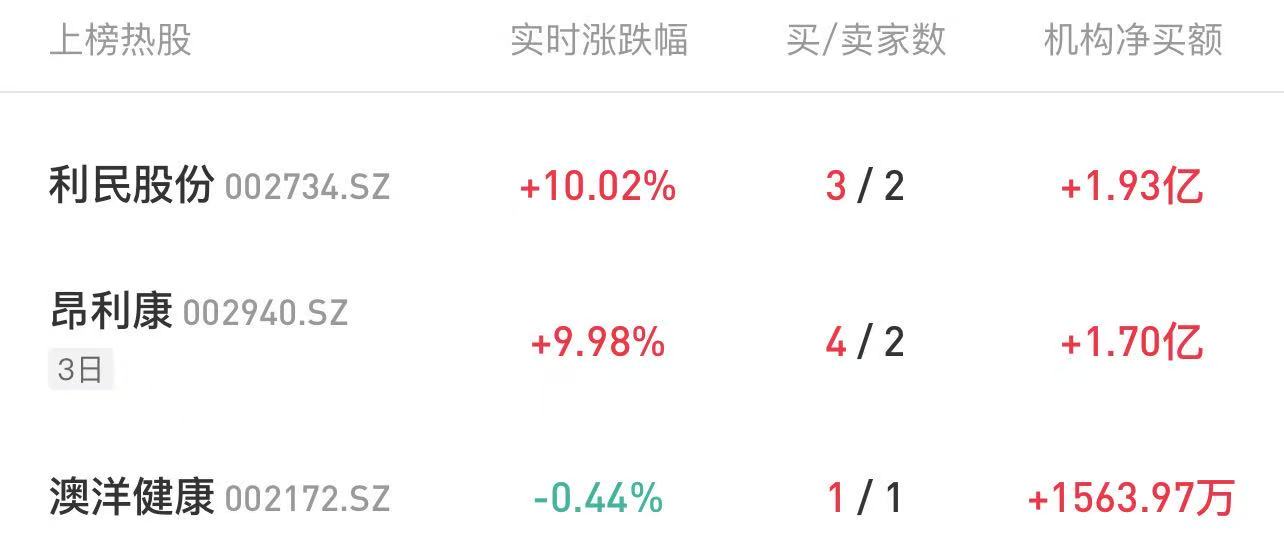
Group 1 - Institutional investors bought a total of 30 stocks, with net purchases in 9 stocks and net sales in 21 stocks on the day [1] - The top three stocks with the highest institutional purchases were: Limin Co., Ltd. (¥193 million), Anglikang (¥170 million over three days), and Aoyang Health (¥13.56 million) [1] - Limin Co., Ltd. saw a net purchase of ¥193 million from 5 institutions, benefiting from rising prices of key products such as Abamectin and Mancozeb, which is expected to enhance its profitability [3] Group 2 - The stock of Limin Co., Ltd. increased by 10.02% with 3 buyers and 2 sellers [2] - Anglikang's stock rose by 9.98% with 4 buyers and 2 sellers [2] - The automotive industry is experiencing a shift as major companies have committed to standardizing supplier payment terms to 60 days, which may alleviate profit pressures across the industry [3]