
石油供需关系

Search documents
原油日报:高开后震荡下行-20260306
Guan Tong Qi Huo· 2026-03-06 12:03
Report Industry Investment Rating - Not provided Core Viewpoints - OPEC+ agreed to increase oil production by 206,000 barrels per day in April, with the further production increase plan undetermined and subject to adjustment. The situation in the Middle East remains tense, and it is expected that crude oil prices will fluctuate strongly in the near future. The progress of the situation in the Middle East has a significant impact on crude oil price fluctuations [1]. Summaries by Relevant Catalogs Market Analysis - OPEC+ will increase oil production in April to cope with the sharp decline in Iran's crude oil exports after the attack. The next meeting will be held on April 5. EIA data shows that the increase in US crude oil inventories exceeded expectations, while the decrease in refined oil inventories was relatively small, and the overall oil product inventories continued to increase. The Russia-Ukraine conflict has not made substantial progress, and both sides are still attacking each other. The US and Israel launched an air strike on Iran, and Iran counterattacked. The oil tanker passage through the Strait of Hormuz has been blocked, and Iraq's Rumaila oil field has cut its daily production. Qatar's LNG production has been affected. Trump said the military action against Iran may last 4 - 5 weeks, and Iran claims to be ready for a long - term war. The US will provide insurance for oil tankers passing through the Strait of Hormuz and may send naval escorts. Saudi Arabia is considering transferring crude oil through the east - west oil pipeline. The US Treasury is expected to announce measures to deal with soaring energy prices [1]. Futures and Spot Market Conditions - The main crude oil futures contract 2604 fell 0.14% to 664.8 yuan/ton, with a minimum price of 622.1 yuan/ton and a maximum price of 696.6 yuan/ton. The open interest decreased by 1,576 to 34,244 lots [2]. Fundamental Tracking - The EIA monthly report raised the 2026 WTI crude oil price by $0.79 per barrel to $52.21 per barrel, lowered the 2026 global oil demand from the previous forecast of 105.2 million barrels per day to 104.8 million barrels per day, and raised the 2026 global oil production from the previous forecast of 107.4 million barrels per day to 107.7 million barrels per day. The IEA raised the 2026 global oil demand growth rate by 70,000 barrels per day to 930,000 barrels per day and raised the 2026 global oil production growth rate by 100,000 barrels per day to 2.5 million barrels per day. US EIA data on March 4 showed that the US crude oil inventory for the week ending February 27 increased by 3.475 million barrels, exceeding expectations, and the overall oil product inventories continued to increase [3]. Supply - side Situation - OPEC's latest monthly report shows that the average total crude oil production of OPEC+ in January was 42.448 million barrels per day, a decrease of 439,000 barrels per day compared to December, mainly due to supply disruptions in Kazakhstan, Venezuela, and Iran. US crude oil production decreased by 6,000 barrels per day to 13.696 million barrels per day in the week of February 27. The four - week average supply of US crude oil products decreased to 21.02 million barrels per day, with gasoline and diesel production decreasing week - on - week, driving the single - week supply of US crude oil products to continue to decrease by 7.40% week - on - week [4].
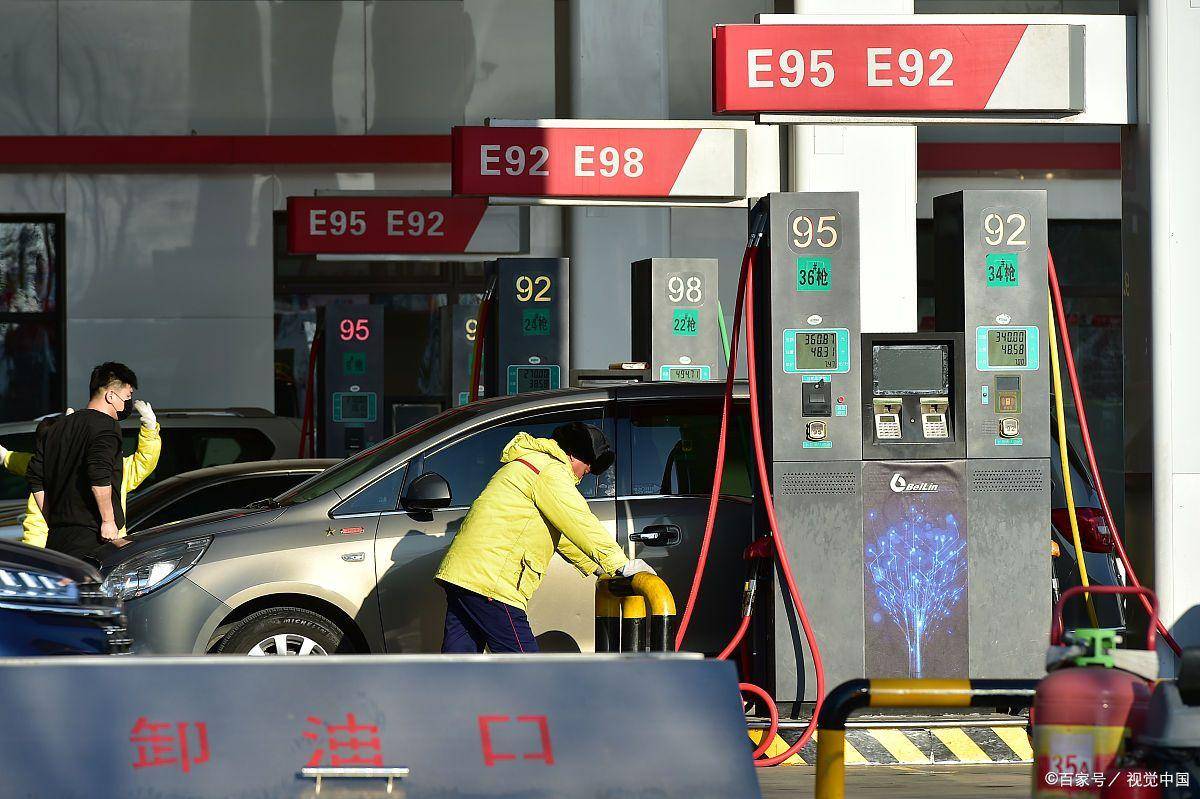
油价一夜下跌!今天1月18日调整后,全国加油站92、95汽油最新售价
Sou Hu Cai Jing· 2026-01-18 21:37
Core Viewpoint - The oil prices are expected to rise due to geopolitical tensions and increased demand ahead of the Chinese New Year, despite a generally oversupplied market and a shift towards electric vehicles [2][3][8]. Price Trends - The next price adjustment window is on January 20, with expectations of an increase of approximately 75 yuan per ton, translating to a rise of about 0.06 yuan per liter [2][8]. - Since August of the previous year, there have been ten price adjustments, with six decreases and one increase, resulting in a cumulative drop of nearly 700 yuan per ton for gasoline [2][3]. Regional Price Variations - Gasoline prices vary significantly across regions, with 92-octane gasoline priced at 6.66 yuan per liter in Hunan and up to 7.82 yuan in Hainan [4][5][6]. - The price for 98-octane gasoline also shows considerable regional differences, with prices reaching 9.30 yuan in Hainan and as low as 7.72 yuan in Gansu [6][7]. Supply and Demand Dynamics - Global oil supply remains ample, with U.S. shale oil production exceeding 13.8 million barrels per day and OPEC not reducing output [3]. - The International Monetary Fund (IMF) forecasts global economic growth at 3.1% for the year, which is lower than the previous year, indicating a weaker demand outlook for oil [3]. Long-term Outlook - Analysts predict that the average international oil price may settle between $60 and $65 per barrel this year, which is lower than last year [3][8]. - The overall market is expected to remain oversupplied, with increasing competition from electric vehicles and policies aimed at reducing carbon emissions [8][12].

Why Geopolitical Chaos Isn’t Pushing Prices Higher
Yahoo Finance· 2026-01-05 22:00
Core Insights - Despite geopolitical tensions and crises in major oil-producing countries, oil prices remain around $60 a barrel, defying traditional expectations of price increases under such conditions [1] Group 1: Supply Risk Dynamics - Venezuela, despite having the largest proven crude reserves, has seen its oil output decline due to mismanagement and sanctions, making it less impactful on global supply [2] - Traditional oil producers like Russia and Iran face sanctions that limit their ability to sell oil at market prices, leading to discounted sales and complex operational challenges [3] Group 2: Demand Behavior Changes - The growth trajectory of oil demand has shifted significantly, with factors such as efficiency gains, vehicle electrification, and regulatory pressures leading to a plateau in demand growth [5] - Traders are now more concerned about potential demand faltering rather than just supply tightening, indicating that a decline in consumption could have a more significant impact on prices than supply disruptions [6]