石油 - 美元体系

Search documents
5分钟充电至70%,比亚迪重塑世界能源格局?
Sou Hu Cai Jing· 2026-03-08 08:12
Group 1 - BYD has announced a revolutionary breakthrough with its second-generation blade battery, allowing charging from 10% to 70% in just 5 minutes and to 97% in 10 minutes, even in extreme cold conditions [2][4] - This advancement effectively addresses the slow charging issue of electric vehicles, significantly reducing user anxiety regarding battery life and expanding the usability of electric cars in high-latitude regions [4] - The implications of this technology could lead to an accelerated penetration rate of electric vehicles, potentially surpassing 80% earlier than expected, and may signal a shift in the global energy landscape from a "petroleum hegemony" to a "diverse electric ecosystem" [4] Group 2 - The current dominance of oil in the U.S. hegemony is critical, with historical context provided on how oil has been used as a tool for economic control, particularly against the Soviet Union [6][10] - The transition towards alternative energy sources has been ongoing, with countries seeking to reduce their dependence on oil, which poses a threat to the "petroleum-dollar" system [13] - The rise of China's "Renminbi settlement" system is challenging the "dollar settlement" system, with significant increases in oil trade settled in Renminbi from countries like Saudi Arabia and Russia [15]



亲历霍尔木兹被封72小时,全球五分之一石油被困住
阿尔法工场研究院· 2026-03-04 00:04
Core Viewpoint - The article discusses the significant disruption in global oil supply due to the military conflict between the US, Israel, and Iran, particularly focusing on the implications of the blockade of the Strait of Hormuz, a critical chokepoint for oil and gas transportation [6][8]. Group 1: Impact on Oil Supply - The Strait of Hormuz is vital for global energy supply, with over 20% of the world's oil and LNG passing through it daily [7]. - Following the military actions, oil prices surged, with Brent crude reaching $82 per barrel, marking a seven-month high, and natural gas prices in Europe spiking by approximately 20% [8]. - If the blockade continues, oil prices could exceed $100 per barrel, with potential shortages in the LNG market comparable to the 2021 Russian gas supply cut to Europe [8][12]. Group 2: Regional Energy Security Risks - Asian countries, particularly India, Japan, and South Korea, face the highest risks regarding energy security due to their reliance on oil imports from the Middle East [9]. - The blockade could lead to a significant reallocation of oil supplies, particularly affecting Asian refineries that depend on the Strait for 84% of their crude oil and condensate [15]. Group 3: Alternative Supply Routes - Current alternative pipeline capacities from Gulf countries can only cover about 15% of the daily oil transport volume through the Strait, leaving a substantial supply gap [12]. - The reliance on the Strait means that even with some alternative routes, the overall capacity remains insufficient to meet demand if the Strait remains blocked [12]. Group 4: Economic Implications - A prolonged blockade could lead to a significant increase in global inflation, with estimates suggesting that oil prices above $100 per barrel could raise the US CPI from 2.4% to over 4% [16]. - The shipping industry is likely to see increased costs, with freight rates in the Red Sea region reportedly rising by about three times due to the heightened risk [16]. Group 5: Long-term Market Changes - The article suggests that while the immediate crisis may be temporary, the long-term implications of rising oil prices could lead to a paradigm shift in the oil market, potentially strengthening the dollar [17].

出海必争地,特朗普靠中东之行逆风翻盘?
虎嗅APP· 2025-05-19 00:06
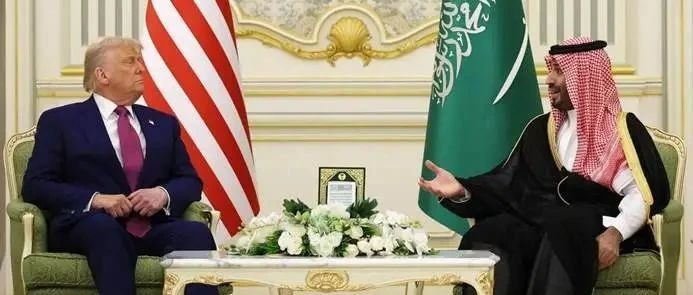
Core Viewpoint - The article discusses the strategic importance of the Middle East in the context of U.S. President Trump's visit, highlighting economic cooperation and investment opportunities between the U.S. and Middle Eastern countries, particularly Saudi Arabia [3][11]. Group 1: Economic Cooperation and Investments - Saudi Arabia has committed to investing $600 billion in the U.S. over the next four years, with plans to increase this to $1 trillion, covering sectors such as energy, defense, and technology [3]. - A historic military sales agreement worth $142 billion was signed, focusing on enhancing air force capabilities, missile defense, and military training support [3]. - Companies like Google, DataVolt, Oracle, Salesforce, AMD, and Uber have pledged to invest $80 billion in advanced technology sectors between the U.S. and Saudi Arabia [3]. Group 2: Geopolitical Significance - The Middle East is viewed as a critical energy hub and a strategic area for the U.S. to maintain its influence over global energy pricing and supply chains [11]. - The region's stability is essential for international energy market fluctuations, and strengthening ties with Gulf nations is seen as a way to counterbalance China's influence [11]. Group 3: Market Potential and Economic Trends - The Middle East holds nearly 60% of the world's oil and gas reserves, with countries like Saudi Arabia and the UAE showing strong GDP growth rates of 4.4% to 5.3% and 4.9%, respectively [17]. - The region is undergoing economic diversification, with Saudi Arabia's Vision 2030 reform plan focusing on attracting foreign investment and developing sectors like renewable energy and digital economy [20]. - The youth demographic in the Middle East, with over 50% under the age of 25, is driving significant consumer trends in entertainment, e-commerce, and technology adoption [20].
出海必争地,再不去就晚了,特朗普靠中东之行逆风翻盘?
凤凰网财经· 2025-05-18 05:58
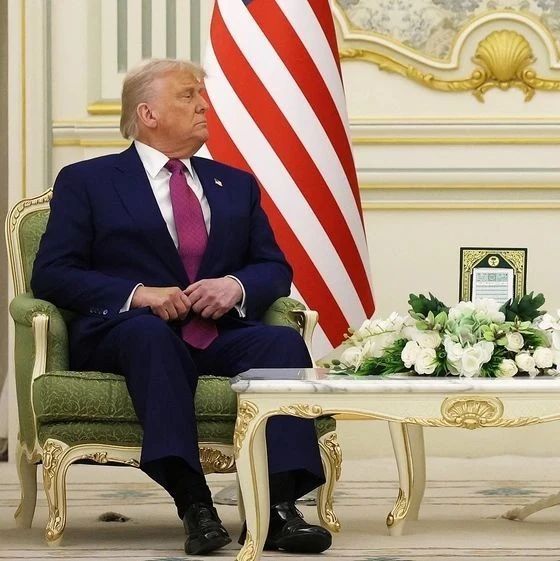
Group 1 - The core viewpoint of the article highlights the significance of Trump's Middle East visit, focusing on economic cooperation and substantial investments from Saudi Arabia to the U.S. [1] - Saudi Arabia has committed to investing $600 billion over the next four years, with plans to increase this to $1 trillion, covering sectors such as energy, defense, and technology [1] - A historic military sales agreement worth $142 billion was signed between Saudi Arabia and the U.S., encompassing five key areas including air force capabilities and missile defense [1] Group 2 - Trump's first visit to the Middle East comes after the imposition of global tariffs, which has led to significant market volatility and criticism from various political figures [2][4] - The article discusses the retaliatory measures taken by countries like India and the EU in response to Trump's tariff policies, indicating a broader impact on international trade relations [5][6] - The strategic importance of the Middle East is emphasized, as it serves as a global energy hub and a critical area for U.S. geopolitical interests [7] Group 3 - The Middle East is increasingly viewed as a strategic location for global enterprises, driven by its financial resources and energy reserves, with oil and gas accounting for nearly 60% of global supplies [10] - Economic growth in the Gulf states, particularly Saudi Arabia and the UAE, is projected to be robust, with GDP growth rates of 4.4%-5.3% and 4.9% respectively [10] - The region is undergoing economic diversification, with Saudi Arabia's Vision 2030 reform plan aiming to reduce reliance on oil and promote sectors like renewable energy and digital economy [13] Group 4 - The demographic structure of the Middle East, with a significant portion of the population under 25, is driving new consumer trends in entertainment, e-commerce, and technology [14] - The e-commerce market in the region is expected to reach $82 billion by 2025, with a notable increase in online shopping during Ramadan [14] - Local e-commerce platforms like Souq and Noon are highlighted as key players in the market, alongside the growing presence of Chinese cross-border e-commerce [15]