
破五唯

Search documents
瞭望 | 破立并举激活创新第一资源
Xin Hua She· 2026-02-24 09:01
Core Viewpoint - The reform of the talent evaluation system in China aims to break the traditional "five only" model and establish a classification and hierarchical evaluation system that aligns with national strategic needs, thereby enhancing innovation and high-quality development [1][3][5]. Group 1: Reform Objectives - The reform seeks to activate the innovative potential of scientific talent by moving away from the restrictive "five only" evaluation criteria, which include an overemphasis on papers, titles, degrees, and awards [1][4]. - The new evaluation system is designed to better serve national strategic needs and transform the "talent dividend" into an "innovation dividend" [1][5]. Group 2: Implementation Strategies - The reform is being implemented through a series of systematic changes, including the introduction of differentiated evaluation methods for various types of scientific talent, such as basic research, applied research, and high-skill talent [4][5]. - The evaluation methods are being optimized to respect the rules of scientific research and talent growth, allowing for more flexibility in evaluation cycles to encourage deep exploration and innovation [6][7]. Group 3: Evaluation Standards - The new evaluation standards focus on different contributions based on the type of research, emphasizing originality for basic research, practical results for applied research, and economic value for industrial transformation [5][8]. - Institutions like the Chinese Academy of Sciences are implementing a classification evaluation mechanism that tailors assessment criteria to the specific contributions of different types of talent [5][9]. Group 4: Collaborative Framework - The reform emphasizes collaboration between various stakeholders, including universities and enterprises, to ensure that talent evaluation aligns with innovation needs [9][10]. - A model of "who uses, who evaluates" is being promoted, allowing enterprises to have a say in the evaluation of practical talent, thus ensuring that evaluations meet real-world innovation demands [9][10]. Group 5: Future Directions - The focus is shifting from breaking old rules to constructing a new evaluation system that emphasizes innovation capability, quality, effectiveness, and contribution [12][13]. - Experts suggest that a dynamic adjustment mechanism for evaluation standards should be established to adapt to changes in national strategic needs and field development [13][14].

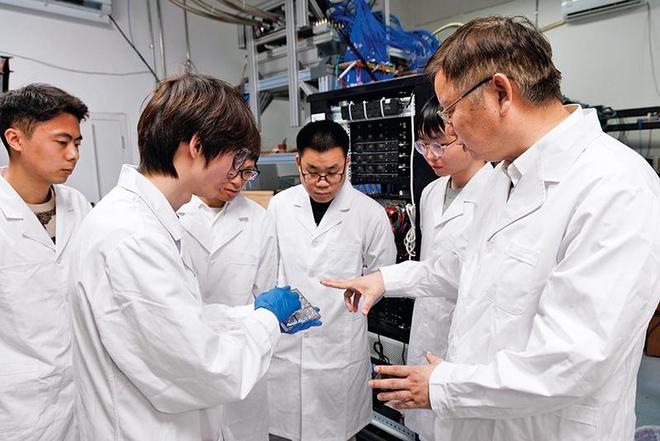
紧跟产业需求培养卓越工程师
Jing Ji Ri Bao· 2025-12-27 21:59
Core Viewpoint - The cultivation of outstanding engineers is essential for the integrated development of education, technology, and talent, as well as a pressing need for building a modern industrial system [1] Group 1: Progress in Engineer Training - Since the reform began, nearly 26,000 engineering master's and doctoral students have been recruited through school-enterprise collaboration, with over 2,000 graduates now working in the industry [1] - The organized and large-scale training of engineering master's and doctoral students through school-enterprise collaboration has opened new pathways for the independent cultivation of strategic talents [1] Group 2: Breaking Traditional Models - The reform breaks the traditional model of engineering talent cultivation, which relied heavily on universities, by introducing a school-enterprise council system and implementing joint recruitment and alternating training [2] - Engineering master's students are required to have at least one year of practical experience in enterprises, while doctoral students must have at least two years [2] - This new model enhances graduates' practical abilities, allowing them to adapt to job roles more quickly [2] Group 3: Emphasis on Practical Outcomes - The first cohort of over 2,000 engineering master's graduates has achieved more than 2,500 innovative outcomes, including over 300 engineering practice results and 800 intellectual property results [3] - The training process emphasizes the ability to innovate and solve complex engineering problems, with enterprises identifying over 10,000 issues for research and practical projects [3] - A total of 200 core courses have been developed in collaboration with enterprises, facilitating shared resources between schools and companies [3] Group 4: Focus on Key Industries - The Ministry of Industry and Information Technology has recommended over 100 specialized small and medium-sized enterprises and manufacturing champions for collaboration in training engineering master's and doctoral students [4] - There is a strong demand for talents in high-tech fields, necessitating professionals with solid theoretical foundations and strong innovative capabilities [4] - New educational platforms have been established to focus on key areas such as integrated circuits, artificial intelligence, and biomedicine, forming a comprehensive training framework [4] Group 5: Achievements in Practical Training - Graduates have gained a deeper understanding of cutting-edge technologies and practical applications through hands-on learning in research settings [5] - The training aims to meet real demands, solve genuine problems, and produce tangible results, effectively bridging the gap between education and industry [5] Group 6: Collaborative Efforts - A notable achievement includes the first engineering doctoral degree awarded based on practical outcomes, marking a significant step in reforming the evaluation system for engineering degrees [6] - Over 60 engineering master's and doctoral students have received degrees based on practical results, indicating a shift towards aligning academic standards with industry needs [6] - Companies are encouraged to actively participate in the training process to ensure that the practical outcomes align with industry challenges [7]
“破五唯”探索:不写论文也能获学位的博士在清华、西工大等高校亮相
Xin Lang Cai Jing· 2025-12-15 13:15
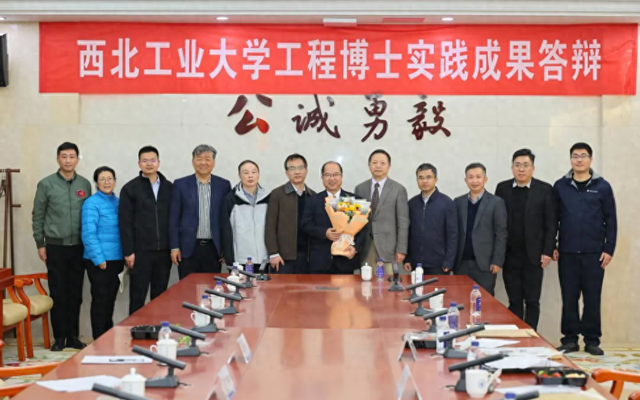
Core Viewpoint - The recent reforms in China's graduate education system allow for the awarding of degrees based on practical achievements, marking a significant shift from traditional academic evaluation standards and aligning education with industry needs [1][10]. Group 1: Degree Reform and Implementation - As of December 10, 59 engineering master's degrees and 3 engineering doctoral degrees have been awarded based on practical achievements, highlighting the importance of this reform in breaking traditional academic evaluation standards [1]. - The implementation of the "Degree Law" on January 1 has legally recognized "practical achievements" alongside "thesis" as criteria for degree awarding, providing strong legal support for the reform [3]. - Several universities, including Northwestern Polytechnical University and Tsinghua University, have begun awarding engineering doctoral degrees based on practical achievements, indicating a trend towards integrating practical experience into higher education [1][5]. Group 2: Notable Achievements - Huang Lingcai from Northwestern Polytechnical University became the first engineering doctoral student in China to be awarded a degree based on practical achievements, specifically for his work on the AG600 amphibious aircraft [1][3]. - Tsinghua University awarded its first engineering doctoral degree based on practical achievements to Nie Hailiang, who developed a technology for steelmaking electric furnace dust removal [5][7]. - Chongqing University awarded an engineering doctoral degree to Yuan Xiaohu for his research on high-temperature supercritical turbine valve coatings, which has been successfully applied in several domestic power generation projects [8][9]. Group 3: Industry and Educational Collaboration - The reforms have led to nearly 26,000 engineering master's and doctoral students being jointly recruited and trained by universities and enterprises, with over 2,000 graduates entering the workforce [10]. - The emphasis on practical achievements in degree evaluation involves hiring industry experts to participate in thesis defenses and degree assessments, further bridging the gap between academia and industry [10].
科研圈潜规则让骗子郭伟成为科学家
经济观察报· 2025-11-25 13:11
Core Viewpoint - The Guo Wei case reflects the deep-rooted issues in China's research field and serves as a crucial opportunity for reform, emphasizing the essence of research as the pursuit of truth and exploration of the unknown, which cannot tolerate any falsehood or speculation [1][2]. Group 1: Industry Issues - The Guo Wei case reveals the long-standing underlying problems in the research sector, where an individual managed to deceive institutions for years by fabricating credentials and research achievements, ultimately leading to significant financial gains [2]. - The case highlights the "quantitative worship" in research evaluation and resource allocation, where the focus on metrics such as publications, projects, titles, degrees, and awards has simplified the evaluation process to mere comparisons of indicators, allowing fraudsters to exploit these weaknesses [3]. - The prevalence of "circle culture" and "information barriers" in the research community has facilitated the perpetration of fraud, as trust is often based on personal connections rather than actual capabilities, leading to a lack of thorough verification of credentials [4]. Group 2: Resource Allocation and Regulation - The "heavy application, light regulation" approach in resource distribution has created an environment conducive to fraud, where the initial competition for project approval is intense, but subsequent monitoring and verification of results are often superficial [5]. - The lack of effective oversight mechanisms allows individuals like Guo Wei to fabricate data and papers to meet project requirements, as the regulatory bodies often adopt a lenient stance towards compliance [5]. Group 3: Recommendations for Reform - To prevent similar fraud cases, it is essential to break the "quantitative indicator" evaluation paradigm and shift towards a system that values quality, innovation, and social contribution, establishing a diversified evaluation framework [6]. - Building a transparent research integrity system is crucial, which includes a unified platform for verifying researchers' credentials and achievements, and introducing cross-disciplinary review processes to eliminate the "circle culture" [6][7]. - Strengthening the regulatory framework throughout the research process is necessary, including rigorous verification of application materials, dynamic monitoring of project progress, and third-party evaluations of research outcomes to ensure accountability [7].

“唯论文”让男性“患上”妇科病(健谈)
Ren Min Ri Bao Hai Wai Ban· 2025-05-08 22:42
Core Viewpoint - A recent paper published by a nurse in 2017 claiming that "men can suffer from uterine fibroids" has sparked widespread controversy, highlighting significant failures in academic oversight and the integrity of medical research [1][2]. Group 1: Issues in Medical Research - The paper in question included absurd claims, such as a control group with "27 male" and "13 female" patients, which is fundamentally incorrect as men do not have a uterus [1]. - The hospital involved has taken disciplinary action against the nurse, including a demotion and cancellation of promotion eligibility for five years, indicating a recognition of the issue [1]. - The paper was published eight years ago and has been cited six times, raising concerns about the peer review process and the standards of academic journals [1]. Group 2: Broader Implications - Following the exposure of this paper, multiple gynecological studies have been found to include male patient data, revealing a systemic issue in academic publishing where financial incentives may compromise research integrity [2]. - Some journals reportedly lower their review standards to collect high publication fees, leading to a prevalence of "water papers" that lack scientific rigor [2]. - The current evaluation system in medical institutions emphasizes quantity over quality in research output, pressuring healthcare professionals to publish regardless of the validity of their work [2][3]. Group 3: Reform Efforts - There is a growing movement in China to reform the "Five Uniques" (which includes a focus on publications) in educational evaluations, aiming to create a more balanced and meaningful assessment system for medical professionals [3]. - Efforts are being made to establish a diversified evaluation system that reduces the emphasis on paper publications, thereby addressing the root causes of academic fraud [3]. - A more realistic talent evaluation mechanism is essential to foster a healthier academic environment and encourage genuine innovation across various fields [3].