碳成本

Search documents
英国寻求降低碳成本 保护炼油行业
Xin Lang Cai Jing· 2026-02-23 01:13
Core Viewpoint - The UK government is developing a strategy to protect refineries from rising carbon costs, which have already led to the closure of two refineries in the past 18 months [1] Group 1: Government Actions - The government is considering including the refining industry in the UK's carbon border adjustment mechanism, which would impose fees on imported goods with lower environmental standards [1] Group 2: Industry Impact - Two refineries have closed in the UK due to rising carbon costs, and ExxonMobil has warned that if carbon costs continue to rise, the refining industry may eventually disappear [1]
碳价与绿证市场预期升温
HTSC· 2026-01-29 02:30
Investment Rating - The industry investment rating is "Overweight" for both Utilities and Environmental sectors [8]. Core Insights - The carbon pricing market is undergoing a value reconstruction driven by both policy and market forces, with carbon prices expected to stabilize at 150-200 RMB/ton by 2030 [3][7]. - The green certificate market is currently underperforming, with prices at only 8% of the carbon price, indicating significant potential for value release [5][7]. - The upward pressure on electricity prices is anticipated from both carbon costs and green certificate revenues, with wholesale electricity prices projected to increase by 10% to 385 RMB/MWh [6]. Summary by Sections Carbon Price Trends - Carbon prices peaked at 98 RMB/ton by the end of 2024 but fell to a low of 38 RMB/ton in 2025 due to declining energy prices and increased renewable energy capacity [4]. - As of January 2026, carbon prices have stabilized at an average of 73 RMB/ton, supported by compliance demand from the power sector and the expansion of carbon markets in heavy industries [4]. Green Certificate Market - The average price of green certificates was 4.2 RMB per certificate in 2025 and increased to 5.5 RMB in 2026, still significantly lower than carbon prices [5]. - The low price of green certificates is attributed to the incomplete integration with the carbon market and insufficient market demand for green electricity [5]. Electricity Price Dynamics - Current carbon and green certificate prices are expected to push wholesale electricity prices from 350 RMB/MWh to 385 RMB/MWh, with further increases anticipated if carbon prices rise to 150-200 RMB/ton [6]. - If green certificate prices align with carbon prices, wholesale electricity prices could increase by 24-31% [6]. Future Outlook - The carbon market is expected to transition from "soft constraints" to "hard constraints" by 2027, with a gradual tightening of quotas and an increase in the proportion of paid allowances [7]. - Policies are being established to link the environmental value of green certificates with carbon reduction values, which may enhance the economic viability of green electricity [7].


警惕单边碳壁垒!CBAM瞄准中国钢铝,95%钢铁产品碳成本超800元/ 吨,应对指南来了
Zhong Guo Neng Yuan Wang· 2026-01-15 01:21
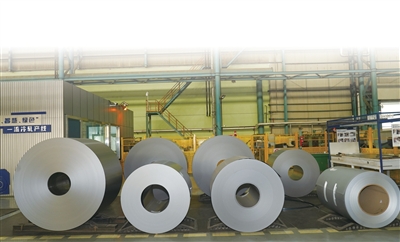
Core Viewpoint - The implementation of the EU Carbon Border Adjustment Mechanism (CBAM) starting January 1 will significantly impact China's high-carbon industries, particularly steel and aluminum exports to the EU, which account for approximately 3.5% of China's total exports to the EU [2][3]. Group 1: Short-term Impact - The initial pressure from CBAM is manageable, with a starting carbon cost of only 2.5%, allowing Chinese companies to maintain competitive pricing in the short term [4]. - The default emission values set by the EU for Chinese products are generally higher than the global average, creating an unfair barrier for Chinese exporters [4]. - The steel industry, in particular, may face increased export tariffs and competitive pressure, especially for companies that do not conduct their own carbon assessments [3][4]. Group 2: Compliance and Adaptation - Chinese exporters need to shift from relying on default values for carbon reporting to establishing their own carbon monitoring and reporting systems [5][6]. - Over 90% of Chinese companies used global average default values during the trial phase, which will lead to increased carbon costs once country-specific values are published [5]. - Companies are encouraged to engage with third-party certification bodies to enhance the credibility of their carbon data and compliance [6]. Group 3: Long-term Strategy - The transition to low-carbon operations should be a key focus for companies aiming to expand in international markets, with an emphasis on developing green products and processes [8]. - The CBAM will expand to include around 180 downstream products by 2028, necessitating a comprehensive approach to carbon footprint management across the entire supply chain [8]. - Companies should evaluate potential partners based on their carbon data transparency and low-carbon transition plans to ensure compliance and competitiveness in the future [8]. Group 4: External Environment and Policy - The Chinese government advocates for fair trade practices and is prepared to take necessary measures against any unfair trade restrictions imposed by the EU [9]. - There is a call for improvements in the domestic carbon market, including the introduction of auction mechanisms and negotiations with the EU for recognition of China's carbon pricing [9].

欧盟碳边境调节机制正式落地对我国影响几何
中国能源报· 2026-01-12 05:55
Core Viewpoint - The implementation of the EU Carbon Border Adjustment Mechanism (CBAM) starting January 1 will significantly impact China's high-carbon industries, particularly steel and aluminum exports to the EU, which account for approximately 3.5% of China's total exports to the EU [2][3]. Group 1: Short-term Impact - The short-term pressure from CBAM is manageable, with the initial carbon cost set at a base rate of 2.5%, allowing companies some time to adapt [3]. - Companies that have not undertaken energy-saving and carbon-reduction transformations will face the most significant challenges, especially those relying on default values for carbon emissions reporting [2][3]. - The default emission values set by the EU are particularly high for Chinese products, creating a barrier for exports [2][3]. Group 2: Carbon Management and Compliance - Exporting companies must shift from relying on default values to establishing their own carbon data monitoring and reporting systems to avoid increased carbon costs [5]. - Over 90% of Chinese companies used global average default values during the trial phase, which will lead to higher costs once country-specific default values are published [5]. - Companies are encouraged to engage with third-party certification bodies to enhance the credibility and compliance of their carbon data [5]. Group 3: Long-term Strategy - In the long term, companies need to focus on low-carbon transformation as a key strategic direction for sustainable development [8]. - The expansion of CBAM to include 180 downstream products by 2028 will increase the complexity of carbon footprint calculations, necessitating a comprehensive approach to carbon management across the supply chain [8]. - Companies should evaluate potential partners based on their carbon data transparency and low-carbon transition plans to ensure compliance and competitiveness [8]. Group 4: External Environment and Policy Recommendations - There is a call for the improvement of the domestic carbon market and the introduction of quota auction mechanisms to create a more competitive environment for companies [9]. - Diplomatic efforts are suggested to negotiate with the EU for recognition of China's carbon pricing, which could alleviate some of the carbon cost burdens on Chinese exporters [9]. - The Chinese government aims to maintain fair trade practices and protect the interests of its enterprises while addressing global climate change challenges [9].

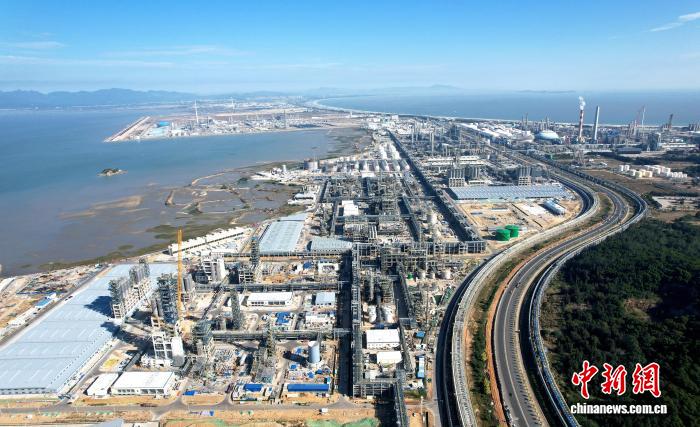
(经济观察)福建古雷为何建设“零碳园区”?
Zhong Guo Xin Wen Wang· 2025-12-10 10:49
Core Viewpoint - The Gule Petrochemical Base is constructing a "zero-carbon park" to enhance its green transformation and become a significant "green value hub" that injects clean and low-carbon competitiveness into the regional and broader industrial chain [1]. Group 1: Zero-Carbon Park Construction - The zero-carbon park aims to achieve a national standard of 0.3 tons of carbon emissions per ton of standard coal by 2035, positioning itself as the first large-scale zero-carbon petrochemical park in China [1]. - A construction blueprint has been established, emphasizing a two-step approach to realize the zero-carbon goals [1]. Group 2: Industry Collaboration and Technological Integration - The recent conference included representatives from nearly 100 multinational companies and experts, facilitating the practical application of zero-carbon technologies and compliance management [2]. - The Gule Petrochemical Base is integrating advanced technologies such as carbon capture and utilization to enhance its green competitiveness and avoid potential international green trade barriers [4]. Group 3: Regional Economic Impact - Gule aims to become a pivotal hub for regional industrial ecology, supplying low-carbon raw materials to key industries in Fujian Province, including textiles, footwear, and automotive sectors [5]. - Strategic cooperation with Tianjin University focuses on driving technological innovation and talent development to support the transition from a high-carbon to a zero-carbon demonstration park [5].